





























Is my plant thirsty or overwatered?
Recognise the signs of improper watering and remedy the problem
Contents
Watering is an aspect not to be underestimated in plant care. Coupled with rainwater, it provides the water necessary for their survival and growth. An adequate irrigation allows plants to absorb nutrients from the soil, carry out photosynthesis and transport essential minerals to all parts of the plant. Inappropriate watering can compromise these vital functions and lead to health problems for the plant. Watering that is too frequent and too abundant, as well as under-watering, has detrimental consequences for plants, causing them to suffer from overhydration or dehydration.
In this article, let’s examine how to identify the signs of a plant that is thirsty or dehydrated compared with a plant that has received too much water. Let us then outline the measures to take to remedy these problems and prevent them in the future.

The importance of proper watering for plant health.
Each plant has specific water needs. Some plants prefer soils that are always moist, many appreciate a cool soil, while others thrive in dry soils. Climate conditions and soil type influence the plant’s water needs. For potted plants, the type of substrate, its water-retention capacity, its quality and the pot size also play a role. Consequently, it is essential to first familiarise yourself with the specifics of each plant species present in your garden, then to take into account the influence of your soil or substrate type and climate conditions. When we talk about climate conditions here, we take them all into account: wind has a desiccating effect on plants, rain is not always effective at penetrating the soil, heat and direct summer sun drastically increase the water needs of certain plants.
Note that overwatering can be as harmful as dehydration. The best tools for observing your plants’ water needs, whether met or not, are your eyes and hands: touching the soil or the substrate a few centimetres deep proves very useful.
Note: when we talk about fresh soil, appreciated by many plants that are not Mediterranean-type plants, we refer to a soil that, to the touch, feels cool: it is not wet and sticky, it is not dry, but it retains a certain coolness between two waterings. This is often the case for soils rich in humus, with medium permeability, ordinary, loamy or slightly clayey, with adequate or good drainage.
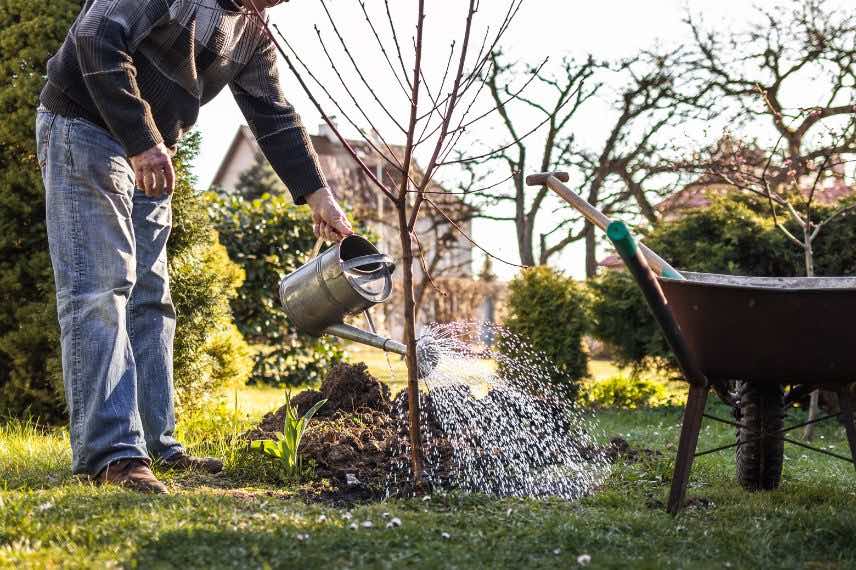
Appropriate watering comes from observing plants and soil
Read also
Watering the garden: how to do it?Signs of a dehydrated plant and steps to take
Symptoms
When a plant lacks water, it typically exhibits certain characteristic signs indicating its dehydrated state. The simplest sign to identify is leaf desiccation, or the edges turning brown and “crisp”, while stems may appear thin and brittle. If you touch the leaves, they feel dry to the touch and may even bend downward. The plant is not receiving enough water to maintain normal transpiration.
Leaves may also begin to droop and become soft; to prevent excessive water loss through transpiration, they lose their usual rigidity, curl in on themselves, and fall. The plant slows its growth and its flowers wilt more quickly than usual, as it concentrates its limited resources on survival rather than reproduction.
When inspecting the soil, you will notice it feels dry to the touch or cracks easily. For a plant in a pot, the potting substrate pulls away from the edges of the container.
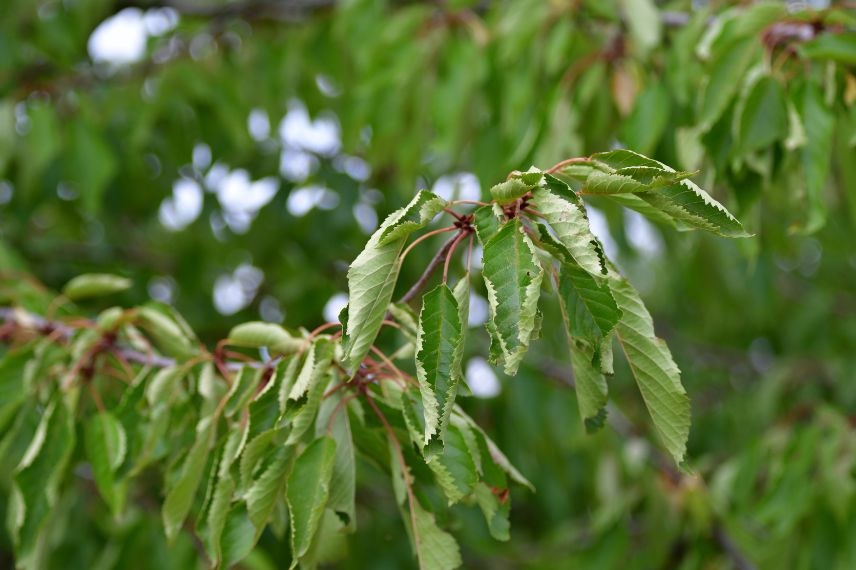
Cherry tree leaves curled up on themselves due to lack of water
What to do?
It is important to act quickly when you identify these signs of dehydration in a plant. A thorough watering is the first step to rehydrate the plant. Take care to water slowly and deeply, ensuring the water reaches the plant’s roots. Let the water penetrate the soil sufficiently to ensure adequate hydration. If it is a potted plant and you can move it, soak it in a basin or a sink. Otherwise, water it several times on the same day. In the following days, water it again. Monitor the plant afterwards and water it further for a few weeks, until it regains its appearance and normal growth.
For a severely dehydrated potted plant, repotting is necessary if the substrate is too dehydrated: if it no longer retains any water and lifts away from the pot walls, replace it completely.
Do not swing to the opposite extreme afterwards; this watering pattern should last from a few days to a few weeks depending on the plant’s size, whether it is in a pot or in the ground, etc. Then resume standard watering, as a plant can also suffer from overwatering.
A rule applicable to all plant types and watering is this: it is better to water less often and more deeply than to keep plants on a drip-feed of frequent waterings. Example: it is better to water once a week with two watering cans than to pour half a watering can every two days. This is only to give a rough idea, as in summer, in the heat, some plants require watering every two days!
Of course, take account of any water restrictions in your area; these must be observed.
Prevention
- Establish a regular watering schedule based on the plant’s specific needs and the environment, the seasons, as well as your observations (it is very important to observe your plants!).
- Organic mulch around the base of the plant by a few centimetres helps retain moisture in the soil.
- Applications of compost in autumn and spring also help improve the soil’s water retention qualities.
- Rainwater harvesting systems are essential if you can install them.
Carrying out these improvements year-round helps to approach the summer period more calmly. Water management should be considered year-round.
Signs that a plant has been overwatered and steps to take
Symptoms
Often, an overwatered plant will yellow its leaves. Leaves can become flaccid and feel soft to the touch, as they are waterlogged. If the situation persists, the plant’s roots will rot due to excess moisture, which limits oxygen supply and leads to poor nutrient uptake. You may also notice a foul odour coming from the soil, a sign of root decay.
Then, an overwatered plant is more likely to develop diseases such as root rot or pathogenous fungi. The roots become unable to supply the plant with the necessary nutrients, resulting in an overall weakening of the plant and a reduced ability to resist diseases. If you notice dark spots or mould on the leaves or stems, this may indicate the presence of fungal diseases due to excess humidity.
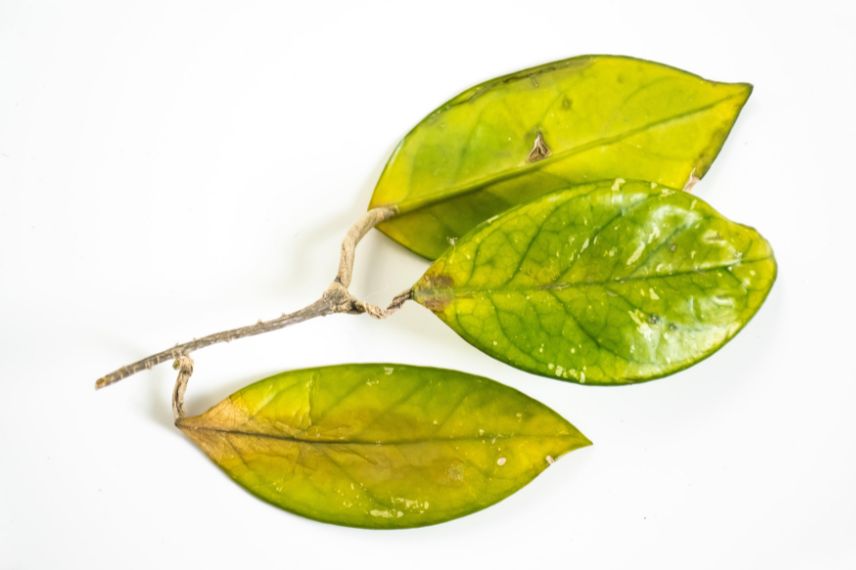
Soft and yellow Hoya leaves, symptoms of an overwatered plant
What to do?
To remedy overhydration, it is important to allow the plant to dry out properly.
If the plant is in a pot, remove it from its pot, and discard the waterlogged soil. Inspect the roots. If they are brownish, soft and have an unpleasant odour, that’s a sign of root rot. You should then delicately remove the damp substrate around the roots, clean them and cut away any damaged portions if necessary to remove the damaged parts. Replace the potting compost.
If you fear the situation may recur, choose a terracotta, porous pot, which evaporates water more quickly, and add drainage elements to the potting mix such as the perlite or pour clay balls at the bottom of the pot to improve drainage. Remember to always choose pots with drainage holes for potted plants.
If the plant is in the ground, leave it alone! You will water it again when you are sure the critical period has passed. If your soil is heavy, poorly draining, suffocating, dig up the plant, add gravel or pozzolana at the bottom of the planting hole and add drainage elements to your planting soil.
Reduce the watering frequency to avoid excess moisture in the future.
Read also
Watering potted plantsProper watering
To prevent both dehydration and overwatering of plants, it is essential to understand the specific needs of each plant species. Do not buy a plant without knowing whether it is suited to your soil and climate. Find out its needs (our site is full of information on plants, by the way). Each plant has different watering requirements depending on its type, its growth stage, and the environment in which it grows.
It is recommended to regularly check soil moisture before watering. Insert your finger into the soil to a depth of about 2.5 cm. If the soil is dry at that depth, it’s time to water the plant. However, if the soil is still moist, it is best to wait before watering again.
Also use pots with drainage holes to allow excess water to drain freely. The addition of a drainage medium, such as clay balls at the bottom of the pot, is necessary for any type of potted plant.
Do not underestimate the importance of watering quality! By observing your plants and acting quickly when you notice signs of water stress, and by adjusting your watering practices accordingly, you help your plants to stay healthier.
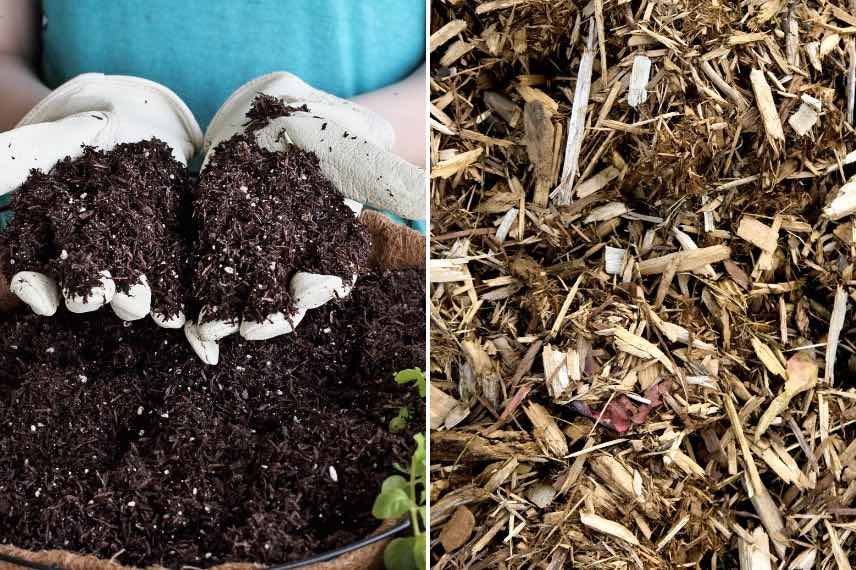
A well-draining substrate, often beneficial for plants, especially if they are prone to overwatering, and organic mulch to help the soil retain moisture
- Subscribe!
- Contents
Comments