





























Inflation-proof vegetable garden: how to grow your own food in response to rising prices?
Make significant savings on the food budget
Contents
A salad for £2, a kilo of green beans for £8, tomatoes at nearly £4… Prices can be significantly higher depending on the region where you live, whether you buy at the market or the supermarket, and the origin of the products. Undeniably, over the past few months (and years), the price of vegetables has risen considerably. And the health recommendations encouraging the consumption of five fruits and vegetables a day are becoming difficult to maintain… for the wallet!
Could the solution lie in the vegetable garden? Does growing your own vegetables and (small) fruits really allow you to save money? Undeniably, the answer is yes, no matter how modest the garden. Moreover, some vegetables are surprisingly easy to grow and, above all, very profitable. However, not everyone has a green thumb, and success is not always guaranteed.
Let’s discover together how to make real savings by sowing, planting, and growing your own vegetables.

The advantages of a vegetable garden in the face of inflation
In July 2022, the French Price Observatory of Familles Rurales, a consumer association, sounded the alarm regarding the rising prices of vegetables. In just one year, a conventional basket of vegetables has increased by 15%! And, over the past 10 years, vegetable prices have risen by 37%! Consequently, in the face of rampant inflation, it is becoming difficult, if not impossible, to adhere to the recommendations of the national nutrition and health programme (PNNS) to eat five fruits and vegetables a day. Especially if you wish to consume fresh vegetables…
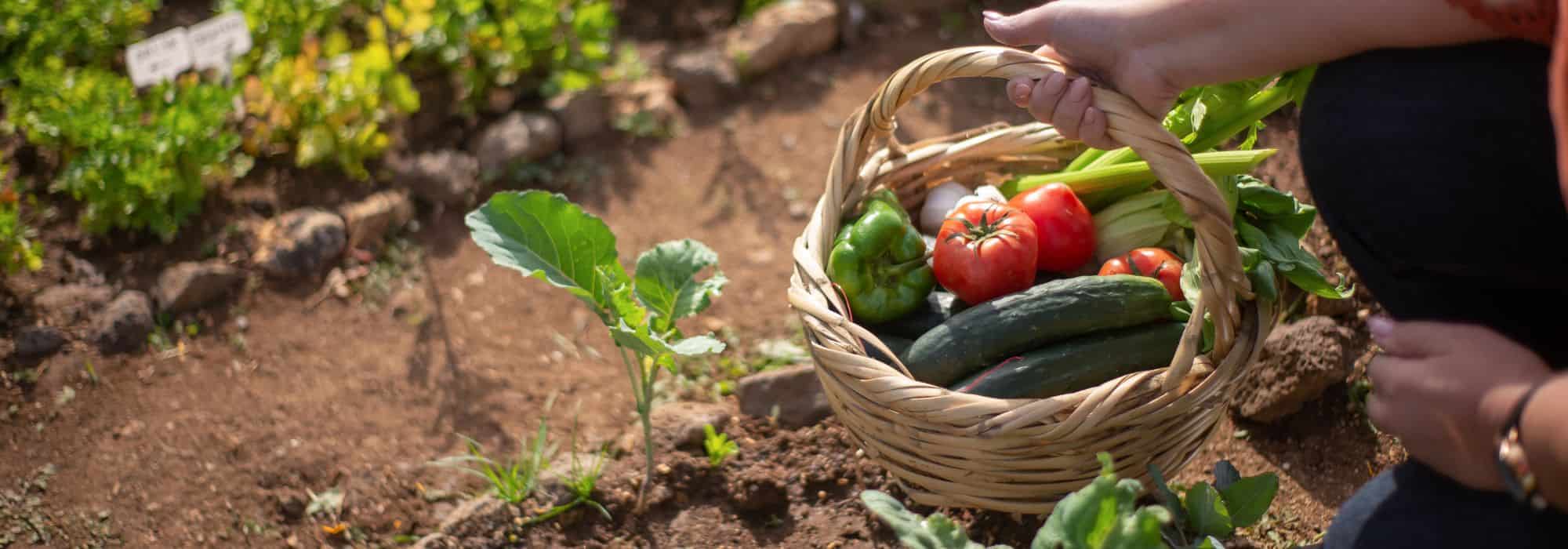
Thus, to counter this inflation, the solution could lie in growing your own vegetables. Whether you live in the countryside or in the city, or have just a small piece of land, a terrace, a tarmacked yard, or a balcony!
In urban areas, it is also quite easy to join a community gardening association that offers plots for rent at a low cost (often less than 100 euros per year), integrate (or create) a shared garden, or join a movement like Incredible Edibles…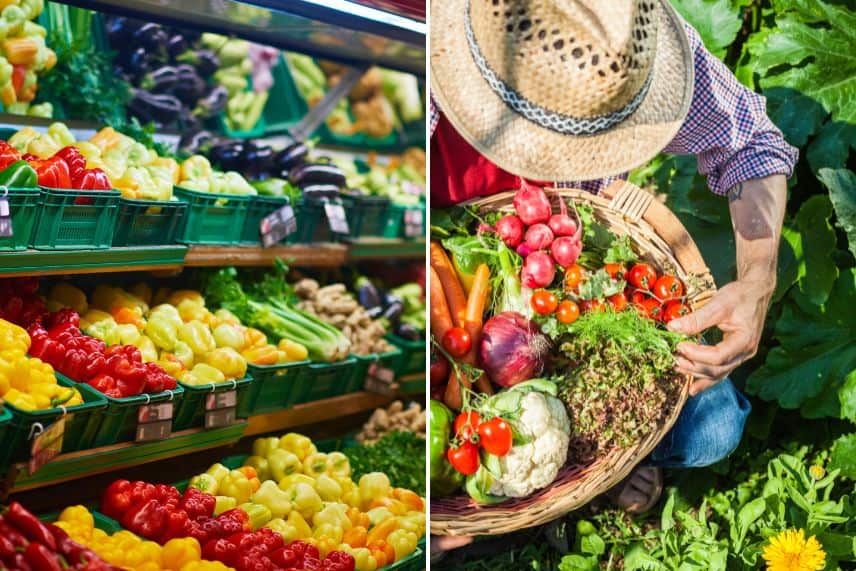
Creating a vegetable garden also means equipping yourself with essential gardening tools, such as a spade, a hoe, a rake, and a fork… The purchase of this gardening equipment represents a significant cost. However, you can perfectly turn to second-hand equipment bought online, from solidarity associations like Emmaüs, or from a recycling centre… Some tools can even be rented, but in the long run, buying is certainly more cost-effective.
Once you are equipped with the basic tools, it’s time to start growing! I invite you to consult the Beginner’s Guide to Starting Your First Vegetable Garden by Aurélien, which will provide you with valuable advice on choosing the best location, determining the size of your garden, and preparing the soil…
Also, be aware that when choosing the vegetables to plant, you should consider your preferences, tastes, and especially the space you have available. In terms of cost-effectiveness, sowing is significantly more advantageous than buying plants in pots or plug plants. A packet of seeds is inexpensive and allows you to multiply your plants. For instance, a packet of 30 seeds of a tomato like ‘Cornue des Andes’ will cost you 2.90 euros, while a plant sold in a garden centre ranges from 1 to 2 euros. I’ll let you do the math.
Some vegetables like salads, radishes, or spinach can be sown directly in the ground, while others, which are more sensitive, need to be sown in trays, boxes, or pots. Don’t hesitate to collect small plastic pots, yoghurt containers, polystyrene trays, or egg boxes for your vegetable seed sowing. There are also seed or plant exchange fairs. Discover François’s tips to learn how to sow in pots.
You can also, year after year, harvest your own seeds. Provided you choose reproducible seeds (and not F1 hybrid varieties) and store them properly.
Thus, creating your own vegetable garden allows you to make significant savings while eating seasonal, healthy vegetables free from pesticides and other phytosanitary products, delicious and nutritious. Growing your own garden also benefits the environment by reducing the transport of vegetables from Spain or Morocco, grown in greenhouses… By cultivating your garden, you will contribute to biodiversity as you attract and nourish pollinating insects, even in the city!
Final tip: don’t aim too high, or you risk losing motivation when faced with weeding, hoeing, and other tedious gardening tasks. It’s better to have a small, well-filled garden than a large, empty one overrun with adventive plants.
Vegetables to grow for a profitable vegetable garden
Saving money by growing your own vegetable garden is a well-established fact. However, it is essential to select the best vegetables. Indeed, some vegetables prove to be much more profitable than others. It is important to consider not only their productivity but also the relationship between the cost of seeds or plants, potential yield, ease of cultivation, and the time that elapses between planting and harvest…
Therefore, to start a vegetable garden, it is better to focus on vegetables that grow quickly and, above all, without difficulty. The champions in all categories are certainly radishes and lettuces. In good growing conditions, radishes can be harvested about twenty days after sowing. Lettuces, particularly oak leaves, grow very quickly and are highly productive since the leaves regrow after harvesting. Spinach is also easy to sow, grow, and harvest. Just like courgettes, Swiss chard, or cherry tomatoes, as well as kale or Daubenton’s perpetual cabbage (which returns on its own each year). Sowing peas and green beans is not difficult and is very profitable compared to their price in a market or supermarket. As for the flavour, it is incomparable!
Among the various species of vegetables, some varieties are known for their superior productivity. These are ideal vegetable seeds if you aim for a productive and edible garden. Other vegetables may be less productive but are very expensive if purchased in a supermarket. For example, new potatoes will occupy the soil for at least 90 days but will save you a significant amount! In contrast, storage potatoes take up a large space in the garden for almost four months and remain very affordable to buy. In the category of small fruits, raspberries are relatively expensive to buy due to their fragility but are incredibly easy to grow. And they are very productive. Cucumbers also yield well, but they require a bit more work and plenty of sunlight.
It is also essential to cultivate a vegetable garden throughout the seasons, including in winter if you live in a suitable region. So, consider leeks, cabbages, onions, garlic, and shallots, beetroots, lamb’s lettuce, carrots… which allow for extended harvests in autumn or even winter. Some can even be stored throughout the winter in the soil, in a cellar, or in a box filled with sand away from light.
It is also possible to grow perennial vegetables, which are vegetables that return year after year without needing to be reseeded or replanted. This way, you can achieve a sustainable and self-sufficient garden.
Take advantage of what nature offers
In its great generosity, nature offers us its riches… but in return, it can be capricious, obstinate, and stubborn. Therefore, it deserves the utmost respect, but also a degree of tolerance. That said, if you wish to achieve a sufficiently productive vegetable garden, you must learn to take advantage of what nature offers for free. This involves finding the best location for your vegetable garden. It is essential to choose a well-sunny spot throughout the different seasons and not to place it in the shade of hedges or trees that could also hinder the crops with their root system. The vegetable garden should not be exposed to excessively strong or cold winds, or drafts, which are particularly harmful during the winter months. 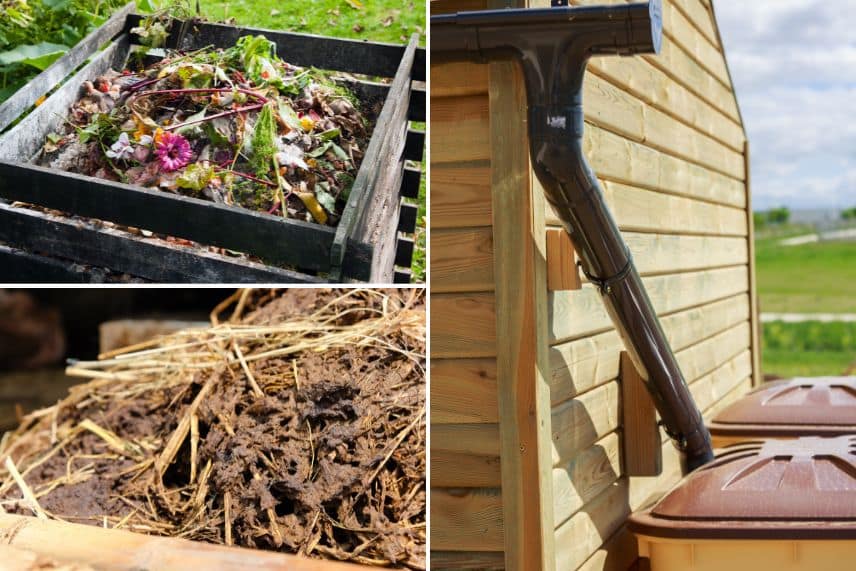
The soil is also crucial. If you are growing your vegetable garden above ground, choose a good vegetable garden compost. Otherwise, if you have land, you must work with what you have. However, the soil can be enriched with manure, compost…
Finally, nature offers us a resource that is becoming increasingly rare with the advance of climate change: water. Don’t hesitate to collect barrels or invest in tanks to harvest rainwater. This will save you a lot of money, unless you are fortunate enough to have a well.
In return, you must learn to loosen your grip, to show humility and tolerance towards this vegetable garden. Indeed, not everything will succeed 100%, you will face failures and learn to distinguish between profitable harvests and those that are not. Test, try, experiment, and take the time to give your vegetable garden a chance. Profitability may not be immediate in the first year, as it takes time to establish a vegetable garden, enrich the soil, and encourage beneficial wildlife to return…
Tips for maximised yields
Maximising yields from your vegetable garden also involves good cultural practices, which are more or less simple to apply:
- Mulch to space out watering and limit the proliferation of weeds
- Compost to fertilise the soil (using a compost bin or a worm composter in urban areas)
- Combine vegetables and practice crop rotation
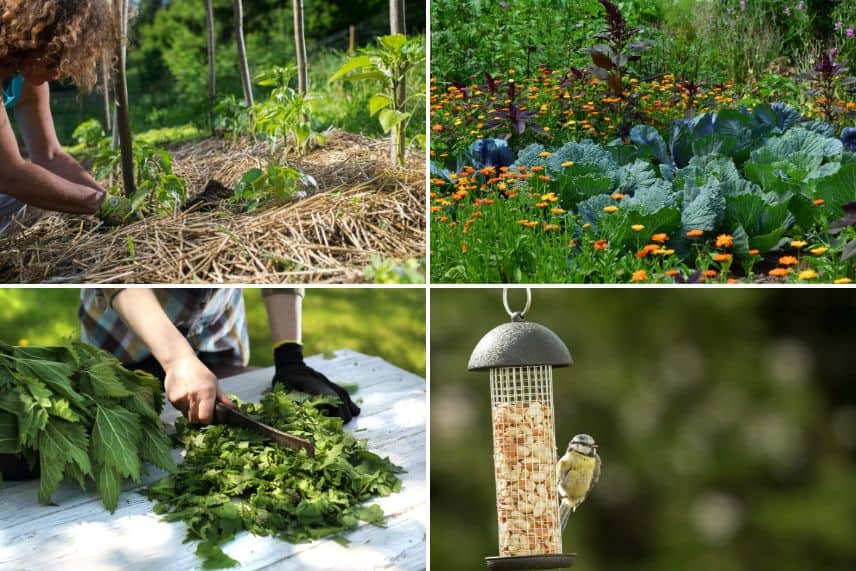 Mulching, companion planting, using nettle manure, and welcoming beneficial wildlife can increase vegetable garden production
- Make the most of your vegetable garden’s potential even if it is small, for example by growing vertically
- Practice companion planting to combat pests and maximise space
- Stagger sowing and planting periods for continuous harvests
- Use free fertilisers like nettle manure, which is easy to prepare yourself
- Choose heat-resistant vegetables suited to your climate
- Restore biodiversity in your vegetable garden to attract garden wildlife including birds, insects, and small beneficial mammals, which are useful for biological pest control
Learning to preserve your harvests
Summer is the season when the vegetable garden is in full swing. Harvests come in quick succession, and you enjoy fresh vegetables every day. However, in autumn and winter, the garden is more sparse. It is therefore essential to apply various methods of preserving vegetables to enjoy them all year round.
Ingrid B. explains everything in her article: Preserving vegetables from the garden, where and how? In the garden or at home?
- Subscribe!
- Contents

Comments