

























Identifying the main insect pests and diseases of fruit trees
How to recognise and treat them naturally?
Contents
Scab, powdery mildew, brown rot, canker, aphids… Fruit trees are sometimes affected by diseases or parasitic insects, capable of completely ruining harvests or jeopardising their survival. To maintain the health of your trees and ensure a plentiful harvest, it is crucial to know how to identify them, so you can intervene in time and limit their spread in the garden. We present the most common insects and diseases, with some tips to recognise them and know how to treat them naturally.

The most common diseases
-
Apple scab
Apple scab is a cryptogamic disease (caused by a fungus) that mainly affects apple and pear trees. It is favoured by mild, humid weather and is therefore particularly virulent in certain regions such as Brittany or Normandy. Fruits are marked by small dark brown spots that eventually join together and develop a brownish, blackish hue with a corky, cracked appearance. Leaves are also marked with brown spots and eventually fall. The tree’s bark can also crack.
Treatment : To control apple scab, we recommend collecting and removing affected fruit and leaves in autumn. Also prune damaged shoots, and apply a copper-based fungicide. You can also treat with baking soda.
For more information, see our article on apple scab.
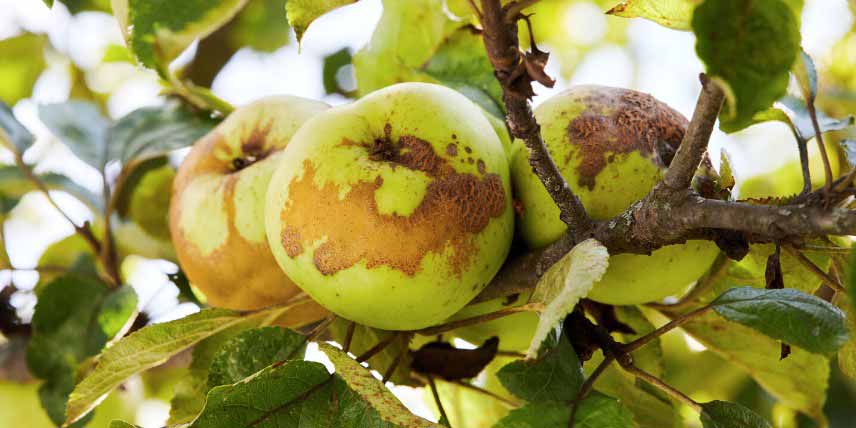
Apples damaged by apple scab
-
Powdery mildew
Powdery mildew, also called white disease, is caused by a microscopic fungus and can affect a variety of fruit trees, notably apple, pear, peach and cherry trees. This disease is characterised by a whitish-grey felt-like coating, with a floury appearance, that covers the leaves, the buds and young shoots. In cases of severe attack, young leaves may become deformed. Fruits often discolour, develop a corky appearance and shrivel.
Treatment : Start by removing the most damaged leaves and shoots, then spray a sulphur-based fungicide. You can also use baking soda.
→ Our article on powdery mildew.
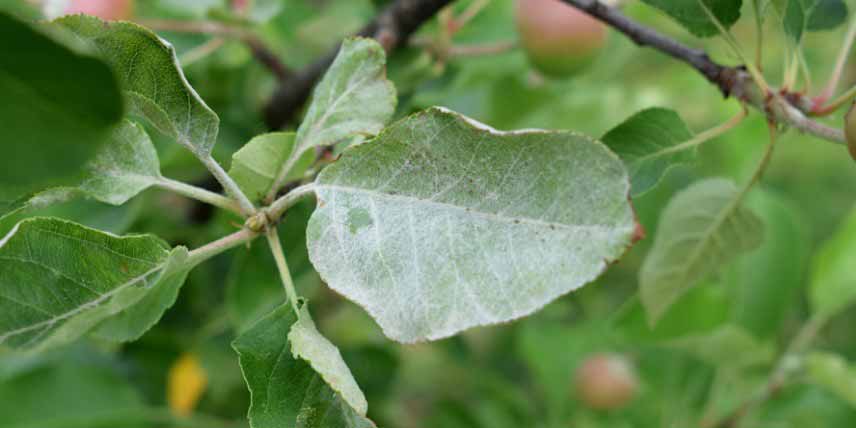
Powdery mildew is characterised by the appearance of a white coating. Here, on apple leaves
-
Brown rot
Brown rot is a disease that causes fruit to rot. It can also affect young shoots, flowers and twigs. Infected fruit turn brown and are marked by concentric rings of white fuzz, yet they may nevertheless remain attached to the tree throughout the winter. This disease affects a wide variety of fruit trees, notably both stone and pip-fruit: apple, pear, cherry, peach, plum…
Treatment : Prune to remove cankers and affected twigs. Also remove mummified fruit, whether still attached to the tree or fallen to the ground. Then spray a copper-based fungicide (Bordeaux mixture or copper oxychloride).
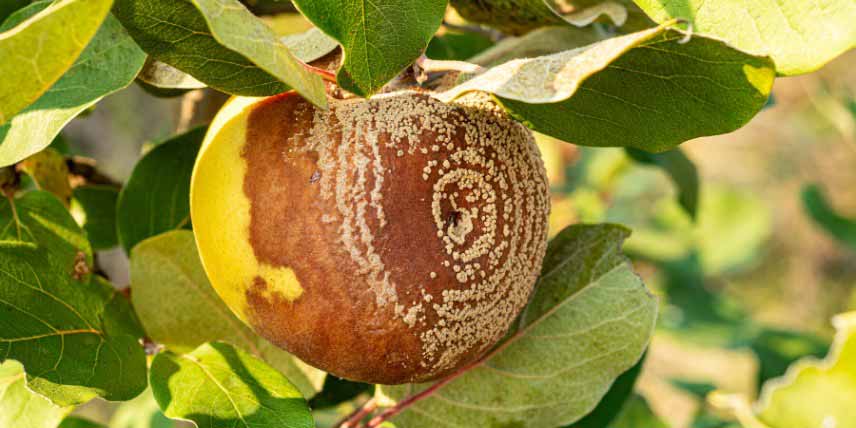
An apple affected by brown rot. You can see the concentric white rings characteristic of this disease.
-
Shot-hole disease or Coryneum
Shot-hole disease, also called Coryneum, is a disease that affects stone fruit trees: cherry, peach, apricot, almond… It is caused by the fungus Coryneum beijerinckii. Leaves are then marked by round spots, about 3 mm in diameter, brown or reddish. Gradually, these spots perforate, hence the name shot-hole. Leaves sometimes end up falling, and fruit can also be affected (notably in apricot and almond), showing a pitted surface marked by small spots. Coryneum can also cause small cankers on the twigs.
Treatment : Prune and burn the most affected parts, collect infested fruit and leaves, and apply a wound-sealing mastic to pruning wounds. Treat with a copper-based fungicide.
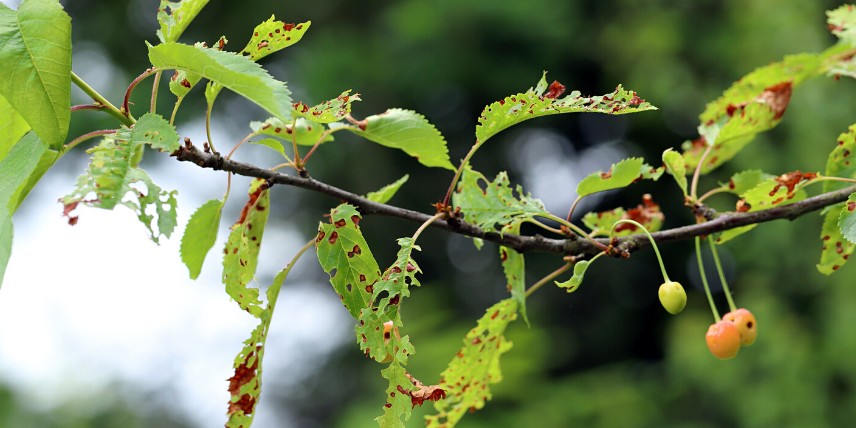
A cherry tree affected by Coryneum
-
Peach leaf curl
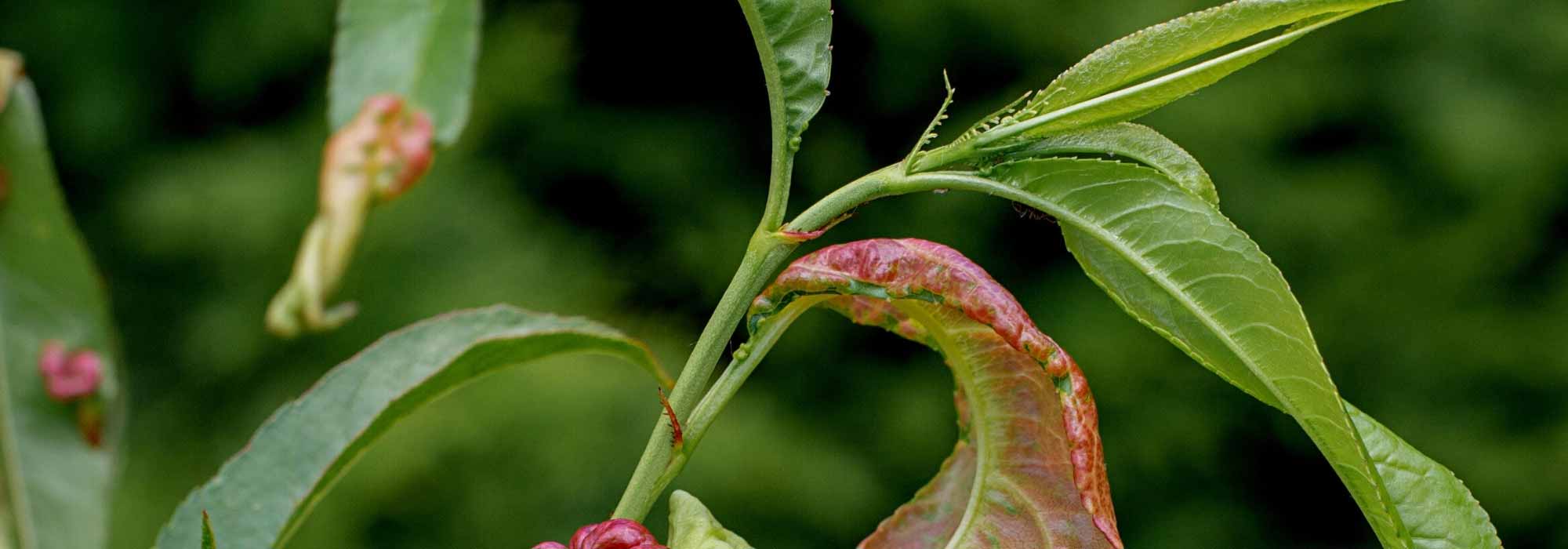
Peach leaf curl is a very common cryptogamic disease in peach and nectarine trees. It is favoured by a cool, wet spring. Leaves become thick and take on a puckered appearance, curl up and turn a reddish-orange colour in early summer as they become covered with a white felt. They eventually fall prematurely.
Treatment : There is no curative treatment, but it is possible to take preventive measures to avoid its development. Strengthen the tree by regularly adding well-rotted compost or manure, prune bearing shoots, disinfect cutting tools and apply a wound-sealing mastic after each pruning. We also recommend spraying a copper treatment in spring and autumn. You can also use a horsetail decoction, which has antifungal and biostimulant properties.
Our article on peach leaf curl.
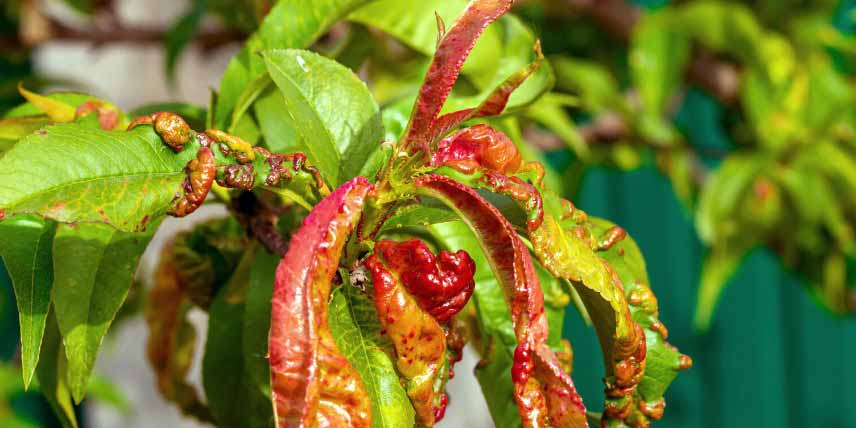
Peach leaf curl is characterised by deformed, swollen leaves, often tinged with red
-
Entomosporiosis
Entomosporiosis is a disease caused by the fungus Entomosporium maculatum. It attacks quince trees in particular, but also apple and pear trees. It is favoured by humid weather in spring and summer. It appears on the foliage as small round spots, 1 to 3 mm in diameter, reddish and then covered with brownish crusts. In case of a severe attack, leaves eventually yellow and fall. Fruits can also be marked with necrotic spots and crack. They become unfit for consumption.
Treatment : Prune affected parts and spray Bordeaux mixture. Also remember to disinfect your pruning tools and avoid planting too densely.
Our article on entomosporiosis.
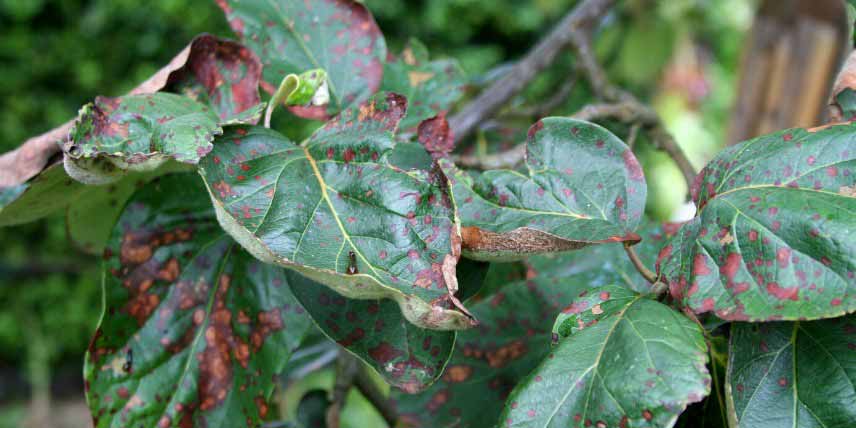
Brown spots characteristic of entomosporiosis. Here on a quince tree
-
Canker
Canker manifests as lesions on the trunk or branches, which can ooze a gummy substance. A brown patch generally appears on a branch or the trunk, followed by swelling that leads to splitting and the formation of cracks in the bark. This can cause the death of branches and, in severe cases, the entire tree. Canker can be due to different bacterial or fungal pathogens. It develops from a wound to the cambium (second bark), often caused by pruning. Wounds are an entry point for unwanted spores.
Treatment : Prune infected parts and disinfect pruning tools. Then spray a copper-based fungicide, such as Bordeaux mixture.
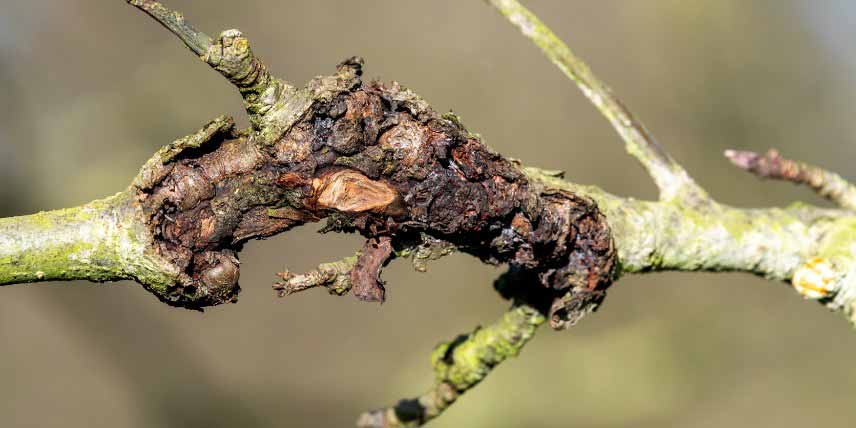
An apple branch damaged by a bacterial canker
The most common parasites
-
Aphids
Aphids are small black or green insects that usually form colonies under the leaves or on young shoots and pierce the tissues to feed on the sap. They weaken the plant, cause leaves to become deformed and can transmit viruses. They can also lead to the development of sooty mould, a fungus that appears on the leaves as a black, felt-like covering similar to soot.
Control methods: We recommend using a solution based on black soap (15 to 30 g per litre of water), to spray onto the foliage. You can also introduce natural predators such as ladybirds or lacewings, which will help regulate the aphid population.
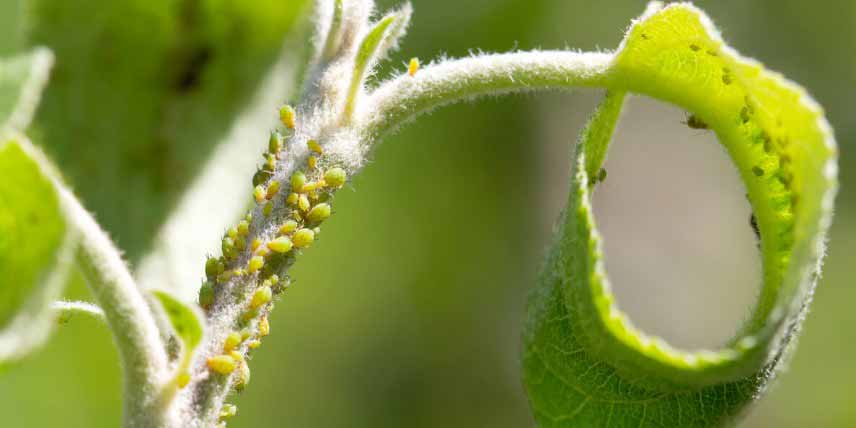
A colony of aphids on a young shoot of an apple tree
-
The codling moth
The codling moth, or fruit worm, is a small pinkish caterpillar with a brown head that feeds on the flesh of fruit. It then becomes a pupa and later a moth. It attacks many fruits such as apples, pears, cherries, apricots and plums. The fruits are hollowed out from the inside, making them unsuitable for consumption.
Control methods: You can use pheromone traps, which, by emitting the female moth’s scent, trap the males and thus limit the reproduction of this moth. Nematodes are also effective.
Our advice sheet on the codling moth
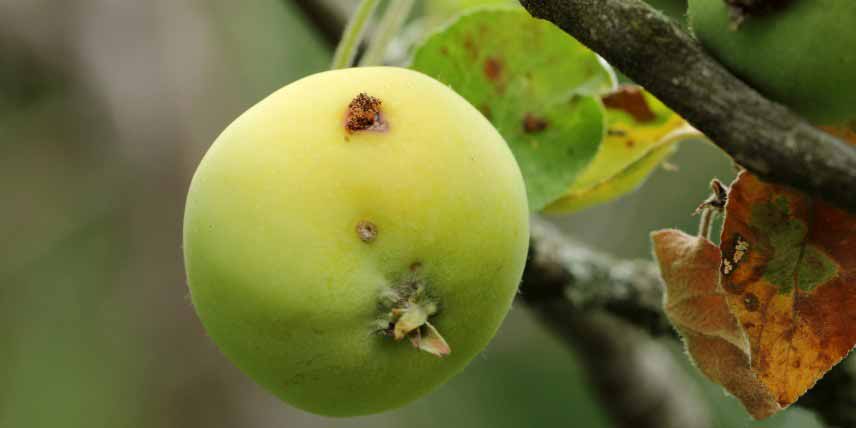
An apple attacked by the codling moth
-
The cherry fruit fly
The cherry fruit fly (Rhagoletis cerasi) is a small insect that lays its eggs in developing cherries. The larvae then feed on the fruit, which turn brown and rot. This can completely ruin a harvest. Affected fruit can be identified because they have a small hole and brown spots develop on the skin. They may also fall before ripening.
Control methods: Use yellow sticky traps: the flies are attracted to this colour and will stick to them. You can also use pheromone traps or spray an insecticidal product based on plant pyrethrum.
Our advice sheet on the cherry fruit fly
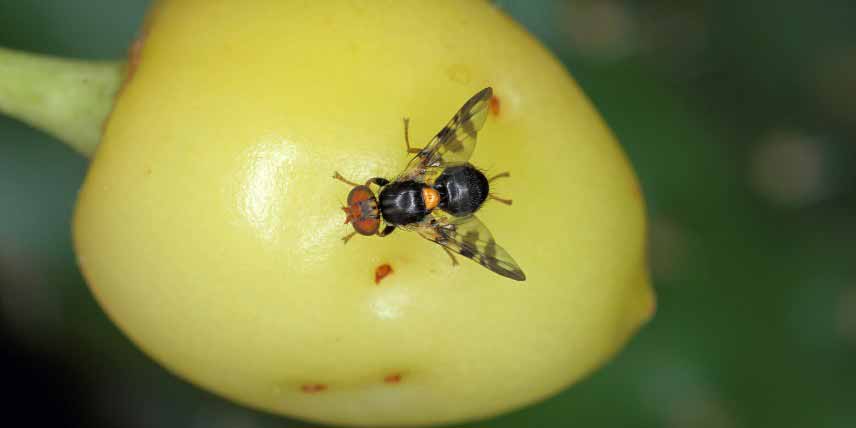
The cherry fruit fly lays its eggs in developing cherries, and its larva develops inside them.
- Subscribe!
- Contents
Comments