





























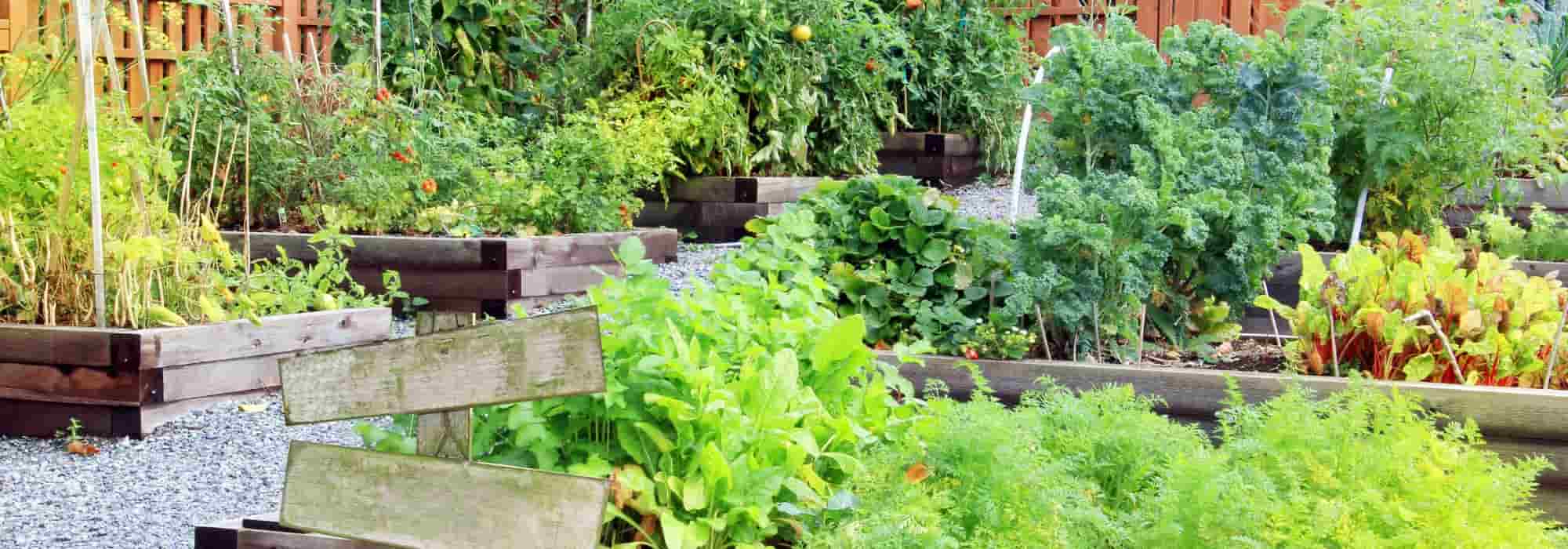
Recycling ideas to save money in the vegetable garden
Our recycling tips to reduce expenses in the vegetable garden
Contents
At home, it has almost become a reflex: you multiply small gestures to reuse, recycle, repurpose, and above all, not throw away what can still be useful. What if you applied the same philosophy to your vegetable garden? After all, a vegetable garden, albeit on a smaller scale, generates waste. Thus, if you buy all the sowing equipment or tools, it can quickly become expensive to grow a few vegetables. However, recycling is quite easy to implement in the vegetable garden, with a bit of ingenuity, a small dose of know-how, and some DIY skills. This means less waste and, consequently, less pollution…
Discover some ideas and tips for recycling in the vegetable garden, firstly to make a gesture for the planet and start your ecological shift, but also to save money. And remember, gardening and recycling go hand in hand!
Before exploring our recycling solutions, I also recommend reading my article: Inflation-proof vegetable garden: how to grow your own food in response to rising prices?

Recycling everyday materials for the vegetable garden
Our daily lives generate a lot of waste that ends up in our bins before being incinerated. Instead of going up in smoke, a source of pollution, these materials could have a second life in the vegetable garden. Moreover, they are often sturdy enough to withstand the elements, cold, or intense heat.
When it comes to recycling materials, pallets are undoubtedly the champions in all categories. With a bit of effort (especially to remove the nails!), pallets can be transformed into trendy sofas and tables for the living room. However, these pallets can also be reused in the vegetable garden. A jigsaw, a drill, a few screws, and your pallet can be turned into a frame to get a head start on your sowing. With pallets, it is also quite simple to build raised beds, if you want to garden off the ground or on a balcony. Or even a compost bin. When fixed upright against a wall, the pallet is ideal for storing gardening tools. When placed vertically, it also becomes a planter, for example, to grow strawberries.
Another material from our daily lives is often criticised for being under-recycled: the plastic bottle! And if you can’t drink tap water, plastic bottles quickly fill up recycling bins. However, these bottles can have multiple uses in the vegetable garden. You can first recycle it into an emergency watering system while you’re on holiday. Simply cut off the bottom of the bottle and drill holes in the cap. Then, you need to plant the bottles in the soil, for example, at the base of tomatoes, aubergines, courgettes… These same cut bottles can serve as cloches to protect small seedlings just transplanted, or for propagation by cuttings. You can also reuse the base of plastic bottles as pots. Just make sure to drill holes for drainage. In the same vein, fruit packaging trays, also made of plastic, are very handy for sowing in trays.
Speaking of sowing, it can be done in a multitude of recycled containers such as egg boxes, polystyrene trays, yoghurt pots… 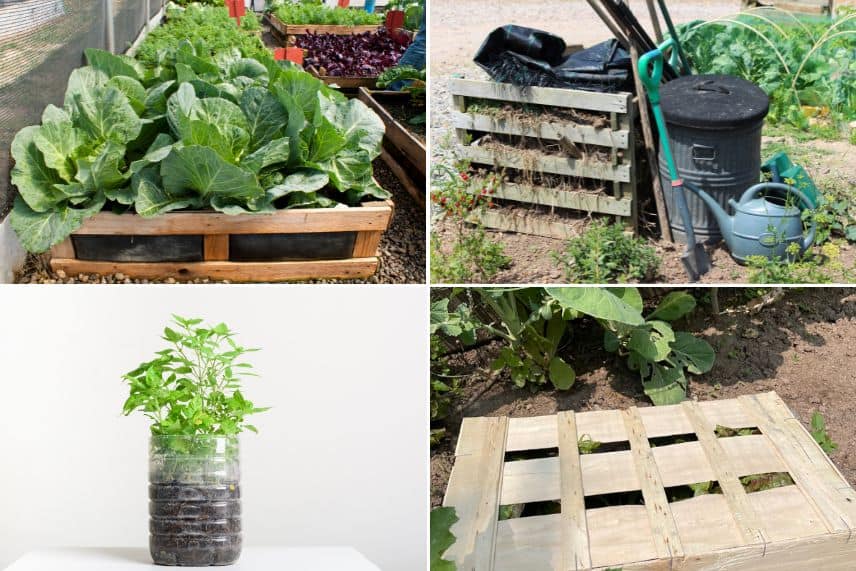
As for the nets that surround potatoes, they are very effective for protecting summer bulbs from rodents.
Vegetable crates are also easy to recycle (unless you use them to start a fire in the fireplace during winter!). In the vegetable garden, they can be used to shade certain vegetables like salads during extreme heat or heatwaves. Personally, I use them to label my vegetables in my garden.
Finally, in recent years, ollas have become very trendy in the vegetable garden. However, this capillary watering system can be relatively expensive. To save money, terracotta pots can become very effective ollas. Marion explains how to make a homemade olla to water the garden.
Read also
10 tips for gardening on a budgetMaterials recovered from the garden and reused in the vegetable patch
Your ornamental garden generates a lot of waste on its own. While you can choose to take it to the recycling centre where all green waste will be processed, all those trips represent a waste of time and considerable effort, not to mention the pollution caused by your vehicle. Recycling your garden waste is much simpler and requires no more effort than the back-and-forth trips to the recycling centre:
- The culms of bamboos or cane from Provence (Arundo donax) are perfect as tomato stakes, or as a tipi for climbing beans. You can also create a lovely trellis for a climbing plant or even use them to shade a pergola.
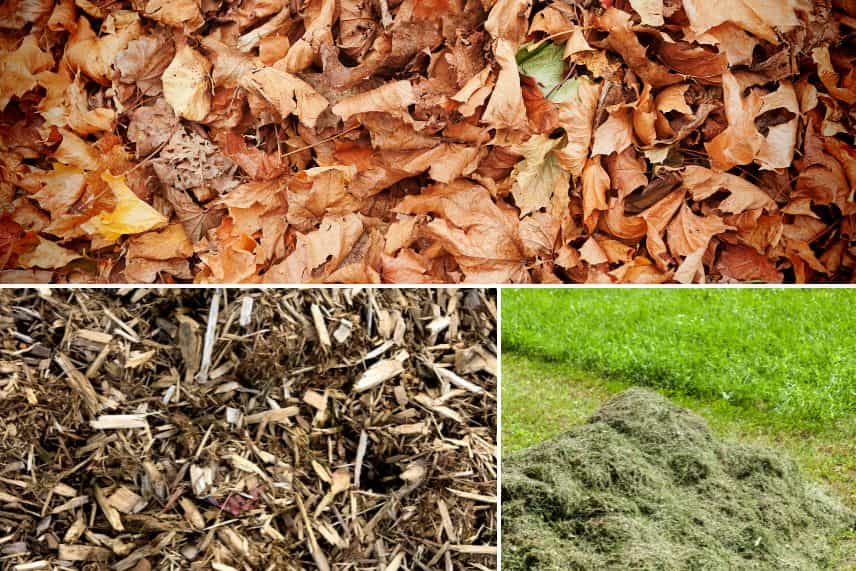
- Grass clippings can be recycled as mulch to retain moisture at the base of vegetable plants, thus reducing the need for watering. Rich in nitrogen, these clippings can be used as they are in a thin layer or dried beforehand in a thick layer.
- Dead leaves, rich in carbon, collected in autumn, should not be discarded as they can be used in various ways: to protect plants from the cold, to limit the impact of rain, to mulch the soil to retain moisture and limit weed growth, and to maintain soil fertility through decomposition… Virginie D. also explains how to make good leaf mould.
- Branches and twigs from pruning shrubs or trees can also be recycled (provided they are not diseased!). If you decide to invest in a shredder, you can reuse your pruning waste as ramial chipped wood (RCW), which can be relatively expensive to buy.
- Organic waste from gardening or cooking can be recycled into compost, a fantastic 100% natural fertiliser for your vegetable garden that also aerates the soil. Furthermore, remember that composting will be obligatory for everyone in 2024.
Tips for reducing gardening costs
Gardening, especially for beginners, represents a significant investment. Indeed, one needs to purchase the basic tools essential for the vegetable garden, as well as packets of seeds and young plants in pots. Additionally, watering is necessary to achieve a good yield, and one may need to treat plants against pests, provide organic fertilisers to facilitate plant growth… All these basic actions come at a certain cost, making it considerably less profitable to grow your own fruits and vegetables. However, you can easily make significant savings with a few simple tips on reuse, repurposing, or borrowing.
To avoid using tap water (which is often too cold and too hard) for watering your vegetables and fruits, you can simply collect rainwater, which is completely free. Simple barrels connected to the gutters can effectively collect rainwater. Also, consider the use of greywater from the house. You can start by watering your vegetable plants with the water used for washing salad and vegetables, as well as the cooking water from those same vegetables once cooled.
It is entirely possible to connect this water collection system to water-saving irrigation techniques such as drip irrigation or micro-porous watering. Jean-Christophe explains how these systems work: Automatic watering: the different systems, which one to choose?
When equipping yourself with gardening tools, it is wise to consider second-hand options. Indeed, it is quite easy to find gardening tools in good condition at car boot sales, charity shops, or through organisations like Emmaüs. Renting can be a good solution for motorised equipment that is used infrequently (shredders, tillers, hedge trimmers…). Today, there are websites that offer garden equipment rental between individuals. Similarly, if you have a good relationship with your neighbours, it can be beneficial to foster solidarity and lend tools. Is it really necessary for everyone to own a pair of secateurs when they could be shared?
To save on your seeds, collecting your own seeds is an excellent idea. However, you often end up with the same varieties year after year. To broaden your gardening horizons and discover new varieties, consider seed or plant exchange fairs, rich in discoveries, exchanges, and sharing.
Finally, to nourish the soil in your vegetable garden, deter pests, or give your plants a boost, there is a whole range of fertilisers, products for caring for the vegetable garden, and preventive and curative products against pests and diseases… Some of these natural products can be replaced by simple manures, infusions, or decoctions made from plants collected in nature (nettle, horsetail, fern, dandelion, elder leaves…). Likewise, your farmer neighbour, or even better, the horse breeder, will be happy to get rid of a few wheelbarrows of manure. Did you also know that your urine can be an excellent fertiliser? Now that’s truly the pinnacle of recycling!
- Subscribe!
- Contents
Comments