






























How to treat a sore throat with thyme?
Benefits and uses
Contents
When your throat itches or stings, thyme is an indispensable old wives’ remedy. This aromatic herb, prized in cooking, is also a valuable ally in herbal medicine. Thanks to its antiseptic, antiviral and anti-inflammatory properties, it helps soothe irritations and clear the airways. Thyme tea, recognised for its soothing properties, is one of the most common uses, particularly when combined with honey and lemon. But thyme is not limited to infusion: as a gargle, in inhalations or essential oil, it relieves sore throats effectively and helps fight infections. Discover how to best use thyme to soothe a sore throat naturally!

The benefits of thyme for sore throats
Thyme (Thymus vulgaris) is a perennial, aromatic and medicinal plant in the Lamiaceae family. It grows as a small bush with woody, ramified shoots, generally not exceeding 30 cm in height. Its leaves are small, ovate, grey-green and covered with a fine down. In summer it bears tiny mauve or pink flowers, highly melliferous, attracting pollinators. Originating from the Mediterranean basin, thyme favours dry and sunny soils, where it develops a high concentration of essential oils with potent medicinal properties.
Thanks to its antiseptic, antiviral and anti-inflammatory properties, it helps to fight ENT infections such as tonsillitis, pharyngitis and dry coughs. Its active constituent, thymol, is a powerful natural disinfectant that purifies the throat and the respiratory tract.
In addition to soothing irritations, thyme stimulates the immune system. It is therefore ideal for preventing and alleviating winter ailments.
Read also
Thyme: growing, planting, pruningWhich varieties of thyme to use for sore throats?
To relieve a sore throat, several thyme varieties are particularly interesting:
- Common thyme (Thymus vulgaris) is the most commonly used for its antiseptic and expectorant properties. It contains a high concentration of thymol and carvacrol, two compounds with powerful antibacterial and antiviral effects.
- Lemon thyme (Thymus citriodorus), with a milder, lemony aroma, also has soothing properties for the throat. It is valued for its more pleasant taste, particularly in herbal tea, and can be used for children.
- Thyme officinal (Thymus officinalis), indispensable and also widely used in phytotherapy, makes an excellent choice to benefit from the therapeutic properties of thyme.
- Thujanol thyme (Thymus vulgaris CT thujanol) is a specific variety rich in thujanol, a molecule well tolerated by the body, ideal for targeted action against ENT infections.
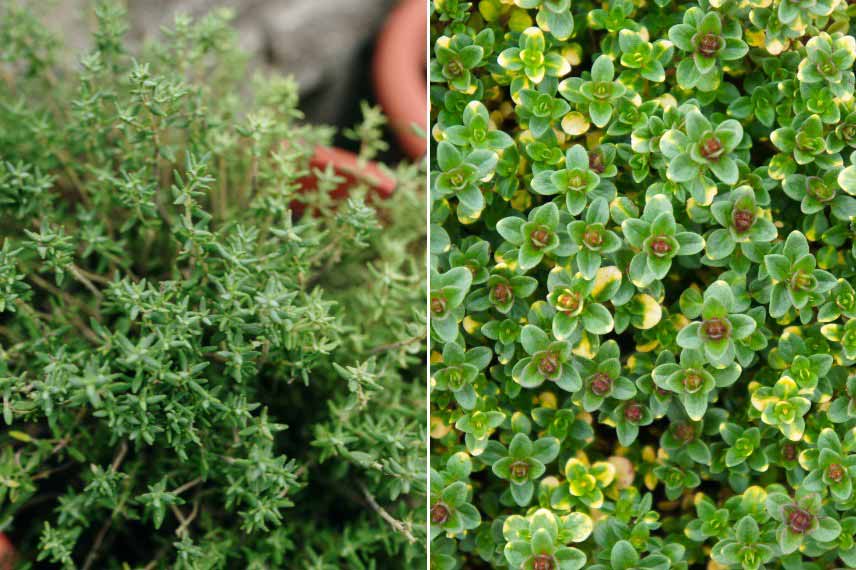
Common thyme (Thymus vulgaris) and lemon thyme (Thymus citriodorus)
How to use thyme for a sore throat?
Thyme can be used in various forms: fresh or dried, in leaves or in flowers.
- Dried thyme is often preferred for infusions, as its active constituents are more concentrated. It keeps its properties well provided it is stored away from light and moisture.
- Fresh thyme offers a more intense aroma and retains its essential oils better.
- Leaves are most commonly used in infusions, while flowering tops provide a higher concentration of active constituents.

Prefer harvesting flowering tops rather than just the leaves, as they are more concentrated in active constituents
Our natural remedies for treating a cold
Thyme is a valuable ally for soothing sore throats and winter ailments. Here are different ways to use it to reap all its benefits :
Thyme tea
Steep a tablespoon of dried thyme or a few fresh sprigs in a cup of simmering water for 10 minutes. Strain and drink 2 to 3 cups a day to soothe irritation and clear the airways.
Thyme tea, honey and lemon: the miracle cure!
A classic for naturally soothing an irritated throat. Prepare a thyme infusion, then add a spoonful of honey with soothing and antibacterial properties, as well as a few drops of lemon, rich in vitamin C and cleansing properties. To be drunk 2 to 3 times a day.

Thyme tea, honey and lemon
More concentrated infusion
For a stronger effect, let a tablespoon of thyme steep in 200 ml of boiling water for 15 minutes before straining and drinking hot.
Homemade thyme syrup
This syrup soothes the throat and quietens a cough. Infuse 3 tablespoons of thyme in 250 ml of water for 15 to 20 minutes, strain then add 150 g of honey and the juice of half a lemon. Store in a sealed bottle in the fridge and take a tablespoon for adults or a teaspoon for children over two, two to three times a day.
Gargle
Prepare a thyme infusion, let it cool, then use it as a mouthwash several times a day to disinfect the throat and calm the inflammation.
Inhalation
Pour a handful of thyme into a bowl of hot water and inhale the vapours under a towel for 10 minutes. This remedy is ideal for decongesting the airways and soothing an irritated throat.
Thyme essential oil
Highly concentrated, it should be used with caution. Dilute a drop in a spoonful of honey or a carrier oil before ingestion. For topical application, mix it with a neutral oil and apply to the throat. Follow the dosages carefully.
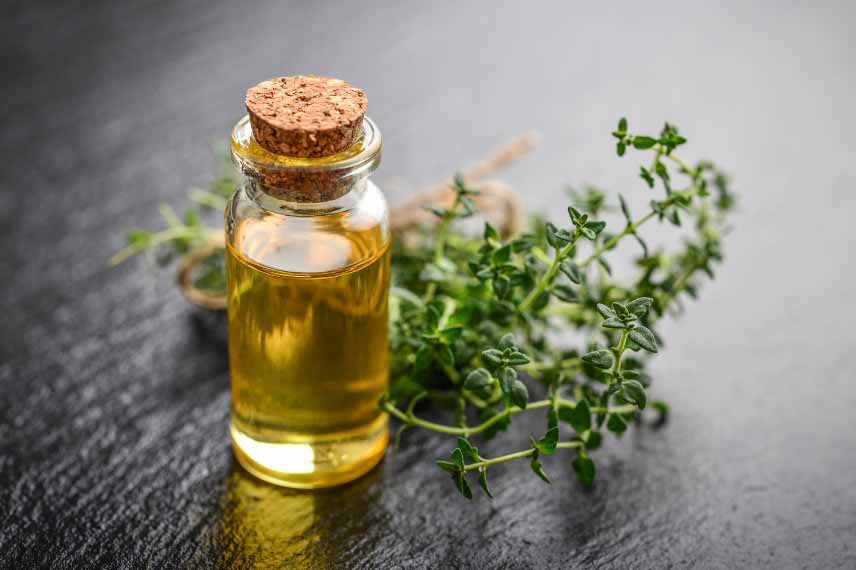
Thyme essential oil
Read also
How to choose thyme?Thyme: precautions for use and contraindications.
Although thyme is a valuable ally, its use should be moderate to avoid any adverse effects. It is a potent plant whose excessive use can pose certain risks. Thyme essential oil, particularly concentrated in active constituents, is not recommended for pregnant women, young children and people with epilepsy. Its use should be limited due to its potential to irritate mucous membranes and the liver.
Infusions and gargles are generally well tolerated, but excessive consumption can cause digestive irritations. People allergic to plants in the Lamiaceae family should avoid its use. If in doubt, persistent symptoms or if a severe infection is suspected, it is advisable to consult a health professional. Thyme should not replace medical treatment in the event of a confirmed infection.
- Subscribe!
- Contents
Comments