





























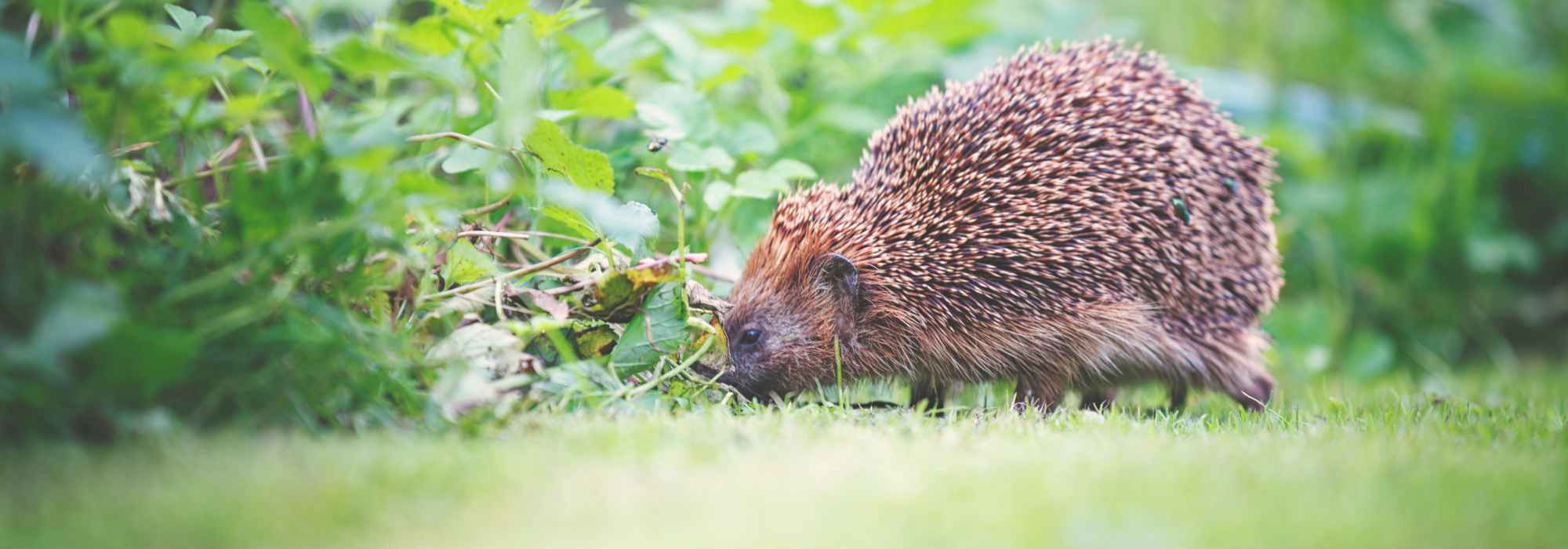
How to tell if a hedgehog lives in your garden?
Fortunately, it leaves us little clues
Contents
The Common Hedgehog or European Hedgehog is a very useful animal for biodiversity and for gardeners, as it consumes a good number of insects, larvae, and slugs. Unfortunately, it is also endangered due to the loss of its natural habitat, the decline of insects, poisoning from insecticidal and molluscicidal products, cutting machines used by gardeners, and vehicles that crush them when they attempt to cross the road at night. Welcoming a hedgehog into the garden is therefore not only beneficial for us but also for them, as it is one of the ways to protect the species, which has been in great danger in recent decades.
What signs does the hedgehog leave to alert us to its presence? This is what we will explore in our article.

Traces of its presence in the garden
The Common Hedgehog is not as discreet as it seems. It often leaves traces and signs revealing its presence. Get your detective magnifying glasses ready!
- small droppings: the Common Hedgehog or European Hedgehog leaves its droppings somewhat randomly, sometimes even in the middle of a paved path. These droppings are black and cylindrical: up to 10 mm in diameter and 40 mm long. If you look closely, you may observe insect parts, such as wings, legs, or elytra;
- paw prints: the hedgehog’s paws resemble small hands with 5 fingers, measuring 2.5 cm in diameter for the front paws and 3 cm for the hind paws. You can see paw prints in soft, damp soil;
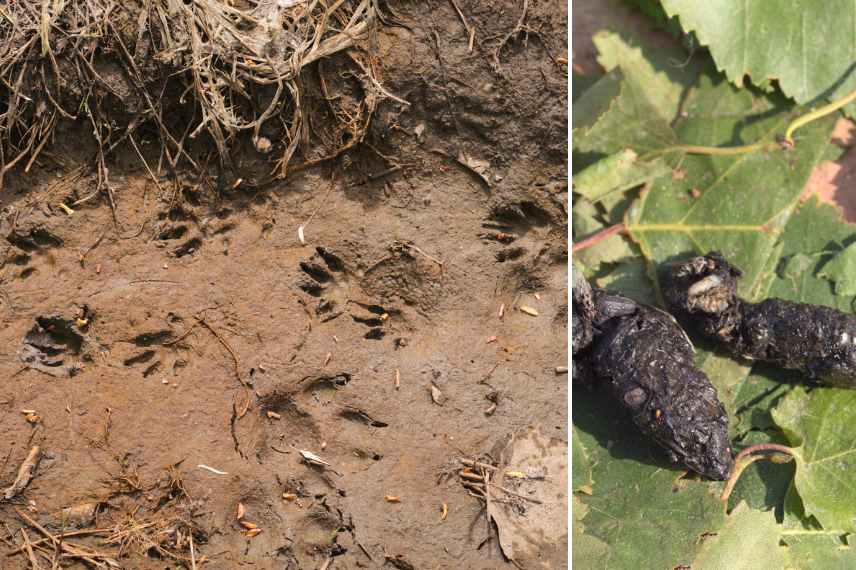 It looks like a hedgehog has passed this way…
- noise: at night, between April and September-October, you may hear the hedgehog moving about with little discretion, snorting and grunting loudly. The noise is even louder during mating. If it feels threatened, it will emit small squeaks and then curl up. However, if you approach it gently, it will not run away. Be careful, though, as hedgehogs are very prone to stress and can die a few hours later. Leave hedgehogs alone!
- Nests: during hibernation (between October and April), you may observe its nest in the garden under a bundle or a pile of leaves and dry grass. Often, a circular opening the size of a hedgehog is visible on one side. If this is the case, do not make noise and move away! During the day and for the rest of the year, the hedgehog sleeps in a shelter made with leaves in a quiet corner of the garden under a bush;
- setting up camera traps in the garden: once reserved for naturalists or hunters, camera traps are becoming more accessible. These “traps” (rest assured, it’s just a camera!) can be left out for one or several nights and are triggered when something moves in front of the sensor. Capable of recording in complete darkness, they allow for surprising discoveries about garden wildlife. You might discover, when reviewing the images the next day, the flight of an owl, a fox, bats, an overly curious neighbour, or… why not a hedgehog.
Note: the “Hedgehog Mission” survey suggests setting up footprint tunnels in the garden. The principle is simple: place these tunnels in strategic locations (on the ground, along a linear structure, sheltered from the elements). Inside, there are blackened areas with ink (charcoal powder + vegetable oil), white sheets, and bait (kitten kibble). The hedgehog or another animal crosses the tunnel, leaves its paws on the ink, and then on the white sheets, thus leaving its print in black on white.
If this type of device interests you, you can order it from the LPO website or build it yourself. All the information about footprint tunnels can be found here.
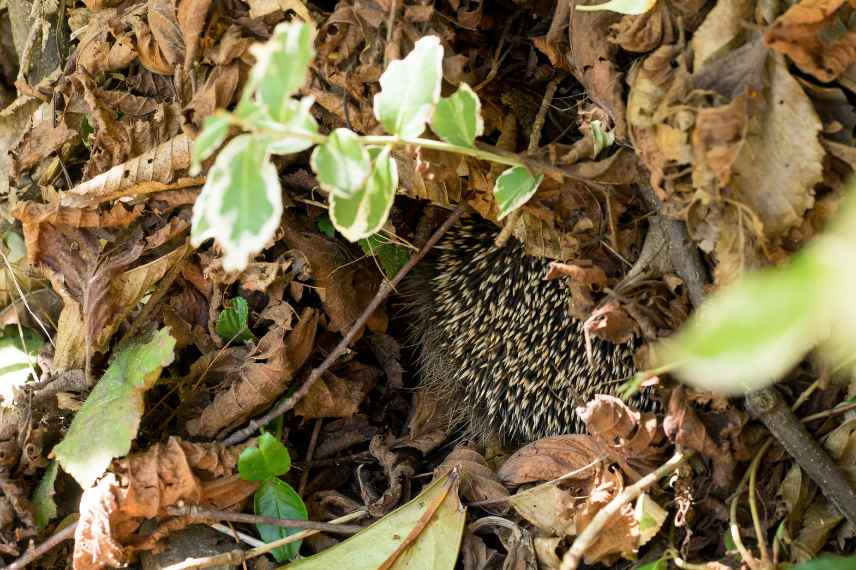 The hedgehog’s nest, not always easy to spot… keep your eyes peeled for piles of dead leaves!
Read also
Welcoming a hedgehog in your gardenFor further reading...
If you wish to create a welcoming garden for hedgehogs, you will find all the important information in our article: Welcoming a hedgehog to your garden.
Nature protection organisations are committed to protecting and counting hedgehogs, whose populations are declining at an alarming rate.
In France, participatory censuses have been initiated with Hedgehog Operation (France Nature Environnement) and Hedgehog Mission.
In Belgium, the LRBPO (Royal Belgian League for the Protection of Birds) is responsible for this with its suiviherisson.be.
Finally, hedgehogs have been protected in Europe since 1981. It is illegal to kill, capture, mutilate, or disturb their habitats under threat of heavy fines. Attached is the legal status of hedgehogs in France.
- Subscribe!
- Contents
![[hedgehog footprints]](https://www.promessedefleurs.ie/blogwp/wp-content/uploads/2023/03/Comment-savoir-si-un-herisson-vit-au-jardin-.png "[identifiant param1=\"savoir\" param2=\"hérisson\" param3=\"jardin\"]")
Comments