





























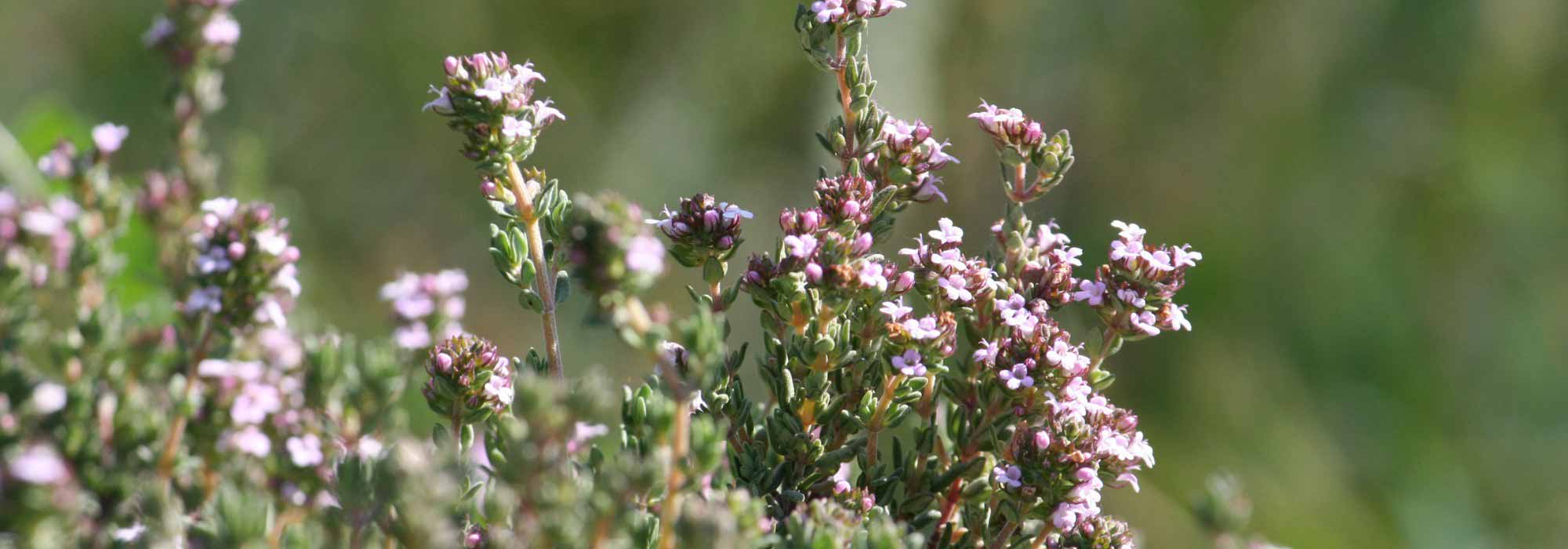
How to naturally treat a cold with thyme?
A natural remedy for the common cold
Contents
A blocked or runny nose, as winter arrives and the first signs of a cold appear, it’s natural to seek an effective and natural cold remedy. Among the best-known medicinal plants, Thyme stands out for its many virtues. Used for centuries, it is appreciated for its antiseptic, expectorant and antiviral properties.
Whether as thyme tea, by inhalation with a few drops of essential oil, or as an infusion, alone or in combination with rosemary to bolster its effects or with honey to soothe the throat, this plant is a precious ally. It helps to decongest the breathing passages, calm the cough and boost immunity. Easy to prepare and to incorporate into your winter routine, discover how to use thyme to fight cold symptoms naturally and quickly regain comfort!

What are the benefits of thyme for treating a cold?
Thyme (Thymus vulgaris) is an aromatic herb belonging to the Lamiaceae family. It forms small, bushy shrubs with green leaves and purple or pink flowers. Its strong fragrance is due to its richness in essential oils, widely used in phytotherapy for their medicinal properties. Its essential oil contains thymol and carvacrol, substances recognised for their antibacterial and antiviral action. Thyme is particularly recommended for colds with a productive cough, as it helps to loosen mucus. Thyme is:
- Antiseptic and antiviral: It helps to fight infections of the respiratory tract.
- Expectorant: It helps to expel mucus in a productive cough.
- Anti-inflammatory: It soothes irritated mucous membranes and reduces inflammation.
- Immunostimulant: It strengthens the body’s natural defences against winter infections.
Which thyme variety should you choose to ease a cold?
To make the most of thyme’s benefits in fighting colds, it is recommended to use mainly Common thyme (Thymus vulgaris, also known as Provençal thyme).
It is the variety richest in active constituents, notably thymol and carvacrol, which confer its antiseptic, antiviral and expectorant properties.
You can also opt for officinal thyme (Thymus officinalis), with similar medicinal properties, or Lemon thyme (Thymus citriodorus), which provides a milder and more pleasant flavour, perfect for infusions. Feel free to mix these different varieties: they are all aromatic and complementary, making your herbal teas even more fragrant and effective!

Common thyme (Thymus vulgaris) and lemon thyme (Thymus citriodorus)
Fresh or dried thyme: which is the best form for treating a cold?
Thyme can be used in different forms, depending on the aim of use. Fresh or dried, both are effective:
- Fresh thyme contains more volatile essential oils, which gives it a more intense aroma and a more pronounced flavour. It is ideal for herbal teas, decoctions and homemade syrups.
- Dried thyme is more concentrated in active constituents, as the water it contained has evaporated. This concentration enables better extraction of compounds when preparing herbal teas and inhalations. It is also easier to store for a long period and remains readily available.
Which parts of thyme should be used?
- Leaves and flowering tops are the richest parts in active constituents. They are preferred for herbal teas, inhalations and other medicinal remedies.
- Stems can be used in decoctions, but they are less concentrated in active constituents than the leaves and flowers.
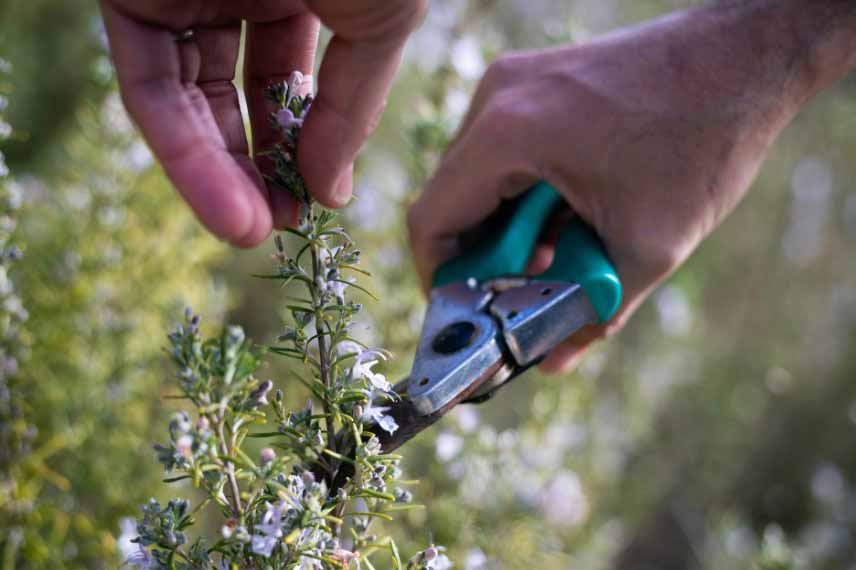
Harvest the flowering tops (the upper parts of the stems with leaves and flowers)
How to use thyme for a cold?
- As a herbal tea
Thyme herbal tea is an effective natural remedy for soothing the throat and clearing the airways.
- Preparation: Steep 1 tablespoon of thyme (fresh or dried) in a cup of hot water for 10 minutes.
- Consumption: Drink 2 to 3 cups per day.
- Tip: Add honey (antibacterial), lemon (rich in vitamin C) and ginger (anti-inflammatory) for an enhanced effect.
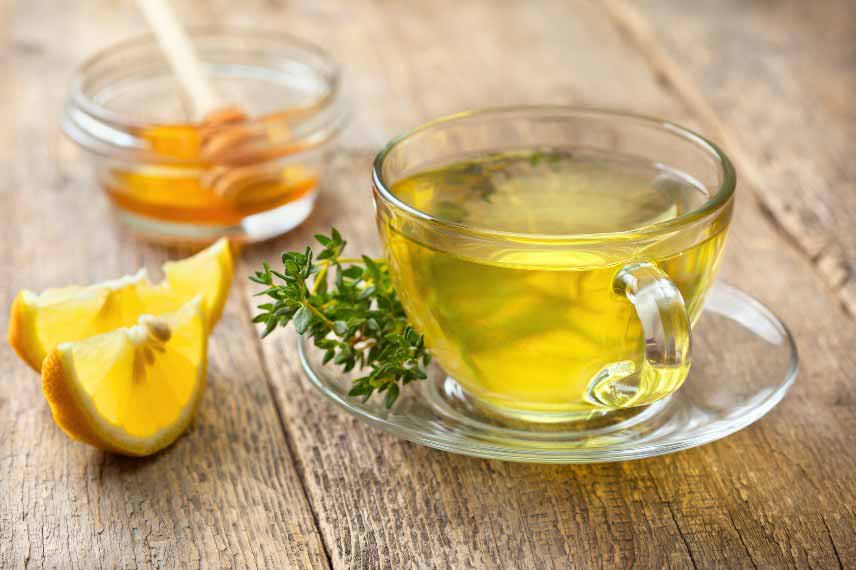
Thyme, lemon and honey herbal tea
- How to clear a blocked nose with thyme? By inhalation!
Inhalation is the most effective method for clearing the nose thanks to the vapours released by thyme. For greater effectiveness, you can add a few drops of eucalyptus essential oil or peppermint oil to the hot water. These plants work synergistically to open the airways and relieve the sensation of a blocked nose. Repeat the inhalation 2 to 3 times per day, especially before bed, to breathe more easily during the night.
- Preparation: Boil 1 litre of water with a handful of thyme.
- Usage: Cover your head with a towel and inhale the vapours for 5 to 10 minutes.
- Effect: Thins the mucus, clears the airways and eases nasal congestion.
- Gargle
Gargling is ideal for soothing an irritated or hoarse throat.
- Preparation: Infuse 2 tablespoons of thyme in 250 ml of hot water, let cool slightly and strain.
- Usage: Gargle several times a day to calm the inflammation.
- Homemade thyme syrup
Thyme syrup can help to ease a cough and soothe the throat.
- Preparation: Make a thyme decoction, (boil thyme leaves and flowering tops in water for about 10 minutes to extract as many active constituents as possible, strain) then add honey and lemon.
- Consumption: Take 1 teaspoon several times a day.
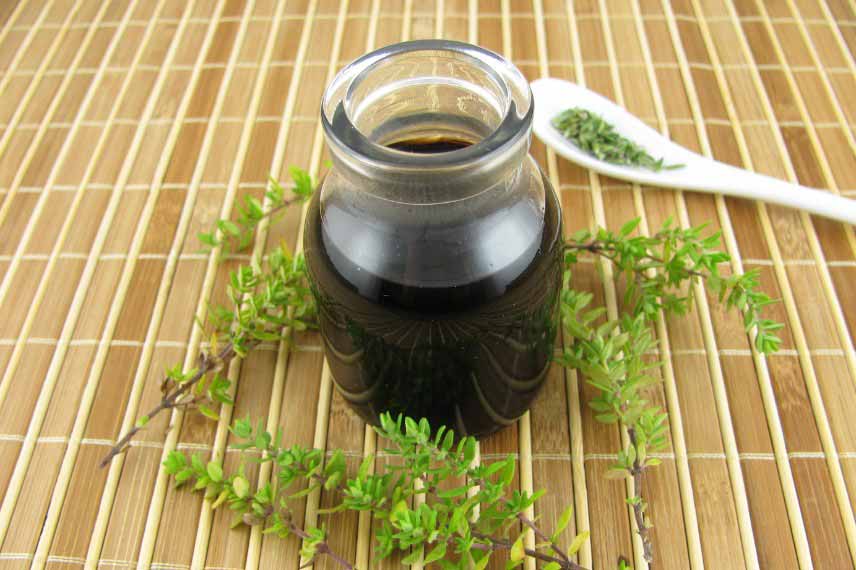
Thyme syrup
- Compress
Applying a compress soaked in thyme infusion to the chest helps to breathe more easily.
- Preparation: Infuse thyme, let it cool and soak a clean cloth or compress in it.
- Application: Place the compress on the chest for 10 to 15 minutes.
- Massage with thyme essential oil
Thyme essential oil can be used in massage to decongest the bronchi.
- Preparation: Mix a few drops of thyme essential oil with a vegetable oil (sweet almond, olive).
- Application: Massage the chest and back before bedtime.
- Precaution: Not recommended for young children and pregnant women.
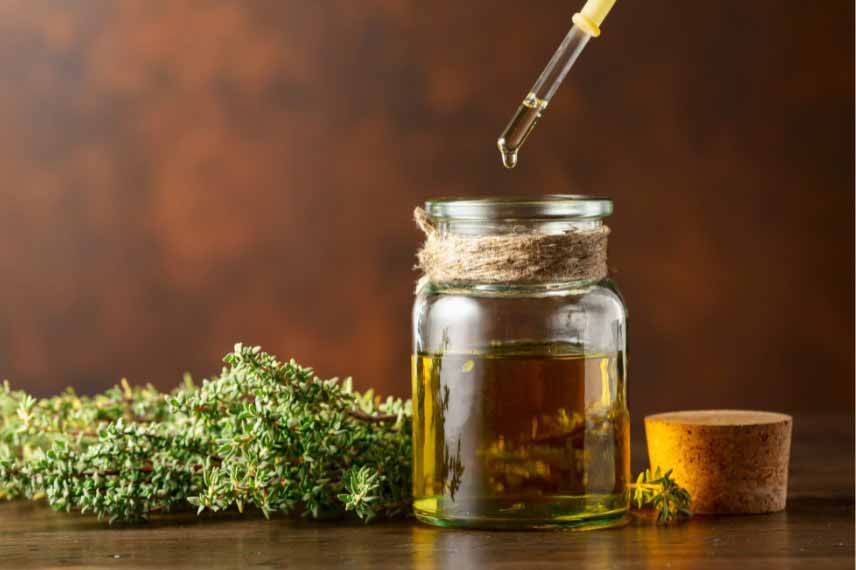
Thyme essential oil
Which other plants should thyme be paired with to boost its effectiveness against the common cold?
Thyme can be combined with other medicinal plants to help combat the common cold. Here are some interesting pairings:
- Ginger: Antiviral and anti-inflammatory, it stimulates the immune system and helps to decongest the airways.
- Lemon: Rich in vitamin C, it boosts the immune system and adds a refreshing flavour.
- Honey: Antibacterial and soothing, it softens the throat and strengthens thyme’s antiseptic effect.
- Eucalyptus: Inhaled, it is very effective at clearing a blocked nose and soothing a cough.
- Peppermint: Decongestant and refreshing, it helps you breathe more easily.
- Rosemary: Expectorant and antiseptic, it pairs well with thyme in cases of a productive cough.
- Sage: Antiseptic and anti-inflammatory, it is particularly effective as a gargle for soothing the throat.
- Chamomile: Soothing and anti-inflammatory, it calms irritated mucous membranes and promotes restful sleep.
Synergistic infusion recipe: Combine 1 tablespoon of thyme, 1 piece of fresh ginger, 1 tablespoon of honey and a few drops of lemon juice in a cup of hot water. Leave to steep for 10 minutes before drinking.
Precautions for use and contraindications
Although thyme is a plant with many virtues, it should be used with caution. Its use is not recommended for pregnant women and young children in the form of an essential oil, due to its concentration of potent active compounds. As an infusion, it remains safe and beneficial if consumed in moderation. For beneficial use, do not exceed three cups per day. If symptoms persist for more than a week or worsen, seek medical advice.
Further reading
Also read our article: How to treat a sore throat with thyme?
- Subscribe!
- Contents
Comments