





























How to manage heat in the greenhouse during summer?
Tips and techniques to protect your plants from overheating
Contents
The greenhouse is an essential element for any gardener looking to extend the growth season of their plants and protect their sensitive crops. However, as summer approaches and temperatures rise, it is crucial to manage the heat inside the greenhouse. Plants are a bit like us; they cannot tolerate excessive heat that can jeopardise their health! How does extreme heat affect plants in a greenhouse? What are the means to regulate these high temperatures? Discover all our tips for managing heat in the greenhouse during summer.

What is the ideal temperature in a greenhouse?
For most commonly grown young plants in greenhouses, the ideal daytime temperature is between 20 and 25 degrees Celsius and a nighttime temperature of around 15 to 18 degrees Celsius. When the temperature rises above 30°C, many plants begin to suffer from thermal stress.
It is worth noting that this can vary depending on the species. For example, tropical plants can tolerate higher temperatures, while plants from temperate climates (such as lettuce) may start to show signs of stress at lower temperatures.
The consequences of heat on plants in a greenhouse
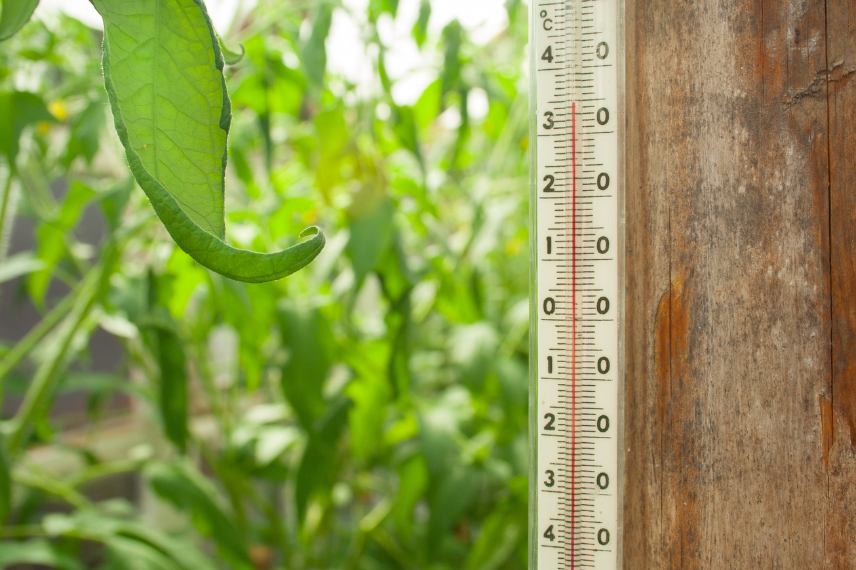
At temperatures above 30°C, most plants close their pores (stomata) to reduce transpiration. Photosynthesis (the process by which plants convert solar energy into food) is then severely limited, and the growth of the plant halts, along with the development of fruits and vegetables. Certain types of plants, such as tomatoes, peppers, and aubergines, struggle to be pollinated at high temperatures, which can affect their ability to produce fruit.
Moreover, thermal stress can also make plants more susceptible to diseases and pests.
Finally, excessive heat can cause plants to sacrifice their leaves and fruits to conserve enough energy to survive. This leads to wilting, premature leaf and fruit drop, and even the death of the plant under extreme conditions. This is why it is essential to monitor the temperature in your greenhouse.
The different methods for controlling heat in a greenhouse
Ventilation
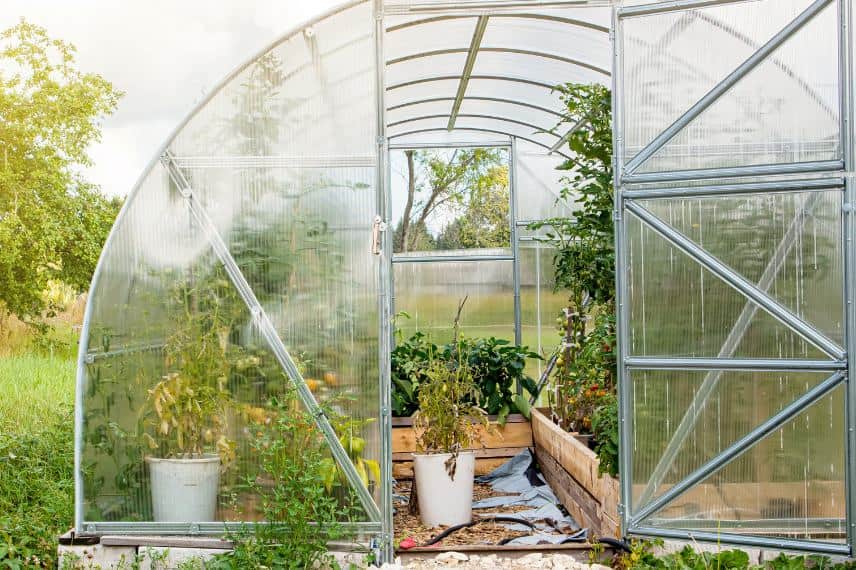
Ventilation is one of the simplest and most effective solutions for reducing temperature in a greenhouse. It simply involves opening windows and doors to allow air to circulate. Ideally, open at least two opposite openings in your greenhouse to create a draught, also known as the “chimney effect” (warm air tends to rise, while cold air stays closer to the ground). For a tunnel greenhouse without windows, open the ends and lift the cover in places above the ground.
In summer and during heatwaves, keep it open even at night, as long as nighttime temperatures are above 15°C. This method also helps regulate humidity levels in your greenhouse and limits the development of fungal diseases.
Tip: If your plants are susceptible to insects and other pests, consider installing protective nets or mosquito screens.
Shading
Shading is another effective, simple and often inexpensive method for controlling heat.
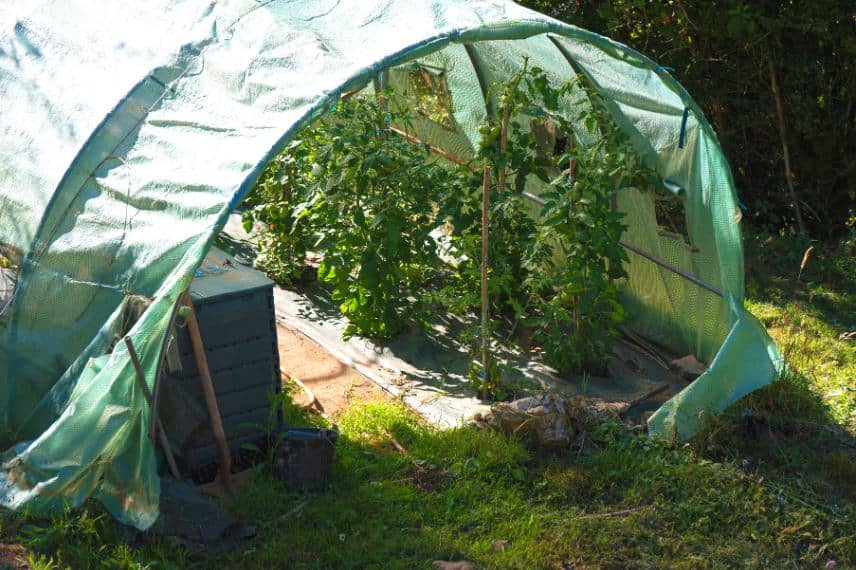
You can simply use a shading cloth to place over the top of the greenhouse, from the outside, and secure it to the ground with strings. Shading cloths suspended inside are less effective against heat. They are available commercially in different shading levels, usually between 30% and 70%, allowing you to choose the level of solar light reduction that best suits your plants. You can also roll out a reed mat over tunnel greenhouses. To save money, you can repurpose old sheets as an improvised shading cloth.
It is also possible to whiten the walls of the greenhouse to reflect sunlight. For glass greenhouses, quicklime or Meudon white is mainly used. For tunnel greenhouses or those made of polycarbonate, a special shading paint is preferred. These are mostly white and can be washed or scraped off at the end of the summer season.
Natural shading is also a lovely solution! Create a beautiful green screen by planting a hedge near your greenhouse (2 to 3 m away) or a deciduous tree (3 to 5 m away depending on the variety), such as a magnolia, a fig tree, a lilac, or an albizia. However, be careful that the shade is not too dense, so that there is enough light for photosynthesis.
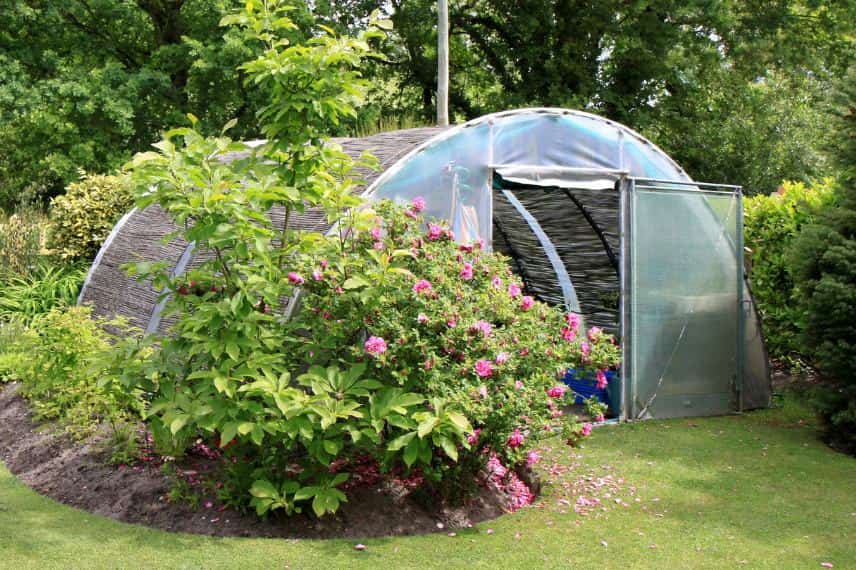
A greenhouse with reed matting and bushes for shading
Irrigation and Watering
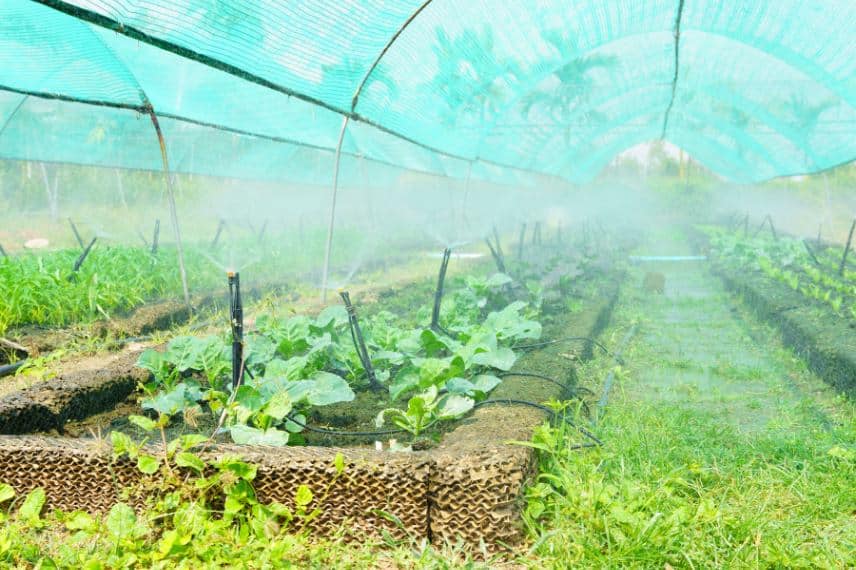
Humidifying the air can also help reduce the temperature in your greenhouse. This can be achieved by simply watering the paths in the greenhouse. The water then evaporates, absorbing heat and cooling the air. It’s a simple and inexpensive method, but it can increase humidity to a level that may promote certain plant diseases. Therefore, you will need to keep a close eye on the humidity levels in your greenhouse.
Some gardeners prefer installing a misting system. This sprays a fine mist of water into the air, which evaporates quickly, absorbing heat and cooling the air. They can be automatic or manual and are particularly effective in larger greenhouses.
Note: Remember that the optimal humidity level for most plants is between 50 and 70%. Excess humidity can facilitate the development of fungal diseases and pests. So be sure to regularly monitor humidity levels and adjust your humidification practices accordingly. If you don’t have one yet, don’t hesitate to install a hygrometer!
Read also
How to choose a greenhouse?The importance of the location and orientation of the greenhouse
Managing heat is crucial for the success of a greenhouse, and location and orientation play key roles in this task. Good positioning can facilitate temperature regulation.
Greenhouse Location:
The site for the greenhouse should be chosen considering several factors. First, the location should receive maximum sunlight throughout the day, especially during winter. It is therefore preferable to select a site that is not shaded by buildings or dense trees.
However, in summer, too much direct sunlight can lead to overheating of the greenhouse. Deciduous trees can be beneficial nearby, as they will provide shade in summer while allowing sunlight to pass through in winter when their leaves fall. Opt for trees that provide light shade or prune them to allow light to filter through, such as the black locust, maples, birch, or Albizia and Paulownia. Also, remember that the distance between these trees and the greenhouse should be sufficient to avoid excessive shading and potential damage from roots or falling branches.
It is also important to consider air circulation to prevent heat accumulation. Avoid sunken areas, such as between two walls, or zones sheltered from the wind where air can become stagnant.
Greenhouse Orientation:
The orientation of the greenhouse is equally important. Orient your greenhouse along a north-south axis, with the entrance facing north. This way, the greenhouse will benefit from the first rays of morning sun coming from the east and the last rays of light in the evening from the west, especially in winter! This also limits intense midday sun exposure, which can generate more heat in summer.
- Subscribe!
- Contents
Comments