





























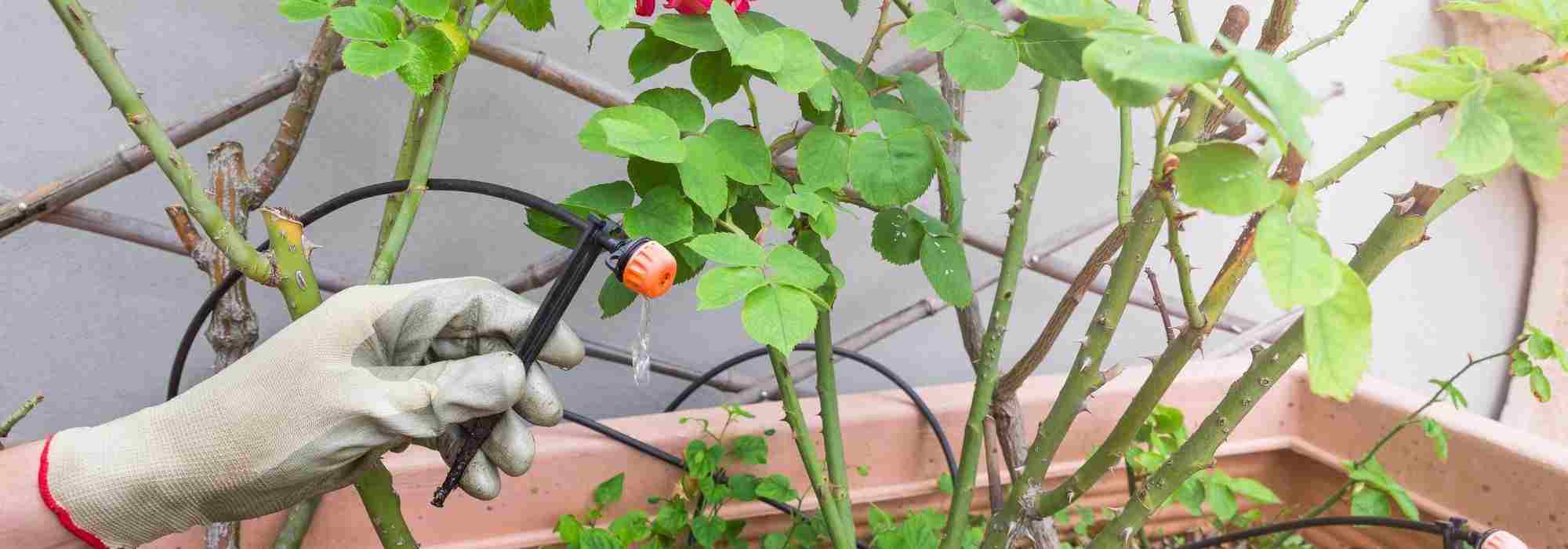
How to install an automatic watering system on a balcony or terrace?
Our tips for watering your plants properly when you are not here to care
Contents
Plants grown on terraces or balconies are often in pots, planters, or containers. They require special attention regarding their watering, as water tends to evaporate more quickly than in open ground. Some sheltered areas may also deprive plants of natural rainwater.
To make daily life easier and in case of absence, setting up an automatic watering system is a perfect solution. Let’s explore what type of system to choose, how to install it, and how to optimise watering on a balcony or terrace.
Also, check out our article: “Automatic watering: the different systems, which one to choose?”
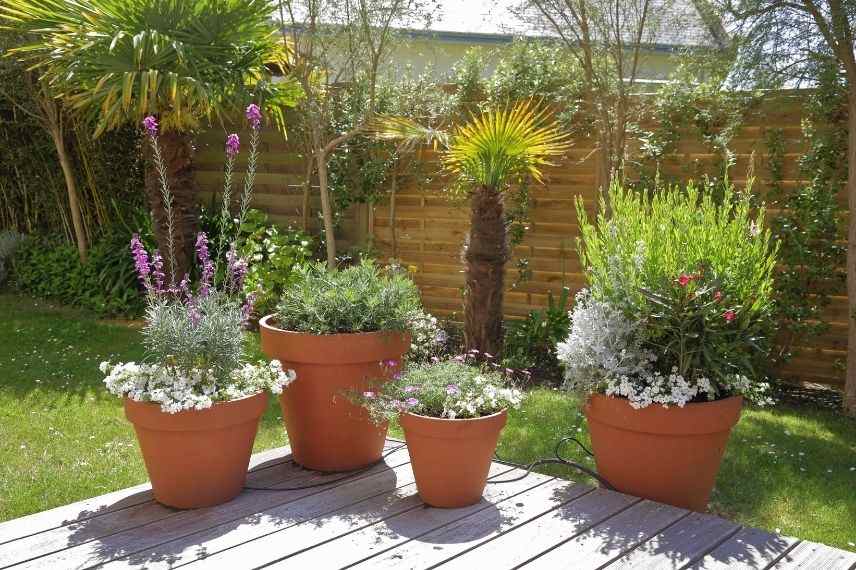
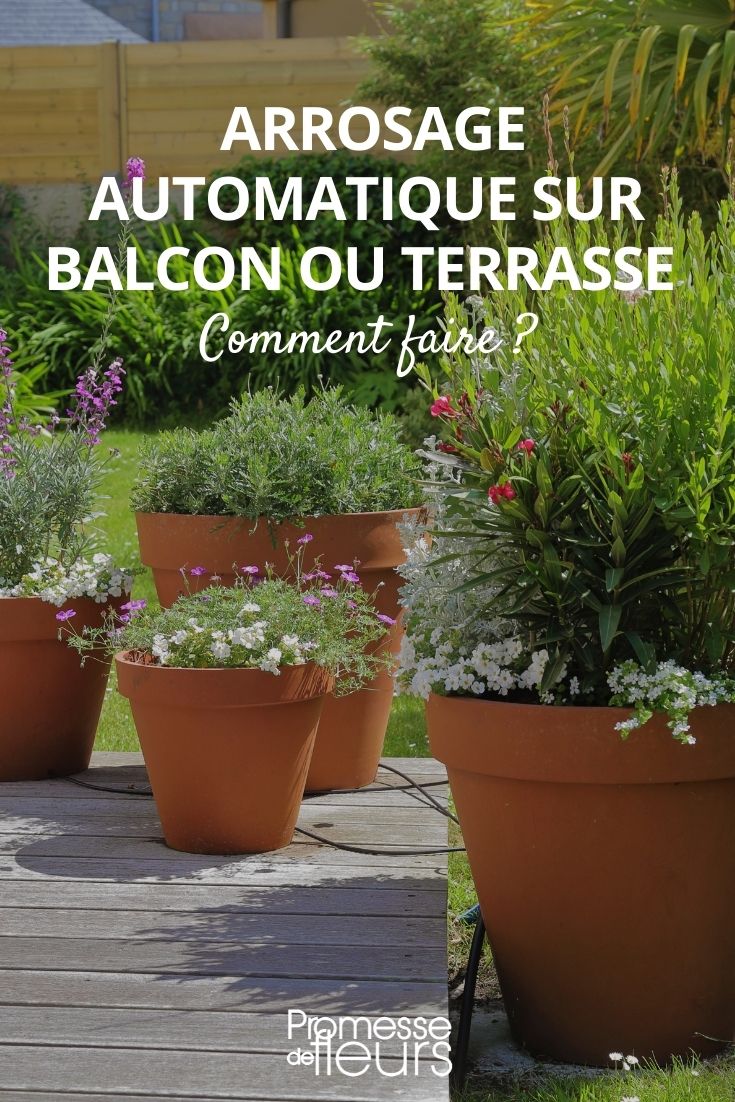
Irrigation of these potted plants on the terrace is done through automatic watering. Each pot is connected by a pipe to the water supply.

Which automatic irrigation system to choose?
For watering your plants on terraces or balconies, we recommend opting for a drip irrigation system. This consists of a fairly rigid polyethylene pipe, connected to smaller tubes leading to drippers. This allows water to flow regularly along the entire length.
Less suitable for potted plants, sprinkler or microporous systems are more commonly used in greenhouses, for lawns, in flower beds, or in row crops in the vegetable garden.
The drip irrigation system thus allows:
- targeted and gentle watering at the base of the plants, which is more efficient and water-saving than traditional watering;
- total autonomy when paired with a timer;
- watering without wetting the foliage, which limits the development of fungal diseases;
- great adaptability depending on the size of the containers to be watered, the number of plants, the required flow rate, etc.;
- significant time savings and peace of mind, whether daily or during your absences.
It is worth noting that this system does have some drawbacks to consider: depending on the size of your terrace or balcony and the quality of the materials, the budget can sometimes increase. However, for a small area, expenses typically remain quite limited.
Also, consider the energy consumption, which may rise depending on the chosen system (pump for water, timer, etc.).
Additionally, plan for the winterisation of your system: draining, cleaning the various components, and storing them in a sheltered place if your terrace or balcony is not protected from frost.
Read also
Watering potted plantsThe necessary equipment
The installation of an automatic drip irrigation system can be tailored to your needs: the number of pots to water, the number of plants per container, the layout of your terrace or balcony, etc. The aim is to set up a network of pipes, consisting of elbow fittings or diversion fittings. Before purchasing any equipment, we recommend assessing your plants and taking measurements to buy the appropriate length of pipe and the right number of fittings.
Here is the list of necessary equipment.
- A tap connected to the water supply or a rainwater reservoir. The water reservoir has the advantages of being more eco-friendly and economical, while using less chlorinated water than that from the mains. However, it requires a minimum amount of space and is not always very aesthetically pleasing. It should be placed at a height to ensure sufficient flow by natural gravity, or paired with a small electric pump. The longer the pipe, the more flow will be needed to supply all the drippers.
- A universal connection fitting, made of plastic (cheaper) or metal such as brass, stainless steel, or aluminium (more expensive but more durable). You can opt for a double-outlet fitting, which will allow you to continue using your tap in parallel, without having to remove the timer each time.
- A timer: usually powered by rechargeable batteries and can be connected to a solar battery, it allows you to choose the time, frequency, and duration of watering. Some models are equipped with a light sensor or a humidity probe, which can even activate automatically based on external conditions. Other models can be controlled directly via a smartphone or tablet app.
- An irrigation control unit or pressure reducer (sometimes already integrated into the timer).
- An impurity filter to prevent particles from clogging the drippers (optional but recommended).
- A main pipe and connection elements.
- Drippers.
- An electrical supply, if some components need to be connected to the mains (such as a pump, although there are also solar models available).
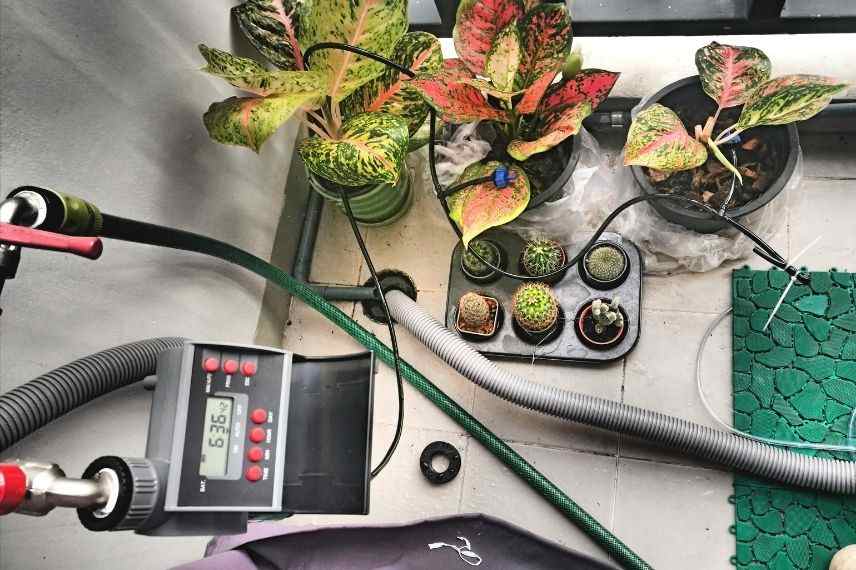 Drip irrigation system for potted plants[/caption>
There are many ready-made irrigation kits, adjustable as needed, at varying prices to suit different budgets. These kits already include all the components needed to create your irrigation system. They are increasingly available in specialist shops, garden centres, or online.
We recommend scheduling the watering of your plants in the early morning or late evening, always avoiding the hottest hours. This will limit natural evaporation, reduce the risk of diseases caused by a combination of heat and humidity, and prevent leaf burn from the magnifying effect.
Installing a drip irrigation system
- Install the connector fitting on the tap and connect the timer to it.
- If necessary, connect the pressure reducer and the filter.
- Finally connect the main pipe of the drip system.
- Unroll the pipe, ensuring it passes through all the containers properly.
- At each container, cut the pipe and install a diversion or elbow to create T-junctions. Add the drippers at the end. Ideally, each foot of plant should have its own dripper. Add extra drippers for plants that require more water or for larger vegetation.
- To ensure the drippers are in contact with the soil and as close as possible to the base of the plants, anchor them using small stakes, rings or climbing roots (tent pegs also work).
- Adjust the flow of the drippers if they are adjustable, usually by screwing or unscrewing them, depending on the plants’ needs. Requirements vary depending on the type of vegetation, but also on their age (newly planted or younger plants often need more water), and natural exposure (sun, wind, and heat cause the substrate to dry out more quickly).
The pipe can be easily concealed for a more aesthetic effect, using slabs, synthetic turf, natural or mineral mulch, etc.
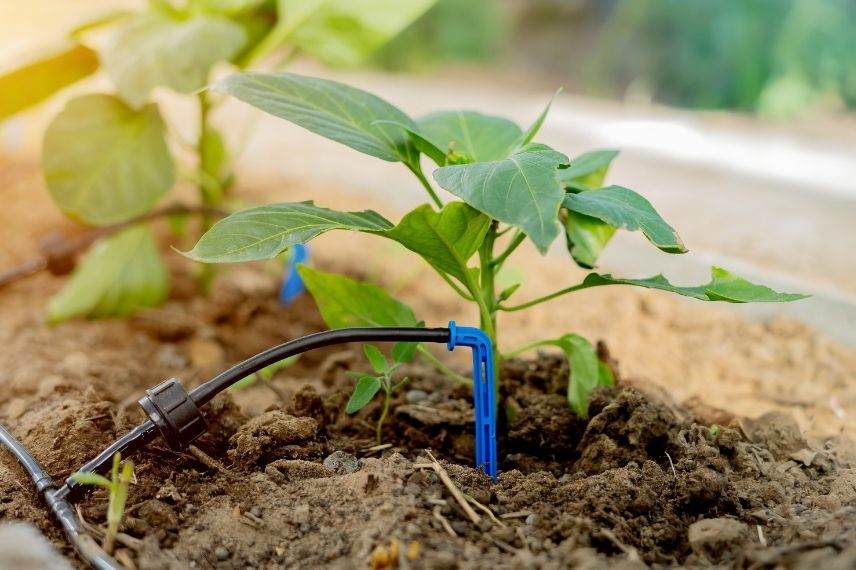
Place a dripper at the base of each plant.
Complementary actions to optimise watering on terraces and balconies
This automatic watering system can easily be combined with other small actions to limit natural evaporation and save water.
Install saucers under your pots and planters. They will help retain excess watering water and prevent waste. However, remember to place a drainage layer at the bottom of your containers (pumice, gravel, clay balls, terracotta shards) to avoid any risk of root rot.
We also recommend installing a layer of mulch (mineral or organic) at the base of the plants. In addition to being decorative and hiding irrigation pipes, it helps limit natural evaporation and keeps the substrate fresh for longer.
- Subscribe!
- Contents
Comments