





























How to heal with trees?
By collecting bark, buds, sap, and aments
Contents
For centuries, nature has been an invaluable source of care and healing, with trees at the heart of this tradition. Tree therapy, or dendrotherapy, has its origins in various cultures, particularly in Asia, where it is a cornerstone of traditional Chinese and Ayurvedic medicine. Today, this practice is gaining increasing recognition worldwide, thanks to a heightened awareness of the benefits of nature for our physical and mental health.
Birch sap cures and bark decoctions… What are the healing trees that alleviate our ailments with their sturdy trunks, buds, sap, and other aments? Here’s a detailed review with this stroll through the forest and our gardens!

With buds
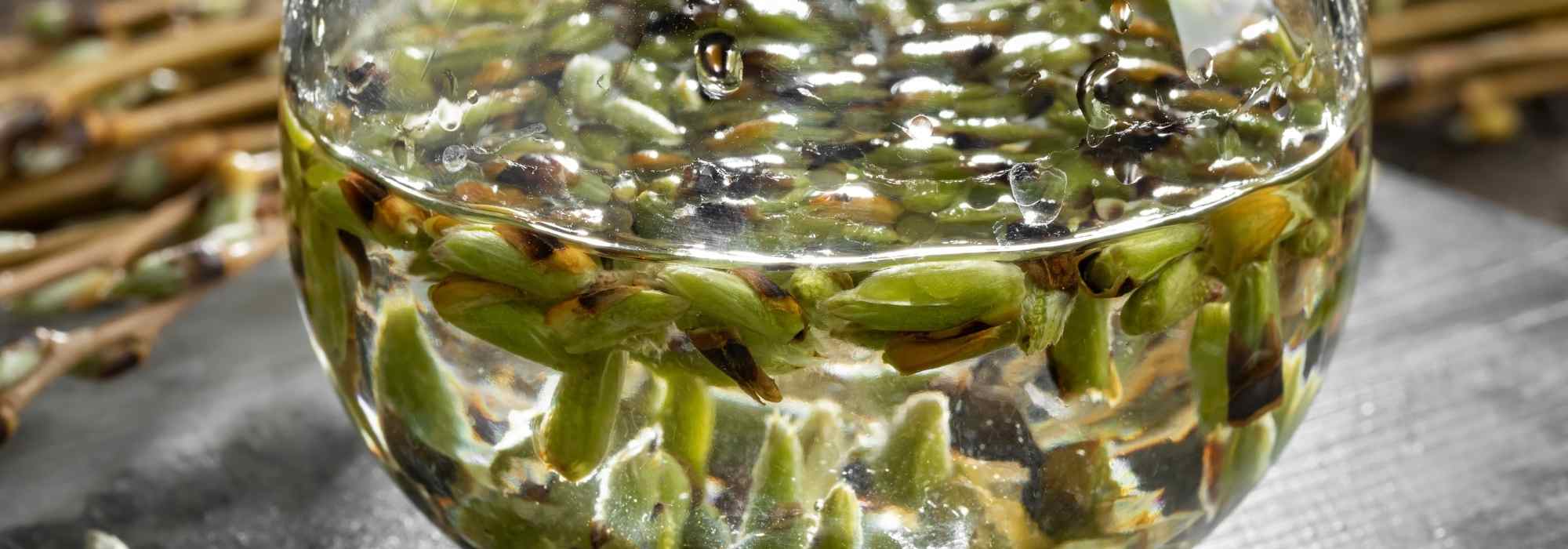
Buds, or gemmae, are said to be true reservoirs of energy and vitality. Their virtues are even part of a branch of phytotherapy known as gemmotherapy. Not only fresh buds, but also young shoots and rootlets of trees and bushes are used, ground down. Among the most interesting and easy to find in the garden or in nature, we have:
- Buds of birch: once used against kidney stones, they are reputed to be diuretic, acting as a hepatic drain, as well as revitalising and anti-inflammatory. They are used in macerate from downy birch or verrucate birch, to be diluted in water.
- Buds of blackcurrant (Ribes nigrum): known for its anti-inflammatory properties and for stimulating the immune system, as well as improving joint comfort. It is harvested in spring and used at a rate of 10 to 15 drops of macerate per day.
- Buds of fig (Ficus carica): excellent for digestive health and helping to relieve stress. The large buds are easy to harvest in spring, used at a rate of 10 drops of macerate per day.
- Buds of Scots pine (Pinus sylvestris): recommended for improving the respiratory system and supporting lung health. Harvested in spring, it is often used over a three-month course (5 to 15 drops of macerate per day).
- Buds of oak are used particularly to combat fatigue.
- Buds of horse chestnut, indicated for circulation disorders…
Note: all these buds are prepared in the form of glycerinated macerates, extracts where a base of fresh buds, water, 90° alcohol, and glycerine are allowed to macerate, which extracts a concentrated solution of active principles.
→ Learn more in our article Gemmotherapy: the vital energy of buds.
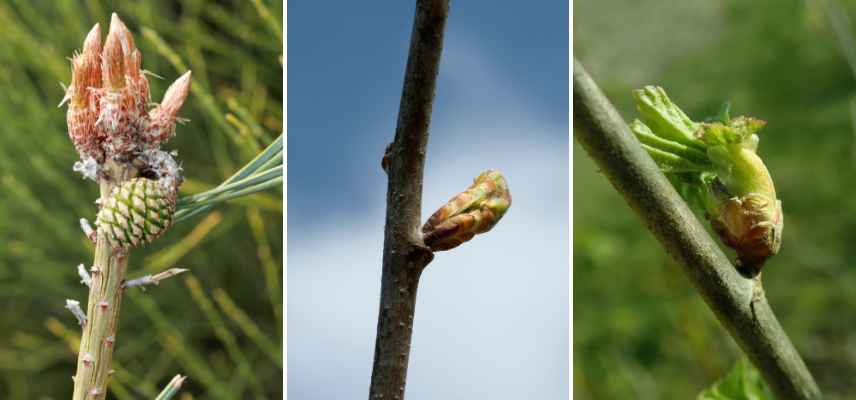
Buds of pine, oak, and blackcurrant
Read also
Birches: planting, pruning and careWith barks
Barks, on the other hand, are recognised for their richness in active principles beneficial for health. The liber, a type of internal bark of the tree, conducts elaborated sap. Here is a list of the most commonly used barks:
– The bark of birch (our versatile tree!): diuretic, it also stimulates digestion. It is also said to be febrifuge (against fever).
– The bark of white willow (Salix alba): used for millennia for its analgesic properties, it is the source of aspirin. It is generally harvested in autumn and used at a rate of 2 to 5 g for a herbal tea.
– The bark of oak (Quercus spp.): a venerable tree, sacred in many cultures, its bark has been used since ancient times. It is recognised for its multiple virtues, including astringent, antidiarrhoeal, and antiseptic properties, as well as for soothing certain skin diseases like eczema, itching, and skin lesions. Harvesting takes place in spring from relatively young trees in autumn. Prefer pedunculate oak (Quercus robur) or white oak (Quercus pubescens). A decoction of bark is prepared by boiling the barks in water for a few minutes, to be applied as a compress. Use between 5 g and 10 g for a decoction.
– The bark of elm (Ulmus spp.): used to relieve digestive issues or as a cough remedy in decoction. Reduced to powder and then made into a paste, it is used to create poultices for superficial wounds or abscesses.
– The bark of lime (Tilia spp.): it is useful for calming nerves and promoting sleep, but also has antispasmodic and draining properties on the liver and kidneys. Harvesting occurs in spring, generally from Tilia platyphyllos, Tilia argentea, and Tilia cordata. Plan to use 2 to 5 g for a herbal tea.
These barks are generally prepared as decoctions or infusions. To do this, they are separated from the tree without causing harm, left to dry, and then reduced to coarse powder before being used in infusion.
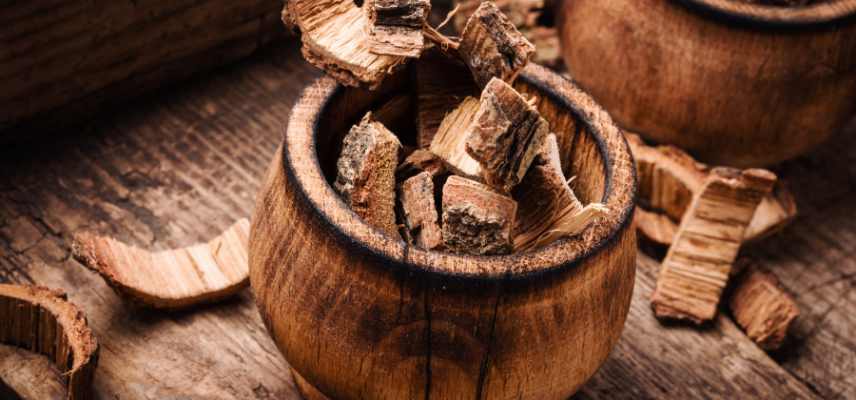 Oak bark
With sap
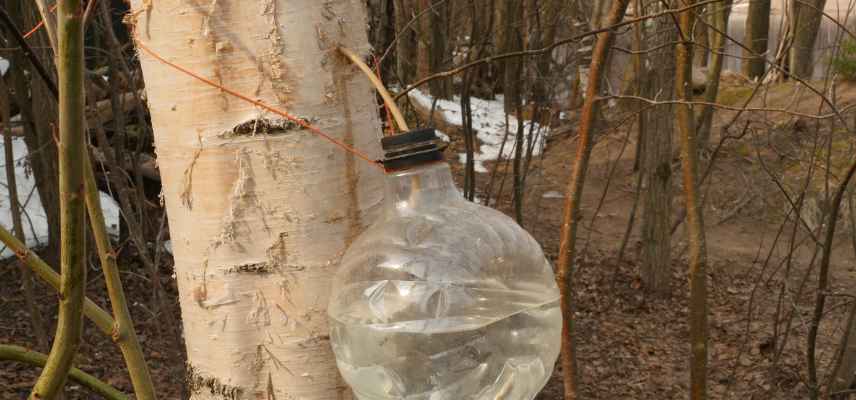
We mainly know the benefits of birch sap (indeed…), renowned for being rich in trace elements (copper, magnesium, and iron) and antioxidants, often used in seasonal cures as a detoxifier for the body. The harvest of crude sap takes place towards the end of winter, from mid-February to mid-March, when the sap rises just after the frosts, and the buds have not yet appeared. Birch sap is harvested for about 3 weeks by tapping mature specimens of Betula pubescens or common birch (Betula pendula, also known as weeping or silver birch, or verrucate birch). The liquid flow will be greater in trees exposed to the south, which experience a significant temperature range during the day. It is very slightly sweet and opalescent.
It should not be confused with birch juice, which is derived from a decoction of the tree’s leaves, or birch sugar, obtained by boiling the sap down to a syrup.
As for maple syrup, well-known to Quebecers, it comes from the sap of Acer saccharum (sugar maples), which is heated to produce a delicacy that is also rich in antioxidants (and sucrose!).
With catkins
The trees known as bearing catkins produce soft, pendulous male inflorescences called “catkins,” which appear before the leaves. The most well-known is the catkin of the hazel, but catkins can also be found on birch and willow trees. Some of these trees have healing properties:
– The birch (Betula spp.): its catkins are diuretic and depurative, helping to eliminate toxins from the body. They are harvested in spring and used at a rate of 2 to 4 g for an herbal tea.
– The hazel (Corylus avellana): the catkins have astringent properties, useful in cases of diarrhoea or wounds. They are harvested at the end of winter and used at a rate of 2 to 3 g for an herbal tea.
– The willow (Salix spp.): its catkins are used for their anti-inflammatory properties. They are harvested in spring and used at a rate of 3 to 5 g for an herbal tea.
N.B.: Catkins are generally used in the form of herbal teas or macerations.
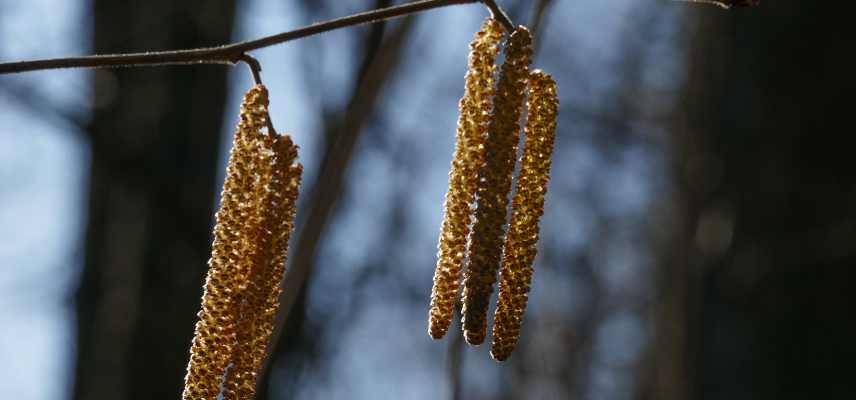
hazel catkin
Forest therapy and Ayurvedic medicine
When discussing “healing” trees, one cannot overlook forest therapy, which has gained significant attention in the media in recent years, with numerous videos and reports advocating the benefits of “cuddle therapy” sessions in the woods.
Forest therapy, or shinrin yoku, involves more than just the use of buds, bark, and other aments. It encompasses the tree and its environment, the sounds, and the scents that contribute to immersion in nature. One absorbs the energy of the trees through their embrace, listening to the wind in the leaves, and the sensations this evokes in our minds. This practice, where breathing also plays a significant role, is often referred to as a forest bath, as it originates from Japan. It has its followers because it provides mental calmness. Recent scientific studies have proven that these forest walks, with close contact to the trees, reduce stress, strengthen the immune system, and improve sleep quality.
In Ayurvedic medicine, the use of trees is equally important. The Indian pharmacopoeia has revered certain native species for millennia. The Neem tree or true Persian lilac (Azadirachta indica), for example, is used for its antibacterial and anti-inflammatory properties. The Moringa tree (Moringa oleifera) is renowned for its nutrient-rich leaves and for alleviating dental issues. Pine (Pinus spp.) is valued for its resins with antiseptic and expectorant virtues.
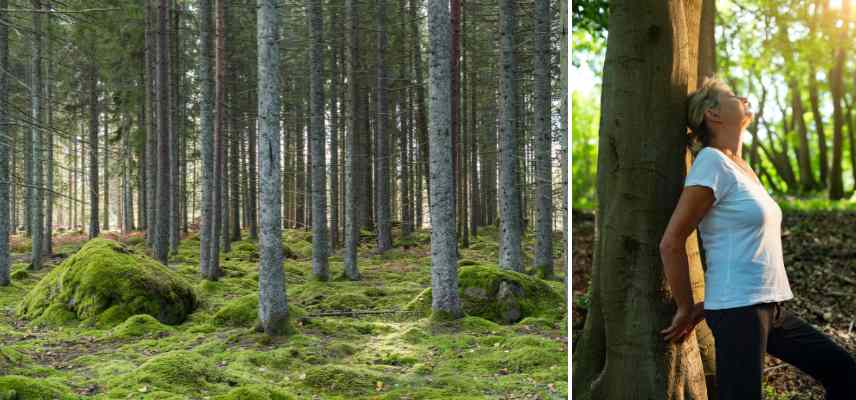
Shinrin yoku or forest therapy
Beware of wild harvests!
Remember that respecting nature is essential when harvesting plants, and sustainability is key to maintaining the balance of our precious ecosystems. Be careful not to harvest just anywhere: the law prohibits collecting sap in forests, woodlands, and public places under penalty of a fine, and harvests are limited to certain quantities. Of course, you can ask the landowner for permission, with the best option being to collect bark, buds, sap, and aments from your own garden.
Warning!
The aforementioned medicinal uses are not all confirmed by serious scientific studies. The benefits of trees are primarily used in a preventive manner.
Self-medication and alternative medicine, even when based on natural products, are not without risks. Although trees and plants offer numerous health benefits, it is important to note that the information provided in this article does not replace the advice of a healthcare professional. Each individual is unique and may react differently to certain plants. There are particularly contraindications for pregnant women, children, or individuals with certain health conditions. Additionally, some plants may interact with medications and lead to adverse effects. Finally, the dosages indicated in this article are for informational purposes only. They must be validated with a qualified healthcare professional in this field (phytotherapist, herbalist, pharmacist…).
It is therefore essential to consult a doctor, pharmacist, or herbalist before starting any new plant-based care routine. They can help you determine which plants are most appropriate for your situation, how to use them safely, and at what dosage.

Learn more...
To learn everything about preparations and trees from our regions to use, we recommend the essential book Nourishing and Medicinal Trees: 260 Culinary and Medicinal Recipes with the Trees of Our Flora by Karine Greiner. Ed Ulmer. 2019. All these books are in French.
… and older, yet a beautiful reference work: the book on trees and health: the observation, knowledge, and experimentation of the therapeutic powers and virtues of trees by René A. Strassmann. Ed. Libr. de Médicis. 1996.
The theme of sylvotherapy is also very present in bookstores in the “personal development” section, including The Art and Science of Forest Bathing: How the Forest Heals Us by Qing Li. 2018. Ed First.
Also worth reading: The Benefits of Birch: What Scientific Studies Reveal.
- Subscribe!
- Contents

Comments