





























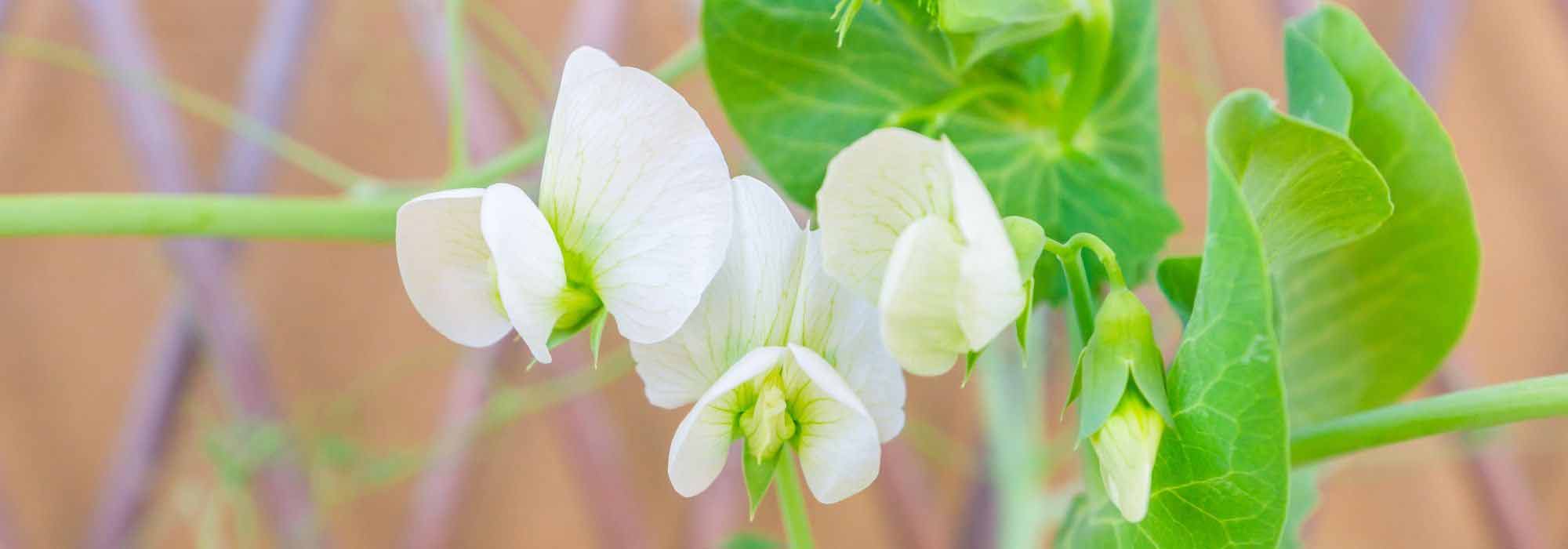
How to grow sweet peas in pots?
Our tips for successful planting and maintenance so you can enjoy it even without a garden
Contents
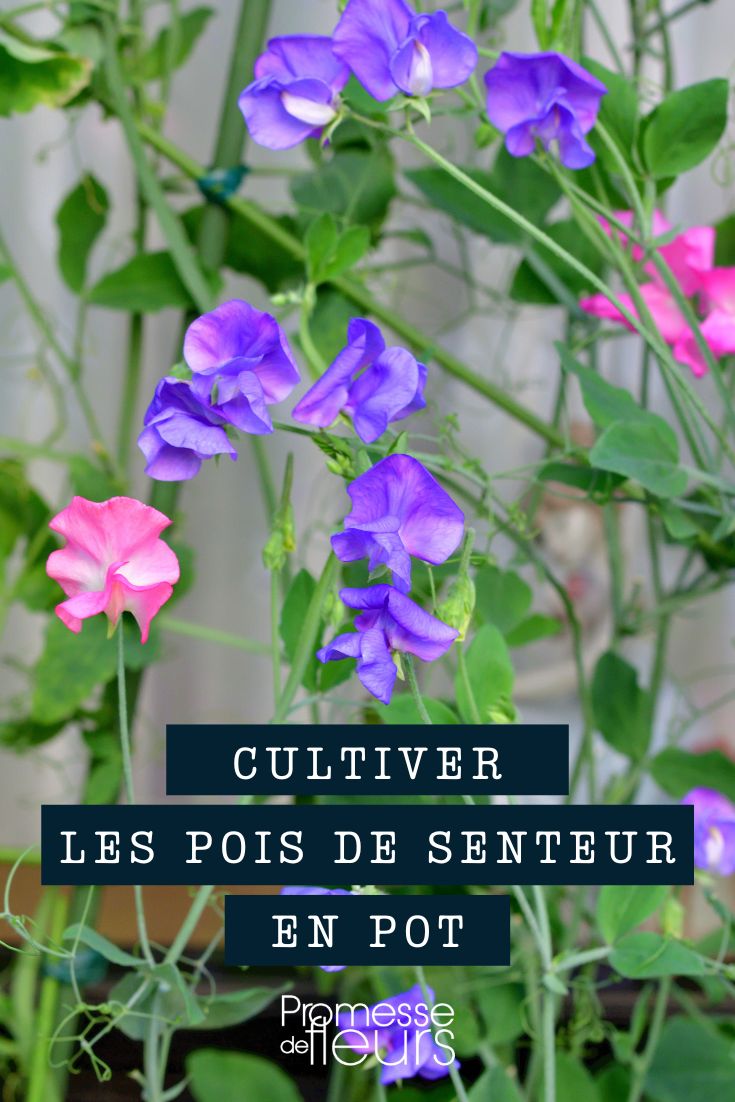
Sweet peas (Lathyrus) undoubtedly brighten up summer with their multicoloured flowers that resemble little butterflies.
Annuals or perennials, climbing or bushy, they fit into all types of gardens and are very easy to grow in the sun. For small spaces, on the terrace or balcony, some varieties of sweet peas can easily be grown in pots. Use them, for example, in a lovely hanging floral arrangement, or in a large container to gracefully adorn railings and trellises.
Here are our planting and care tips to easily succeed with sweet peas in pots.
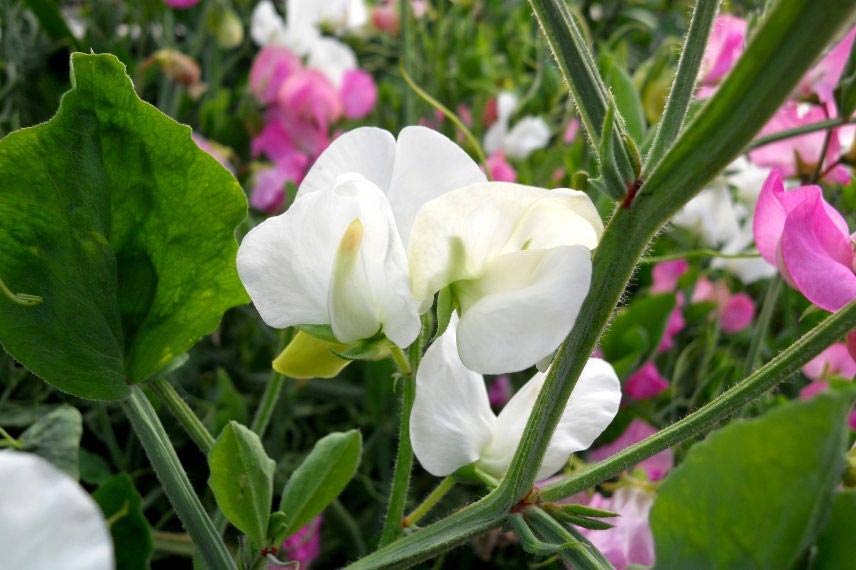
Sweet peas: one of the essential plants to brighten your summer!
Which varieties of sweet peas to choose?
Easy to grow, sweet peas can thrive in containers: pots, window boxes, bowls, or troughs. Just be sure to choose varieties of modest size. Avoid perennial sweet peas, which are too vigorous and imposing, as well as cultivars exceeding 1.8 metres in height.
You can certainly opt for dwarf sweet peas, ideal for summer pots, balcony boxes, or hanging baskets. The variety ‘Cupid Pink’ reaches only 20 cm in height and 45 cm in spread, offering a fragrant bicolour flowering of pale pink and bright pink. You can also try a selection of sweet peas ‘Bijou Mixed’, for a multicoloured display of cream, pink, red, and purple, all with a lovely fragrance.
Less well-known, bush varieties, measuring around 70 to 80 cm in height, can also be grown easily in pots.
Finally, when it comes to larger annual varieties, you have plenty of options:
- ‘Zorjia Rose’ (1.75 metres in height and 40 cm in spread) produces violet-pink flowers;
- ‘Miss Willmott’ (1.8 metres in height and 30 cm in spread) offers a rich salmon pink;
- ‘Blue Ripple’ (1.8 metres in height and 30 cm in spread) features a bicolour flowering of light blue and white;
- ‘Apricot Sprite’ (1.8 metres in height and 30 cm in spread) delights with a beautiful pink-orange hue;
- ‘Blue Velvet’ (1.8 metres in height and 30 cm in spread) impresses with its stunning blue-violet tinged with black.
You can also choose a selection that includes varieties of different colours, such as ‘Elegant Ladies’, which mixes sweet peas in pastel shades, or ‘Heirloom Mixed’, which combines cultivars with small, brightly coloured, and powerfully fragrant flowers.
Climbing varieties can be grown in hanging baskets, creating long, trailing floral garlands, or to cover any support where their voluble tendrils can climb.
When to plant sweet peas in pots?
Sweet peas are among those annuals that you will mainly find in seed form. The sowing period varies depending on the location where they will be kept until germination:
- in an unheated shelter, sow in October-November to obtain sturdy plants and flowers earlier;
- in a heated room, sow from March;
- outdoors, wait until temperatures have warmed up (above 10-12 °C approximately) and that any risk of frost has passed (typically between March and May depending on the regions).
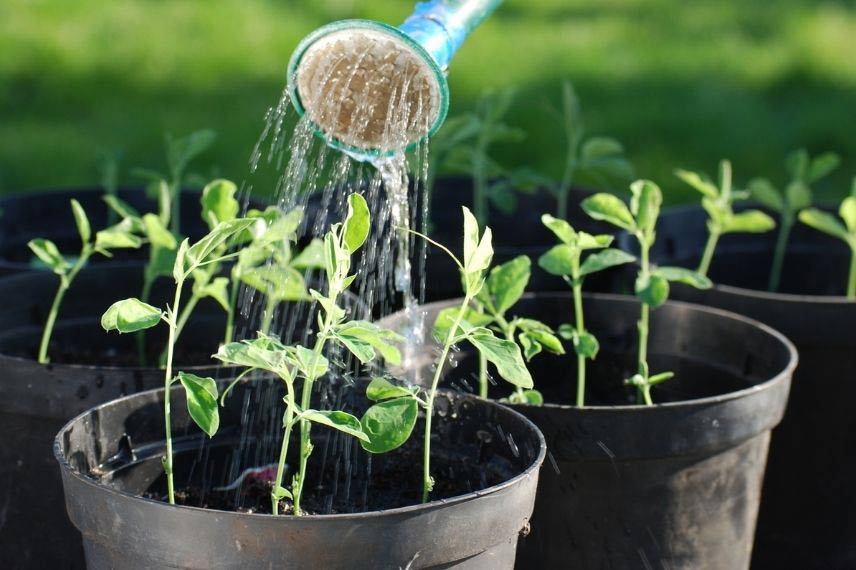
Outdoors, sweet pea sowing takes place between March and May
If you purchase sweet peas in another form, such as plug plants, be sure to transplant them as quickly as possible to avoid any drying out of the roots, while always keeping them protected from frost.
Discover other Sweet Pea seeds
View all →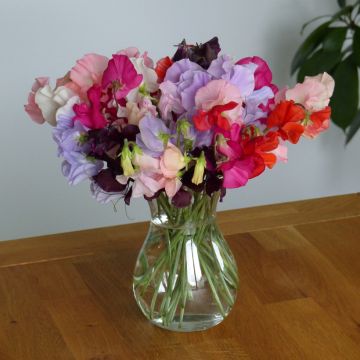
Available in 1 sizes
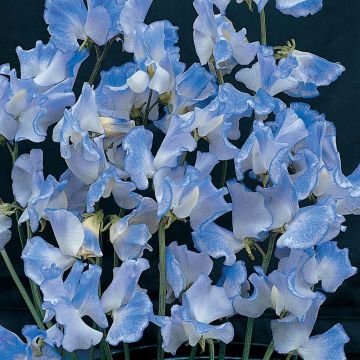
Available in 1 sizes
Available in 1 sizes
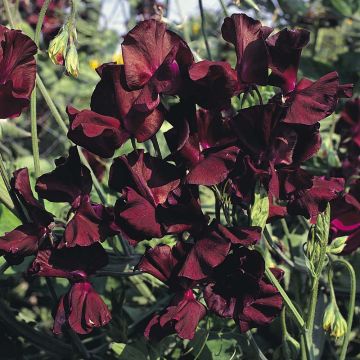
Available in 1 sizes
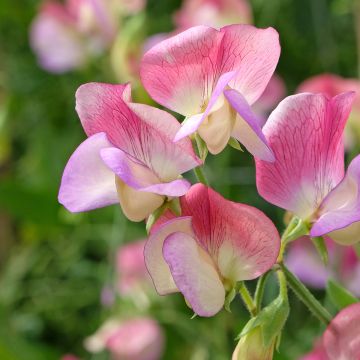
Available in 1 sizes
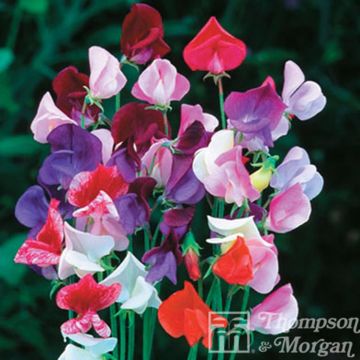
Available in 1 sizes
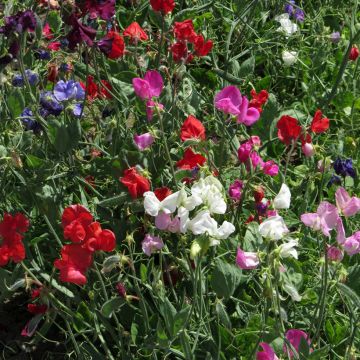
Available in 1 sizes
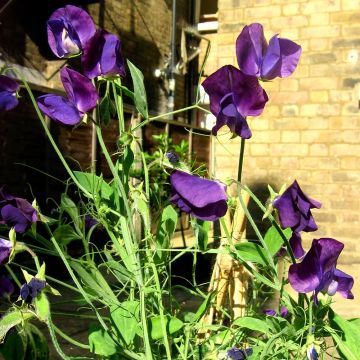
Available in 1 sizes
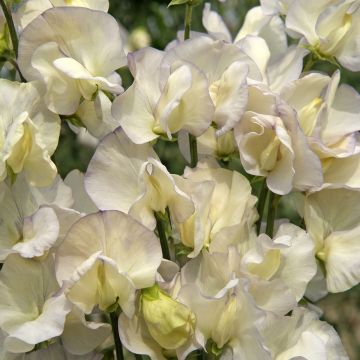
Available in 1 sizes
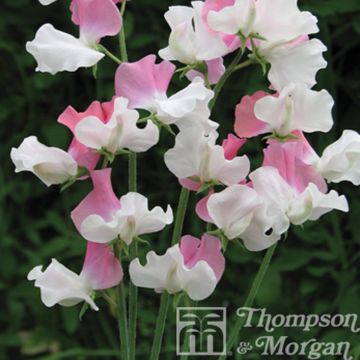
Available in 1 sizes
Planting sweet peas in pots
Container
To grow sweet peas in pots, choose:
- a container 30 to 40 cm deep and wide for dwarf and bush varieties;
- a container deeper than wide, at least 50 to 60 cm wide for climbing varieties;
- a larger planter or trough to create a display with other plants.
Opt for a container with drainage holes, which will allow excess watering or rainwater to escape.
Prefer clay or terracotta containers, which provide better aeration of the substrate due to their porous material, or wooden troughs.
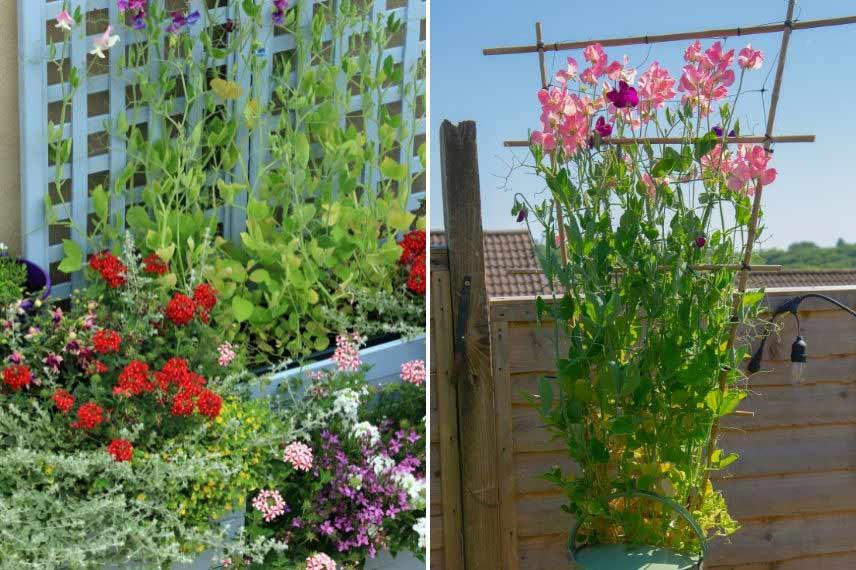 Your container should be adequately sized to accommodate the sweet peas.
Substrate
Sweet peas prefer humus-bearing soils rich in organic matter, but well-drained to prevent water stagnation.
Mix:
- ½ of good quality horticultural compost or compost for planters and pots
- ½ of garden soil or topsoil
- a handful of sand or vermiculite to lighten the mix (optional)
Sowing
The day before sowing, soak the seeds in a bowl of lukewarm water to soften their outer coating and facilitate germination.
- Place a layer of drainage about 3 to 5 cm deep at the bottom of the container (clay balls, gravel, broken terracotta, …)
- Fill with the substrate mix
- Sow the sweet pea seeds spaced 15 cm apart
- Push them down with your finger to a depth of 2 or 3 cm.
- Top with a thin layer of compost
- Water gently or use a spray bottle
- Keep the substrate moist until germination.
You can also find all of Virginie’s detailed advice in the dedicated tutorial: “How to successfully sow sweet peas.”
When the seedlings have more than two pairs of leaves and measure about 15 to 20 cm, you can encourage branching by pinching the tips of the stems.
Staking
For climbing varieties, install a trellis or stakes (in a line or teepee), if no natural support is available.
Even though they cling spontaneously with their tendrils, you can guide the young stems initially to ensure they climb correctly on their support.
Exposure
Place your sweet peas in pots outside as soon as the last frost risks have passed.
Position them in a sunny spot, but sheltered from drafts.
In regions with hot summers in southern France, partial shade is possible, but flowering may be less abundant.
Note that varieties with red or purple flowers may lose their vibrancy in too much direct sunlight. Therefore, prefer a partially shaded exposure for them.
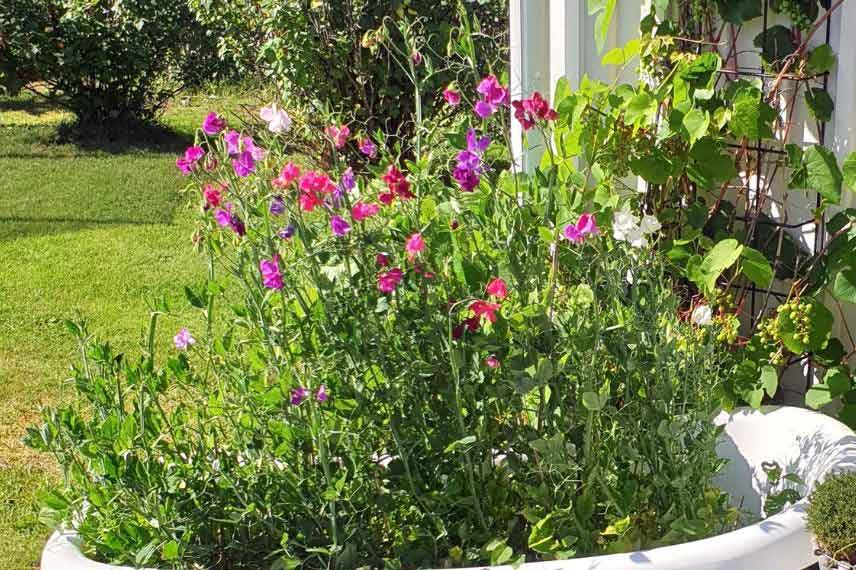 Position the sweet peas in a sunny location, in your chosen container!
Caring for sweet peas in pots
Sweet peas are easy to grow and require little maintenance. However, a few simple actions will help stimulate flowering throughout the summer.
Watering
Sweet peas prefer cool soils that remain moist without being waterlogged. Water regularly, as soon as the substrate dries on the surface.
Increase the frequency during hot, dry summers to maintain abundant flowering.
If you are away, it is quite possible to install an automatic watering system for pots.
Also, consider installing a mulch at the base of your plants to limit evaporation and retain moisture and coolness for longer.
Fertilisation
To support flowering throughout the summer, use a fertiliser specifically for flowering plants. These are low in nitrogen to avoid stimulating leaf production, but rich in phosphorus and potassium to encourage the production of flower buds.
You can use either fertiliser sticks (less concentrated but long-lasting) or a liquid fertiliser (highly concentrated for immediate short-term action).
Always follow the instructions provided by the manufacturers on the products.
Pruning
Remove faded flowers as they occur to encourage the production of new buds. Keep only a few flowers that will turn into pods if you wish to collect seeds for sowing the following year.
Annual varieties grown in pots do not require any further maintenance pruning.
Pests and diseases
If the sowing was done in an atmosphere that was too cool and humid, they may fall victim to damping-off, caused by a fungus. In this case, it is unfortunately necessary to reseed in fresh substrate. Then place the seedlings in a warmer location.
Young plants can be preyed upon by slugs or snails. Regularly inspect your plants to quickly remove any unwanted guests.
In case of aphid attacks, pinch the tips of the affected stems. This will also stimulate branching. In case of infestation, use a mixture of black soap and water (1 tablespoon diluted in 1 litre of warm water), to spray on the affected parts at the end of the day.
Fungal diseases may also appear. In case of a cool, rainy spring, watch for downy mildew (yellow spots on the foliage and white fluff on the underside). During dry spells, powdery mildew (white farinose fluff on the foliage) may occur. Always avoid wetting the foliage when watering. Remove any diseased parts as quickly as possible. If necessary, apply a fungicidal treatment, such as horsetail manure. Check out our tutorial: “How to make horsetail manure?”.
- Subscribe!
- Contents
Comments