





























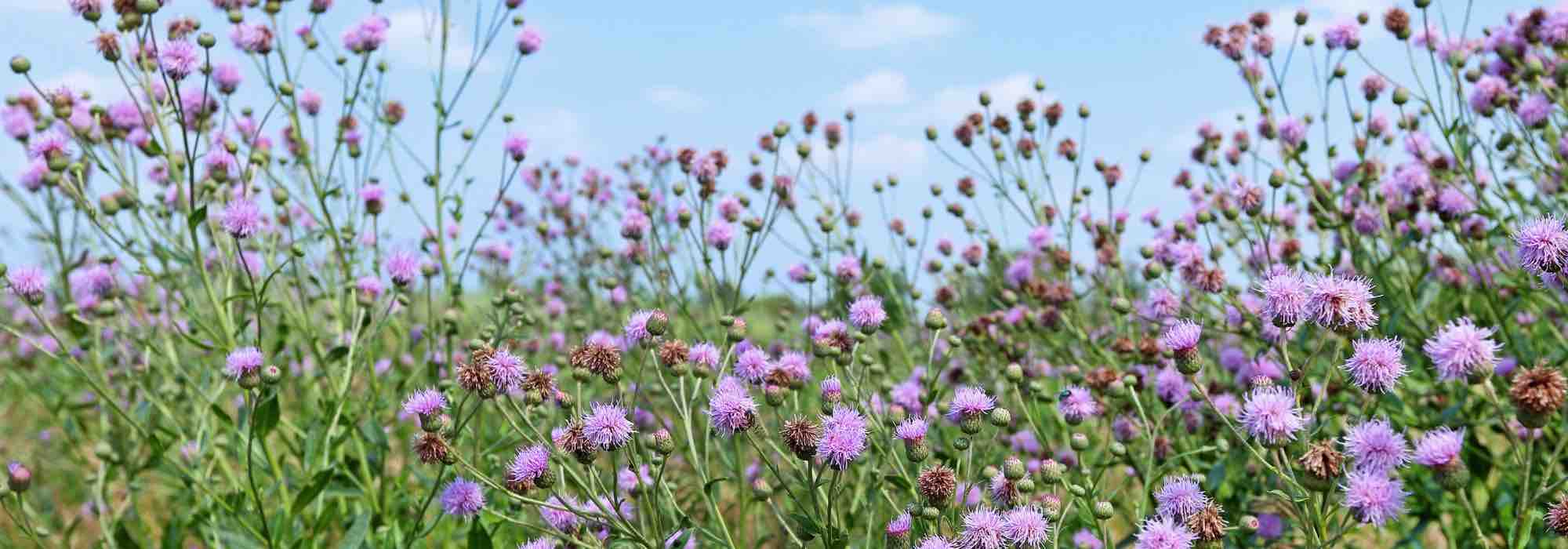
How to get rid of thistles?
Identification, prevention and natural solutions
Contents
Despite its lovely little purple flowers, the thistle is one of the plants feared in the garden. It indeed joins the list of “weeds” or adventive plants, which prove to be invasive and difficult to eliminate once established. Sharp spines, a deep root system, and a strong capacity for dissemination work against it.
Here are our tips for naturally getting rid of field thistle and preventing its appearance.

How to Properly Identify Field Thistle
Characteristics
There are several types of thistles, but we are referring here to Cirsium arvense, known as the “field thistle” or “field cirsium”. It is important to note that not all thistles are considered harmful, and some species are even protected, such as the blue thistle (Alpine blue eryngo).
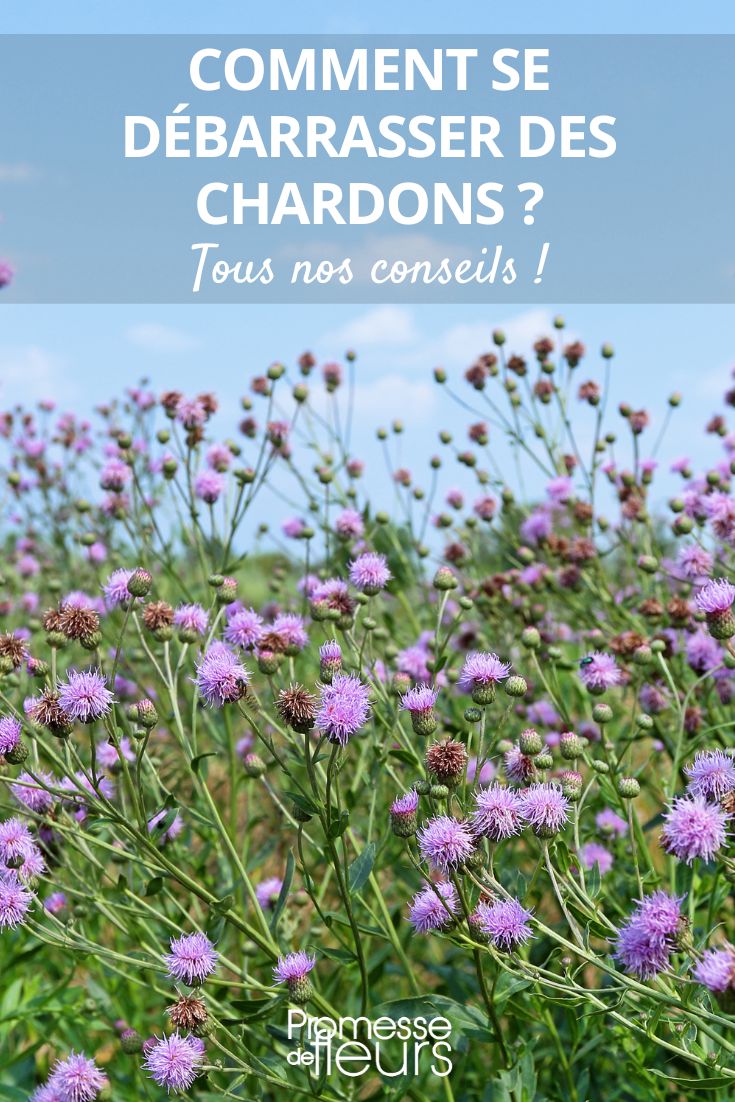
The field thistle is a perennial plant that produces particularly spiny leaves, the underside of which is covered with fine white hairs. The stems can reach nearly 1.5 metres in height. Flowering occurs in summer: the thistle then reveals small blue-violet flowers resembling those of mini artichokes. These then transform into feathery achenes.
The thistle can thrive in many types of soil, even poor and unbalanced ones. It particularly enjoys well-humid, calcareous soils that are relatively fertile, in sunny locations. Widely spread across Europe, the thistle can be found in fallow land, cultivated fields, flowering meadows, and ditches.
Damage Caused
As is the case with most adventive plants, its ability to multiply rapidly is particularly problematic.
The thistle invades gardens, lawns, vegetable patches, and orchards in a formidable manner thanks to two tools:
- a high production of feathery seeds (flying “bristles” like those of dandelions), which are dispersed by the wind and retain their seed viability for a long time;
- the horizontal rhizomes of its powerful pivoting root system, which allow it to sucker easily.
This colonisation will obviously impact surrounding plants, as the thistle competes for both space and available resources (water and nutrients). In the long term, it can thus destabilise ecosystems.
In certain departments, the thistle is deemed so problematic for agricultural crops that its destruction is made obligatory by ministerial and/or prefectural orders. This is the case, for example, in Indre, which imposes a mandatory fight against the thistle. A similar situation exists with our neighbours in Belgium: the royal decree of 19 November 1987 mandates the removal of the field cirsium.
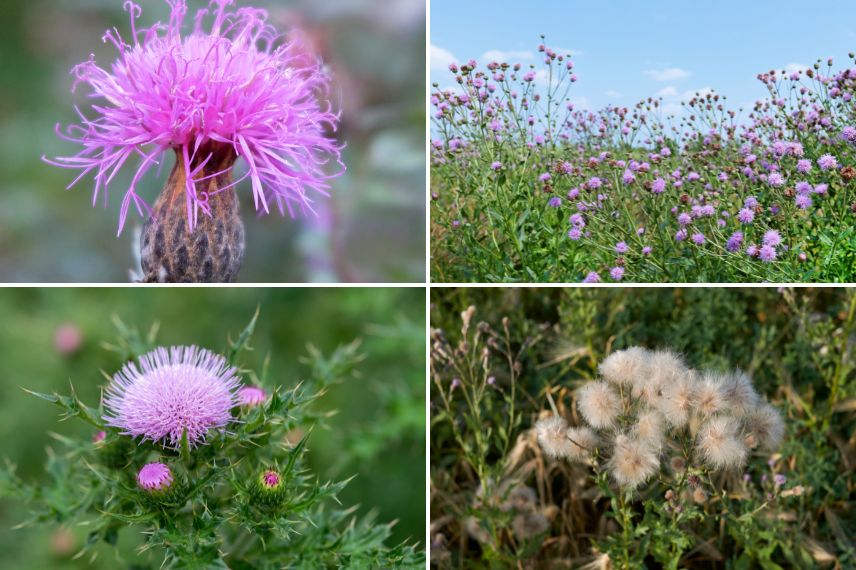
Cirsium arvense
Eliminate thistles naturally
Let’s be honest, as is the case with most adventive plants, thistles are not easy to completely eliminate. The best solution to get rid of this invasive plant is to proceed manually. This will require patience and diligence, but it will allow you to tackle most of the plant.
The ideal time to do this is in spring, before the flowers open and produce their hundreds of seeds. By preventing seed production, you will undoubtedly slow down the plant’s multiplication.
Regular Pruning
By regularly cutting or mowing the aerial parts of the thistle close to the ground, you will prevent it from flowering and help weaken it. Its photosynthesis will indeed be impacted, and the nutrient reserves of the plant contained in the root system will deplete.
Some gardeners recommend pruning on rainy days. The water diffusing to the roots through the cut stems would help weaken them by causing them to rot.
To prune your thistles, equip yourself with:
- thick, puncture-resistant gloves, as the aerial parts are particularly prickly and sharp;
- sharp pruning shears.
If thistles are growing in a lawn, you can also use a mower to cut the aerial parts of the plant.

Thick gloves and pruning shears
Do not hesitate to repeat the pruning frequently between spring and autumn, at different stages of the plant’s growth:
- young plant about fifteen centimetres tall (early spring);
- plant with unopened flower buds (late spring and early summer);
- plant that is storing reserves before winter (late summer).
Deep Uprooting
For thistle uprooting to be effective, it must be done deeply to avoid stimulating the formation of new buds. The thistle has a taproot that can grow several tens of centimetres deep into the soil. To tackle it, use:
- thick gloves;
- a knife weeder or root puller, which allows you to extract the root system deeply.
Ideally, do this after a rainy day, when the soil is moist, making it easier to remove the plant.
This operation will likely need to be repeated several times before completely eliminating the thistles.
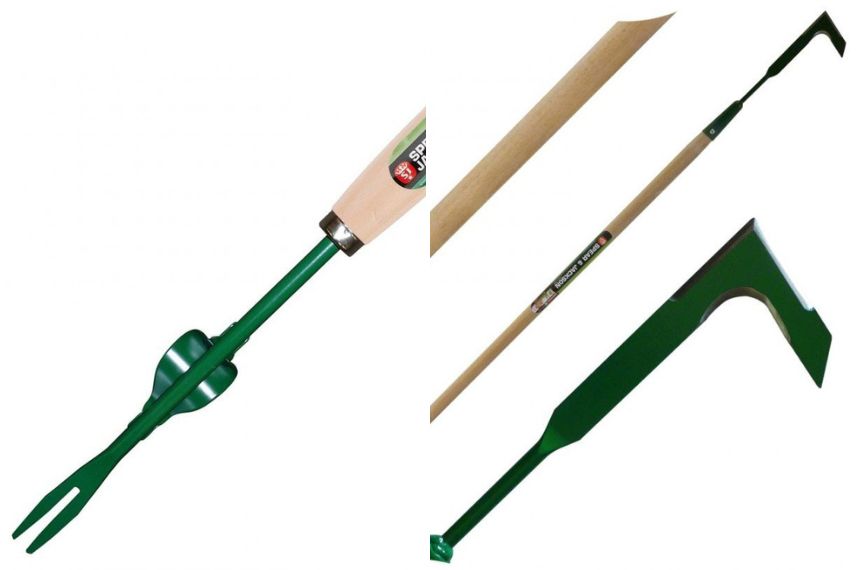
Root puller, weeding knife
Natural Treatments
If you do not need to cultivate in the area overrun by thistles, it is possible to install for several months a geotextile felt, a tarpaulin or cardboard (to be replaced when decomposed). By depriving the undesirable of light over the long term, photosynthesis will no longer be possible, and the plant will eventually wither. If you only have a few plants to eliminate, you can also use an opaque box or an upturned bucket to achieve the same result.
Some old wives’ remedies suggest pouring a bit of salty water on the cut wounds or directly on the forming thistle rosette. Others recommend doing the same with white vinegar. While these treatments are natural, as they do not use chemicals, they are not without risks. They can ultimately negatively impact soil balance and nearby biodiversity.
Finally, you can opt for thermal weeding, which allows you to burn and destroy thistles. While this solution is effective, it is energy-intensive and requires great caution to avoid damaging surrounding plants. Also, avoid using a thermal weeder during dry periods.
Actions to Avoid
Never use a rototiller to eliminate thistles. Their roots could break up and multiply, further facilitating their spread.
We also always advise against using chemical herbicides. In addition to not always being truly effective, they are polluting and harmful to biodiversity.
Preventing the appearance of thistles
Without surprise, thistle behaves like other unwanted plants: it thrives if given the chance! To prevent its appearance, occupy space in the garden by never leaving soil bare.
To do this:
- install a mulch at the base of your plants;
- grow green fertilisers.
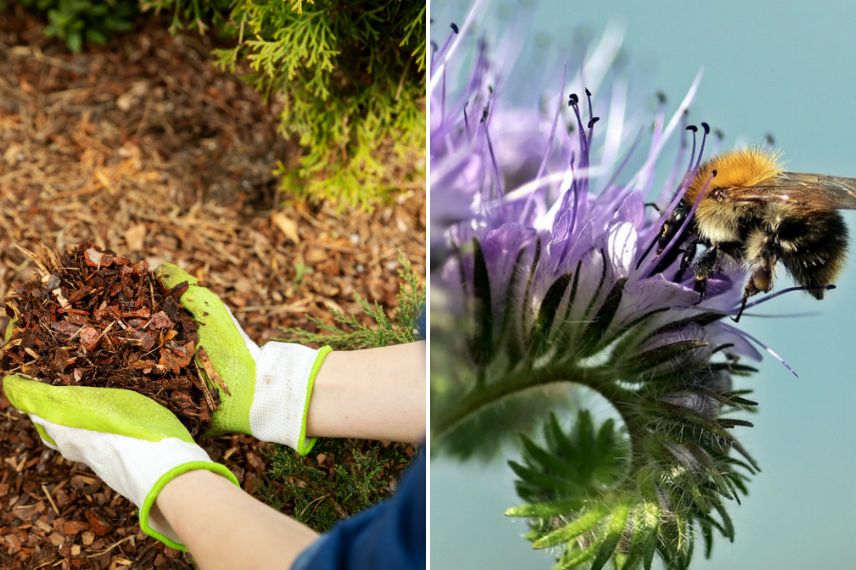
Mulch and green fertiliser (here Phacelia)
Thistles have more than just drawbacks.
Let’s not forget that, like all wild plants, the thistle plays a role in nature. Its melliferous flowers are visited by numerous pollinating insects (bees, butterflies, bumblebees, etc.), which are beneficial to the garden. Its seeds are a delight for birds, such as the famous goldfinch, whose name is actually derived from that of the plant.
The thistle is also said to have a beneficial effect on unbalanced and very compact soils, as its powerful roots help to aerate them.
Finally, the plant is also edible: all its parts can be consumed, from the root to the leaves. When young, they are said to have a delicate artichoke-like flavour. To learn more, we recommend the video from Chemin de la Nature: Les cirses, des “chardons” comestibles !
And if you love the rustic charm of these plants, why not consider ornamental thistle varieties that are not invasive? For inspiration, feel free to read our article “Ornamental thistles: add some flair to your borders!”.
- Subscribe!
- Contents
Comments