





























How to choose your courgettes
Our buying guide to help you choose from the different varieties of courgettes
Contents
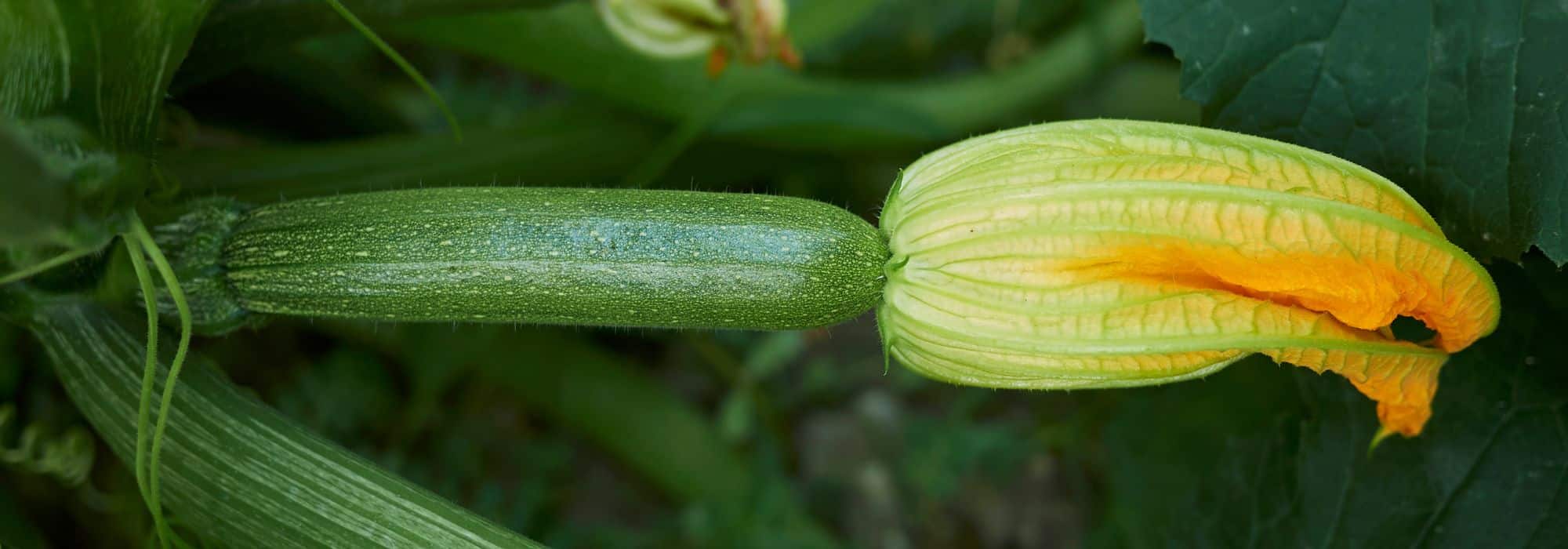
A prominent member of the Cucurbitaceae family, the courgette (Cucurbita pepo var. pepo) is the quintessential sun vegetable. With a wealth of varieties, courgette is a staple on summer tables. Moreover, it is very easy to plant, to grow, and to maintain as long as it receives full sun and is planted in fertile, deep soil that remains cool throughout its development.
If sowing occurs in March or April, planting in the ground does not take place until mid-May, at least in regions with less favourable climates. In southern regions, planting can be earlier. Whether you are sowing courgette seeds or purchasing your courgette plants in pots, the choice can be daunting given the multitude of varieties.
I suggest some criteria to help you select courgettes for your vegetable garden.

Depending on the space available in your vegetable garden
Here is the translated text:
This is certainly one of the first criteria to consider before purchasing your seeds or young plants in pots of courgette. Indeed, depending on the species and varieties, courgettes take up more or less space. There are two types of courgettes: climbing and non-climbing. It is quite logical that a climbing variety, which will take up much more space in the vegetable garden, is ideal for larger areas. On the other hand, if you have a small vegetable garden, you should opt for a non-climbing variety. Unless you have the desire (and the possibility) to train a climbing variety…
Climbing Varieties
These climbing varieties are recognised by their voluble, sturdy, and robust stems, which can reach 3 to 4 metres in length. They are generally non-hybrid courgettes that are very productive. You can let them spread on the ground or train them up a solid support, such as a trellis, pergola, or even an arbour. Thanks to their tendrils, the climbing courgette hardly needs help to climb the support provided. If you want to achieve a better harvest, you can prune and pinch the stems. I explain the method in my article: summer vegetable pruning, why and how to do it?
These courgettes benefit from fairly rapid growth but are later to mature. They are more susceptible to powdery mildew. They also often require more water.
Thus, the ‘Black Forest’ is a good climbing variety that produces dark green fruits 15 cm long. The ‘Shooting Star’ stands out with its climbing habit and especially its beautiful yellow courgettes.
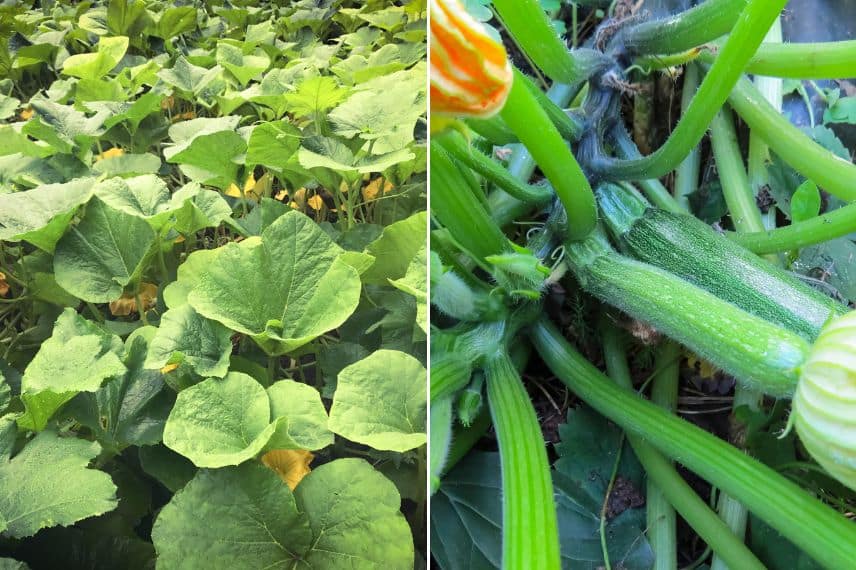
Courgettes come in climbing or non-climbing varieties
Non-Climbing Varieties
The other varieties of courgettes are non-climbing, meaning they hardly exceed 1 m in spread with a rather bushy habit. Most of these are hybrid courgettes that will produce fruits of different sizes or colours. They are ideal for small gardens and require very little care in relation to their production. They are significantly less susceptible to diseases.
Following their shape
In terms of shape, courgettes are classified into two main groups: courgettes with elongated fruits and courgettes with round fruits. While their flavour and properties are quite similar, it is their culinary use that will guide your choice. Indeed, elongated courgettes are ideal, sliced, for salads or for sautéing in olive oil. As for small round courgettes, they are perfect for stuffing with meat, as they are much fleshier. Although the long ones can also be!
Long Courgettes
These are cylindrical courgettes, varying in length depending on the variety. The ‘Verte des maraîchers’ variety is a non-running type that produces fruits 18 cm long. The ‘Diamant F1’ is very productive and well-suited for cultivation under cover. The ‘Baccara F1’, an improvement on the previous variety, produces cream-speckled green fruits. The Italian variety ‘Alberello di Sarzana’ with light green fruits is also very productive, as is the ‘Grisette de Provence’.
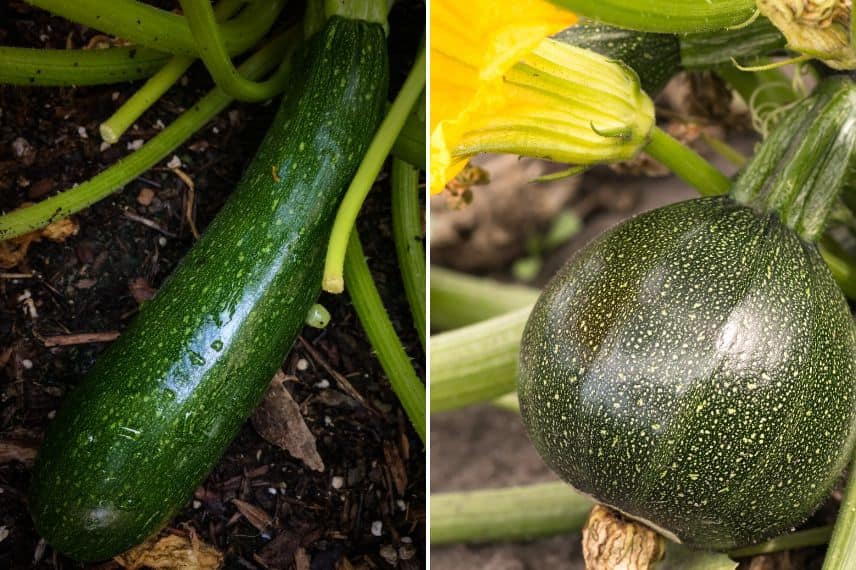
Courgette selection criteria
Round Courgettes
Spherical, these small courgettes have a plump silhouette that invites indulgence. Among the most well-known is the ‘Ronde de Nice’, whose fruits measure between 8 and 10 cm in diameter. Their skin is speckled and their flesh is melting. The ‘Tondo di Toscana’ variety offers well-rounded pale green fruits. Meanwhile, the repeat flowering variety ‘One Ball F1’ stands out with its round yellow courgettes.
According to their colour
Obviously, green courgettes are the most common in vegetable gardens. The green colour can vary from light to dark, sometimes spotted, striped (variety ‘Safari F1’) or marbled like the ‘Courcouzelle’, or even cream-speckled like the ‘Profusion F1’.
However, among the different varieties of courgettes, there are also fruits of yellow colour that brighten up the vegetable plots. Their skin ranges from light yellow to lemon yellow. There are numerous varieties such as:
- ‘Easy Pick Gold F1’: a very productive variety that is easy to harvest thanks to its thornless petioles
- ‘Sebring Yellow F1’: a vigorous and early variety with fine bright yellow fruits
- ‘Lingodor F1’: a variety with long fruits measuring 18 to 20 cm
- ‘Gold Rush’: a variety with creamy flesh
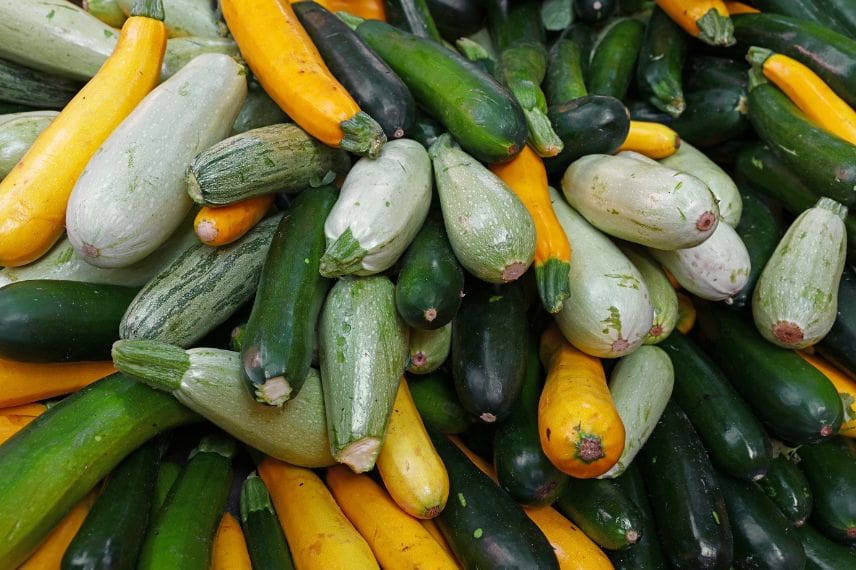
Finally, there are courgettes with white skin: the ‘Virginia Squash’ is a variety originating from Central America that is harvested from June to September. Its courgettes are white, sometimes speckled with pale green. The ‘Lorea F1’ also offers fine white to very pale green fruits. Those from the variety ‘Adrielle F1’ are also a very light green, almost white. They also have excellent taste quality. One could also mention the courgette ‘Blanche de Trieste’.
Read also
Growing courgettes in potsAccording to their earliness
Varieties of courgettes, known for their earliness, are perfect for enjoying the fruits as early produce. Among this category, the ‘Précoce maraîchère’ reveals its main asset: its fruits with light green skin marbled with cream have a fine and tender flesh. The ‘Diamant F1’ is also recognised for the earliness of its harvest, just like the variety ‘Ambassador F1’ whose fruits can be picked very young.
The variety ‘Mutabile’ is also relatively early as they are harvested 60 days after planting, starting in June. The variety ‘Amalthée’ stands out for its speckled jade green skin, its generous shape, and its earliness. Its flesh is also very sweet, and it has a high yield.
According to their resistance to powdery mildew
Zucchinis are among the vegetables that are quite sensitive to powdery mildew, a fungal disease also known as white disease. It often manifests in mid to late summer, causing a decrease in productivity as the leaves deteriorate.
If you have ever had zucchinis affected by powdery mildew, it is advisable to select varieties known for their resistance to this disease. They are generally less sensitive. And if the disease does appear, it is less virulent and causes less damage. Varieties such as ‘Ambassador’, ‘Mutabile’, and ‘Sebring’ are renowned for their robustness. ‘Anissa F1’, an early variety, has also proven its resistance to powdery mildew.
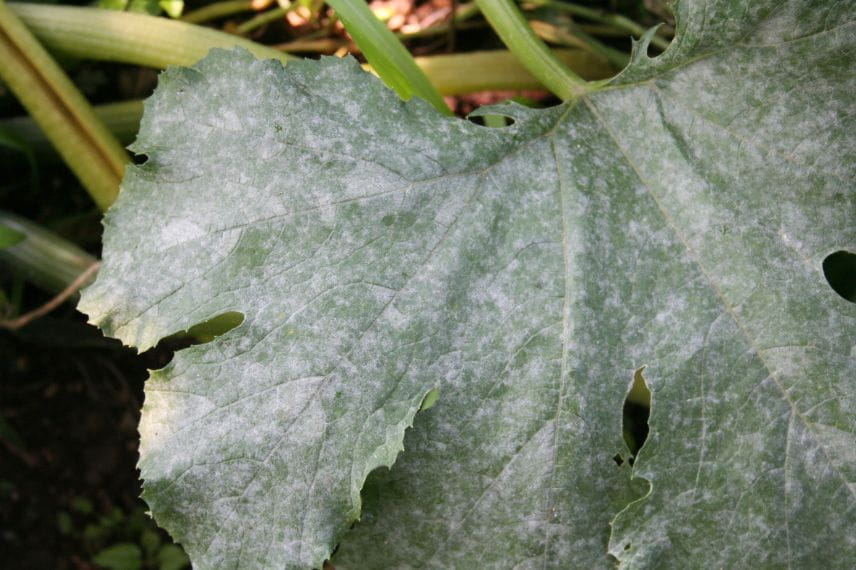
Zucchini leaf affected by powdery mildew
The hybrid variety ‘Astia F1’ is also a disease-resistant zucchini, as well as an early producer of long, slender fruits.
To learn more: Powdery mildew or white disease, prevention and treatment.
According to their productivity
When planting courgettes, one naturally hopes for a good yield. Some varieties offer a significantly higher yield than others in terms of the quantity of courgettes. Thus, the variety ‘Verte de Milan or Black Beauty’ is among the most productive courgette varieties. Its early fruits are a beautiful dark green, almost black. ‘Belor F1’ also boasts a good yield. Its tall growth makes harvesting easier. ‘Defender F1’ produces numerous, well-formed fruits. The Italian variety ‘Genevese’ offers tasty fruits with firm, white flesh.
If you want to obtain yellow courgettes with a high yield, choose the varieties ‘Sebring F1’ and ‘Lingodor’ without hesitation. The latter stands out for its excellent fruit storage, which are of a very good size, and its strong resistance to diseases.
The varieties ‘Gold Rush’, ‘Lingodor’, ‘Baccara’, and ‘Mutabile’ are also productive.
- Subscribe!
- Contents

Comments