





























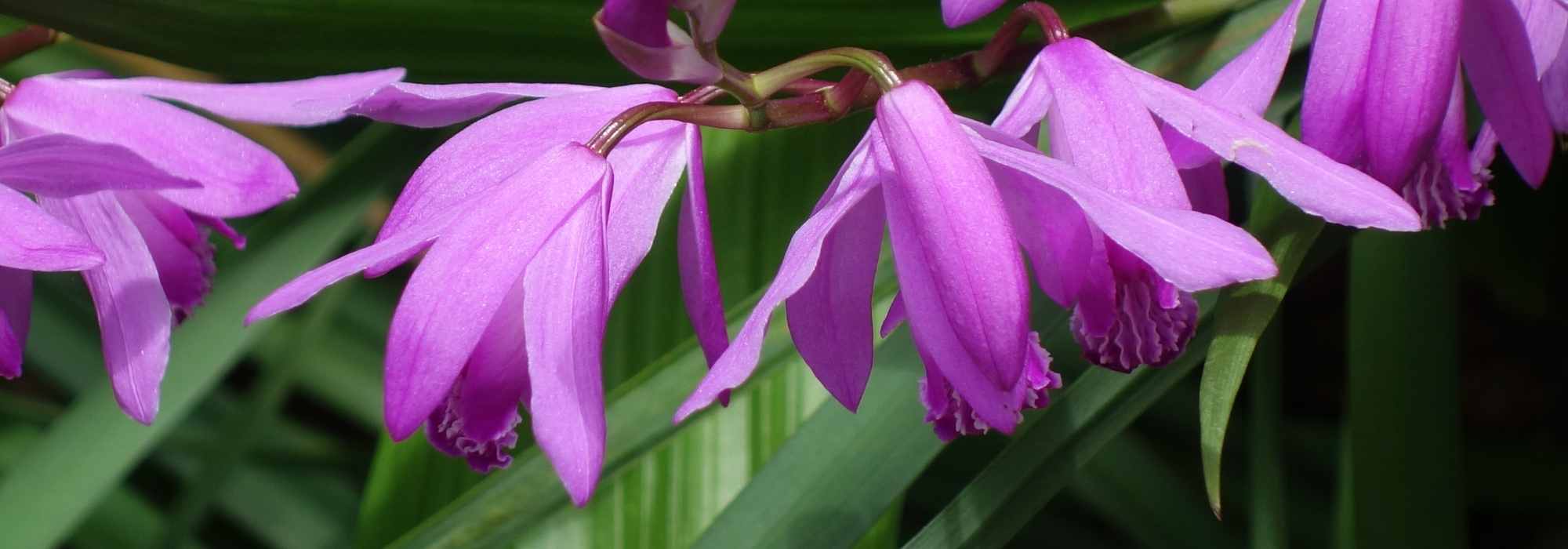
Hardy orchids to grow in the garden
In pots or in the ground
Contents
Did you know that France is the European country with the highest number of orchid species?
These spectacular perennials are not so difficult to grow in our gardens. The bletillas or hyacinth orchids naturalise easily in non-calcareous soil, Calanthes thrive where ferns grow, dactylorhiza, which are native to our regions, are not demanding regarding their substrate and are very hardy, and pleiones must be stored for winter, but are so easy to maintain in pots. Even the stunning Venus slippers can be planted in the garden if provided with the right soil. Terrestrial orchids, to distinguish them from epiphytes, generally require a draining substrate, do not appreciate fertilisers, and are content with fairly poor soils.
What if we ventured into growing hardy orchids in the garden? Here’s a brief overview of the main botanical genera of hardy orchids to adopt in the garden.

Pleiones
Pleiones are semi-hardy garden orchids that can be grown outdoors in our latitudes if protected from severe cold and winter moisture. There are about twenty species, but Pleione formosana is the hardiest and can withstand temperatures down to -5 °C.
The colour of the large solitary flowers varies according to the species and variety, ranging from pure white to purple-pink, and sometimes even in yellow tones. Each spring, a single leaf and flower shoot emerges from a pseudo-bulb which, after flowering, will produce a new pseudo-bulb, thus perpetuating the species.
Pleiones prefer well-drained, rather acidic soils and a partially shaded position. They can be grown in rockeries, under trees, in miniature gardens, or more simply in pots that can be brought into a cold greenhouse as soon as the first frosts arrive in areas with harsh winters.
→ Find all our pleiones in our online nursery.
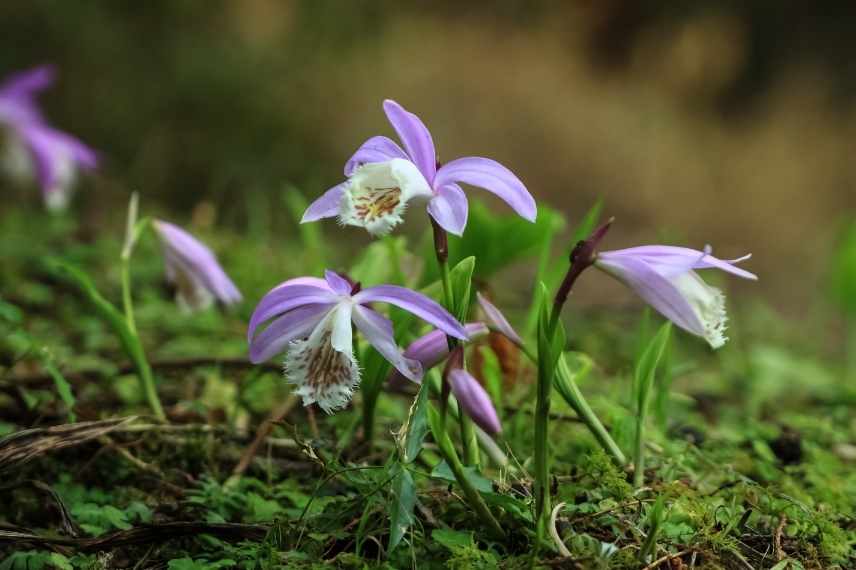
Pleione formosana
Read also
Pleione: planting, growing, and careThe Bletillas or Hyacinth Orchids
Commonly known as the Hyacinth Orchid (or Japanese Orchid), Bletilla striata is a perennial plant that flowers in early summer. It is a terrestrial orchid that forms beautiful clumps of plicate leaves and offers delicate flowering, often in shades of pink-violet. However, there are also varieties with white flowers, such as Bletilla ‘Alba’, blue flowers like Bletilla ‘Blue Dragon’, or pale pink like ‘Kuchibeni’.
It is a prolific plant that can naturalise over the years thanks to its pseudobulbs. The Bletilla flowers at the end of spring or the beginning of summer, then enters dormancy for winter, reappearing in the following spring.
The Bletilla is one of the easiest orchids to grow in the garden! It is a plant that requires very little maintenance. It prefers soil that remains cool in summer… but is sensitive to excess water in winter! Therefore, it absolutely needs well-drained soil. Bletillas can find their place in a mixed border, alongside other colourful flowers and decorative foliage: they can be paired with gypsophila, roses, or hardy geraniums…
→ Discover our range of Bletillas on our website.
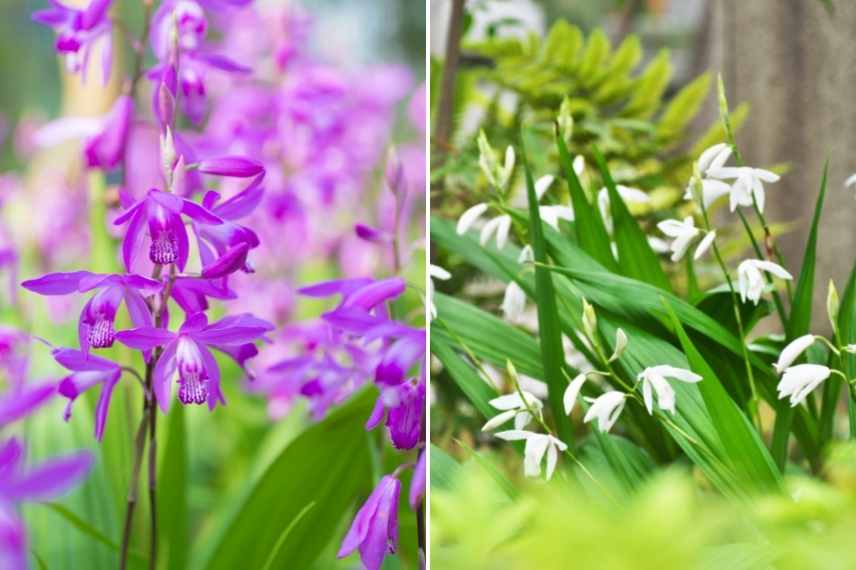
Bletilla striata, pink and white
Discover other Garden Orchids
View all →
Available in 0 sizes
Available in 0 sizes
Available in 0 sizes
Available in 1 sizes
Available in 0 sizes
Available in 1 sizes
Available in 1 sizes
Available in 1 sizes
Available in 1 sizes
Available in 1 sizes
Calanthe
Calanthes are easy-to-grow orchids. However, beware of mistakes, as some should only be grown indoors or in a greenhouse, while others are sufficiently hardy to be introduced into our gardens as perennials: this is the case for Calanthe discolor, Calanthe tricarinata, or Calanthe sieboldii, for example.
These stunning shade orchids create a carpet effect or can be combined with other shade perennials. Among the hardy calanthes, the foliage is evergreen or semi-evergreen, and the flowering occurs between spring and summer (though this depends on the species).
These terrestrial orchids require a semi-shaded position, fresh but well-drained soil, and humus-bearing earth. In short, a woodland corner in your garden will be perfect. They can even be grown in pots or containers.
→ Learn more about Calanthes in our comprehensive guide!
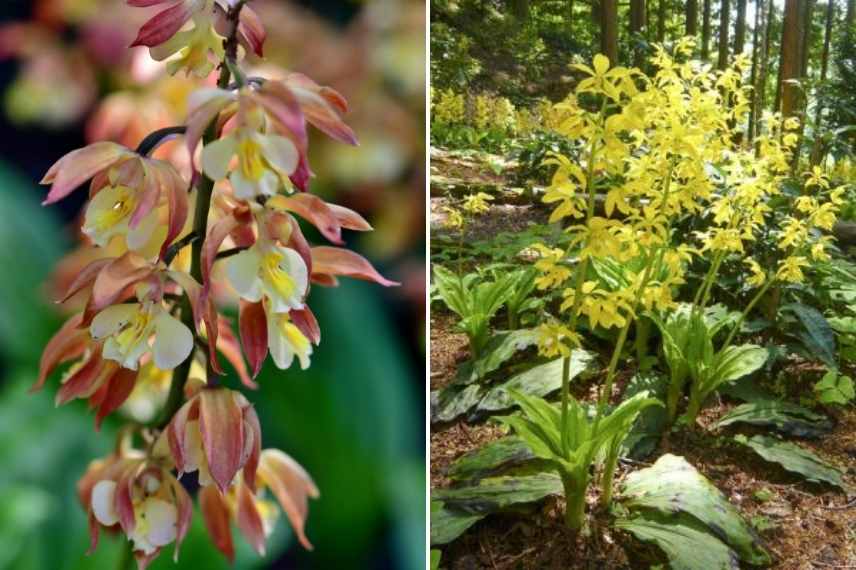
Calanthe discolor and Calanthe sieboldii
Read also
Plant rare bulbs!Dactylorhiza
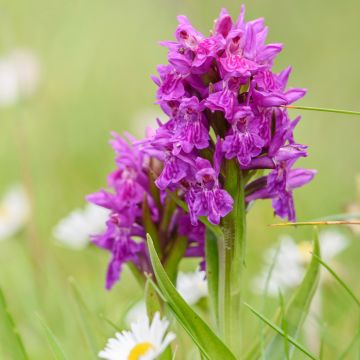
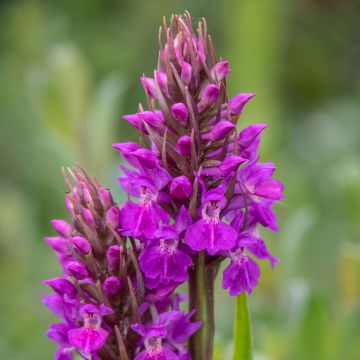
The Dactylorhiza are terrestrial orchids native to the temperate regions of Eurasia. Their tubers are digitated, resembling fingers, which is where the genus name comes from. Perfectly hardy, but sometimes temperamental, these perennial orchids are stunning in the garden: such is the case with Dactylorhiza maculata, the Spotted Orchid, Dactylorhiza praetermissa, the Common Marsh Orchid, or Dactylorhiza majalis, the Early Marsh Orchid.
The flowering of Dactylorhiza occurs from April to July depending on the species, in shades ranging from white to purple, including mauve and pink. The flowers are gathered in a dense cylindrical spike at the tips of the stems.
The Dactylorhiza generally prefer cool to moist environments and acidic, light, and cool soils, but each species has specific cultivation requirements.
→ Discover our finest dactylorhiza on our online site.
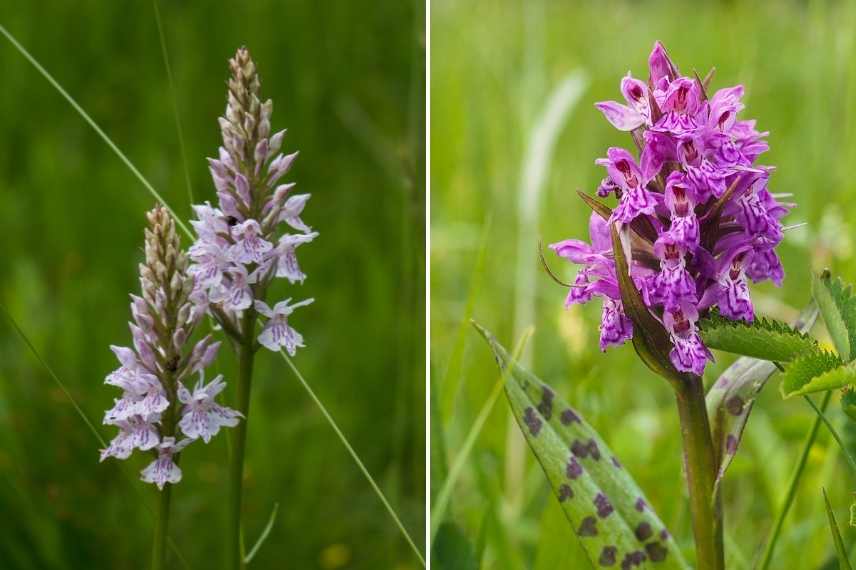
Dactylorhiza maculata and Dactylorhiza majalis
Cypripediums or Lady's Slippers
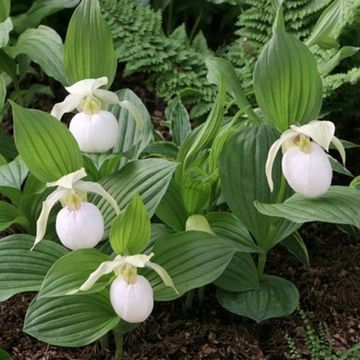
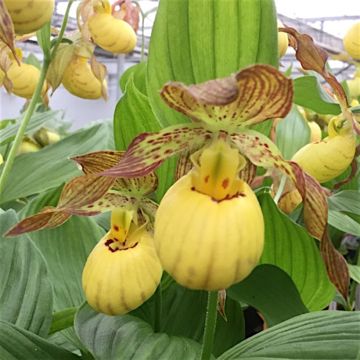
Cypripediums, more commonly known as “Lady’s Slipper”, are also perennial orchids for the garden. They bloom in spring, producing one to two flowers per stem, with colours varying depending on the species and varieties. A typical flower of the Cypripedium genus features its enormous lip resembling a slipper or a shoe.
The foliage of these orchids emerges from the ground in March-April, they bloom in May-June, and then their leaves die back in August-September. The orchid completely disappears in winter.
Among the botanical genus, the Cypripedium reginae is probably the easiest Lady’s Slipper to grow. Cypripediums should be planted in shade, in a cool rockery, between rocks or at the edge of a cool woodland. They can be accompanied by some fresh woodland perennials that prefer well-drained, poor, and slightly calcareous soil.
Very hardy, these orchids are nonetheless delicate regarding their growing conditions. It is important to remember that these plants require specific conditions: a poor, cool, but well-drained soil and a partially shaded exposure.
→ We offer a beautiful collection of Lady’s Slippers in our online nursery. Also, discover our ideas for pairing with Lady’s Slipper!
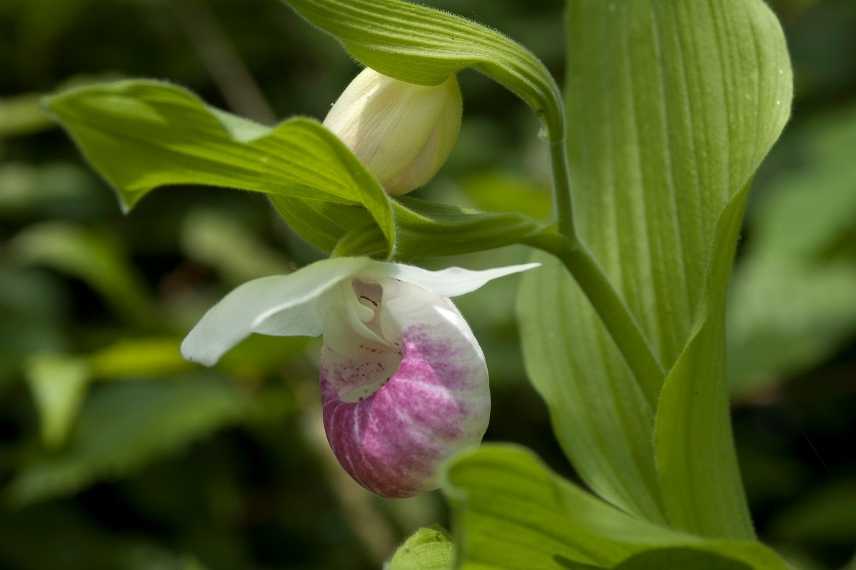
Cypripedium reginae
The Epipactis
The Epipactis are orchids, some species of which are native to our flora: Epipactis palustris, Epipactis helleborine, Epipactis purpurata…
The Epipactis gigantea is a large perennial orchid (70 cm tall!) displaying spikes of flowers from May to July, combining brown, orange-yellow, and red. The Epipactis gigantea ‘Night Serpentine’ is a stunning cultivar with purple foliage derived from this species.
Epipactis are very hardy and relatively easy to grow: they thrive in rocky subsoil, in peaty, porous, cool to moist soil, preferably acidic. These orchids dislike suffocating, impermeable, and overly heavy soils. They should be grown in full sun (if the soil remains moist) or in partial shade. The Epipactis grows well in pots, without any special protection.
Epipactis are original plants, yet with a natural appearance, making them easy to integrate into moist flowerbeds or along the edges of water bodies.
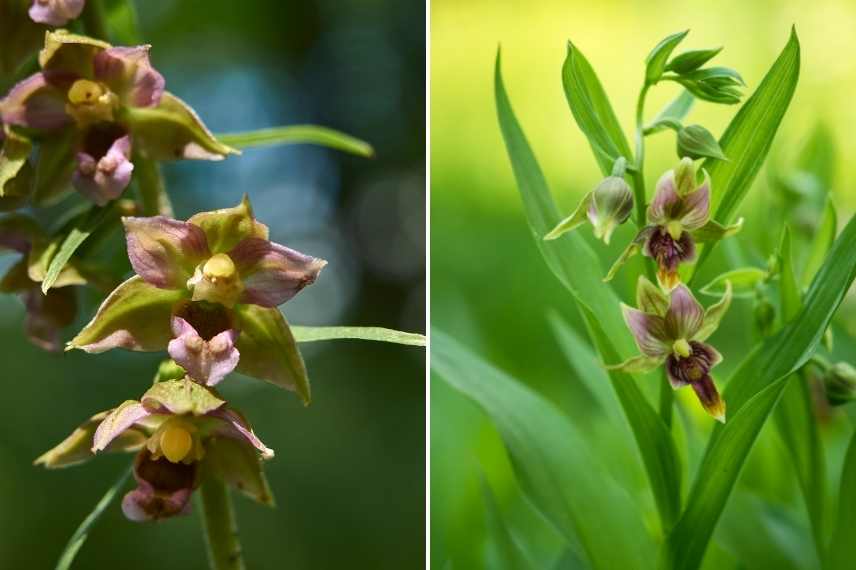
Epipactis helleborine, Epipactis gigantea
Spiranthes
Little known, Spiranthes cernua is an orchid native to the United States. At the end of summer or the beginning of autumn, the flowers, which exude a vanilla scent, appear to twist like braids at the top of the upright flower spikes. The variety Spiranthes cernua ‘Chadd’s Ford’ offers pure white flowering.
Very hardy, the fragrant Spiranthes thrives only in light, well-drained, acid to neutral soils, rich in humus or slightly turfy, remaining cool even in summer. It is best grown in partial shade or in full sun if the soil remains moist.
The Spiranthes can be planted in a moist, sunny border, on the banks of a natural pond, or in a pot to adorn a balcony or terrace.
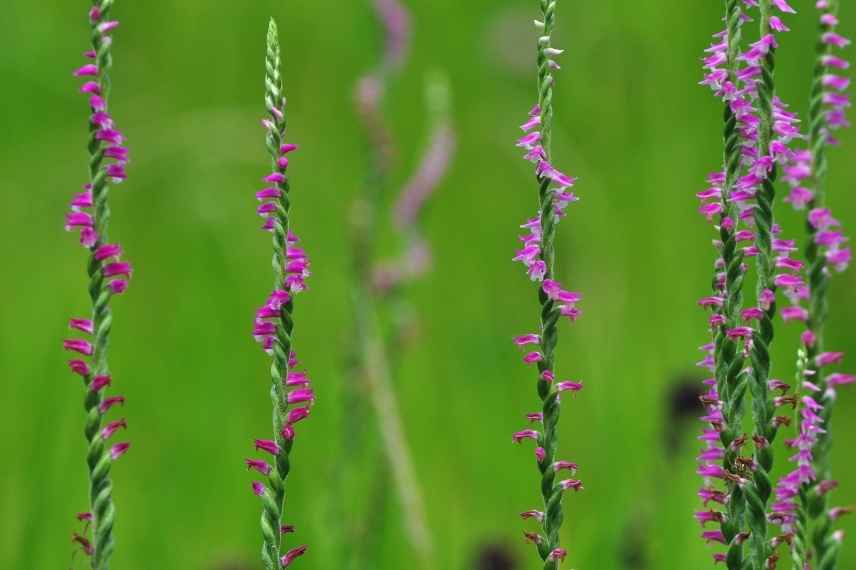
Spiranthes
- Subscribe!
- Contents

Comments