





























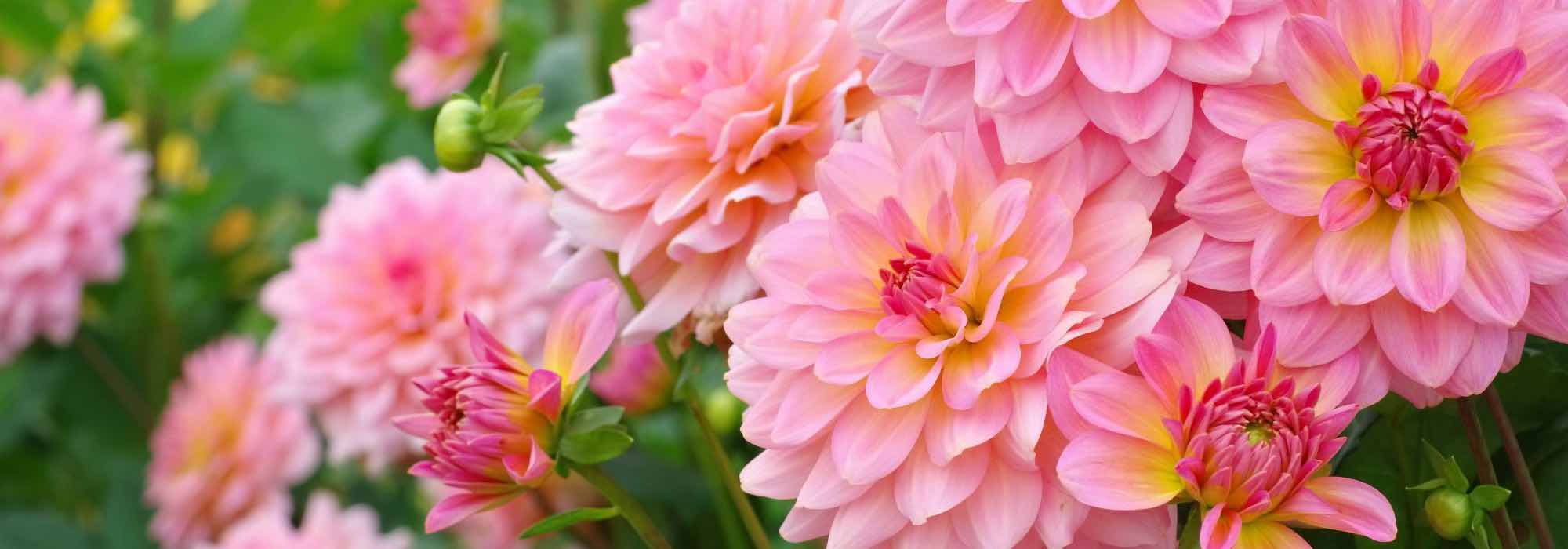
Growing summer bulbs in pots
Our tips to grow them successfully
Contents
Dahlias, Agapanthus, Gladiolus, Lilies… Don’t forget the summer bulbs in your planting plans to enjoy their generous and long-lasting flowering and their vibrant colours. Several species are frost-tender, so it’s advantageous to grow them in pots so you can easily bring them indoors once autumn arrives. Discover our tips on choosing bulbs suitable for pot culture, for choosing the right pot and growing medium, and for caring for your bulbs throughout their growth cycle.

Which summer bulbs should you choose for your pots?
When choosing, opt for varieties well suited to container cultivation:
- They should not grow too large; favour dwarf varieties or those with smaller dimensions. Also choose those described as forming a compact clump.
- Many species are frost-tender; it is wise to pot them up so they can be brought indoors for the winter.
Here are some popular summer-blooming bulbs for pot culture:
- Dahlias: with their vibrant and varied flowers, dahlias are perfect choices for pots.
- Gladioli: these bulbs produce tall flower spikes with a multitude of colourful flowers.
- Agapanthus: summer stars; the most compact varieties can readily be grown in pots.
- Lilies: available in a range of colours and varieties, lilies are majestic blooms for pots.
- Cannas: these bulbs produce lush foliage and exotic flowers, adding a tropical touch to your pots.
- Alstroemerias: refined, they bring a touch of exoticism to the garden.
- Eucomis: original and spectacular; they are a must-see.
- Oxalis: they have small tuberous rhizomes and are easy to grow outdoors, then indoors.
- Begonias: bulbous begonias come in a range of forms, with large flowers, hanging flowers or small flowers.
- Tulbaghia: they have delicate yet generous flowering, with star-shaped flowers.
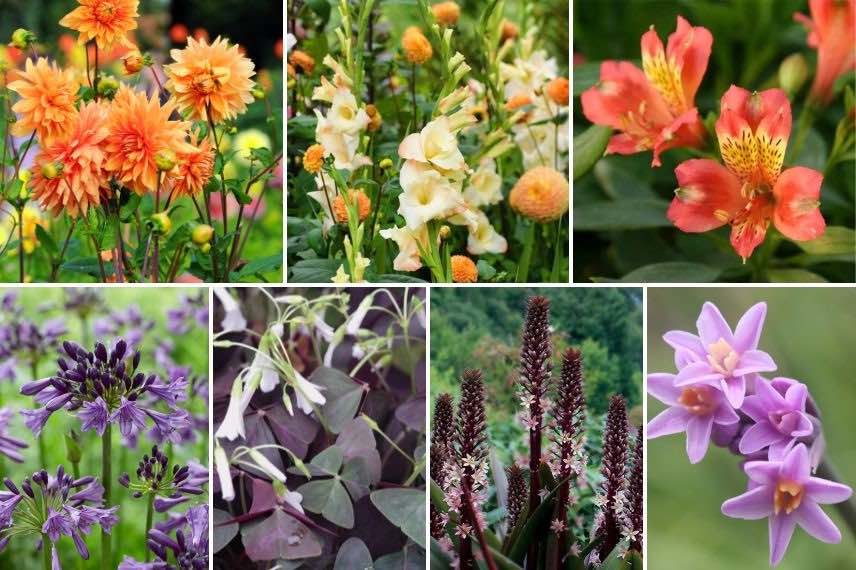
Clockwise from top left: Dahlia, Gladiolus and mixed Dahlias, Alstroemeria, Tulbaghia, Eucomis, Oxalis, Agapanthus
Choosing pot and substrate
When choosing pots for summer bulbs, opt for containers deep enough to allow root development. Choose pots with a diameter of at least 40 cm. Also ensure that the pots have drainage holes to prevent water from accumulating at the root zone.
If you plant dahlias, plant only one tubercle per pot, as they grow vigorously. If the chosen dahlia isn’t too vigorous, you can plant other bulbs in the same pot.
Use a quality, well-drained substrate enriched with organic matter to promote bulb growth. Many bulbs prefer sandy, very light soil. Select a potting compost with good water retention for one third of the mix, blended with one third garden soil and one third sand for planting. Or 70% potting compost and 30% sand. Add a handful of slow-release organic fertiliser, such as crushed horn and dried blood, to nourish your bulbs during flowering.
For the bottom of the pot, provide drainage material such as clay balls, pouzzolane or gravel. Also lay down an organic mulch to cover the surface of the pot.
If necessary, provide one or more supports.
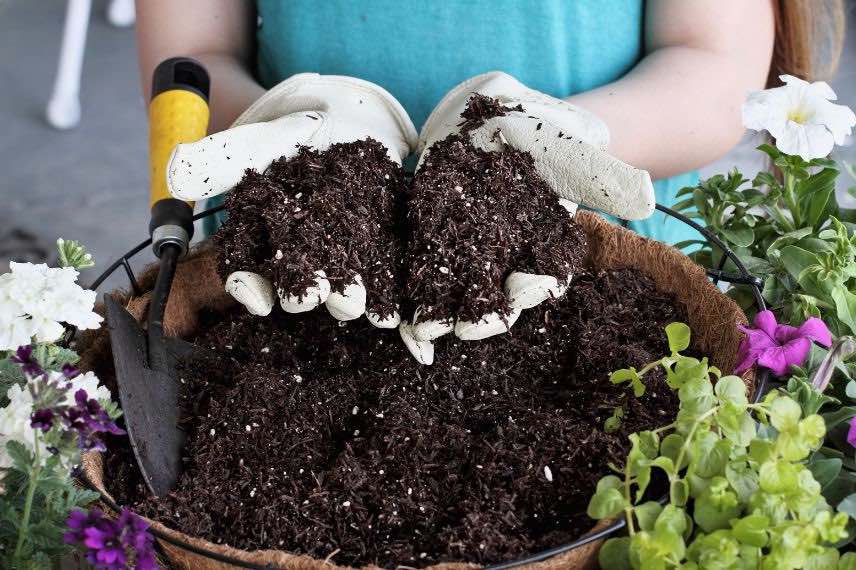
Create a rich, well-drained substrate
When to plant?
The planting period for summer bulbs varies by species. However, In general, planting takes place in spring, once the risk of frost has passed. Some varieties can be planted as early as spring, while others should be planted later in summer. Check the specific instructions for each type of bulb to determine the best planting period.
You can also speed up their cycle by planting them in pots from February, under cover and frost-free, to transplant them into a pot in the garden or onto the terrace in fine weather. In northern France, wait until June.
Read also
10 summer bulbs to plant in springPlanting summer bulbs
For planting summer bulbs, proceed as follows:
- Place a bed of clay pebbles, pozzolana or gravel at the bottom of the pot.
- Fill the lower half of the pot with potting compost or your mix.
- Plant the bulbs at a depth of 2 to 3 times the height of the bulb. Arrange the bulbs in a staggered pattern, ensuring the pointed end faces upwards. For larger bulbs, leave about 5 to 8 centimetres between each bulb.
- Install supports at this stage if necessary.
- Add the remaining substrate until it is about 2 cm below the pot’s surface.
- Lightly firm down, but carefully.
- Water generously for the first watering.
- Top up with potting compost if air pockets have formed.
- Mulch.
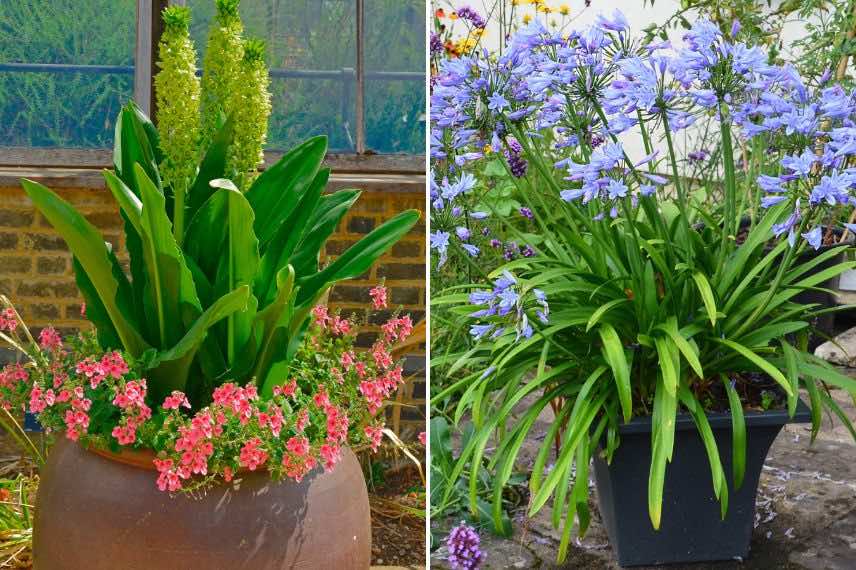
Two examples: Eucomis and Agapanthus in a pot
Care and overwintering
Care of summer bulbs in pots
- Watering: Keep the growing medium moist, but not waterlogged. Water regularly, making sure that water drains freely through the drainage holes.
- Diseases and pests control: Monitor signs of disease or pest damage such as aphids or slugs. Use biological control methods or appropriate insecticidal products if necessary.
- Pruning: Remove spent flowers as they appear to encourage prolonged flowering.
Let the foliage yellow to replenish the bulbs and ensure flowering the following year.
Overwintering of summer bulbs in pots
The simplest option is to bring the pot indoors in autumn, into an unheated room. However, you can also dig them up, in which case:
- Carefully remove the bulbs from the pot before the first frosts. Clean them by removing the potting mix and any damaged parts.
- Place the bulbs in a mesh bag or in a well-ventilated container filled with turf or dry sand.
- Store them in a dark, cool place, at a temperature of around 10–15°C, until the following spring.
- Subscribe!
- Contents
Comments