





























Growing kumquat
All our tips for successfully growing your plants
Contents
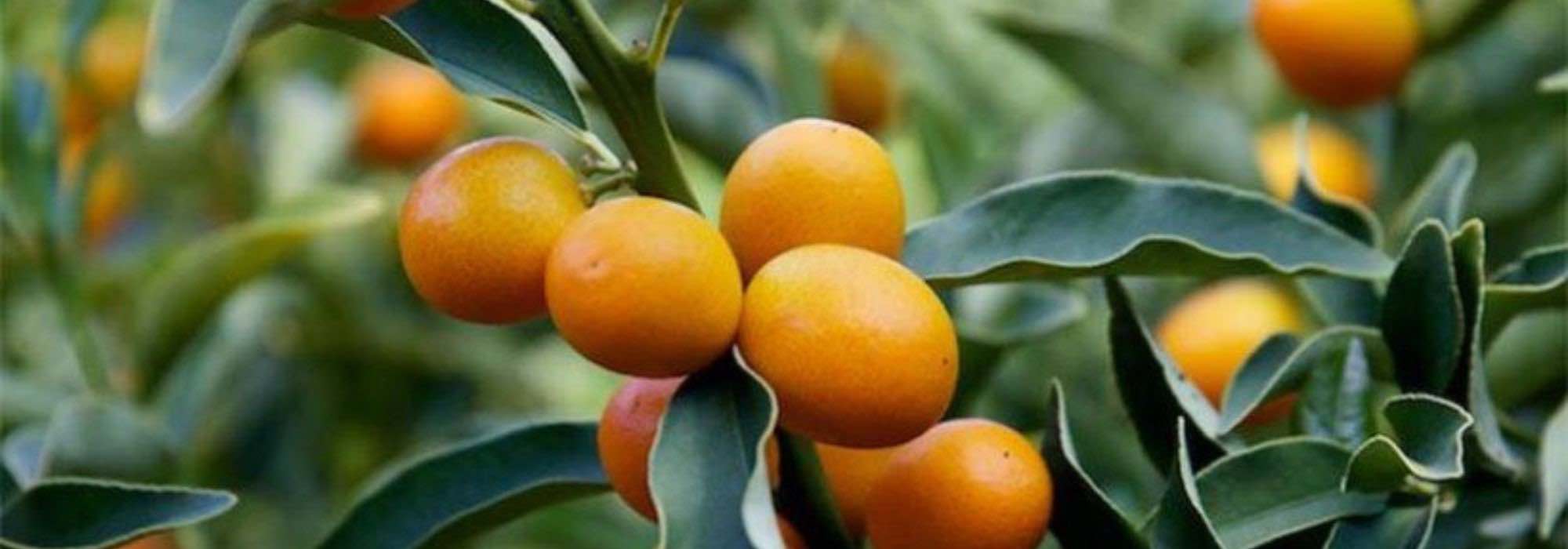
The Kumquat or Fortunella japonica is a citrus fruit with small oval or round fruits, boasting a unique taste. They are enjoyed with the skin for an explosive sensation in the mouth, a concentrate of zest and flesh with a flavour that is both acidic and sweet, with a hint of “spiciness”. It forms a bush with a rounded habit and dark green evergreen leaves. Ornamental, it displays small white flowers in summer and its lovely little round fruits in winter. The kumquat is quite hardy as it tolerates frosts down to about -10° C. However, its fruits are sensitive to frost from -4° C, and since they appear in winter, it is this latter value that should be noted regarding its hardiness.
Discover how to grow it in the ground in the mildest regions and in pots to be wintered elsewhere, as well as how to harvest and enjoy it.

When and how to plant a kumquat in the ground or in a pot?
Kumquats are ideally planted in April, when temperatures begin to rise.
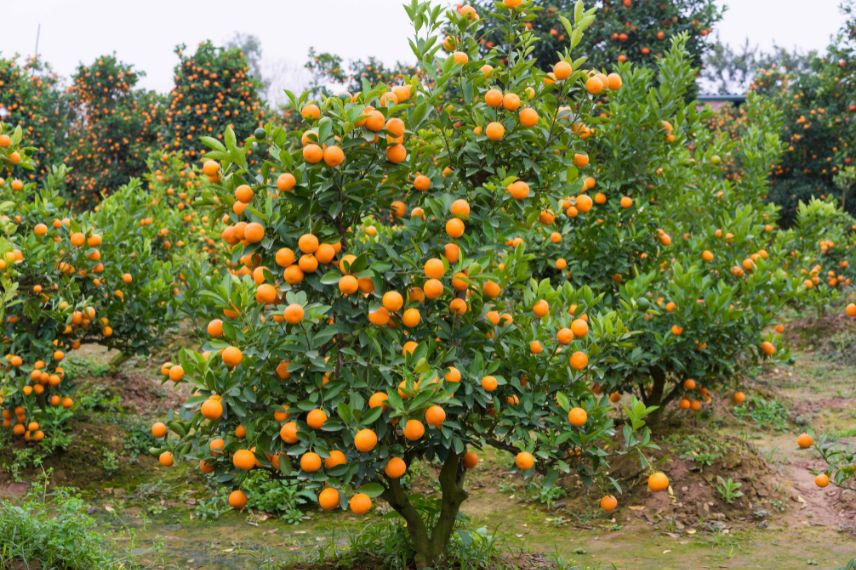
Planting kumquats in the ground is best reserved for the most southern regions, in the south of France and Corsica, due to their limited hardiness. Indeed, while the kumquat itself is quite hardy for a citrus tree, tolerating frost down to about -10°C, its small fruits are sensitive and can suffer frost damage from -4°C.
Elsewhere, kumquats are grown in pots outdoors and brought inside for the cold season.
Choose a sunny and warm location, sheltered from winds. In the northern half of the country, plant it in full sun, at the foot of a south-facing wall, for example. In the south of France, provide some shade during the hottest hours to prevent leaf burn, while ensuring maximum light.
This small, greedy citrus tree needs rich, fertile, yet light and well-draining soil. It dislikes limestone and thrives in neutral to acidic pH soil. Sand, compost, and fertiliser are the amendments you need for its planting.
Planting in the Ground
- Soak the root ball in a bucket of water for about ten minutes to allow it to rehydrate properly.
- Dig a planting hole about 2 to 3 times the size of the root ball.
- Mix your soil with well-decomposed compost, river sand, and possibly potting soil. Don’t hesitate to add a special citrus fertiliser, preferably organic.
- Install a drainage layer at the bottom of the planting hole (gravel, pumice, clay balls, etc.).
- Add a portion of your soil mix.
- Place the root ball in the centre of the hole, adding your mix until the roots are covered, but without burying the grafting point (a sort of bulge at the base of the trunk).
- Firm the soil.
- Create a wide rim around the base of your kumquat to retain watering water.
- Water generously.
- Mulch carefully to limit water evaporation and space out watering.
Planting in a Pot
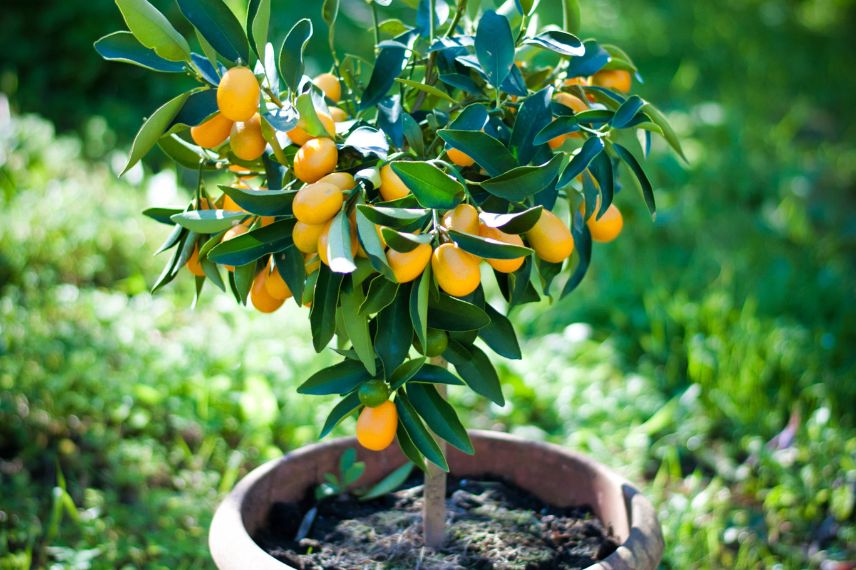
Choose a container 2 to 3 times larger than the root ball, such as a terracotta pot or a wooden trough, which must be drilled or can be drilled by you, to prevent the roots from stagnating in water.
Use a special citrus potting soil or create a substrate consisting of 50% potting soil, 30% compost, and 20% sand.
- Soak the root ball in a bucket of water for about ten minutes to allow it to rehydrate and facilitate the removal from the nursery pot.
- Place a drainage layer at the bottom of the pot using clay balls or gravel a few centimetres thick (avoid pumice as it is heavier in pots).
- Pour the potting soil or mixed substrate until about halfway up the pot. You can also add a special citrus fertiliser.
- Remove the nursery pot and loosen the roots at the bottom of the root ball.
- Place your kumquat in the pot.
- Fill in with your substrate without burying the collar.
- Firm the soil.
- Water generously.
- Mulch carefully to a few centimetres thick.
Entretien
The kumquat is a bush whose maintenance boils down to two main axes: watering and fertilisation.
Outdoor Cultivation
Water regularly during the first few years, allowing the citrus to develop its root system. Afterwards, water mainly during dry periods, preferably using rainwater. Plan to water once a week in summer, more often in case of prolonged drought. Reduce watering in autumn, then stop or significantly reduce it in winter, adjusting according to winter rainfall. It is highly recommended to mulch around the base, as this helps to keep the soil cool for longer while limiting weed growth. Place dead leaves or organic mulch around the trunk.
Apply organic fertiliser or well-decomposed compost to nourish the bush.
In autumn, when temperatures cool, you can place fleece over the aerial parts to protect the fruits, which are more sensitive to frost.
Pot Cultivation
Water regularly from spring to autumn, providing water as soon as the substrate becomes dry (watering once or twice a week). Use rainwater whenever possible. Avoid letting water stagnate in the saucer. The kumquat is nutrient-hungry, so apply liquid fertiliser about once a month. You can also use slow-release fertiliser. In winter, reduce water and fertiliser applications.
In autumn, around October, bring it into a frost-free shelter, such as a cold greenhouse or a conservatory. Choose a bright but unheated location: ideally, the temperature should be between 7 and 10 °C. In spring, take your kumquat outside to a sunny spot.
Repot your kumquat approximately every two years, preferably in spring. This way, you renew its substrate and provide more space for its roots and growth. In years when you do not repot, perform a top dressing: remove the top layer of substrate by a few centimetres and replace it with fresh potting soil.
Why isn't my kumquat tree producing fruit?
There are three criteria to check and modify if your tree is not bearing fruit:
- Is your Kumquat receiving enough light? Make sure that the location of your kumquat is warm, bright, and sheltered.
- Is its substrate or planting soil rich enough? If necessary, add compost and fertiliser.
- In winter, during the fruiting period, if your bush is outside, are the temperatures not too low?
Harvest and tasting
You can harvest the fruits of your Kumquat after 3 to 4 years of cultivation. In autumn and winter, between November and January, sometimes until March, its lovely small round or elongated fruits appear. Before ripeness, they have a bitter taste. When they are ripe, they take on a beautiful orange colour and detach easily. While they can remain on the tree for a long time before falling, they become sweeter, but then they lose their flavour. You have a harvest window to test according to your taste, but keep in mind that the acidic and “zesty” character of citrus trees is appreciated! The sweeter they become, the more bland they also get.
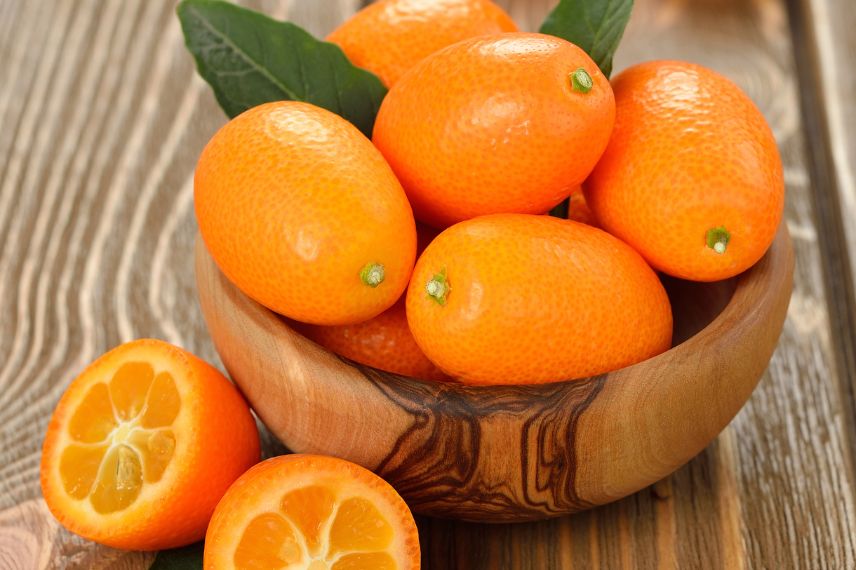
Kumquats have a variable flavour depending on the species and growing conditions, but it is always striking, like an explosion in the mouth. It is more or less acidic, more or less sweet, more or less mild. In any case, it has character. Notably, it is the only citrus tree whose skin is eaten. Thus, it is somewhat like the sensation of eating the zest of a citrus fruit. Rich in essential oil, it is a part of the fruit with a strong taste. Kumquats have few pips and not much juice, only what you feel when you bite into them, but certainly not enough to press. Like other citrus trees, they are rich in vitamin C.
They are enjoyed raw, simply, like a little treat. It is raw that their taste is the most powerful.
Cooked, they can be prepared as marmalade or chutney. They can be candied, sliced or whole, to decorate desserts and cakes. They can be used in sweet and savoury dishes like tagines or included in the composition of sweet and sour sauces in Asian dishes. Cooked, it is the “zest” flavour that stands out along with the fruity taste, both attenuated by cooking.
Personally, I like to use this little orange citrus raw, cut into strips on mini pavlovas, that famous dessert made of both crispy and sticky meringues, topped with a lightly or unsweetened whipped cream, alongside other tangy fruits. Meringues are very sweet preparations, and I find they are perfect with acidic fruits that awaken and balance them rather than with sweet fruits.
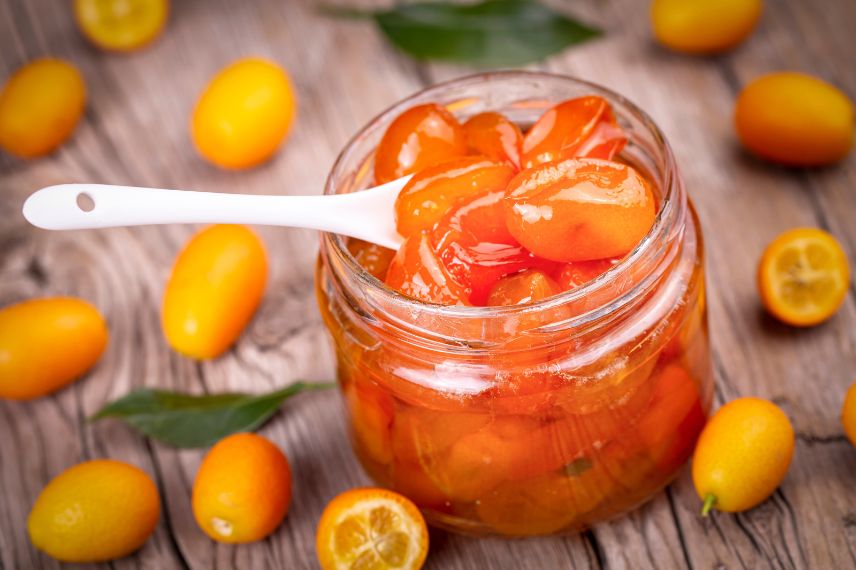
Delicious kumquat marmalade
- Subscribe!
- Contents
Comments