





























Growing Japanese Goumi for its edible fruits
Planting tips for Eleagnus multiflora
Contents
The Japanese Goumi or Eleagnus multiflora is a bush to discover for lovers of natural gardens or those conducive to welcoming birds and insects. Low-maintenance, it is easy to grow. It belongs to the family of Elaeagnaceae, native to China, Japan, and North Korea. Often used in free hedges, it offers a fragrant and melliferous flowering that attracts bees and pollinating insects in spring. In summer, it produces small edible red fruits, which can be harvested and enjoyed in jelly or compote. Discover our tips for growing the Japanese Goumi and enjoying its fruits.

What is the Japanese Goumi?
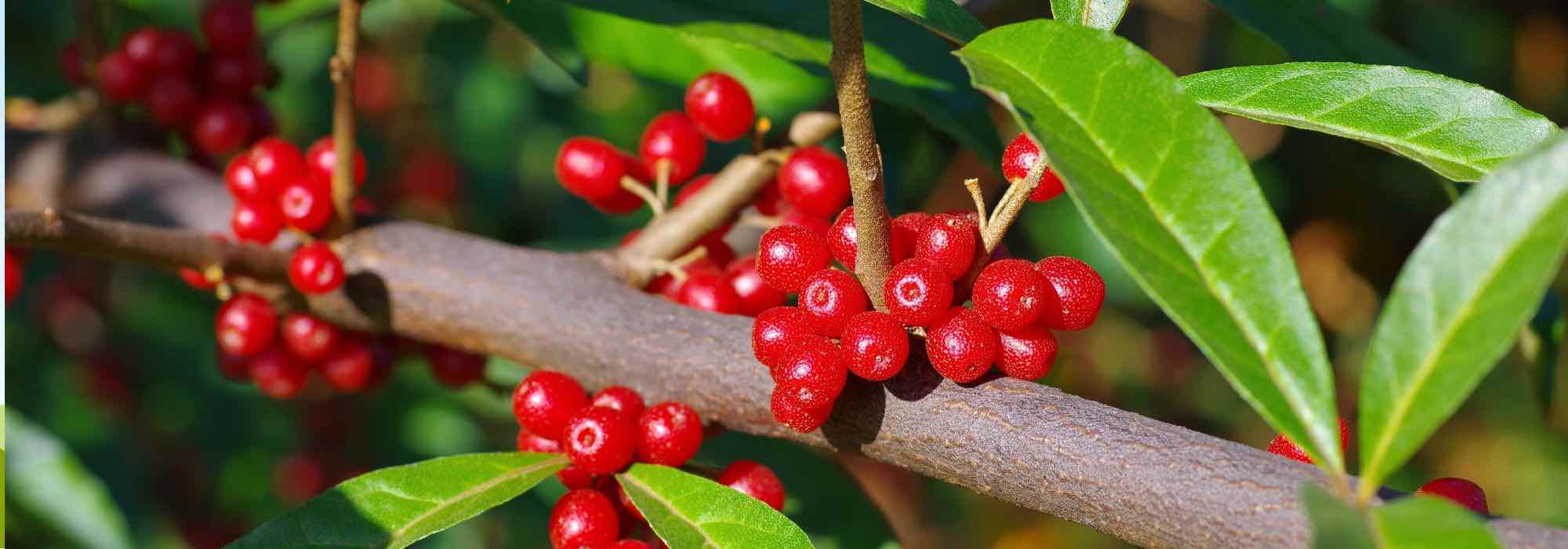
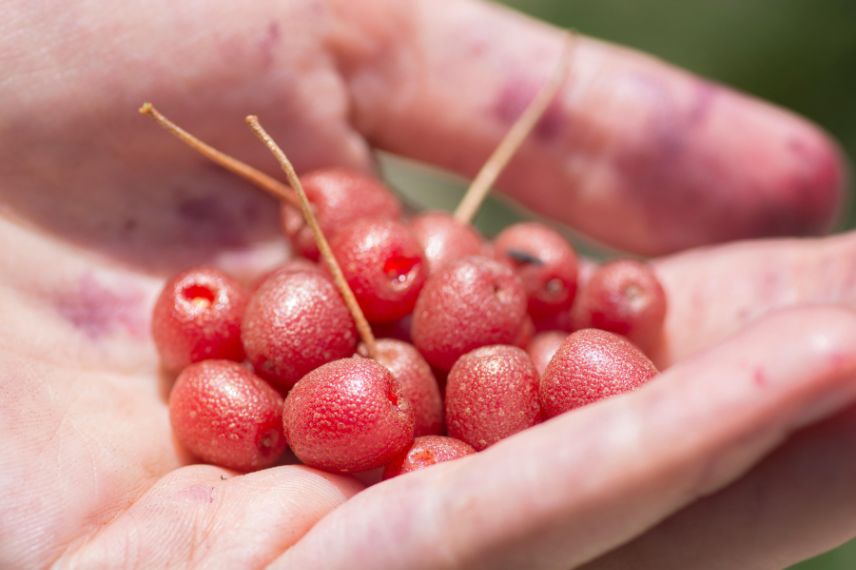
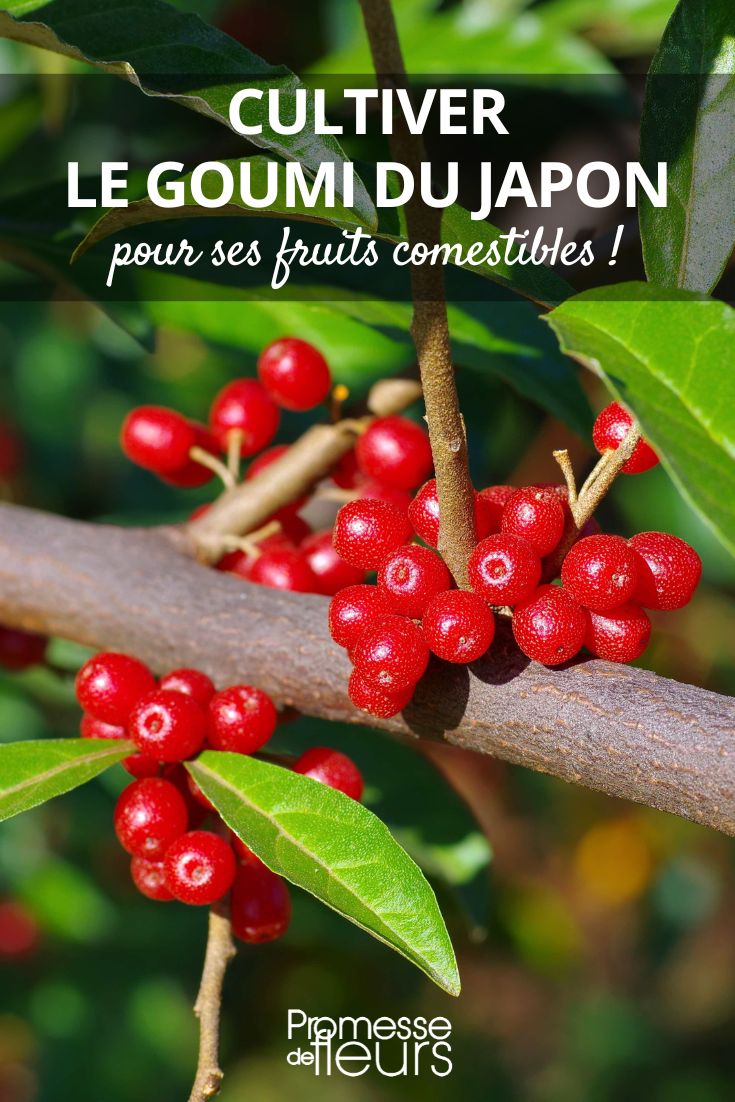
The Japanese Goumi or Eleagnus multiflora is a vigorous bush, growing quickly to achieve a height of 3 metres and a width of 3 metres at maturity. Self-fertile, it has semi-evergreen foliage in mild climates, which can also be deciduous or marcescent depending on your local climate. In the latter case, the leaves dry and remain on the branches in winter. Its reddish branches are covered in tiny scales and bear ovate leaves, green with a silver underside, sometimes even brownish-orange. They measure 3 to 10 cm long and 2 to 5 cm wide, with undulating edges. In April and May, small pale yellow fragrant flowers appear, delighting bees. The flowers are then replaced by small fruits or drupes that are oval and 1 cm long. Slightly translucent, the fruits are covered in tiny silver or brown pustules. They change colour, becoming orange, reddish-orange, and then cherry red when ripe and ready for harvest in the height of summer.
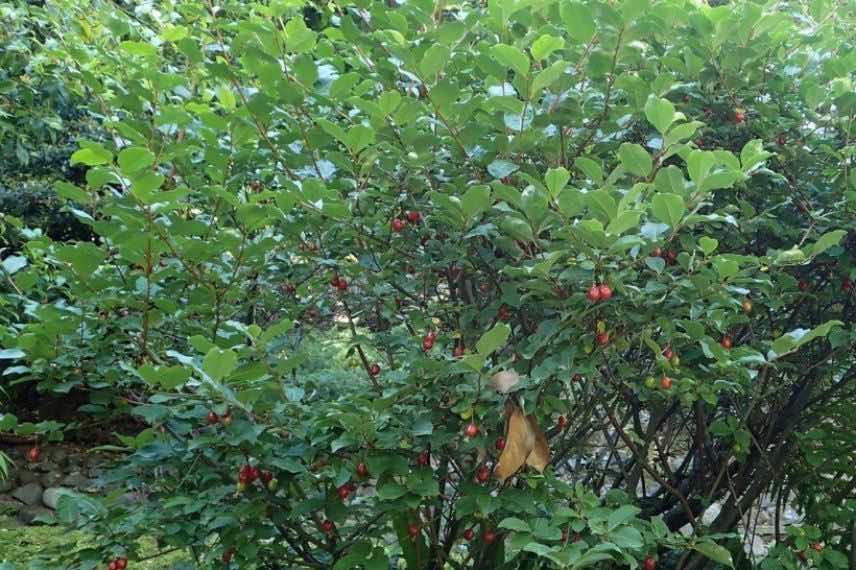
The Japanese Goumi forms a bush 3 m in all directions
When and where to plant?
Planting Period
- Japanese Goumi is preferably planted in spring, in March, or in autumn in October.
- However, it can also be planted all year round, avoiding periods of frost and extreme heat.
Climate and Exposure
- Naturalised in France since 1861, Japanese Goumi is suited to all climates in France. It is particularly established in the Vosges, Lorraine, and Meurthe.
- Hardy down to -28 degrees, it is resilient and can be grown in any region, even by the sea or in areas with strong winds.
- It should be planted in full sun or partial shade.
Soil
- It adapts to all types of ordinary soil, provided it is deep enough.
- The soil can be neutral, slightly acidic, or calcareous.
- Japanese Goumi prefers light, sandy soil, even poor, that remains cool in summer.
- It also adapts well to drier soils, as long as they are loose and well-worked.
- The roots of Japanese Goumi fix nitrogen, enriching the soil. A rich and moist soil is to be avoided for this bush. The roots of Japanese Goumi are also shallow and suckering.
Planting the Japanese Goumi
Planting in Open Ground
- Allow 1 m² of space per bush planted
- Dig a hole or trench 3 times wider than the root ball and 40 to 50 cm deep
- Mix the extracted soil with half potting compost
- Place a layer of gravel or clay balls at the bottom of the hole to ensure good drainage
- Position the bush in the centre of the hole, with the collar level with the soil
- Backfill the hole with the extracted soil
- Keep the bush upright and firm the soil with your foot
- Water generously after planting
Pot Planting
- The Japanese Goumi can be grown in a pot in a deep container. Allow for a pot at least 50 cm deep and 40 cm in diameter.
- Plant it in a well-draining mix of soil and sand, as the Japanese Goumi does not like stagnant moisture.
- Place a layer of clay balls at the bottom of the pot
- Water regularly
- Repot every 3 years.
Read also
10 unknown edible berriesCaring for Japanese Goumi
Watering
- In the first year following planting, water weekly to encourage establishment.
- Once well established, the Japanese Goumi requires no special care and can even go without watering in summer.
Pruning
- In the first few years, carry out light formative pruning at the end of winter, in March or even April.
- Thereafter, prune lightly at the end of winter to maintain a harmonious shape.
Diseases and Pests
- Very resilient, the Japanese Goumi is not susceptible to diseases or pest insects.
- It can suffer from chlorosis in overly alkaline soil and may be attacked by psyllids or caterpillars.
Use of Japanese Goumi
- Japanese Goumi or Eleagnus multiflora thrives in a free-standing hedge, a wild setting, or alongside other fruit trees, such as ornamental apple trees, prunus, dogwoods, or Amelanchier canadensis.
- It can serve as a screen, windbreak, or even a refugium for birds.
- It can be cultivated to harvest its edible fruits and consume them.
- To obtain more fruits, it is advisable to plant several Japanese Goumis.
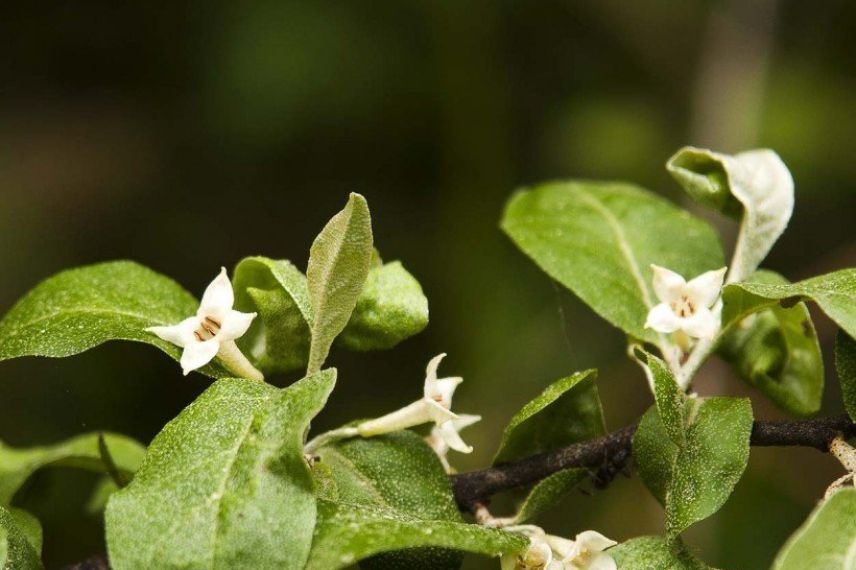
The flowers of the Japanese Goumi
When and how to harvest Japanese Goumi fruits?
- The fruits of the Japanese Goumi are ripe in July and August. They are then cherry red, making them ready for harvest at the end of summer.
- Edible, they have a sweet and tangy taste and are slightly astringent in the mouth.
- They are said to be rich in vitamins and antioxidants.
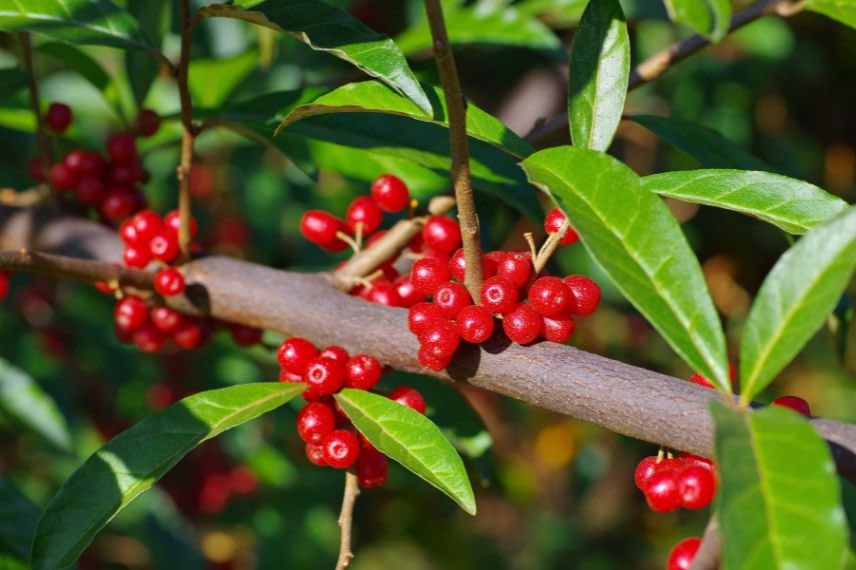
The red fruits of Eleagnus multiflora
What to do with Japanese Goumi fruits?
- Fruits of the Japanese Goumi can be harvested to make jelly, compote, syrup, and even wine.
- A juice extractor can be used to make these preparations.
- You can also leave them on the bush so that they are consumed by the birds that are particularly fond of them.
- Subscribe!
- Contents
Comments