





























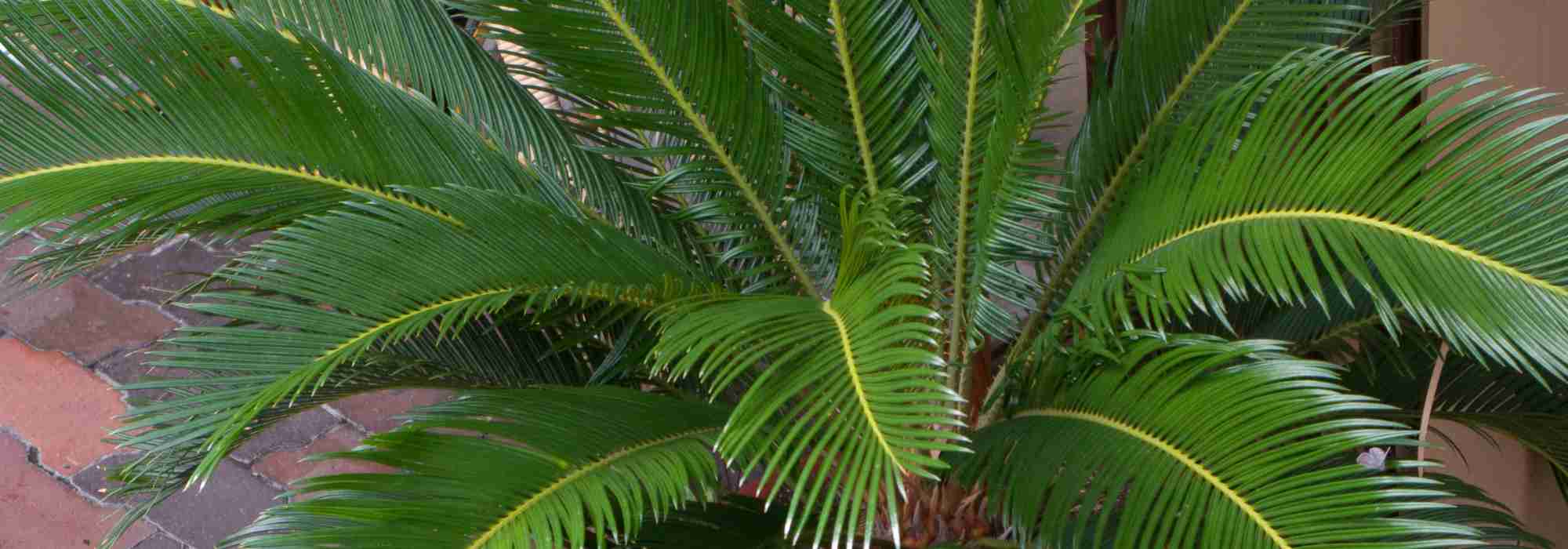
Growing Cycas in pots
A touch of exoticism in a pot
Contents
Do you dream of a garden with a tropical charm? Discover our growing guide for Cycas or sago palm in a pot, a unique prehistoric plant that is attractive and more resilient than you might think. From planting to maintenance, including tips on watering Cycas, necessary fertilisation, and substrate selection, we offer practical advice to successfully grow Cycas or Japanese sago in a pot and transform your garden into a true exotic oasis.
Cycas in a nutshell...
Cycas, or Sago Palms, are a genus of tropical and subtropical plants that belong to the family Cycadaceae. There are approximately 113 species of Cycas, making it the most diverse genus within the cycad family. Often confused with palms (hence their vernacular name, Fern-Palm) due to their similar appearance, cycas and palms, however, belong to fundamentally different groups of plants. In other words: cycas are absolutely not palms.
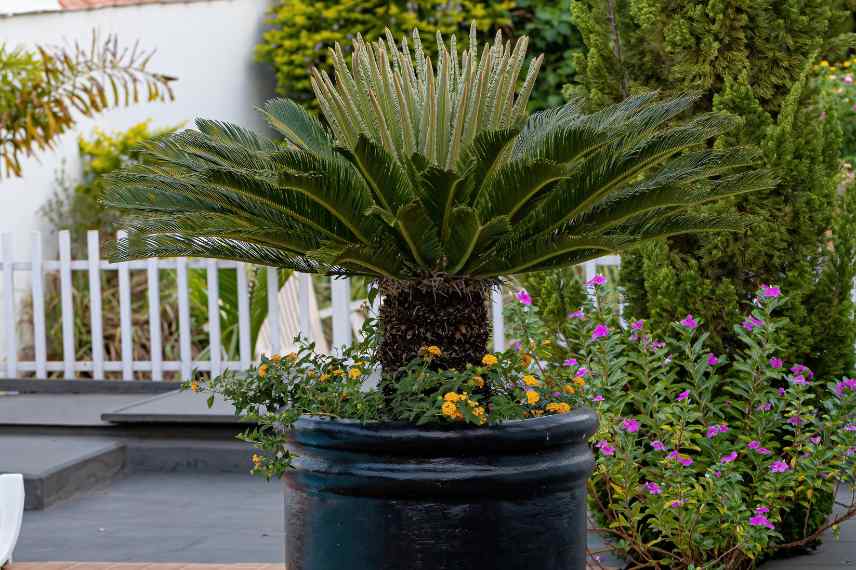
These plants are known for their impressive architectural appearance, with long, rigid pinnate leaves that grow in a tuft from the top of the trunk. The trunk itself, the stipe, is often short and stout, although some species have a more elongated trunk and then resemble palms more closely.
Cycas are dioecious, meaning that each plant is either male or female. Male plants produce pollen cones, while female plants produce cone-like structures that bear ovules.
→ Find our cycas in our online nursery: the “classic” Cycas revoluta or Japanese sago, or the lesser-known Moore’s Cycas.
Warning: It is important to note that all parts of the plant are toxic to humans and animals when ingested, due to the presence of cycasin, a neurotoxic glycoside. Therefore, it is best to grow them in places where they will not be easily accessible to children and pets.
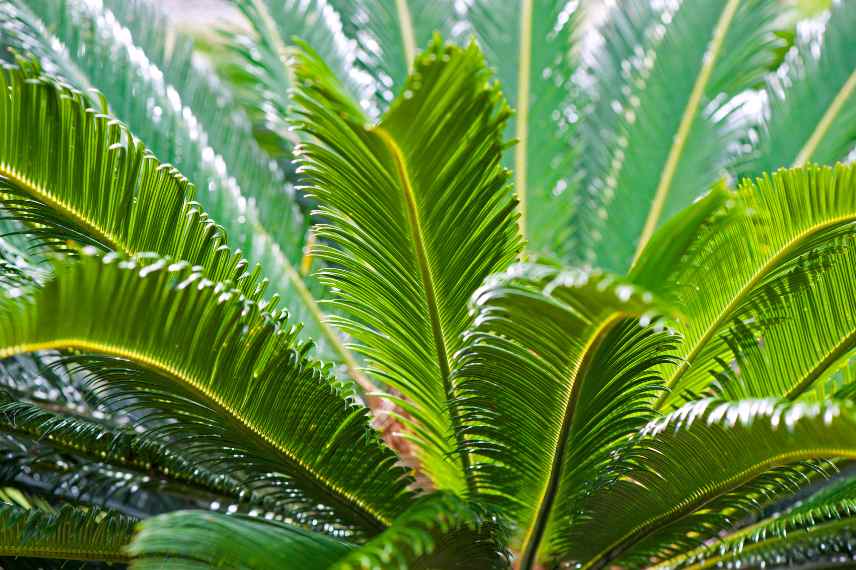
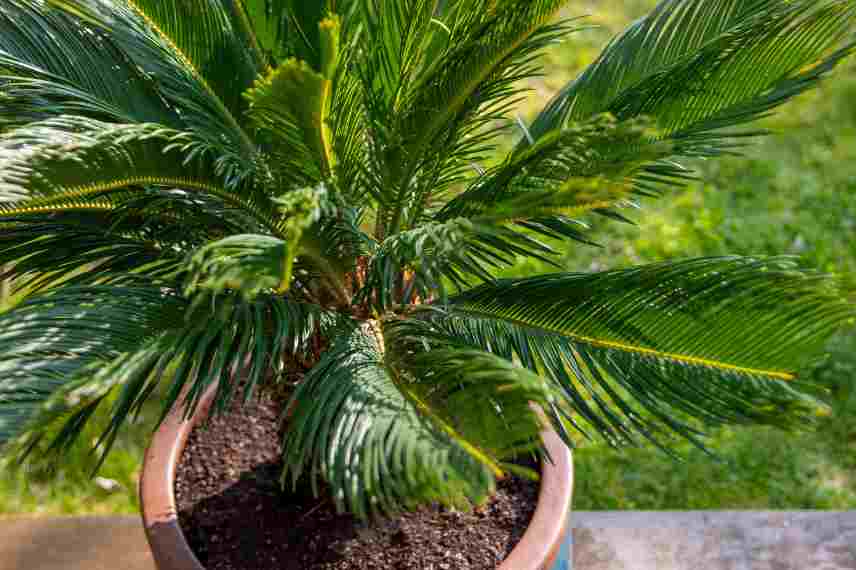
Majesty of the foliage of Cycas revoluta
Read also
How to protect Cycas in winter?Choosing the pot and substrate
A good pot for your cycas
Cycas have fleshy and powerful roots that need plenty of space to develop. Choose a wide and deep pot to allow for good growth of the root system. Generally, a pot with a diameter of 30 to 40 cm is a good starting point for a young plant. Cycas are slow-growing plants, so you won’t need to repot frequently. However, when the plant starts to look cramped in its pot, it’s time to repot it into a slightly larger pot.
Terracotta pots allow for good air circulation, which is beneficial for the roots of the cycas. Additionally, these pots are heavier, which can help stabilise the plant as it grows. Finally, the cycas prefers well-drained soil and does not like excess water. Ensure that the pot has drainage holes to allow water to flow freely.
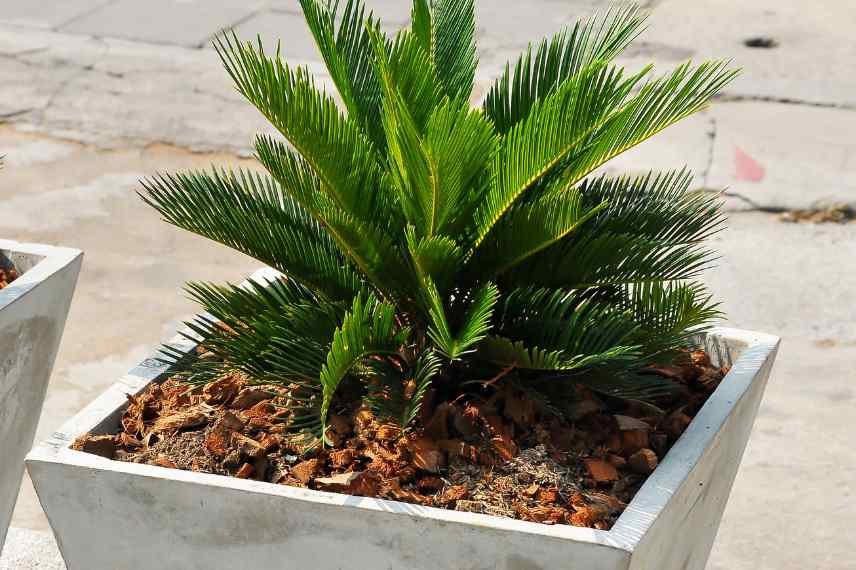
And a good substrate
Cycas prefer well-draining soil to avoid excess moisture and prevent fungal diseases. A standard indoor plant mix can work, but it is beneficial to improve drainage and tailor the substrate to the nature of cycas.
Use a mixture of equal parts indoor potting soil, coarse sand or perlite, and well-decomposed compost. This combination will provide good soil structure, promote drainage, and add essential nutrients. The indoor potting soil helps retain necessary moisture while offering some porosity. Sand or perlite improve drainage and soil structure, which is important as cycas do not like to have “wet feet.” The compost will add nutrients to the soil and help maintain good soil structure.
How to plant a cycad in a pot?
Firstly, place a layer of gravel or expanded clay balls at the bottom of the pot to improve drainage.
Fill the pot with the substrate mix (see above) to about one third of the height (or more depending on the size of the chosen pot). Then, place your Cycas in the centre of the pot, ensuring that the base of the stipe is level with the top edge of the pot. Fill the rest of the pot with your substrate mix, gently compacting it with your hands around the stipe.
Provide a good watering can of non-calcareous water to minimise any potential “air pockets” between the roots and the substrate.
Read also
Cycas revoluta: 10 questions & answersHow to care for your cycad in a pot?
L’entretien d’un cycas en pot est relativement simple :
-
Watering: Cycas do not like excess water. Water the plant thoroughly and then wait for the soil to dry out to a good depth before watering again. In winter, reduce watering further as cycas are in dormancy and require less water.
- Light: Avoid direct midday sun, which can scorch the leaves. Opt for filtered sunlight or partial shade outdoors, or a window facing east or west for cycas grown indoors or in a greenhouse.
- Fertilisation: Fertilise your cycas once a month during the growing season (spring and summer) with a special “Palm and Cycad” fertiliser. Avoid fertilising during winter dormancy.
-
Pruning: No pruning is necessary. If needed, simply remove dead or damaged leaves to keep the plant healthy and attractive.
What about the hardiness of the sago palm?
The Cycas revoluta or Japanese sago can tolerate temperatures down to around -5 to -10 °C, although this may vary slightly depending on soil or substrate moisture, drainage, and wind protection. If the plant is exposed to low temperatures for an extended period, or subjected to severe frosts, it may suffer damage and could even die.
In regions where winter temperatures are colder than the plant can tolerate, it is recommended to grow the cycas in a pot so it can be moved indoors to a bright, well-heated room during the coldest months. However, care should be taken to provide it with enough light indoors, as it needs bright light without direct sunlight to thrive.
- Subscribe!
- Contents
Comments