





























Growing an aster in a pot
To enjoy its natural flowering
Contents
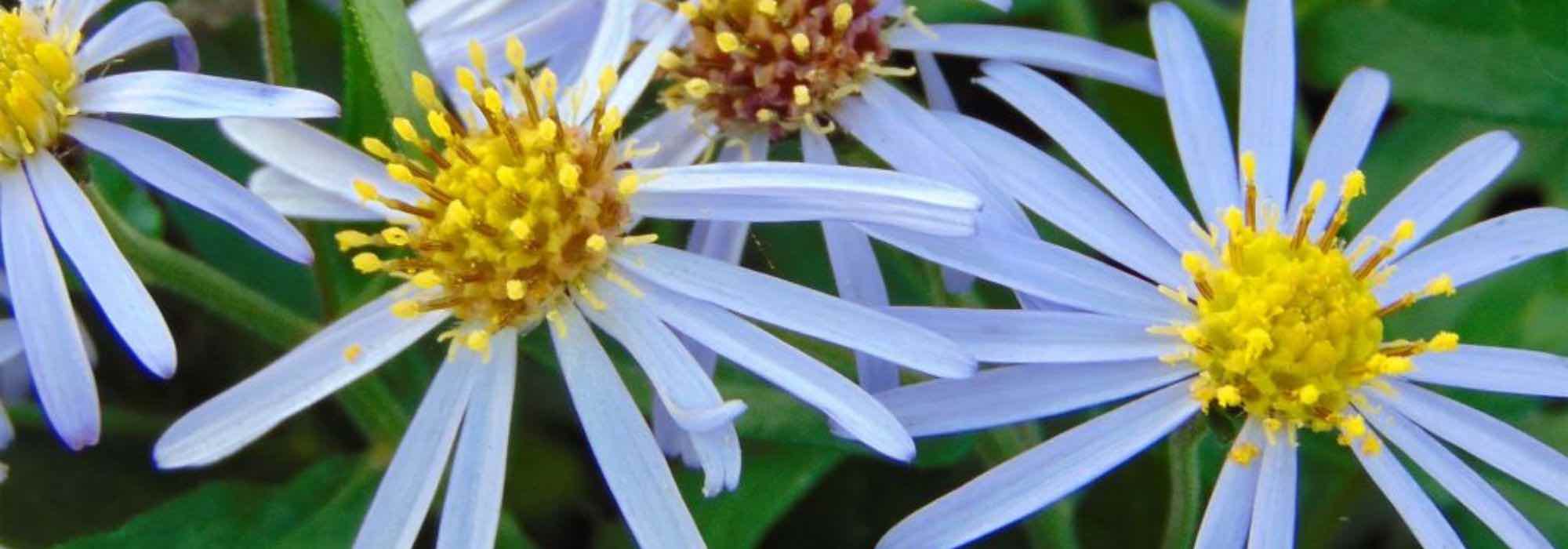
Perennial plants with vibrant colours, the asters bring a natural and wild touch to a garden or balcony. Moreover, they come in numerous species flowering in spring, summer or autumn, which allows you to brighten your garden or balcony with colour throughout the seasons, almost all year round. Blue, purple, pink and white, the flowers resemble daisies or daisy-like flowers with yellow centres. They also evoke a star shape, which is where their name Aster comes from, derived from the Greek for ‘star’. After flowering, seedheads appear that resemble those of a dandelion. Easy to grow, asters generally prefer sun and well-drained soil. Some asters reach over 1 metre, while others form cushions of 30 cm. A great choice for attractive window boxes or flowering pots! Discover our tips for growing asters in pots or window boxes on your balcony.
Which varieties of asters can be grown in pots?
The asters best suited to pot cultivation are the most compact species. Among the smallest, examples include:
- The Alpine Aster or Aster alpinus, which flowers in spring and reaches a height of 20–40 cm. Several varieties exist, such as the Aster alpinus ‘Albus’, which flowers from April to June, producing small white daisies about 20 cm tall. They are grown in full sun, in dry and ordinary soil.
- The Aster amellus provides a summer display. The variety Aster amellus ‘Rosa Erfüllung’ has a medium height of up to 50 cm and produces flowers in a pure pink colour. It enjoys sun and a moist growing medium.
- The Aster ageratoides ‘Adustus Nanus’ or summer dwarf aster yields lovely star-shaped mauve to pale lilac flowers and fits into pots thanks to its small height of 30 cm.
- The Aster dumosus, also dwarf and which flowers in autumn. Thus, the variety Aster dumosus ‘Professor Anton Kippenberg’ offers blue-violet flowers, from August to October, and reaches a maximum height of 40 cm. The flowers are semi-double. Its compact, stout habit gives it a handsome appearance in a pot. To grow in full sun and partial shade, in a rich, moist soil, sometimes rather dry.
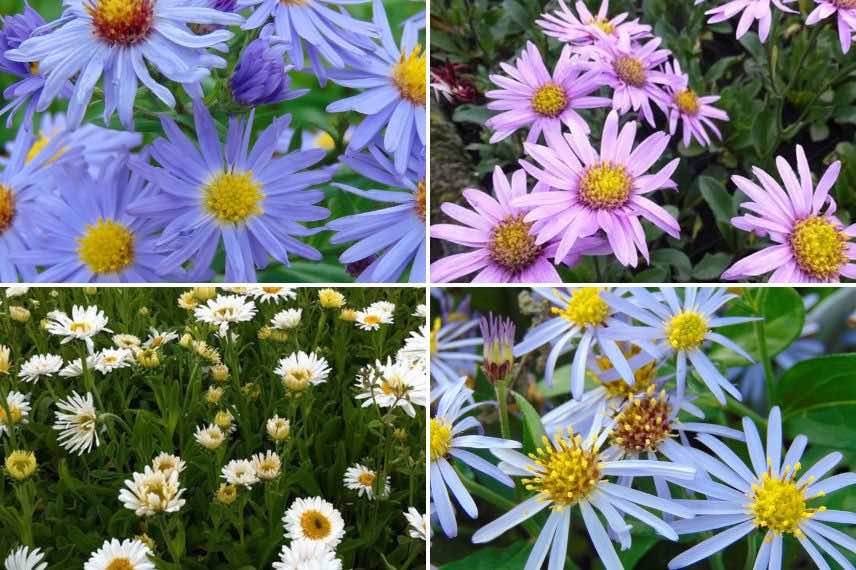
Clockwise from the top: Aster dumosus ‘Professor Anton Kippenberg’, Aster amellus ‘Rosa Erfüllung’, Aster ageratoides ‘Adustus Nanus’, Aster alpinus ‘Albus’
Read also
Asters : growing and careWhen and where should you plant an aster in a pot?
- It is best to plant asters in autumn, but it can also be done in spring.
- Aster generally prefers to be in full sun, but it can also, depending on the species, be grown in partial shade. Some species, such as Aster amellus et the Aster alpinus prefer a well-drained, dry and sunny soil. Others, such as the Aster novae-angliae, prefer a moist, rich soil with partial shade.
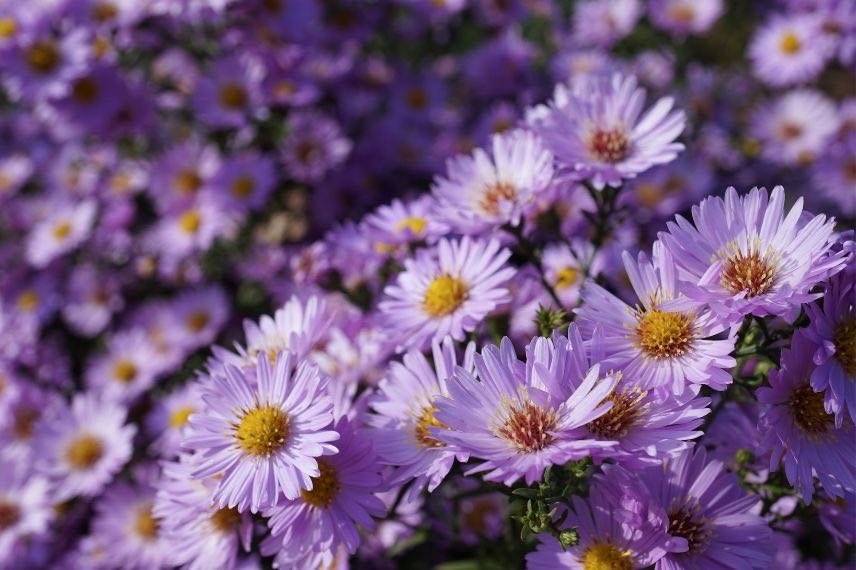
Generally, Asters like sun, but there are a few exceptions
How to grow an aster in a pot?
What type of pot?
An aster can be grown in any type of pot: plastic, resin, terracotta, or metal, with terracotta remaining the material that provides the best aeration for the roots.
What substrate?
To grow an aster in a pot, choose a good potting compost, to which you can add a little compost.
Planting
- Soak the root ball in water
- Take a pot or a planter with drainage holes in the bottom
- Fill it with potting compost
- Place the aster in the centre of the pot and fill with the remaining compost
- Gently firm the substrate
- Mulch around the base to keep it cool
- Water thoroughly
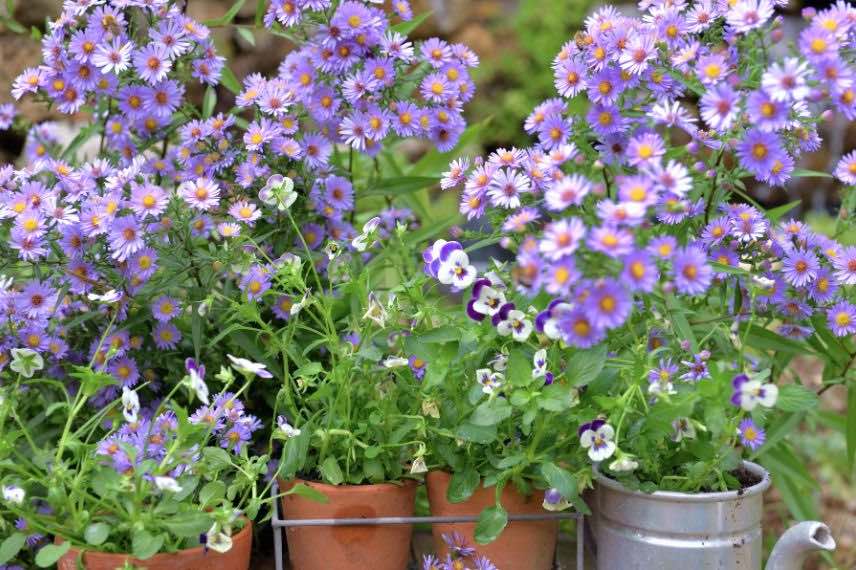
Asters make very pretty container plants
Read also
10 ideas to combine astersCare
Asters are easy to grow and require little maintenance.
Watering
- Water regularly, avoiding wetting the leaves to prevent powdery mildew.
- Don’t let the potting medium dry out completely.
Fertilising
Apply a liquid fertiliser in spring and during the summer
Pruning
- At the start of winter, cut back the stems that have dried to ground level. In regions with severe winters, it’s better to wait until the end of winter to carry out this pruning.
- In June, shorten the stems by half to encourage flowering and a dense habit, and to promote air circulation.
- Pinch the tips of the stems to encourage branching and keep the aster compact.
Staking
The taller Aster species may require staking.
Root division
- Consider performing root division every 2 to 4 years.
- This helps to aerate and rejuvenate the clumps.
Diseases
- The aster may be affected by powdery mildew, a white disease that appears on the leaves. To prevent this, ensure pots and plants are not crowded so that air can circulate well. You can also spray a preventive treatment in summer based on sulfur or horsetail manure. Did you know that Aster novae-angliae differs from other species in its resistance to powdery mildew.
- Asters are also susceptible to rust and downy mildew in damp conditions. You can use Bordeaux mixture or horsetail manure to treat these diseases.
- Asters may finally be attacked by the aphids or the slugs and snails.
For more on growing asters, consult our full guide to planting and caring for the aster, as well as our full range of asters.

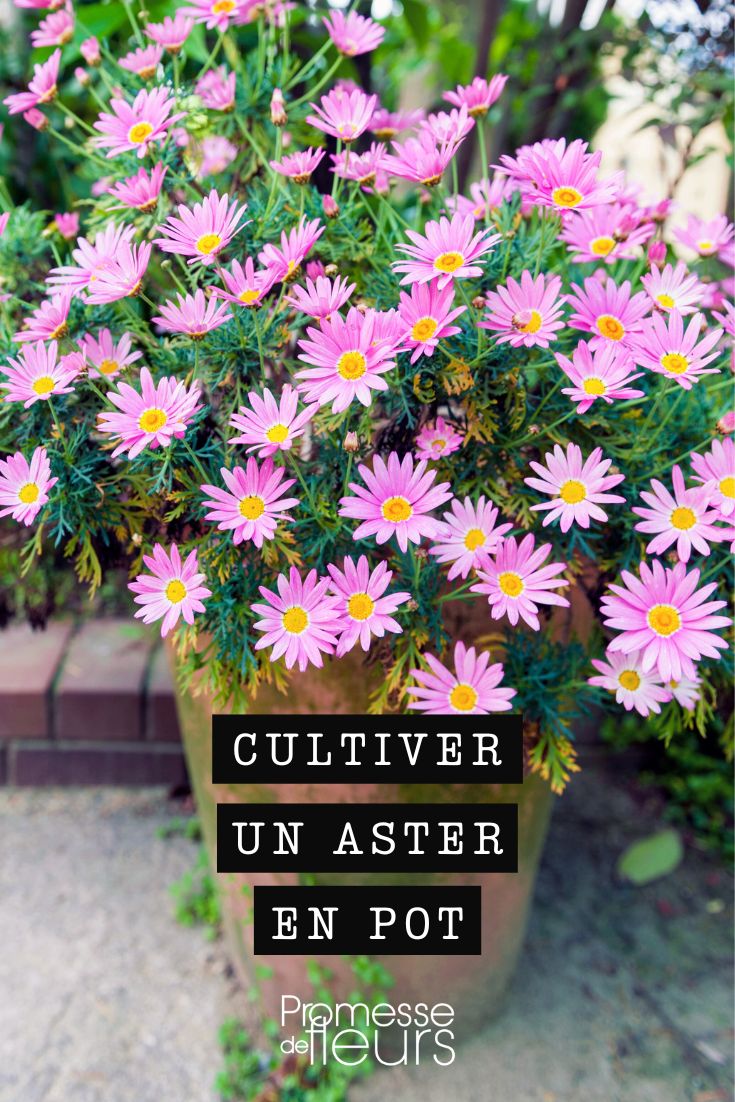
In a large pot, they form substantial clumps
- Subscribe!
- Contents
Comments