





























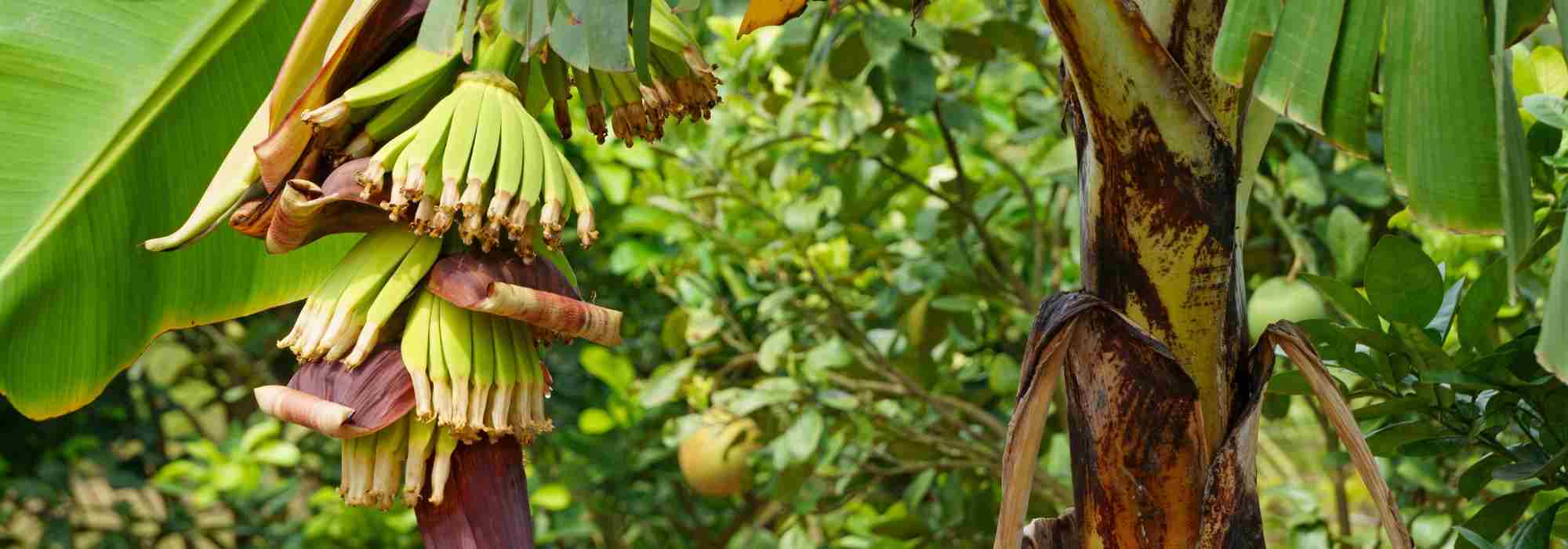
Growing banana plants in the ground
Cultivation and variety selection
Contents
Growing a banana plant in open ground in France or Belgium? While the idea may seem a bit bold, it is entirely possible to see these magnificent tropical plants thrive in our latitudes. However, it is essential to choose them wisely and provide the right care from the moment of planting. If you follow our advice, your garden can quickly transform into a lush oasis reminiscent of distant destinations.
→ Open your adventurous spirit wide and let’s explore the cultivation of banana plants in open ground!
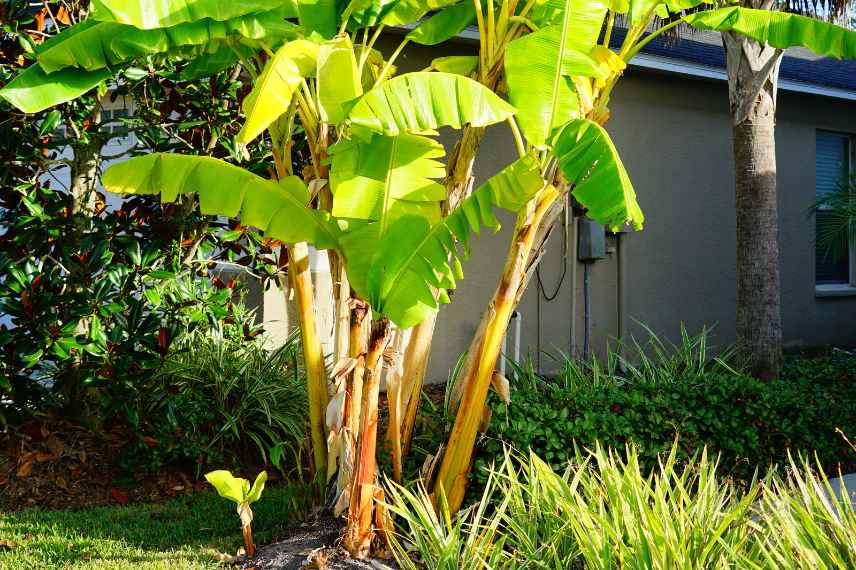
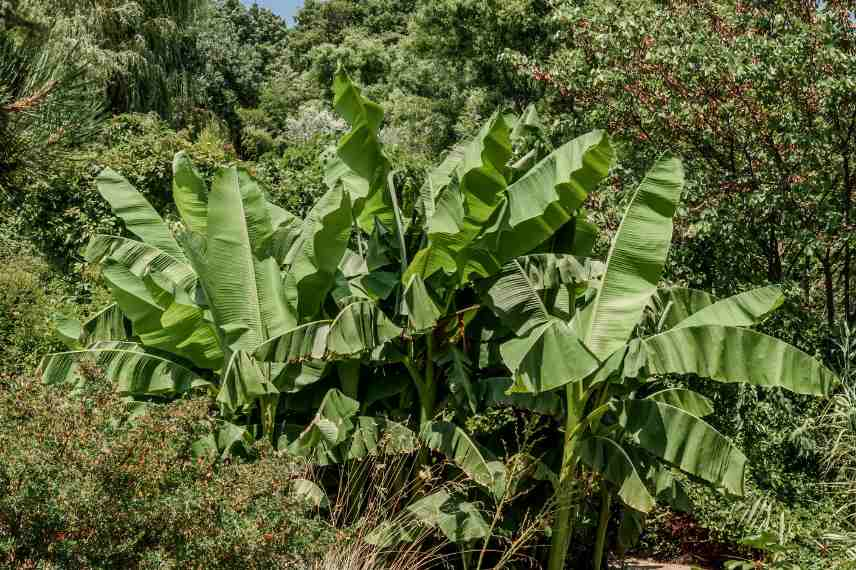 The banana plant alone brings a tropical air to the garden!</caption]

Which varieties of banana plant are suitable for planting in the ground?
Growing a banana plant in France is possible, even if the climate is not as tropical as that of its native regions. There are several varieties that withstand the cold well, making them suitable choices for outdoor planting. Here are some examples:
- Musa basjoo : This is the most cold-resistant species of banana plant and the most commonly grown in France. Native to China, this plant can survive temperatures as low as -12°C, or even lower if well protected. It can reach a height of 3 to 5 metres and produces small inedible bananas.
- Musa sikkimensis: This species, native to the Himalayas, is also very cold-resistant (-12°C). Its leaves are dark green, sometimes with red or purple hues, making it an attractive ornamental plant.
- Musa ornata: This ornamental banana plant is less cold-resistant (-5°C) than the previous ones but can survive in the ground in the warmest regions of France, such as the south. It is valued for its beautiful colourful flowers.
- Musa ‘Helen’s Hybrid’: This is a very cold-resistant hybrid that can survive temperatures as low as -12°C. It can reach a height of 3 to 4 metres.
- Ensete ventricosum ‘Maurelii’ (or red Abyssinian banana): This is not a true banana plant, but it is very similar and often grouped with them. It is an attractive ornamental plant with bronze-red leaves. It is less cold-resistant than the others (-2°C only) and may require wintering indoors in colder regions.
Remember, although these varieties can withstand the cold, they will all benefit from additional protection during the winter months.
→ Want to know more or looking for other planting ideas? Read 5 Cold-Hardy Banana Plants.
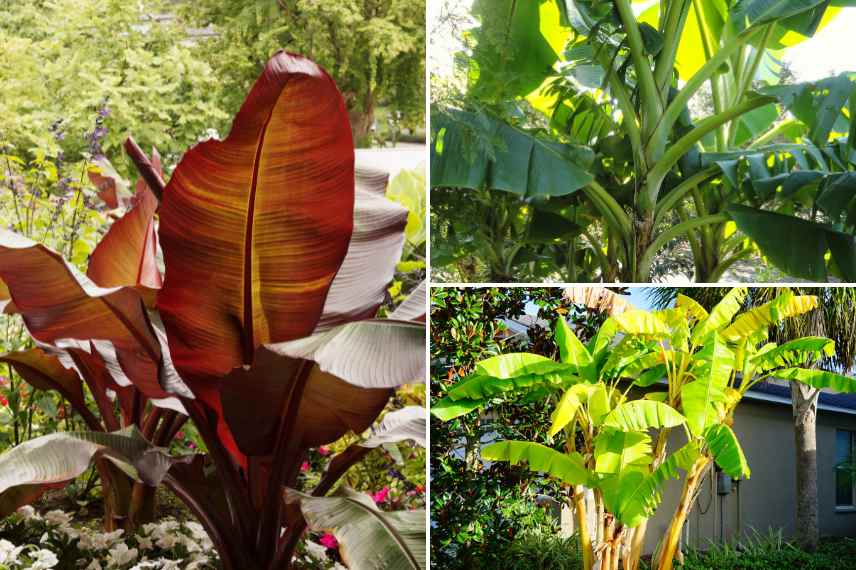
Ensete ventricosum ‘Maurelii’ on the left, Musa sikkimensis (top right), and Musa basjoo (bottom right)
How to plant a banana plant in the ground?
Growing a banana plant in the ground in our latitudes is entirely feasible. Here are a few key points to keep in mind:
- Choose the right variety (see point 1): Not all banana varieties are suited to the French climate. Opt for hardy varieties like Musa basjoo or Musella lasiocarpa that withstand the cold well;
- Find the right location: The banana plant loves full sun. Choose a well-sunny spot that is sheltered from the wind. The soil should be rich, well-drained, and slightly acidic;
-
Plant at the right time: Planting a banana plant is generally done in spring, between April and June. This is when the risk of frost has passed and growth will be the fastest.
Planting a banana plant
-
Soil preparation: Prepare the soil by removing weeds and stones. If the soil is clayey or compacted, add compost or well-rotted manure to improve the soil structure, drainage, and fertility.
- Digging the hole: Dig a hole about twice the width and depth of the banana plant’s root ball. This gives the plant plenty of space to establish its roots.
- Drainage: At the bottom of the hole, place a layer of drainage, such as gravel or broken pot pieces. This helps prevent water from stagnating around the roots, which could lead to rot.
- Planting: Place the banana plant in the centre of the hole, ensuring that the top of the root ball is level with the surrounding soil, or slightly raised. Then fill the hole with a mix of garden soil and compost.
- Firming: Lightly firm the soil with your hands around the base of the plant.
-
Watering: Water the plant generously after planting to help establish the roots and eliminate any “air pockets” between the roots and the soil.
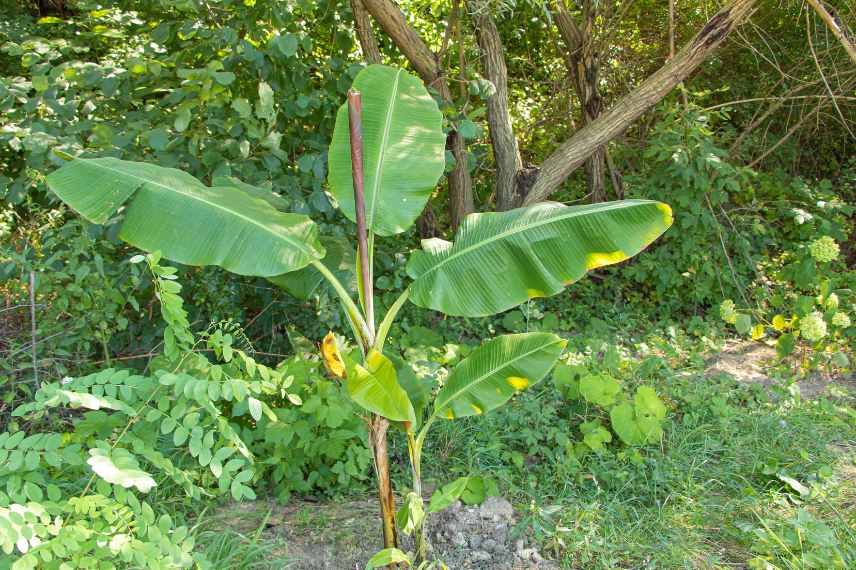
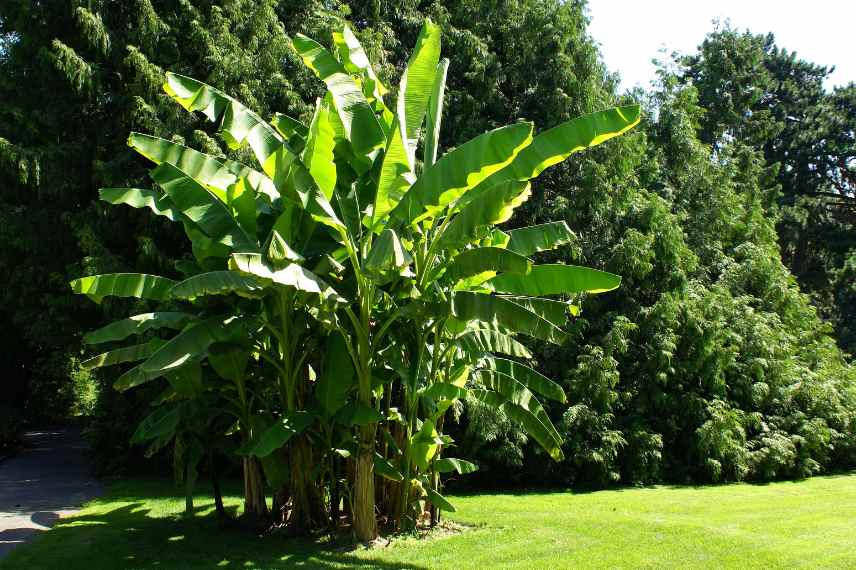
Musa basjoo in the ground
Caring for a banana plant in the garden
Spring-Summer
-
Watering: Banana plants love water. During the hottest months, they require abundant and regular watering, ensuring the soil does not become waterlogged. Make sure the soil remains moist but not soggy.
-
Fertilisation: Banana plants need plenty of nutrients to grow properly. Use a potassium-rich fertiliser, which promotes the overall health of the plant and fruit formation. Regular applications of compost or well-rotted manure are also beneficial.
- Pruning: Banana plants do not require pruning. However, you can remove dead or damaged leaves to keep the plant clean and healthy. Once a banana plant has borne fruit (if it ever does!), it dies but is usually replaced by its shoots.
Autumn
Reduce watering: As temperatures drop, gradually decrease the frequency of watering to help the plant prepare for winter.
In Winter
-
Protection from cold: Even hardy varieties of banana plants need some protection from the cold. Surround the trunk of the plant with straw or horticultural fleece to protect it from frost. A thick layer of mulch around the base of the plant will also help insulate the roots.
-
Limited watering: During winter, watering should be minimal. Ensure the soil does not dry out completely, but avoid overwatering to prevent root rot.
Please note: Regularly monitor your banana plant for any signs of disease or insect infestation. Yellowing leaves, for example, may indicate a lack of water or nutrients.
Read also
Potted Banana tree: planting and careGood to know
The propagation of banana plants: a piece of cake
Banana plants easily propagate through the offsets or “shoots” that appear at the base of the plant. You can separate these offsets and plant them individually to obtain new plants.
Can I hope to eat my own bananas one day?
In ideal conditions and after 2 or 3 years of cultivation, some banana plants (Musa basjoo or Musa sikkimensis) can produce fruit in France, but this is uncommon, and the fruit is often small and inedible. This is not ideal for us. The varieties grown in France are primarily chosen for their ornamental appeal rather than their fruit.
→ Read also: How to have a banana plant that produces bananas in France?
 Banana plants naturally produce offsets at their stump</caption]
- Subscribe!
- Contents
Comments