





























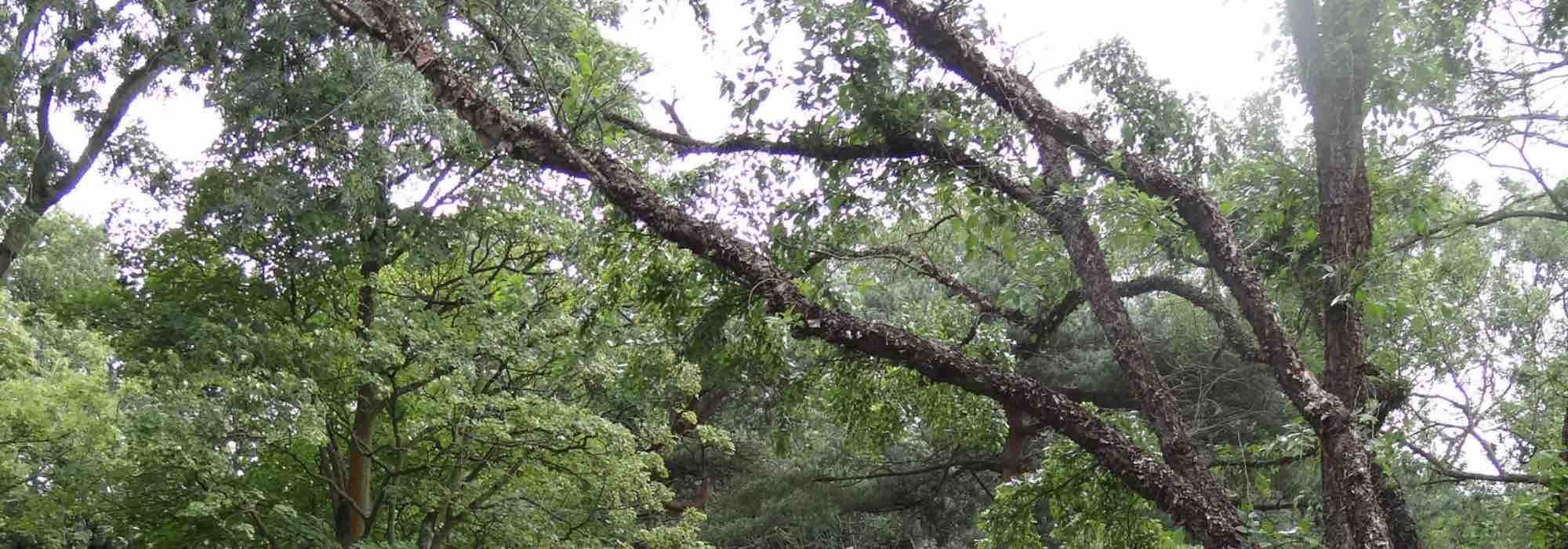
Gentle or Reasoned Pruning of Trees
Let's take care of our trees and bushes.
Contents
Gentle or selective pruning of trees is a practice aimed at maintaining the health and beauty of trees. This method involves pruning trees in a selective and moderate manner, ensuring that their natural growth and ecological balance are not compromised. Unlike drastic pruning, which can weaken trees and jeopardise their longevity, gentle pruning helps preserve their health and resilience against environmental stresses (storms, droughts, parasitic threats…).
→ In this advisory sheet, we will explore the principles and benefits of gentle pruning, as well as the techniques and tools used to practise it effectively and respectfully towards your trees.
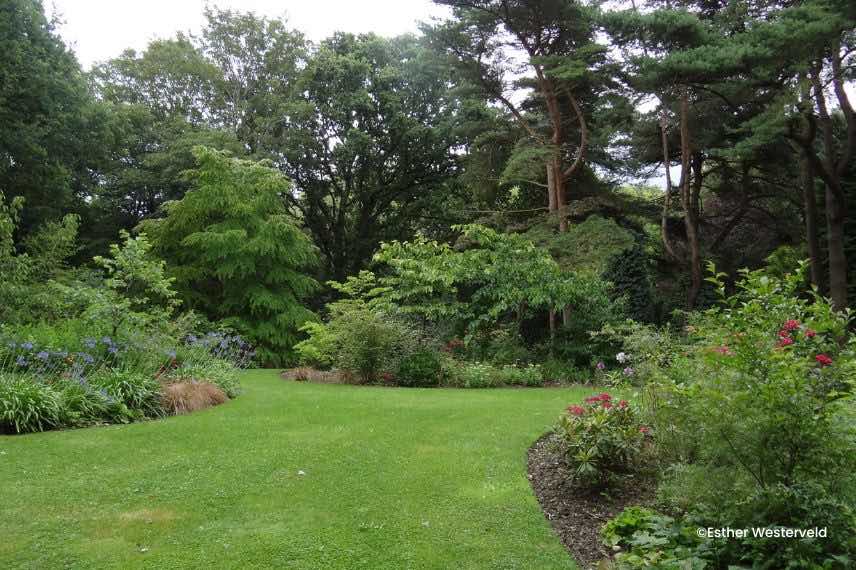
The Vasterival garden, renowned for its practice of selective pruning

What is gentle pruning of trees?
Gentle or reasoned pruning of trees is a pruning technique that involves measured intervention on the tree to maintain its shape, health, and harmonious development, while minimising its impact on the environment. Unlike severe pruning, which involves cutting back large branches, gentle pruning focuses on light and precise cuts to preserve the natural shape of the tree and encourage its growth.
By practising gentle pruning, one avoids causing significant injuries to the tree that could compromise its health and balance. Indeed, severe pruning can lead to serious injuries, loss of foliage, reduced resistance to diseases and pests, and even the death of the tree in the most severe cases.
Gentle pruning thus helps to preserve the natural beauty of trees while contributing to environmental protection by limiting the impact of human intervention on the ecosystem.
→ For further reading: Pruning trees in transparency is a form of gentle pruning.
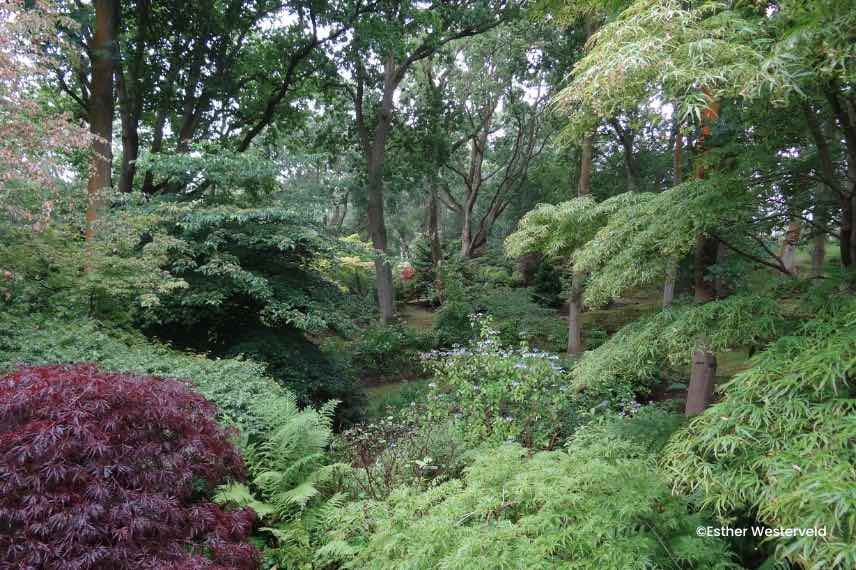
Pruning in transparency is practised at the famous Vasterival Garden, and its aesthetic benefits can be observed here
Read also
Pruning trees in transparencyHow to practise sensible pruning: the key principles
The practice of reasoned pruning on a tree can vary depending on the species of tree, its age, or its size. However, here are some general steps to follow:
- Observe the tree: Before starting the pruning, it is important to observe the tree to identify dead, diseased, or dangerous branches, as well as areas of excessive or unbalanced growth. This observation also helps determine the goal of the pruning, such as improving air and light circulation (transparent pruning), reducing the size of the tree, or removing dangerous branches. Additionally, don’t hesitate to step back (literally!) between each cut to check that you are doing a good job and that your tree maintains a harmonious appearance.
- Remove dead or dangerous branches: The first step in reasoned pruning is to remove dead, diseased, or dangerous branches for the safety of the tree and its surroundings. It is important to use clean, sharp pruning tools to minimise injury to the tree.
- Thin out the branches: Once the dead or dangerous branches have been removed, it is possible to thin out the branches to improve air and light circulation within the tree. This involves removing branches that cross, rub, or are too close together to allow other branches to develop properly.
- Reduce the size of the branches: If the goal of the pruning is to reduce the size of the tree, it is important to limit the size of the branches to less than one-third of their length to avoid having to cut branches of too large a diameter. It is also advisable not to prune too close to the trunk to avoid damaging the tree.
- Avoid severe pruning: Severe pruning can cause damage to the tree, so it is important to avoid this practice. If severe pruning is necessary, it should be done in several stages to minimise stress on the tree.
- Regular maintenance: Reasoned pruning should be carried out regularly to maintain the health and beauty of the tree in the long term. It is important to monitor the tree and practice light, regular pruning to avoid damaging it.
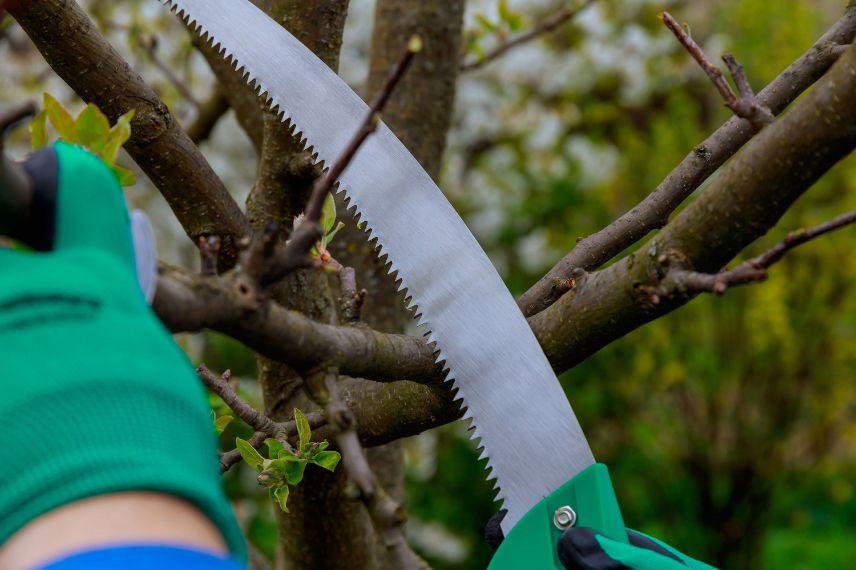
Medium branches are pruned with a pruning saw
- Use appropriate tools: use quality and suitable tools for tree pruning such as pruning shears and pruning saws that are well sharpened and disinfected beforehand. Poorly maintained tools can cause injuries to trees and make them more vulnerable to diseases.
→ To learn how to clean and sharpen your cutting tools, read Clean, maintain, and protect your garden tools.
The right time
In general, the best time for reasoned pruning of trees is during the tree’s dormancy period, that is, during winter when the tree has lost its leaves, to minimise the stress of pruning. This allows the tree to focus its resources on healing pruning wounds rather than on leaf or flower growth. However, it is important not to prune during freezing periods, as this can damage the tree.
It is also possible to carry out light pruning in summer to remove some dead, diseased, or dangerous branches.
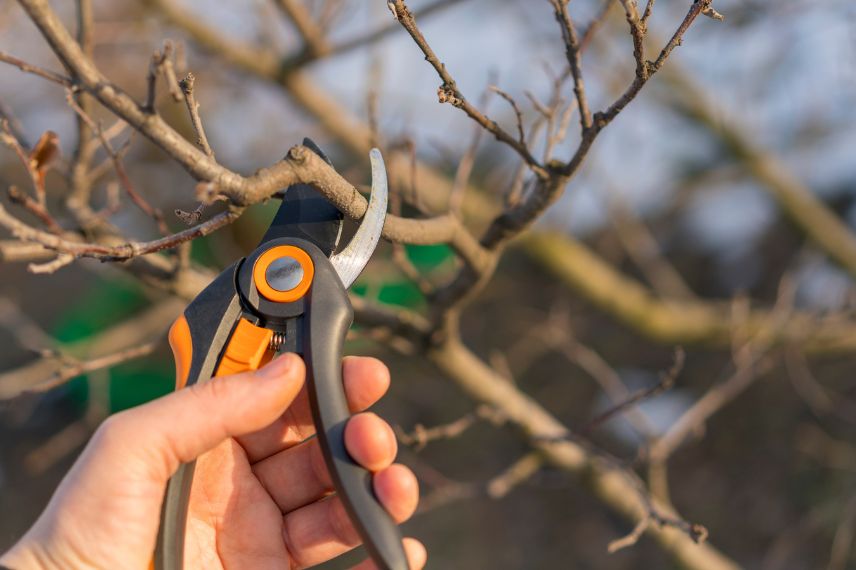
Pruning is carried out during the tree’s dormancy period
Discover other Large specimen trees
View all →
Available in 3 sizes
Available in 4 sizes

Available in 5 sizes
Available in 6 sizes
Available in 6 sizes
Available in 3 sizes
Available in 4 sizes
Available in 3 sizes
Available in 5 sizes
Available in 4 sizes
Advantages and disadvantages of gentle pruning
Advantages:
- Preserves the health and natural balance of the tree;
- Promotes harmonious growth of the tree: which helps to maintain the tree’s natural beauty;
- Reduces the risk of injuries and diseases;
- Improves safety by reducing the risk of dead or brittle branches.
Disadvantages:
- Requires a certain level of technical expertise to be carried out effectively;
- May be more expensive than severe pruning, as the work is longer and often requires a serious professional;
- The results are less visible in the short term compared to severe pruning.
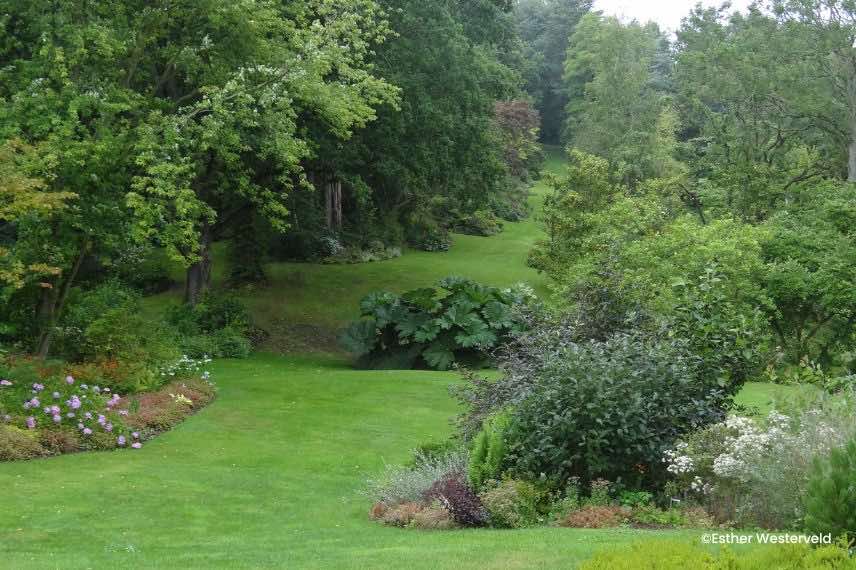
At the Vasterival garden, gentle pruning has been practiced for a long time. In this overall photo, the harmony and place of each subject can be perceived, without harmful competition
It is important to note that the advantages of gentle pruning far outweigh its disadvantages. This pruning method is much more environmentally friendly and helps maintain the health and beauty of trees in the long term. Gentle pruning is indeed recommended by experts in arboriculture, who are concerned about the health of trees.
A little word from Oli: when you hire a tree surgeon, take a little tour of the garden with them beforehand and don’t hesitate to ask them any questions regarding the pruning of your trees. You will see through their answers whether they are a qualified and serious arborist who genuinely cares about the health and beauty of trees. Therefore, avoid anyone who laughs at you when you talk about reasoned pruning… If you have any doubts, seek someone else! Word of mouth among gardeners is also an excellent way to find the rare gem.
- Subscribe!
- Contents
Comments