





























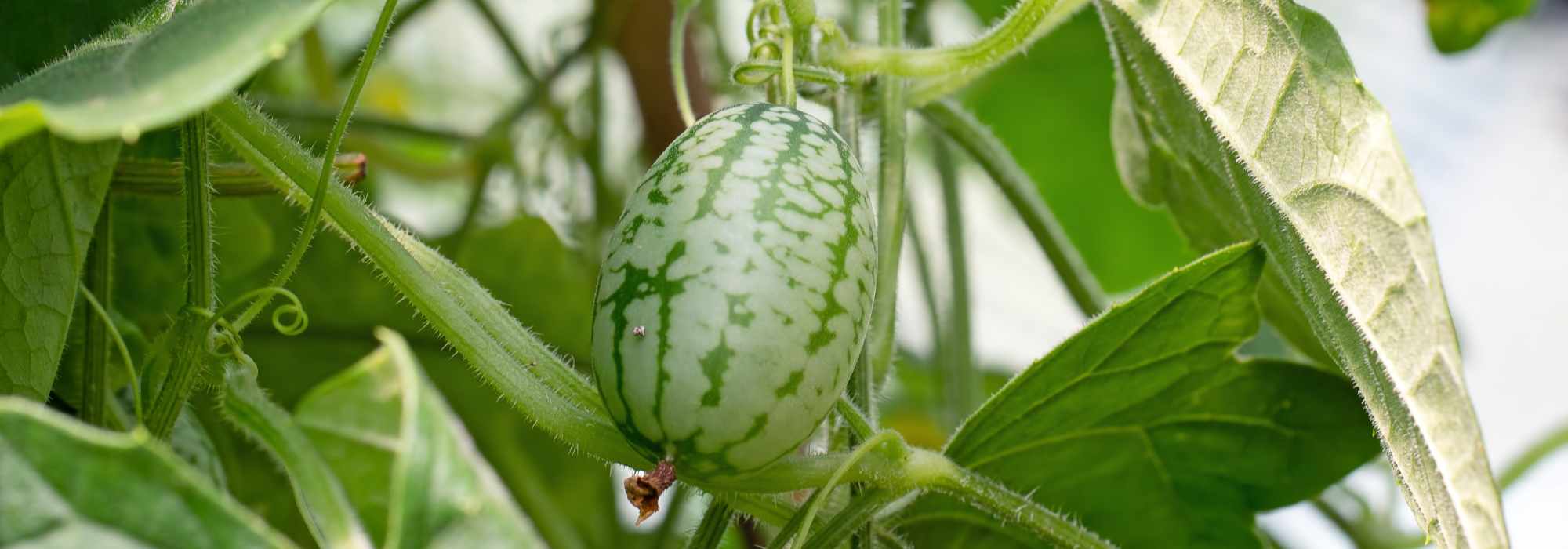
Kitchen garden of wonders: 7 astonishing plants to discover
For an extraordinary vegetable garden!
Contents
The traditional kitchen garden with its rows of lettuces, carrots and tomatoes has charm, true. But imagine a kitchen garden where every corner would be an invitation to wonder, where every edible plant would tease your curiosity and awaken your taste buds. And what if you designed your curiosity garden? A kitchen garden where botanical diversity is queen, making room for vegetables and fruits not found in the local supermarket. How about biting into a melon pear, tasting the maritime flavour of tetragonous, or venturing into exotic kiwano cultivation? Originating from elsewhere or simply overlooked, they can be grown in every region. So many curiosities to discover and new flavours to explore!
Let’s discover seven unusual vegetables and fruits to grow in your kitchen garden!

The Tomatillo
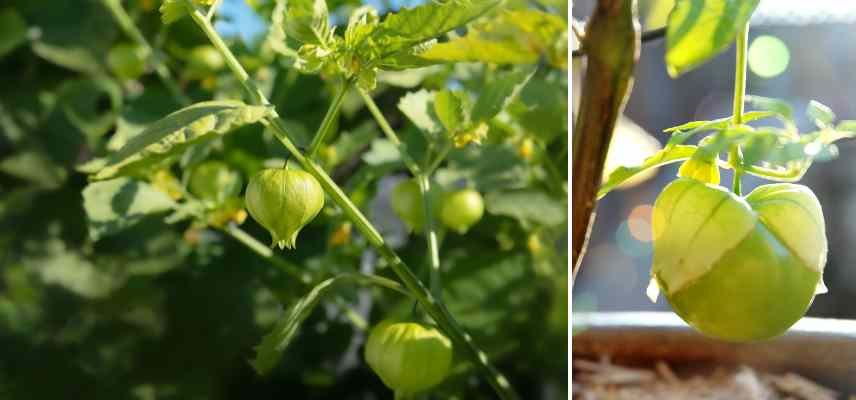
The tomatillo (Physalis philadelphica) is an annual vegetable plant in the Solanaceae family, between tomato and Physalis, native to Mexico. Its stems are ramified and the leaves are cordate and dentate. Yellow five-petalled flowers are followed by green or purple fruits enclosed in a lantern-shaped calyx. Tomatillo is sown in April for a harvest six months later. Flowering typically begins 50 to 75 days after planting, and fruits are harvested from late summer to autumn. Plant at least two plants to ensure fruiting. Once the calyx becomes translucent and begins to split, it is a sign that the fruits are ready to be harvested. It is important to remove the calyx and rinse the fruit to remove the sticky substance before consuming it. In cooking, the tomatillo offers a tangy flavour and is often used in sauces, salsas (the famous Mexican Salsa Verde) and stews. It can also be eaten raw, freshly picked, as is or in a salad. Its pulp contains vitamins (A, B, C, D, K) and possesses purifying, refreshing and diuretic properties. The plant prefers well-drained soil rich in organic matter, and grows in full sun. In cool climates, it is best grown under cover.
Kiwano
Kiwano (Cucumis metuliferus), or Horned Cucumber, is an amazing variety of African cucumber. This Kenyan cucumber produces ovate fruits 9 to 15 cm long, covered with small protuberances. The flesh of the fruit is green and gelatinous, with a flavour of kiwi and lime which develops towards melon, or even banana at ripeness. It is eaten fresh, halved, like kiwifruit and flavours fruit salads. This cucumber is grown like our classic cucumbers, except that it is somewhat more heat-demanding. In less temperate regions, it will be grown under cover. It requires well-manured soil and sunshine. It is sown in spring from April to June for a harvest that runs from July to October.
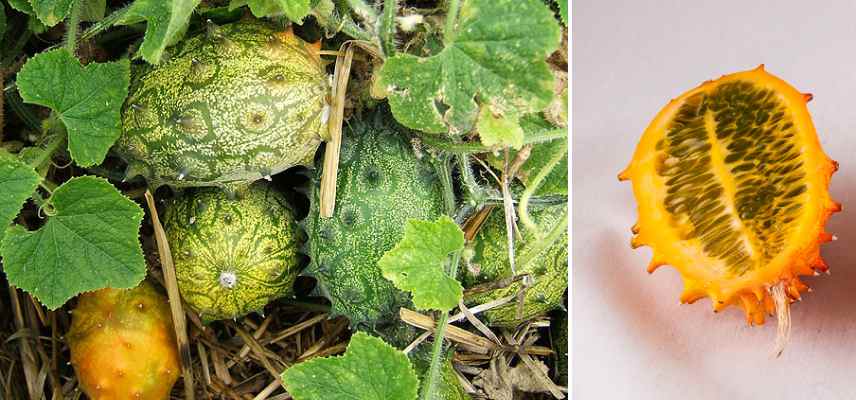
Kiwano (© Museum de Toulouse)
Cucamelon
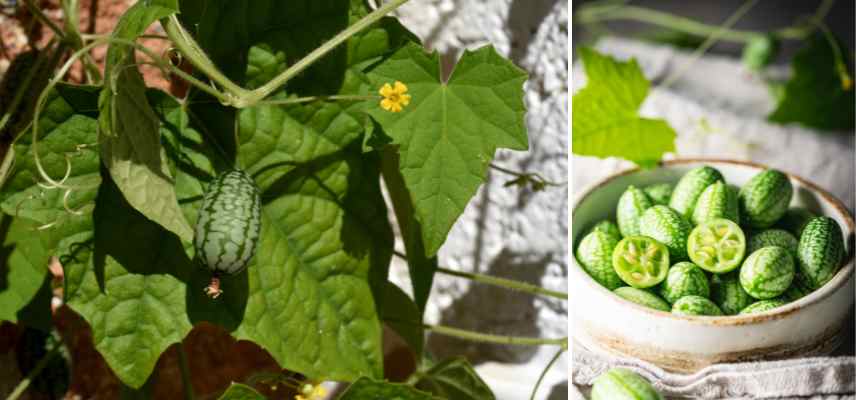
Another cucumber of the most unusual kind! The Cucamelon (Melothria scabra) or pickling cucumber is a climbing plant in the Cucurbitaceae family native to Mexico. It produces small green fruits 2 to 3 cm long, striped with pale green, resembling mini watermelons. The leaves are lobed and the plant uses tendrils to cling to supports. Flowering takes place in early summer, and the harvest runs from June to August. The fruits are eaten raw, in salads or salted as a condiment, pickled in vinegar, like cornichons or to garnish cocktails. Their thin skin allows them to be eaten whole. On the palate, the cucamelon offers a flavour reminiscent of cucumber with a hint of lemony acidity. Easy to grow, it self-seeds from April to May and thrives in full sun, in well-drained soil rich in organic matter.
The Pear-melon
The pear-melon (Solanum muricatum) Melon-Pear, or Pepino, is a surprising South American fruit that will delight lovers of exotic flavours. Frost-tender, this plant is grown as an annual in cooler climates and needs plenty of warmth to bear fruit. It produces blue-violet flowers that mature into pear-shaped yellow fruits. The leaves are ovate and slightly dentate. The fruit’s sweet flavour resembles a blend of melon and pear, and it is often eaten fresh or used in desserts. Pepinos reach ripeness in late summer or early autumn. It is recommended to remove the skin before consumption. For cultivation, choose rich, well-drained soil and a sunny location. In cool climates, grow it under glass or in a pot to overwinter indoors.
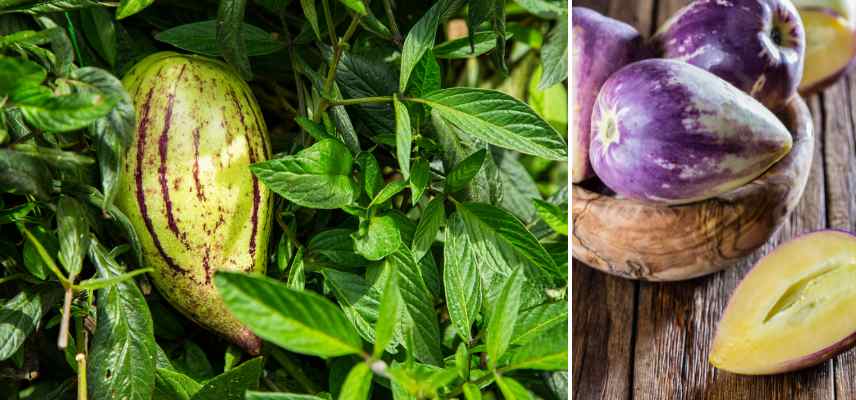
The Tetragonous
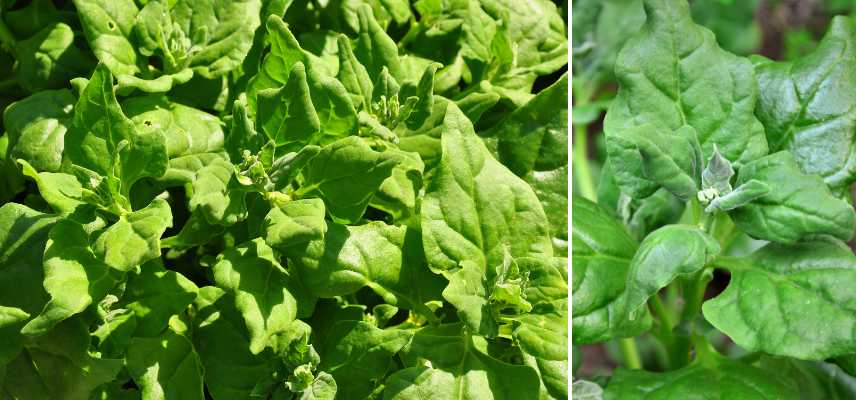
Also known as ‘New Zealand spinach’, Tétragone (Tetragonia tetragonioides) is a creeping herbaceous plant. Leaves are fleshy, triangular in shape and particularly large, with an interesting iodine-like flavour, quite similar to spinach, slightly milder, but with a crisper texture. There is no need to remove leaves from their stems before cooking. Harvesting takes place from July to October as required. Used as a substitute for spinach, it can be be sautéed, steamed or added to soups, or eaten raw in salads. It is sown from March to May in well-drained soil in full sun. Very drought-tolerant, it does not readily bolt in hot weather.
Peruvian Oca
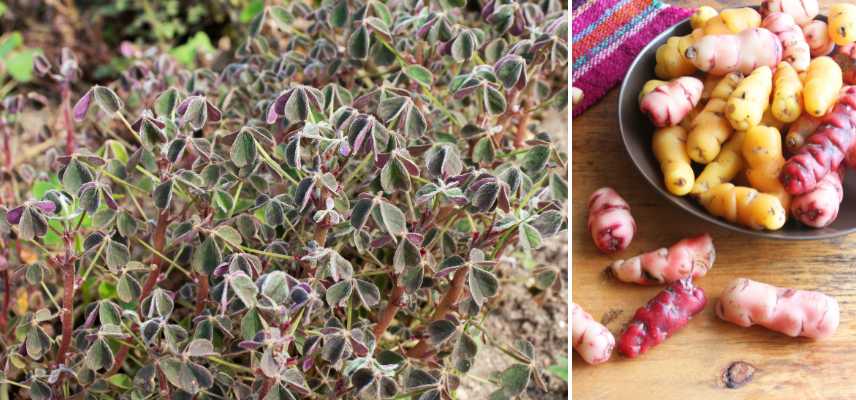
With its red stems and clover-shaped leaves edged in silver, the Peruvian oca proves as beautiful as it is tasty! Oxalis tuberosa, sometimes nicknamed sour truffle, produces small bulging tubercles, whose colour ranges from yellow to red. Their slightly tangy flavour may recall that of potatoes with a lemony note. The tubercles can be cooked in a variety of ways: boiled, fried, mashed or simply sautéed in butter. There is no need to peel before cooking. The ocas are harvested at the end of autumn, from mid-November. They are planted under cover in warmth in April or in open ground from May, after the frosts, in deep, rich and well-drained soil.
Mertensia maritima
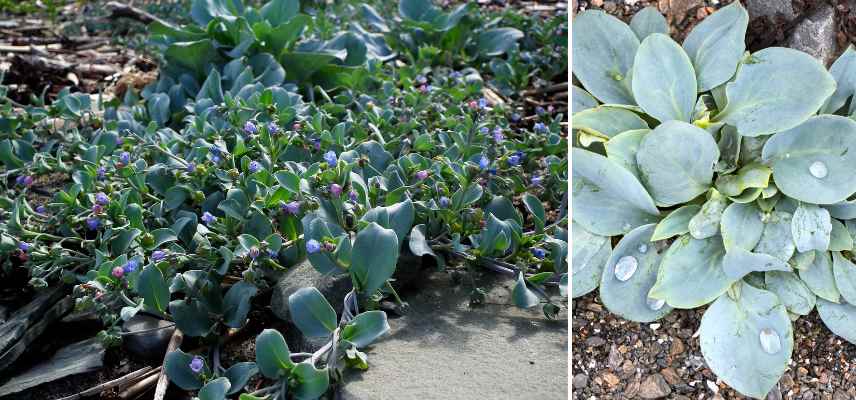
The Mertensia maritima, also known as ‘oyster plant’ or ‘oysterleaf’, is a herbaceous perennial plant that forms a tuft about 15 cm tall by 50 cm wide.
It is characterised by fleshy bluish-green leaves and by its pretty blue, bell-shaped flowers that appear in summer. Very ornamental, it has its place in both the garden and the vegetable plot. The leaves have an exceptional iodine-like flavour, strongly reminiscent of oysters. They are therefore particularly prized in cooking, notably for flavouring fish dishes. It is often used in seafood dishes to enhance the marine flavour, in tartares or in salads to impart a unique iodine flavour. It is recommended to harvest young leaves for freshness. It can be grown in a pot as well as in the ground. This plant naturally grows on sandy coastlines and prefers very well-drained, slightly sandy soils. It is relatively easy to grow, but you must ensure the soil does not dry out for too long between waterings to maintain its fleshy texture. Very hardy, it will return faithfully year after year.
More kitchen garden curiosities
In the category of unusual vegetables or fruits, you can find Balbis’s nightshade, an extravagant little tomato encased in a thorny calyx, whose sweet flavour recalls lychee, Hylocerus undatus, a species of cactus that yields pitaya or dragon fruit, or radish ‘Red Meat’, a variety of Asian radish that hides beneath its white skin a bright pink flesh reminiscent of a watermelon, hence its nickname ‘watermelon radish’.
- Subscribe!
- Contents

Comments