





























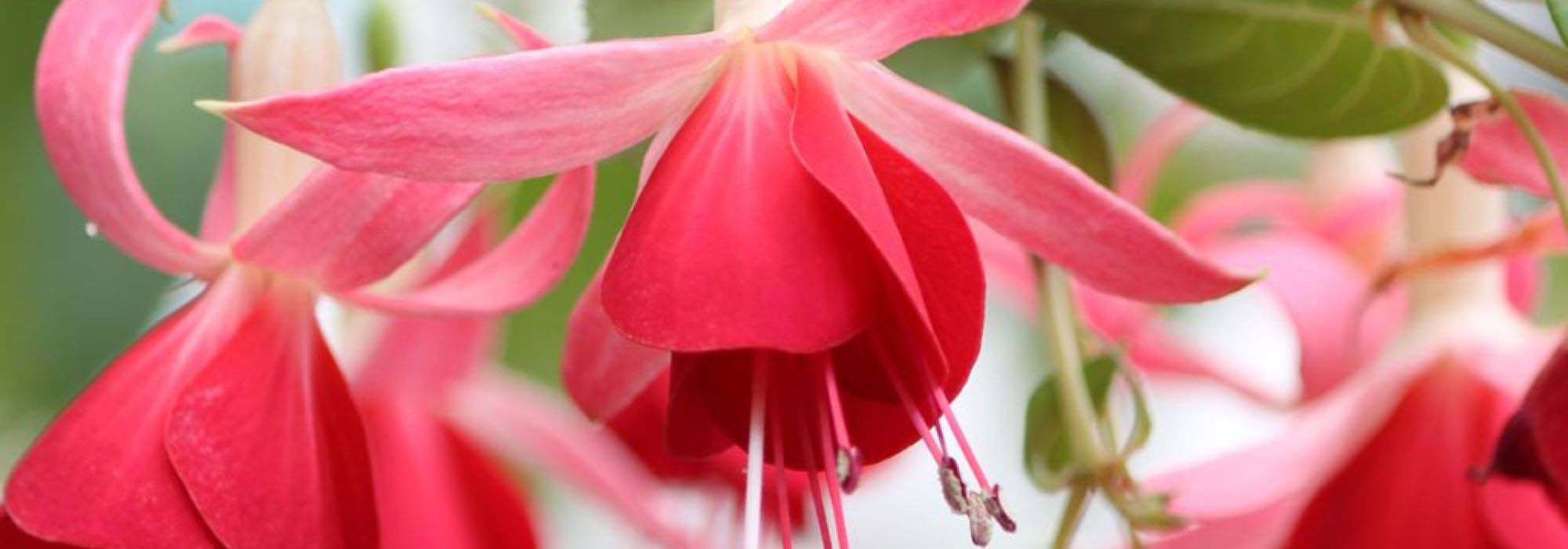
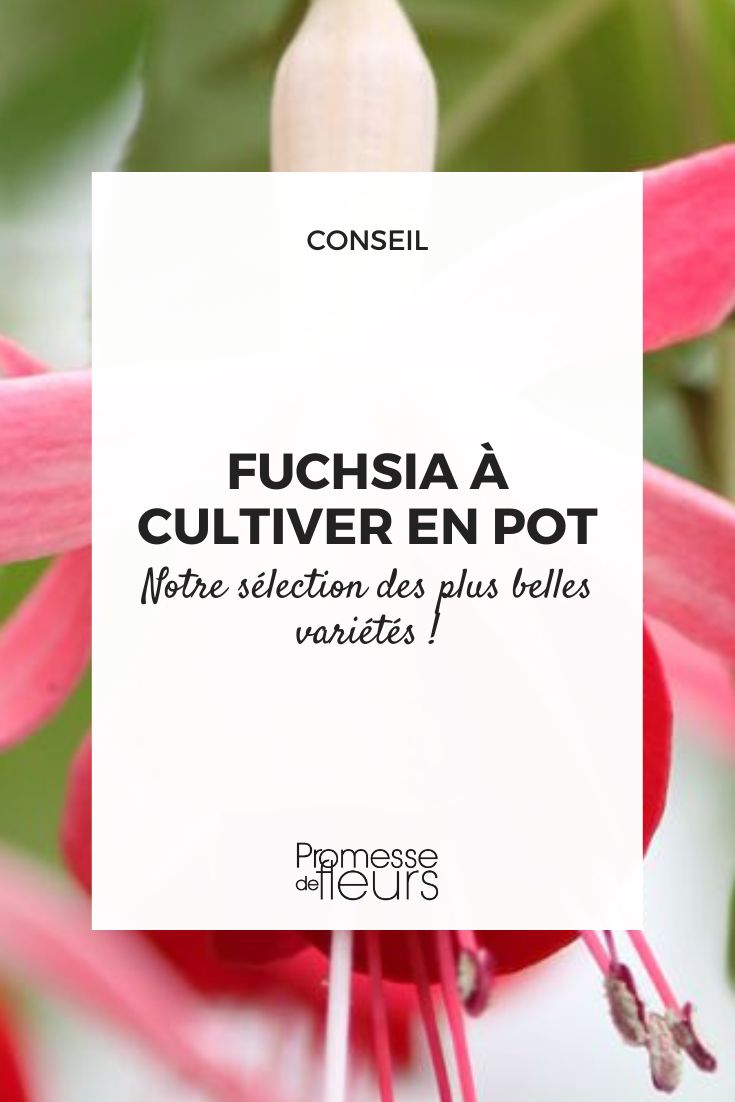
Fuchsia: the best varieties to grow in pots
to brighten up your balcony or terrace
Contents
With its charming pendulous, colourful bells, the fuchsia adds an elegant and exotic touch to a garden or balcony. It offers single, semi-double or double flowers, from June to the first frosts. The flowers display shimmering tones, most often blending two colours: red, pink, purple or white. The sepals of the flower are reflexed, while the stamens emerge from the corolla. The fuchsias are perennial plants or annuals, more or less hardy, which are grown in the ground or in pots. To see them flourish, plant them in partial shade, sheltered from the wind and in rich, cool and well-drained soil.
Discover our selection of the most beautiful fuchsia varieties to grow in pots to brighten your balcony or terrace.

Fuchsia 'Genii', a long-flowering plant
The Fuchsia magellanica ‘Genii’ is a reliable, floriferous bush. Compact in size, this bush reaches a height of 1 metre and produces bicolour flowers in pink-fuchsia and purple for many months, from June to October. The flowers measure 4 cm long and consist of a rose-red tube with four reflexed sepals and a violet corolla of petals, from which pink stamens emerge. The semi-evergreen foliage is golden-green and highlights the bush’s bell-shaped flowers. This heritage variety is prized for its hardiness as it withstands -10°C in open ground. When grown in a pot, it is somewhat more sensitive to cold and frost.
Plant Fuchsia ‘Genii’ in a large pot with a rich, cool, well-drained potting mix, then place it in shade or partial shade. Water it regularly to keep the substrate moist and ensure water does not stagnate in the saucer. During flowering, feed with liquid fertiliser every 15 days. Prune it in autumn, after flowering, and if necessary move it to a sheltered place or protect it from the cold with a fleece in winter.
Fuchsia magellanica 'Riccartonii', the hardiest
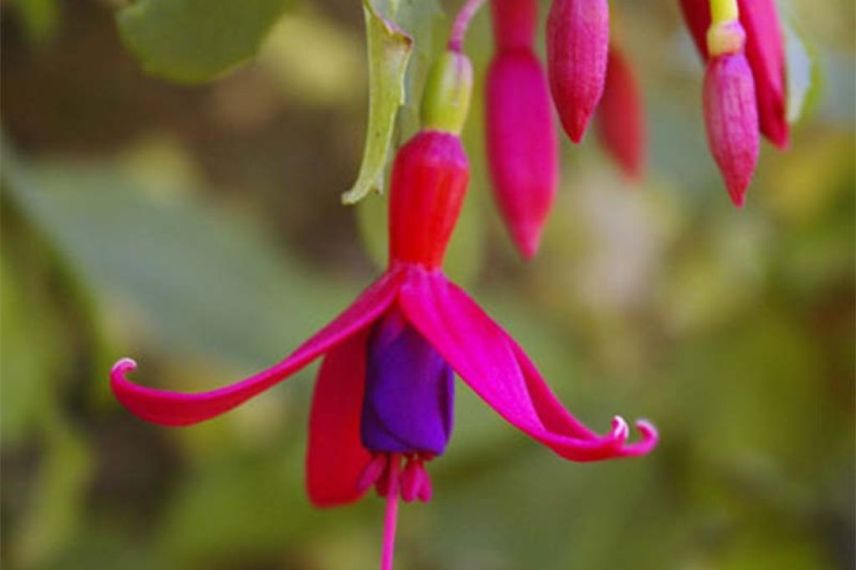
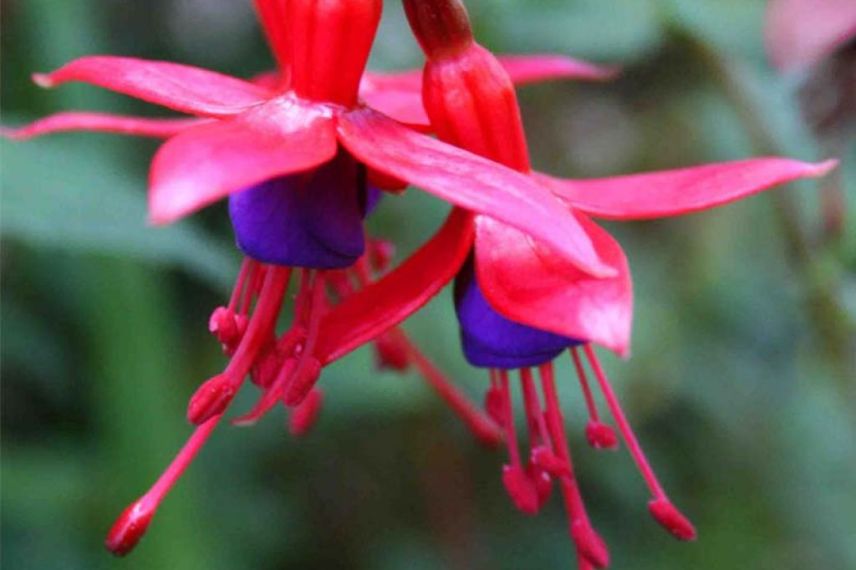
Another reliable choice is the Fuchsia magellanica ‘Riccartonii’, the hardiest of fuchsias and it features abundant flowering of delicate pendulous bells, red and purple.
This bushy shrub flowers from July to September on mid-green, glossy and deciduous foliage. The flowers resemble small bells about 3 cm long, with a bright fuchsia-red calyx, fleshy with four pointed sepals and a purple-violet corolla, with long red stamens protruding. Fast-growing, it reaches 1.20 m in height at maturity.
Place the pot in light shade and give this fuchsia a rich, moist, well-drained, preferably non-calcareous substrate, along with regular watering in the first year. This fuchsia tolerates temperatures down to -12°C in the ground. In cold-climate regions, prune it before winter and protect it with an overwintering fleece. You can also bring it indoors as soon as the first frosts appear to extend its flowering for a little longer. In milder regions, prune it at the start of spring to remove dead wood.
The Fuchsia 'Beacon Rosa', the softness of pink
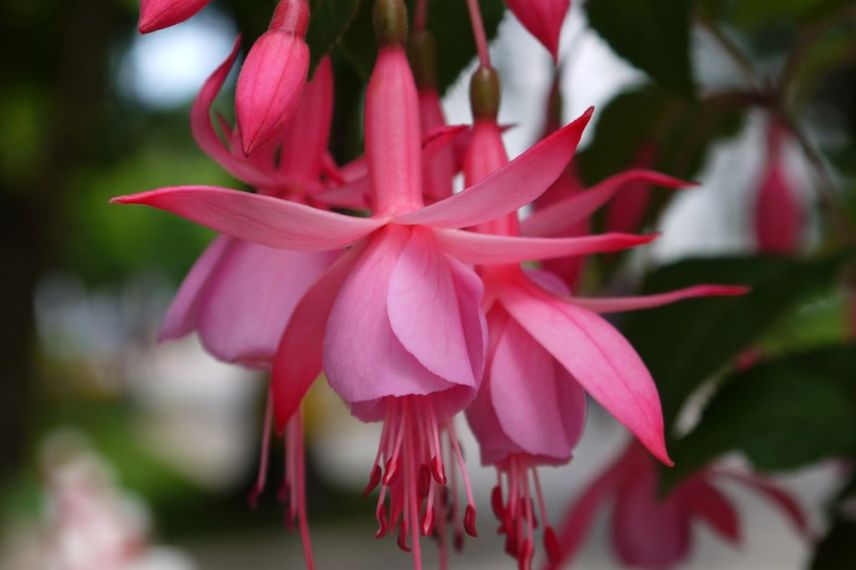
Fuchsia ‘Beacon Rosa’ lets life look rosy thanks to its refined old-rose-coloured flowers tinged with deeper shades. This compact variety forms an upright shrub reaching 60 cm in height, floriferous from June to October. Its abundant foliage is dark green and deciduous. It is hardy down to -15°C in open ground.
Plant this fuchsia in partial shade or in sun that is not scorching, in a substrate that is fresh, rich and well-drained, as for other fuchsias. Watering should be regular, but not excessive to prevent water from stagnating in the saucer and the roots from rotting. Feed every fortnight during flowering. In autumn, at the end of flowering, prune it back and protect it with mulch or an overwintering fleece for the winter.
Read also
Growing a Fuchsia in a potFuchsia 'Celia Smedley', red and pink flowers
The Fuchsia ‘Celia Smedley’ is a variety that has been awarded by the Royal Horticultural Society for its many qualities. This 90 cm-tall shrub is notable for its vigour and its red and pink flowering, which occurs from June to October. It bears bi-colour flowers with pink calyx and currant-red corolla. They are 4 cm long and cover the foliage which is dark green and deciduous. This upright shrub is semi-hardy and withstands temperatures down to -9°C.
This fuchsia prefers partial shade or sun that isn’t scorching and is sheltered from winds. It should be planted in a fresh, rich and well-drained soil, like its congeners. It also prefers regular watering but not excessive, and a fortnightly feeding to promote flowering. In autumn, prune it back to 15 cm above the soil and mulch or cover with a fleece to help it through winter.
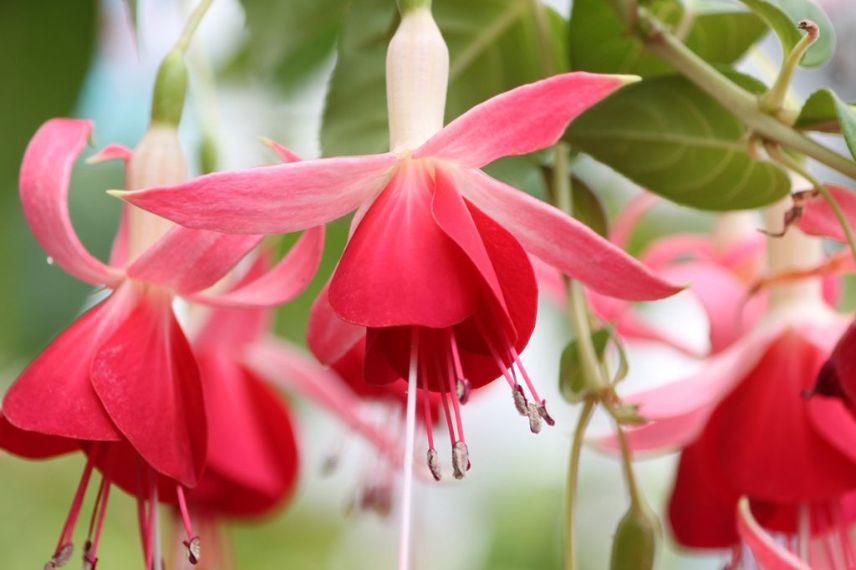
Hardy fuchsia 'Blue Sarah', white and purple bells
The hardy Fuchsia ‘Blue Sarah’ offers an abundance of two-tone bells, featuring a mauve double skirt with violet-rose hues and a dash of blue. The mauve contrasts with the white sepals and the dark green foliage. Flowering runs from May–June to October. Flowers about 10 cm long are particularly noticeable. The shrub is vigorous and has an erect habit with abundant, healthy, deciduous foliage. It reaches a height of around 90 cm.
Relatively hardy (to -9°C in open ground), this fuchsia is easy to grow and, like other fuchsias, needs a partial shade exposure, a rich, moist and well-drained soil. It requires regular, not excessive watering, deadheading and removal of spent flowers and leaves, as well as autumn pruning and wintering according to your region’s climate.
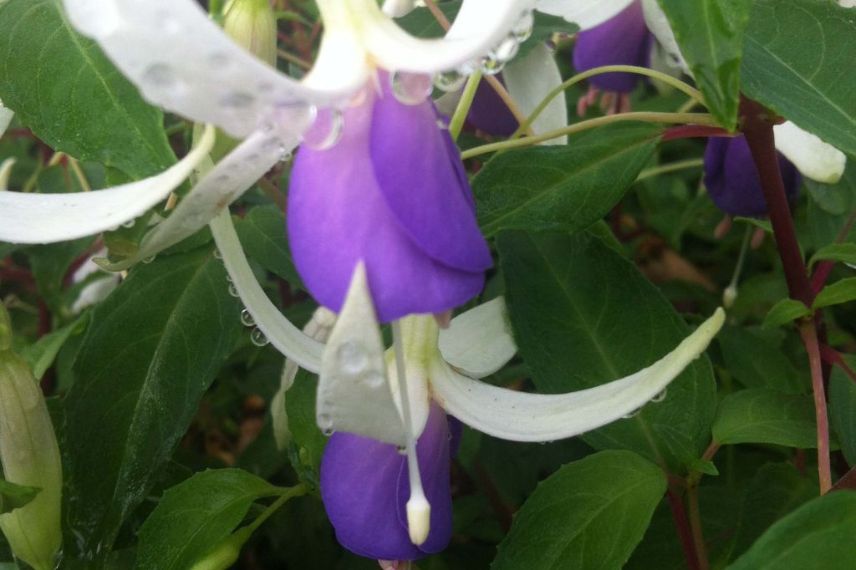
Trailing fuchsia 'Bella Rosella', giant flowers
Here is a fuchsia that combines many attributes and has been recognised by the Royal Horticultural Society.
Vigorous and trailing, the Fuchsia ‘Bella Rosella’ makes a superb display in a pot with its giant flowers measuring 5–7 cm in diameter. Bi-colour, they are coloured with fuchsia pink and pale pink and reveal long bright pink stamens and a white pistil. They cover the dark-green foliage from June to October.
This fuchsia is thirsty and appreciates regular watering as well as the application of fertiliser during flowering. Like other fuchsias, it grows in partial shade and in a cool, rich, well-drained potting mix. In autumn, prune it back. Not very hardy (down to about -4°C); it should be kept sheltered over winter.
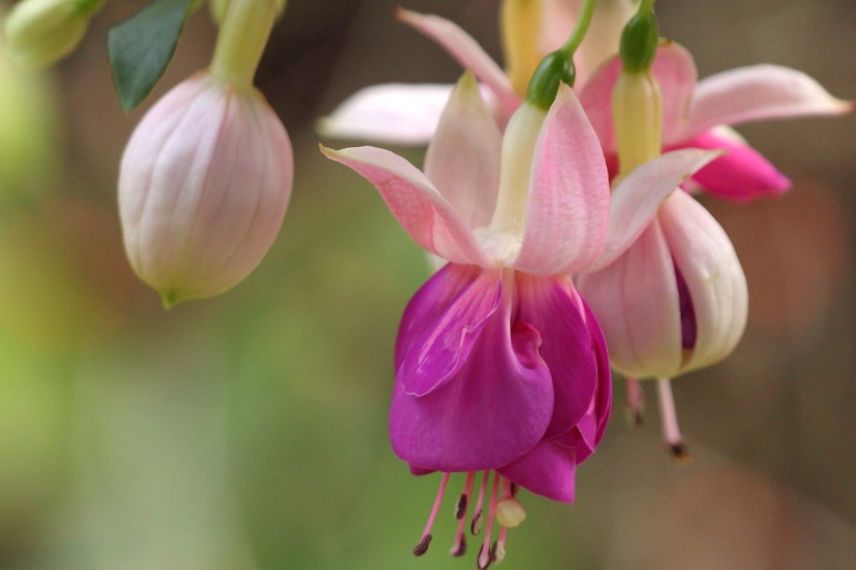
Hardy Fuchsia 'Alice Hoffman', red and white flowers
40 cm tall, Hardy fuchsia ‘Alice Hoffman’ is an old, compact variety, ideal for pot culture. From June to October, its dark green foliage is adorned with red and white bi-coloured bells. Its single flowers are 4–6 cm across and consist of a pink-red tube, four recurved sepals and a white corolla of petals. Purple stamens emerge from the bloom.
The hardy fuchsia ‘Alice Hoffman’ grows in a rich, cool, well-drained growing medium, in partial shade. It is hardy to -6°C without protection and should be overwintered in regions with cold climates.
Further reading
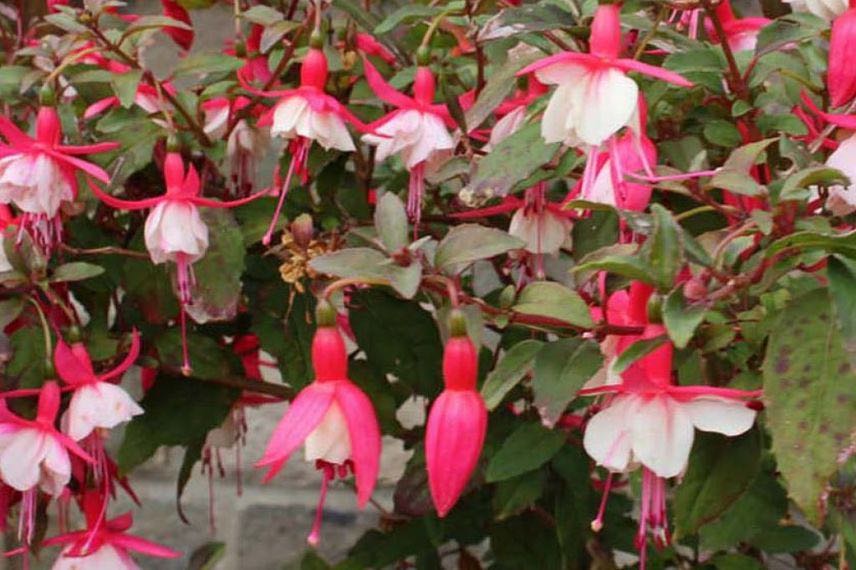
Many other varieties of fuchsias can be easily grown in a pot, such as the semi-trailing fuchsia ‘Swingtime’ with vermilion-red and white bell-shaped flowers, or the fuchsia ‘Walz Jubelteen’ with its upright flowers that are clearly visible.
In addition, you can consult:
- our full range of perennial fuchsias and annual fuchsias,
- our comprehensive guide to growing and caring for fuchsia,
- a selection of fuchsias for hanging baskets.
- Subscribe!
- Contents
Comments