





























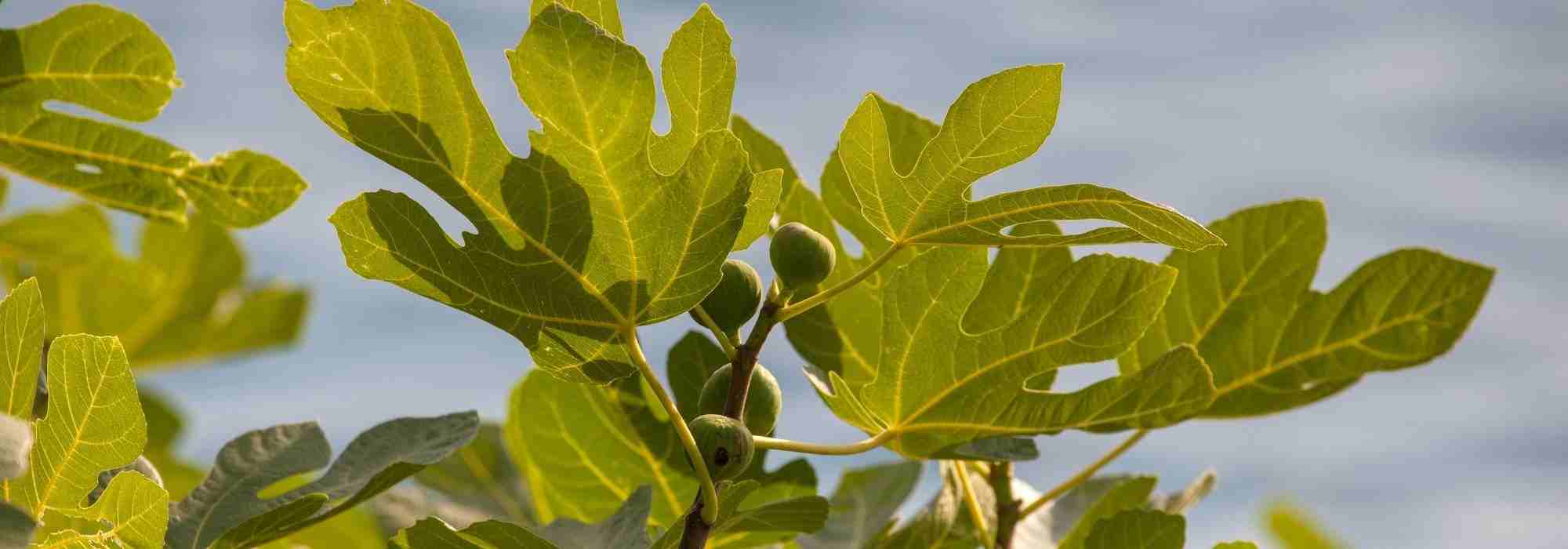
Diseases and Pests of the Fig Tree
Identify and address them.
Contents
The fig tree (Ficus carica) is a robust fruit tree, easy to grow in most regions of France. However, it can fall victim to certain diseases and pests causing various symptoms, such as curled leaves or yellow leaves. Sometimes, fig tree disease can be fatal. Fungi, mites, or insects, discover the main pests of the fig tree, as well as natural and preventive means to combat them.

Fig tree canker
The fig canker is one of the main diseases affecting fig trees. It can cause serious damage, even leading to the death of the fruit tree. This fungal disease is caused by a fungus called Diaporthe cinerascens and generally appears following poorly healed pruning wounds. One can then observe deformation of the branches and the presence of calluses.
Treatment and Prevention
There is no treatment that can eradicate this disease. The only thing to do is to remove the diseased branches and apply a fungicidal (Bordeaux mixture while respecting the manufacturer’s doses) on the wounds before covering them with a healing paste to try to minimise the symptoms. This method can be applied as a preventive measure after each pruning to promote healing of the wounds. Then, apply the fungicide to the entire tree. If the tree is severely affected, it is better to fell it to prevent contamination of other plants.
Before each pruning, sharpen your tools perfectly to ensure clean cuts and disinfect them by passing the blades through the flame of a lighter.
The fig mosaic
The fig mosaic is characterised by countless small swellings, as well as large pale yellow spots on the leaves. It is a mite called Aceria ficus that causes these symptoms and inoculates the virus through its bites. This disease is common and can affect the entire tree, stunting its growth and reducing fruit production, but it does not cause the tree’s death.
Treatment and Prevention
Once present on the tree, the fig mosaic cannot be eradicated. For prevention, grow your fig tree under good conditions. Ensure that the soil is well-drained and enriched, water without excess, and avoid severe pruning.
Discover other Fig trees
View all →
Available in 0 sizes
Available in 4 sizes
Available in 3 sizes
Available in 2 sizes
Available in 3 sizes
Available in 3 sizes
Available in 2 sizes
Available in 2 sizes
Available in 3 sizes
Available in 1 sizes
The fig moth
If your fig tree is affected by the moth, you will notice silken threads (serving as a cocoon) on the folds of the leaves, as well as black droppings. These are the caterpillars of a butterfly named Choreutis nemorana (formerly Eutromula nemorana) that chew on the leaves for nourishment. The perforated foliage turns brown and curls up.
Treatment and Prevention
This occasional pest does not attack figs and does not cause serious damage to the health of the tree. However, if the fig moth infestation is significant, use pheromone traps or spray an organic treatment based on Bacillus thuringiensis (Bacillus thuringiensis), for which you should follow the recommended doses by the manufacturer.
Be aware that great tits love these caterpillars and are therefore natural predators of the moth. Install nesting boxes near the fig tree to provide shelter and a food source for the great tits.
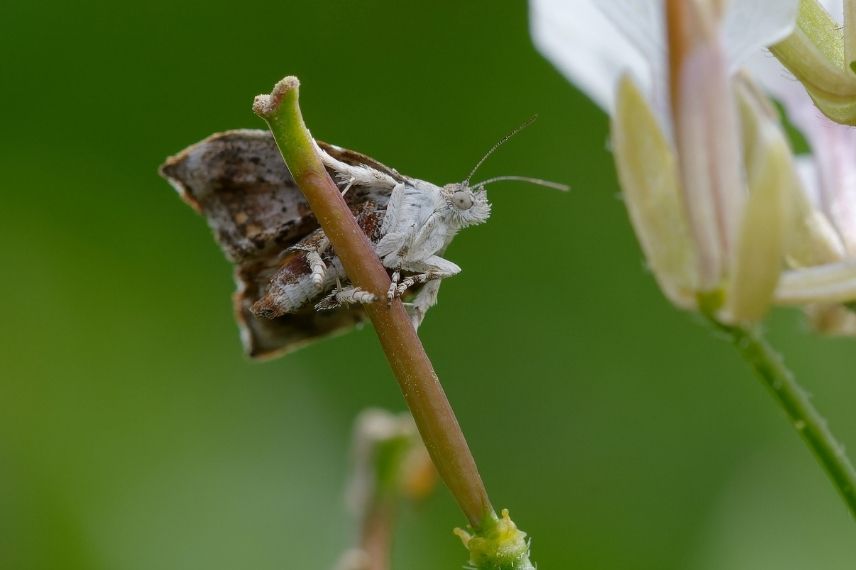
The caterpillar of the butterfly Choreutis nemorana attacks the leaves of the fig tree
The fig tree plastid
The fig tree cero-plast (Ceroplastes rusci) is a scale insect commonly found on fig trees. The fig scale is present on all aerial parts of the tree (branch, leaf, fruit) and feeds on sap. It is recognised by its rounded brown-grey to pink shell. In cases of heavy infestation, you will notice the presence of sooty mould: a black powder on the leaves resulting from the sticky honeydew secreted by the scale. The sooty mould is a fungus that weakens the tree by complicating photosynthesis.
Treatment and Prevention
Act quickly, as scale insects multiply rapidly. If they are few in number, remove them by hand. Otherwise, treat the fig tree with a mixture of one teaspoon of liquid black soap, one teaspoon of methylated spirits, and one teaspoon of vegetable oil (such as rapeseed), diluted in one litre of water. Repeat the operation weekly until the scales are completely gone.
To prevent the appearance of scales, promote biodiversity in the garden: melliferous plants, diverse cultivation, shelters for beneficial insects, nesting boxes, etc. This will attract various natural predators.
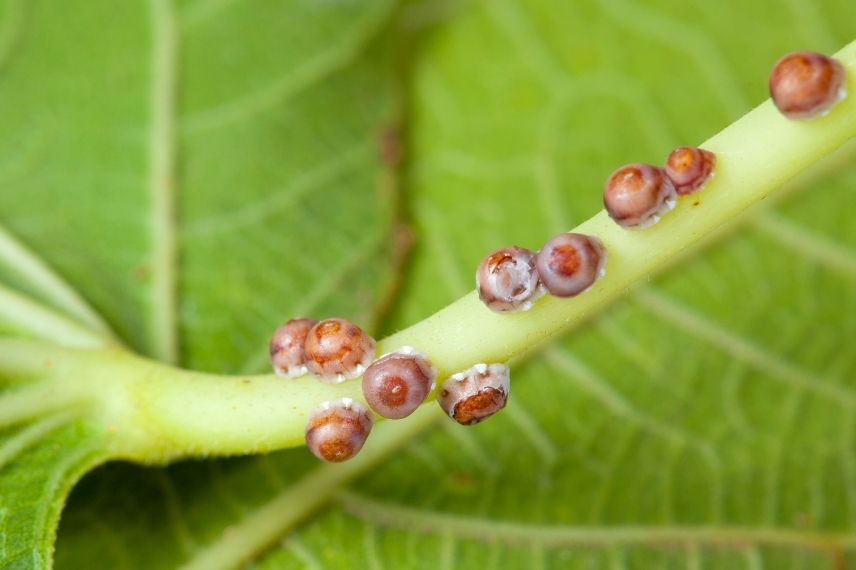
Ceroplastes rusci
The fig psyllid
The fig psyllid generally does not cause significant damage to it. Known as Homotoma ficus in Latin, this relative of the aphid is a piercing-sucking insect that feeds on sap. Measuring about 5 mm long, its pointed wings are transparent and its antennae are particularly pilous. White droplets on the leaves and honeydew appear on the foliage. This can lead to the development of sooty mould, as well as attract ants and aphids.
Treatment and Prevention
As with aphids, make sprays of a solution made from 3 tablespoons of liquid black soap in 1 litre of water. Note that the ladybirds and lacewings are good allies that will help you get rid of them.
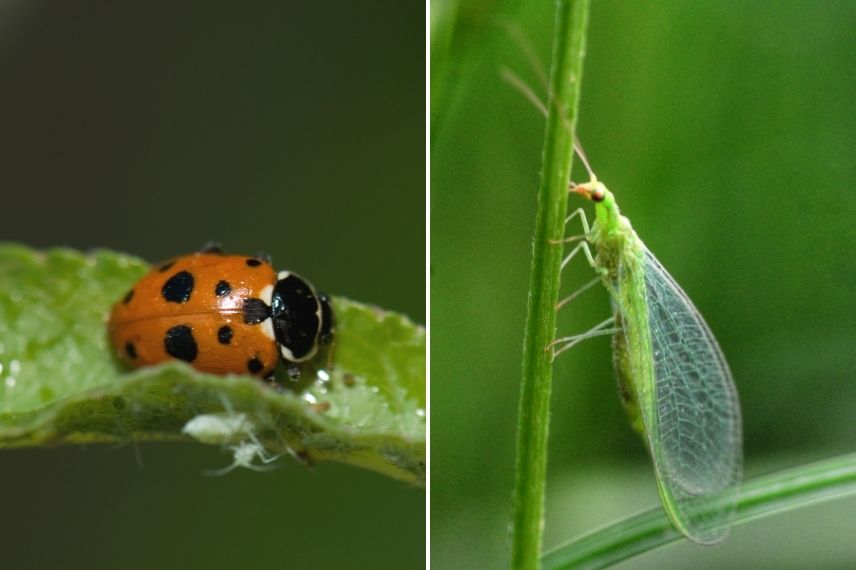
Ladybirds Hippodamia undecimnotata and lacewings Chrysoperla carnea will help you combat the fig psyllid
The fig bark beetle
Specific to the fig tree, the bark beetle Hypoborus ficus primarily targets weak trees. This black beetle lays its eggs in the branches, within galleries. Then, after hatching, the larvae burrow into other galleries to feed, causing damage to the fig tree. The circulation of sap becomes complicated, the affected branches decline, dry out, and die.
Treatment and Prevention
Cut the branches as soon as possible and dispose of them (green waste bin at the recycling centre, for example). A healthy fig tree is less likely to be attacked by bark beetles. So if your fig tree is weak, provide it with nutrients through the addition of compost or well-decomposed manure to help it strengthen.
Other diseases and pests
Here are other fungal diseases and insects that can also infect the fig tree and cause damage:
- Wooly rot (Rosellinia necatrix) and honey fungus (Armillaria mellea) are fungi that develop at the root level. Heavy soils with poor drainage are generally the cause of this fungal disease for which there is no treatment. Uproot the declining tree and do not plant anything in this infected soil for several years.
- The fungus Cerotelium fici (formerly Physopella fici) causes fig rust. The spores of the fungus develop in warm, humid climates. The leaves show small rust-coloured spots before prematurely falling off, and fig production is reduced. Treat the fig tree in May-June with a copper-based fungicide (Bordeaux mixture) to prevent the spread of spores. Spraying with horsetail decoction can help the tree defend itself.
- Flies, such as the fig fly (Silba adipata or Lonchaea aristella) and the Mediterranean fruit fly (Cerastitis capitata), lay their eggs in young, still green figs. The larvae then devour the fruits from the inside. These become inedible, rot, and fall off. These flies are especially prevalent in regions with mild winters. Collect the affected figs from the tree and the ground and destroy them. As a preventive measure, from March onwards, set up sticky traps or pheromone traps to catch the flies before the laying period.
- Although wasps contribute to the pollination of the fig tree, they can, like hornets, cause the destruction of an entire harvest by feeding on ripe figs. Depending on the year, they can be very numerous. In this case, make your hornet trap and grow repellent plants to keep the wasps away. Preferably harvest your figs before they are fully ripe.
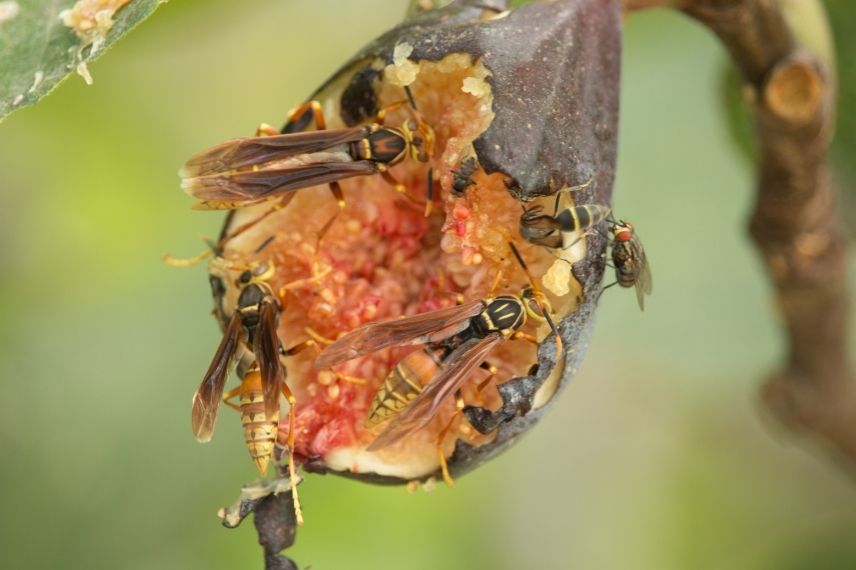
Wasps and hornets love figs and cause damage to the harvests
For further reading
- To learn more about mealybugs and psyllids, check out our advice sheets: Mealybug: identification and treatment and How to get rid of psyllids?
- Find everything you need to know about Armillaria or Honey Fungus: recognise and control this tree fungus
- Discover more information about Bordeaux mixture and other copper-based treatments in the garden
- Use our tutorial to create a Asian hornet trap: how to make it
- Protect your fig harvest with 5 plants that repel wasps
- Subscribe!
- Contents
Comments