





























Diseases and pests of the butterfly bush
Our advice to recognise and treat them naturally
Contents
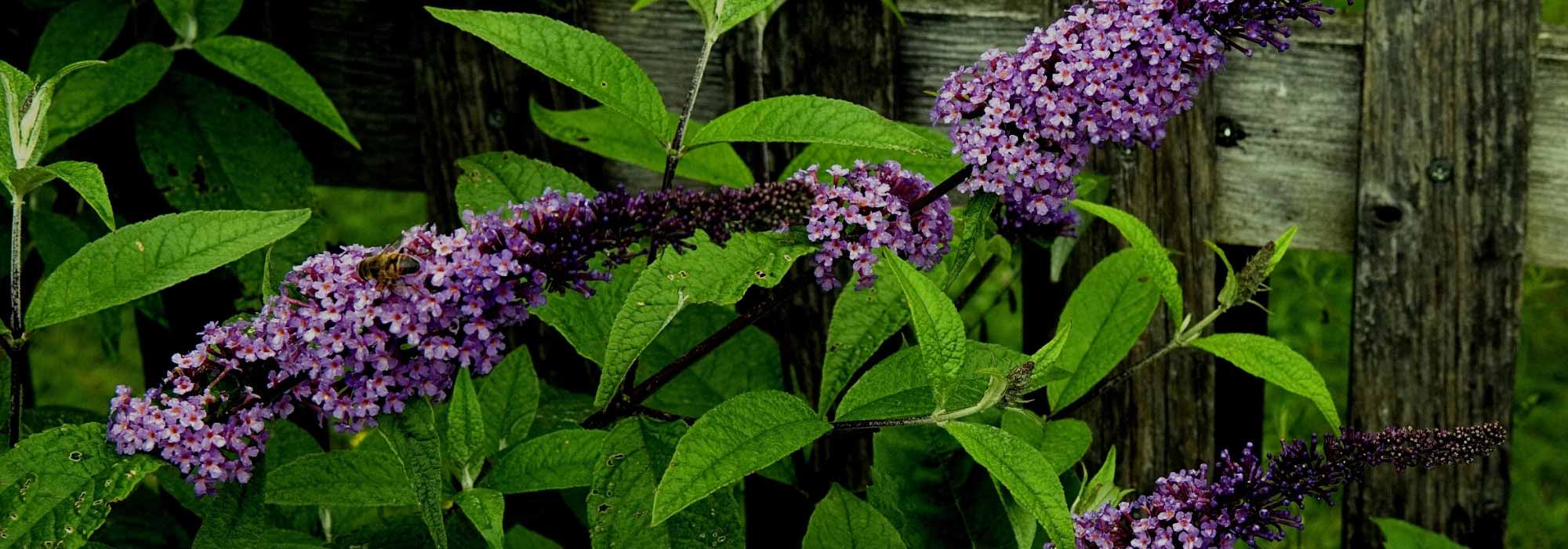
Buddleia, the lovingly nicknamed butterfly bush, is a bush prized for its summer flowering with elongated spikes in blue, mauve, purple, pink or white, whose scent attracts butterflies. It has deciduous, elongated, light green leaves. It is a very undemanding bush and easy to grow, generally hardy and rarely affected by diseases or pests. It can, however, occasionally be attacked by aphids, red spider mites, caterpillars or vine weevils… Find out how to identify these symptoms and get all our tips for caring for the Buddleia naturally.

Aphids
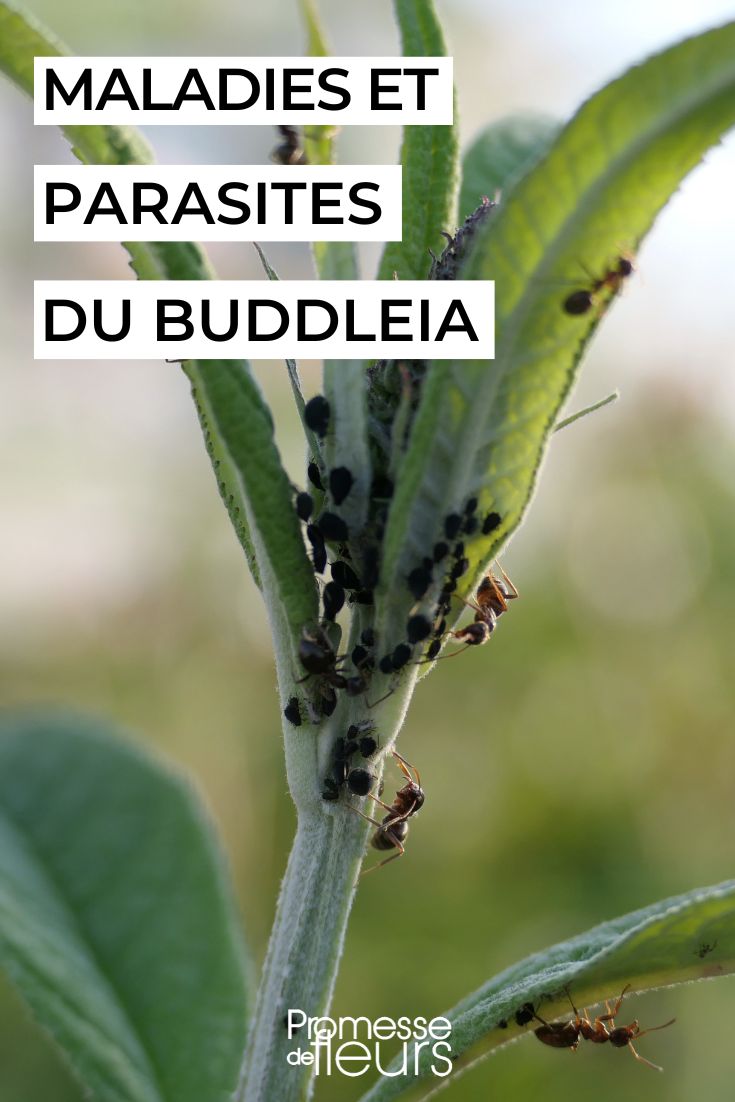
Aphids are small insects familiar to gardeners, which suck the sap from plants to feed on them. They are usually found in colonies on the underside of leaves or on young shoots, at the tips of the branches. They measure between 2 and 4 mm and can be green or black depending on the species. They weaken plants, slowing their growth, and can cause leaves to become deformed. They also secrete honeydew, a sticky, sweet substance on which sooty mould can develop, a fungal disease resembling black soot on the leaves, limiting photosynthesis. Aphids can also transmit viruses and diseases.
Treatment: Against aphids, we recommend spraying the foliage with a solution based on black soap (15 to 30 g per litre of water). If that is not enough, use as a last resort a pyrethrum-based insecticide. You can also introduce beneficial insects such as ladybirds, which are natural predators of aphids. Also encourage biodiversity in your garden by installing insect hotels and nest boxes: lacewings, hoverflies and even tits will help regulate aphid populations naturally.
→ To find out more, read our article on aphids.
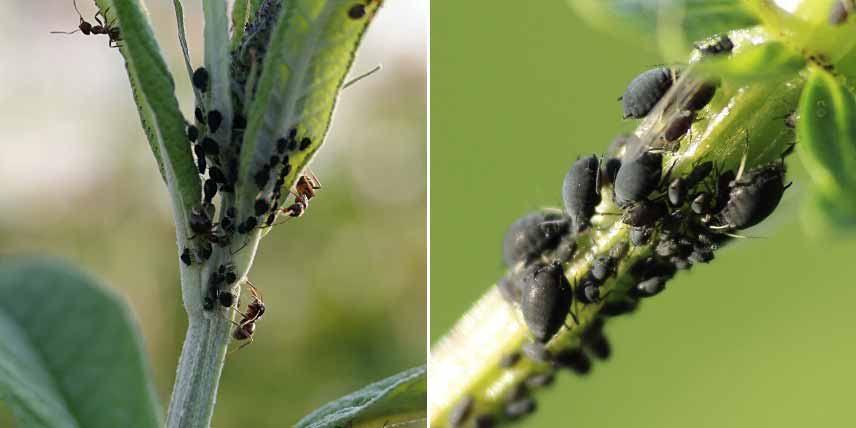
A colony of black aphids
Red spider mites
Red spider mites, also known as web-spinning tetranychids, are tiny mites that are difficult to see with the naked eye. They are barely 1 mm long as adults and particularly favour warm, dry conditions, which is why they are mainly encountered indoors, in greenhouses or conservatories, although they can also be present in the garden. They are noticed especially by the presence of fine webs under the leaves and around the stems, similar to spider webs, and by the appearance on the foliage of small yellow or white, discoloured spots.
Treatment : Red spider mites dislike humidity: spray the foliage regularly with water. We also recommend using a garlic decoction (30 g per litre of water), to be sprayed on the plant. You can also use rosemary essential oil: dilute 20 to 25 drops in a tablespoon of liquid black soap. Dilute the mixture in a litre of water and spray. Finally, as a preventive measure, it is best to limit nitrogen-rich fertilisers and keep the soil cool by mulching.
→ For more information, read our article on red spider mites.
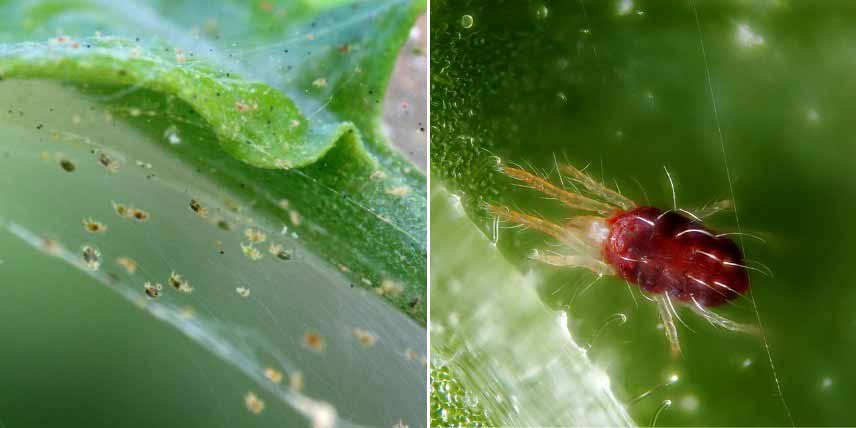
Red spider mites
Caterpillars
Caterpillars are the larvae of various species of butterflies. They feed on leaves and can cause considerable damage in a short time. Some species can attack Buddleia: this is notably the case of Cucullia verbasci, the caterpillar of the mullein moth, a white caterpillar striped with yellow and marked with black spots. Caterpillar attacks are spotted by the presence of holes in the leaves, particularly along the edge of the lamina. The leaf margins are then irregularly notched. Leaves may also be rolled up, and you may sometimes notice fine webs or droppings on the leaves. Be sure to thoroughly inspect your plant and check the undersides of the leaves to spot caterpillars.
Treatment: If the infestation is limited, remove the caterpillars by hand (wear gloves, as some can sting). In the case of a more severe attack, you can spray with Bacillus thuringiensis or apply nematodes, which will parasitise the caterpillars. We also recommend installing nest boxes in your garden to attract birds: they are particularly effective in helping to eliminate caterpillars.
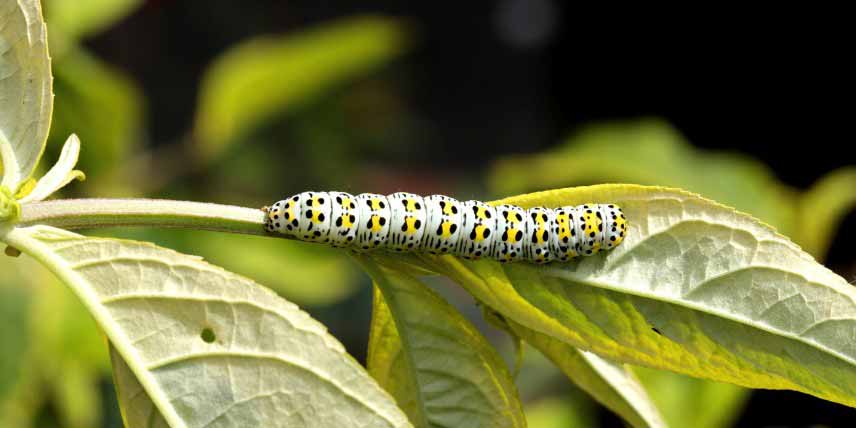
The caterpillar Cucullia verbasci
Read also
Butterfly tree: planting and careStink bugs
Some plant-feeding bugs can cause damage to plants by piercing stems and leaves to feed on the sap. This weakens the plants, can slow their growth, cause deformities or the drying out of certain tissues. They can also transmit diseases. In Buddleia, this notably concerns the bug Campylomma verbasci. However, bugs must be numerous to really cause damage. In general, symptoms are fairly limited and gentle techniques should be used simply to repel them.
Treatment: We recommend spraying a garlic decoction to repel the bugs. You can also use peppermint essential oil, diluting it in a spoonful of black soap, then in a litre of water, and spraying it on the foliage. Don’t hesitate to plant a Nepeta or catmint next to your buddleia: its strong scent helps repel the bugs.
→ To learn more, read our article on stink bugs.
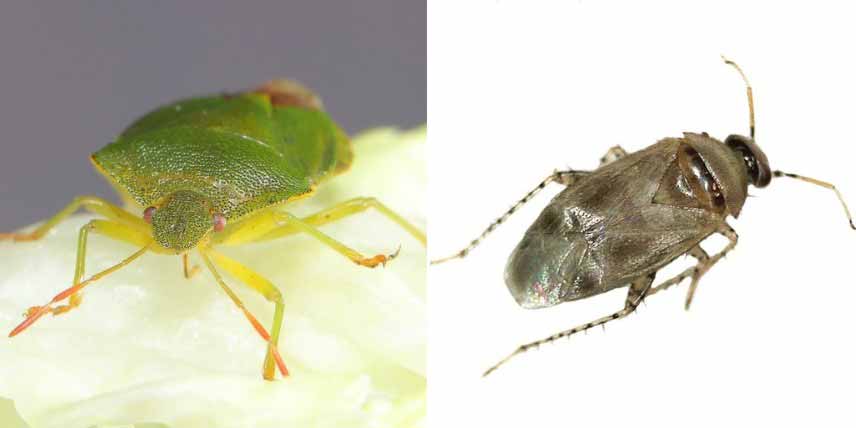
On the left, a green bug; on the right, the bug Campylomma verbasci
Otiorhynchus weevils
The vine weevil is a small beetle belonging to the weevil family. It is black or dark brown and measures 7 to 10 mm long. Increasingly present in our gardens, it is favoured by hot, dry summers. Before becoming adults, they spend about a year in the soil as larvae (resembling a large white grub), feeding on the roots of plants. The affected plants stop their growth and gradually wilt, becoming stunted. In spring, the larvae pupate and give rise to adults, which attack the foliage. They nibble the leaves at night, puncturing them irregularly on the outer part of the lamina.
Treatment: One of the most effective techniques is to apply nematodes (Heterorhabditis bacteriophora), which will parasitise the vine weevils. They come as a powder to be diluted in water and applied to the soil at the base of infested bushes. You can also use traps to protect your plants.
→ To learn more, read our advice sheet on vine weevils.
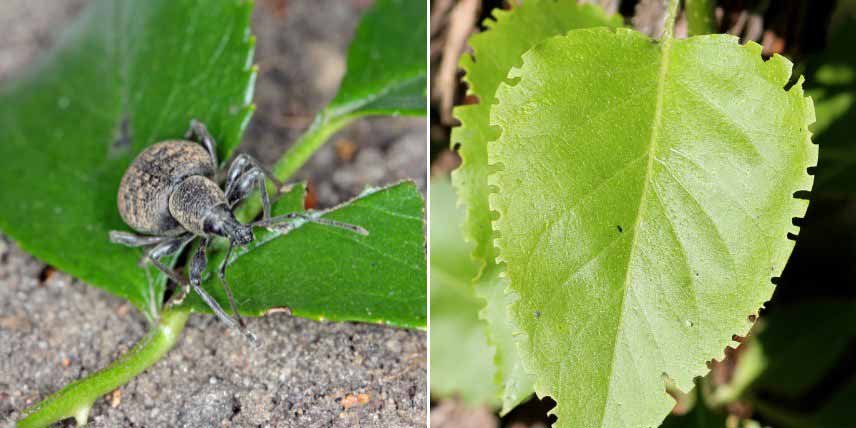
Leaves attacked by the vine weevil are generally cut irregularly along the edge of the lamina
Downy mildew
It is quite rare for buddleia to be affected by downy mildew, but it can nevertheless happen. This fungal disease mainly affects plants in conditions of high humidity and poor air circulation. In buddleia, this disease is caused by the fungus Peronospora hariotii and is characterised by the appearance on the leaves of pale, light yellow-green spots, bordered by the veins and by a slight greyish down on the underside. These spots can spread, causing the leaves to brown and fall.
Treatment: We recommend that you first remove the affected leaves and burn them to limit the spread of the disease. You can then make a bicarbonate of soda solution by dissolving three spoonfuls of bicarbonate of soda and one tablespoon of black soap in a litre of water. Then spray onto the foliage.
- Subscribe!
- Contents
Comments