





























Diseases and pests of squashes and courgettes
Identify, treat, prevent
Contents
Squashes and courgettes, part of the cucurbit family, are easy to grow, but they are susceptible to several fungal diseases and some parasitic pests, which can sometimes be vectors for viruses. Occasionally, curative treatments are either non-existent or ineffective; therefore, we can only advise you to focus on prevention. This prevention starts with good growing conditions and some general principles, good practices applicable in all situations, which quickly prove beneficial. Furthermore, regular observation of your vegetable plants allows you to quickly spot the first symptoms or infestations, and the quicker you act, the more you can eradicate the problem. Otherwise, once established, it becomes very difficult to resolve without losing the plant or having the fungus present in the soil for several years.
Discover our tips for having beautiful, healthy plants of squashes and courgettes, along with useful practices to keep pests and diseases away from your crops.

Powdery mildew
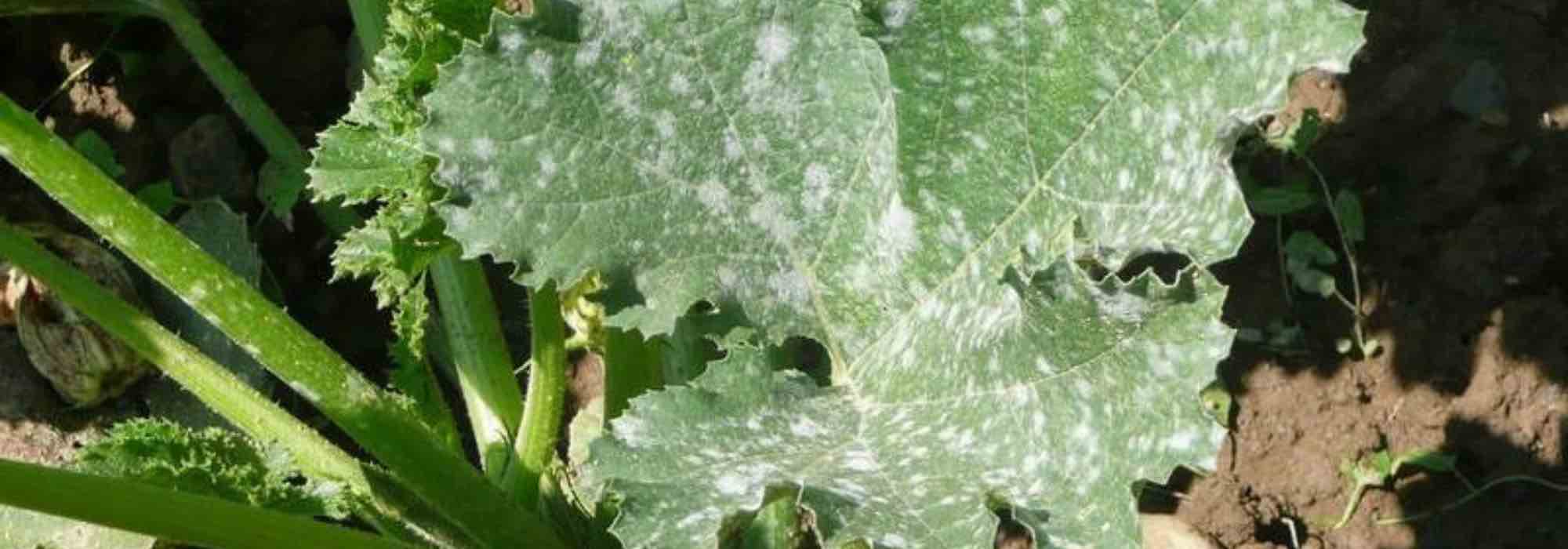
Powdery mildew is well known to gardeners on their courgette (or sometimes squash) plants at the end of the season, with its characteristic white fluff spreading over the foliage. If it is confined to this late stage of growth, there is no need to act. However, if you see this fungal disease appearing while your plants are in full production, it is necessary to intervene.
Powdery mildew, also known as white disease, is characterised by white, powdery spots on the leaves, new shoots, and flower buds. These eventually become deformed, affecting production, the quality of the vegetables, and the plant may die. This disease typically appears in a warm, confined atmosphere. It is caused by microscopic fungi.
Prevention
- Plant your courgette plants 1 metre apart from other crops to promote air circulation.
- Avoid fertilisers that are too rich in nitrogen as they make plants more susceptible; prefer to enrich your planting soil with well-decomposed compost.
- Water your plants well and mulch their soil carefully.
- Regularly monitor the leaves and stems, and cut off any affected ones with a disinfected tool if you see this white fluff. Burn them to prevent the fungus from spreading to the following year.
- Horse-tail decoctions are recommended as a preventive treatment.
Treatment
Several fungicidal treatments exist against powdery mildew, particularly those based on sulphur. This should be used sparingly in the garden, as it impacts wildlife. Prefer natural recipes based on milk (just milk diluted in water, more effective than sulphur), garlic, or bicarbonate.
→ Read how to simply prepare the milk remedy and other natural curative treatments as well as the preventive horse-tail decoction in Virginie’s article: Powdery mildew or white disease, prevention and treatment.
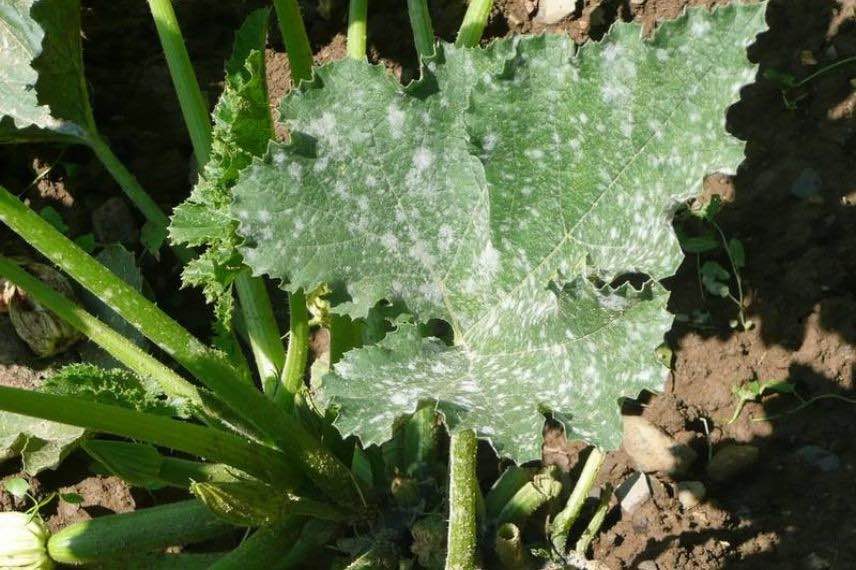
Powdery mildew is common on courgette
Botrytis
Botrytis is also frequently found on courgettes. This other fungal disease manifests as rot that starts at the junction between the flower and the fruit, contaminating the fruit. It begins with brown spots that develop into grey mould and then rot before drying out. Courgettes quickly become inedible, rapidly affected by soft rot.
In courgettes, contamination often starts with the flowers and can also spread to the leaves through contact, appearing first as spots along the edge of the lamina. The tissue progressively undergoes necrosis and may develop a yellow halo. The stems can show signs of canker.
Botrytis or Botrytis cinerea spreads in humid weather or when air circulation is poor. It has produced strains resistant to several synthetic fungicides worldwide. Consequently, emphasis is placed on prevention in the absence of effective treatment, especially since it is very prevalent and spreads quickly, particularly in spring and autumn.
Preventive measures are generally the same for fungal diseases, making it useful to establish systematic good practices.
- Plant with space, as a courgette plant develops to 1 m in width.
- To promote good air circulation, remove yellowing leaves of courgettes in contact with the soil and leave a long petiole to prevent Botrytis from quickly reaching the stem. However, do not cut excessively, as wounds are open doors for fungal diseases. Use disinfected pruning shears with 90° alcohol.
- Prefer morning watering: in the evening, the large courgette leaves may not dry before the night cooling.
- Ensure a balanced soil by avoiding nitrogenous fertilisers that risk excess nitrogen, which weakens plant tissues. A nitrogen deficiency also poses a risk.
- Spray a decoction or horsetail manure as a preventive measure and nettle manure in case of an attack once a week.
→ Read Eva’s article on Botrytis or grey mould.
→ If you wish to prepare your own manures, read Virginie’s articles on making horsetail manure or on preparing nettle manure.
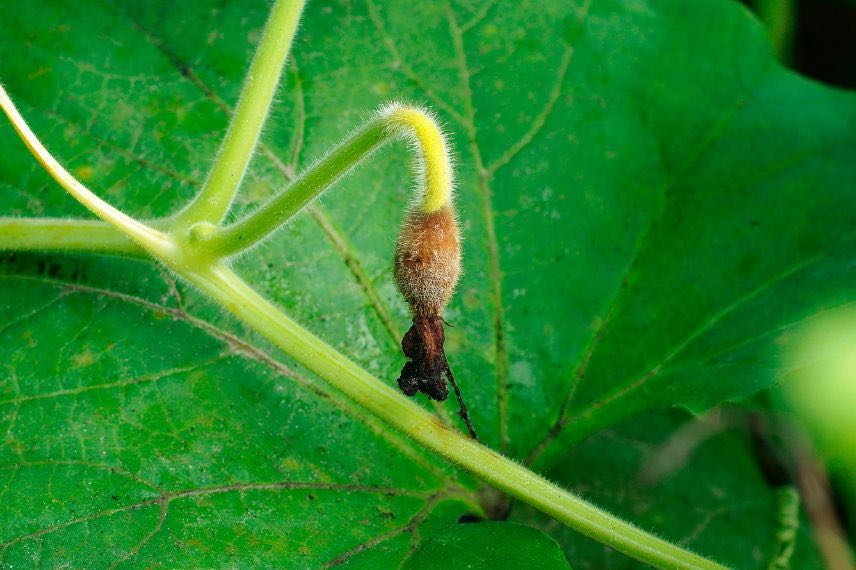
Botrytis on courgette bud
Downy mildew
Downy mildew of cucurbits is less common than tomato blight, but its damage is significant and similar. It is yet another fungal disease, initially revealed by the presence of spots that are first barely visible, resembling oil spots; these then evolve into yellow patches on the leaves, which subsequently turn brown. They develop on the veins, thus appearing quite angular. Specific to downy mildew on courgettes, the spots are arranged like a mosaic. The responsible fungus, Pseudoperonospora cubensis, develops in humid conditions, just like it does in tomatoes.
Treatment
The most well-known treatment is Bordeaux mixture, which helps to slow the spread of downy mildew but does not eradicate it. In any case, manually remove all affected parts and burn them. Spray the Bordeaux mixture judiciously, as it is not without impact on the soil! It can also be used preventively if conditions for the appearance of downy mildew are present, namely during periods of high humidity, between 16 and 22°C. Do not spray preventively if you do not have well-founded concerns about its appearance.
→ Read Eva’s article to learn all about Bordeaux mixture.
Prevention
- Space your plants correctly; this cannot be emphasised enough.
- Remove yellowing leaves that are in contact with the soil.
- Water at the base, avoiding wetting the leaves, without spraying.
- Generously mulch the soil.
- If your cucurbits have already experienced downy mildew attacks, do not replant in the same spot for 5 years.
- Once again, consider horsetail decoction as a good preventive practice for your crops.
- Avoid nitrogenous fertilisers as well.
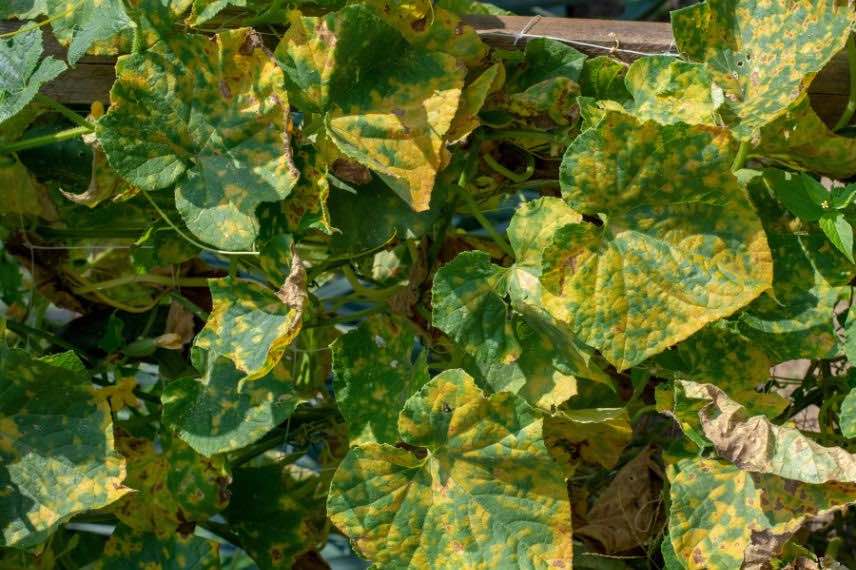
Downy mildew on cucurbits, here a cucumber plant
Aphids
Aphids can seriously attack your courgette and squash plants. They should be taken seriously, particularly because they are vectors for several viral diseases. These diseases are mainly present in intensive cultivation, not among private gardeners, but it is still useful to mention them. They include the Cucumber Mosaic Virus or CABYV and the Zucchini Yellow Mosaic Virus or ZYMV.
Aphids are easily spotted as they settle in colonies of small black or green insects. Generally, it is the Green Aphid (Myzus persicae) that is found on courgette plants.
In cases of heavy infestation, a slowdown in growth and production is observed, along with the development of sooty mould (a black, sticky substance on the leaves).
Treatment
- Disperse the aphid colonies with a jet of water.
- Spray the colonies with a solution of black soap at a rate of 15 to 30 g per litre of water, at the first signs of attack.
- Rely on beneficial insects like ladybirds, which are predators of aphids. We commend the initiative of the Jardin des Plantes in Caen, which distributes ladybird larvae for free in spring. Check if a similar initiative exists near you.
Prevention
One solution is to plant a trap plant nearby, such as Nasturtium, which attracts them and on which the damage is less bothersome. However, the best solution is to cultivate a long-term garden with a balanced ecosystem.
→ Read Virginie’s article to learn all about aphids and how to maintain a biologically balanced garden.
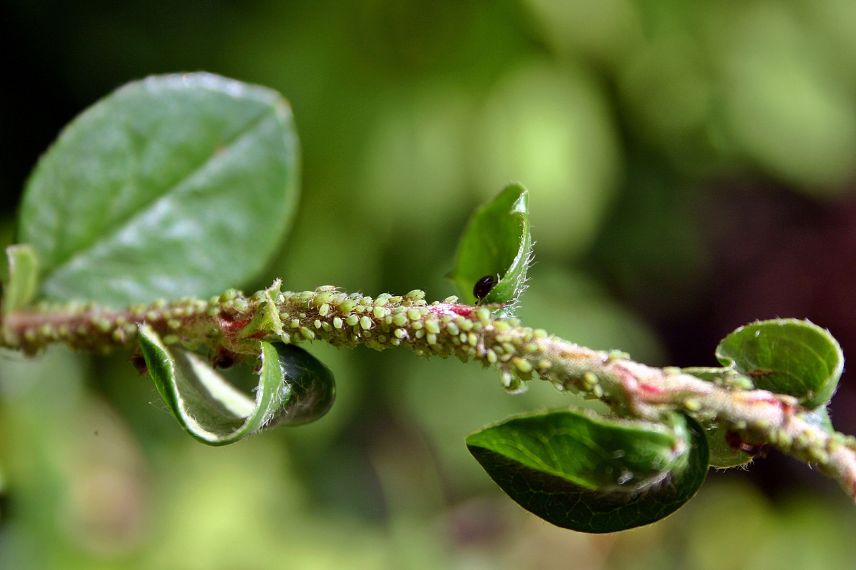
Green aphids in a colony
Whiteflies
In the garden, whiteflies or Aleurodes attack cucurbits in general. Like aphids, they feed on the sap of plants. Without intervention and in the case of a significant infestation, this can lead to the death of the plant. Sooty mould also develops in the presence of Aleurodes.
Treatments are similar to those for aphids: based on black soap or using natural predators.
→ Read Olivier’s article to learn all about whiteflies and how to get rid of them.
As a repellent, the usefulness of nettle manure and the planting of fragrant repellent plants such as Tagetes, Basil, and Arnica is noted, to be planted preventively.
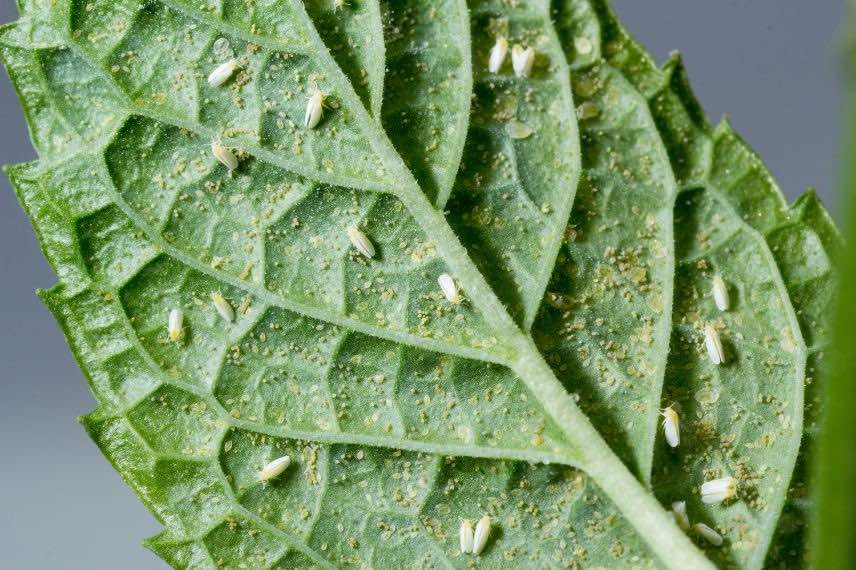
Whiteflies or Aleurodes
Red spider mites
Finally, let’s mention the misnamed red spiders, mites also known as spider mites (Tetranychus urticae), which also attack cucurbits in dry and hot weather. They are often spotted late due to the presence of yellow spots on the leaves or bristles, visible when watering reveals them. As they prefer dry conditions, watering the leaves can dislodge them, but care must be taken to avoid the proliferation of downy mildew. If the weather remains dry for a while, downy mildew is less likely to appear. Additionally, if you water in the morning, the leaves have time to dry.
Regarding these mites, again, an excess of nitrogen is detrimental, so be cautious with fertilisers. Here too, horsetail decoction and nettle manure prove to be useful allies, as does mulching your soil.
→ Read François’s article to learn how to spot them and the possible natural treatments.
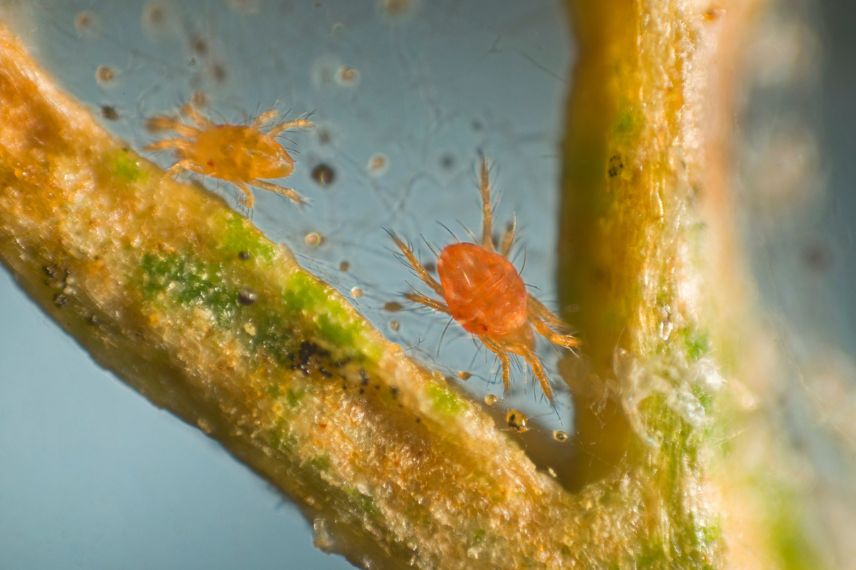
Spider mites or Tetranychus urticae
To learn more about courgette
- Discover the best companions for courgettes in the vegetable garden
- Subscribe!
- Contents
Comments