





























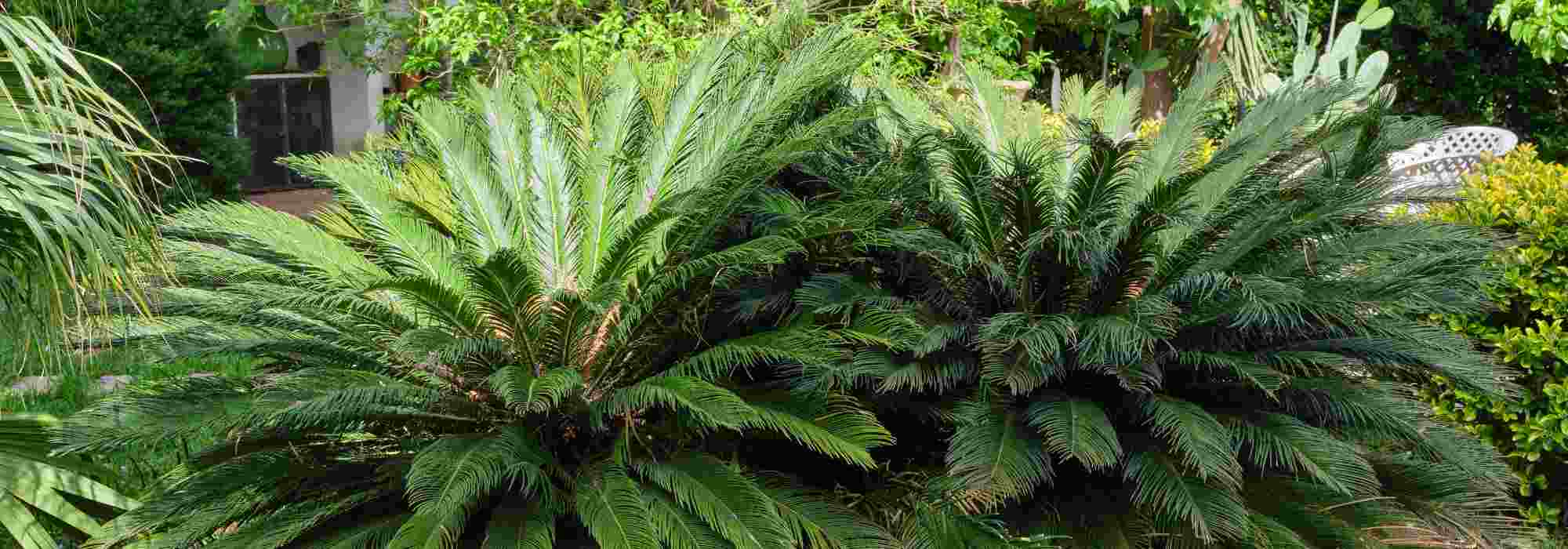
Diseases and pests of Cycas or Japanese sago palm
How to properly care for your sago palm or tree fern
Contents
The Cycas revoluta, more commonly called Japanese sago, is a majestic outdoor plant that brings an exotic touch to any garden or terrace. However, like any plant, Cycas is not immune to diseases and pests that can compromise its health and beauty. In this practical guide, we will explore the most common problems such as mealybugs, aphids, leaf spot disease, and others, which can affect your Cycas revoluta, but also its botanical cousin, the Macrozamia moorei or Moore’s cycad.
But it is above all crucial to know the right cultural practices to keep your Japanese sago in good health. Appropriate watering, balanced fertilisation and good drainage are the pillars of successful cultivation. These key elements will not only help prevent most fungal diseases such as root rot, but also make the plant less attractive to pests such as aphids, mites or nematodes. Regular monitoring of the plant is also essential to detect early signs of disease or infestation and to act accordingly.
Stay with us to discover how to identify and effectively treat the diseases and pests of Cycas revoluta in order to preserve its splendour and vigour.
→ For everything you need to know about growing Cycas, read Cycas: Planting and Care.

Aphids
Aphids are one of the most common pests that can infest the Japanese sago. These tiny sap-sucking insects often gather on the underside of the leaves, where they draw nutrients from the plant. An aphid infestation can cause an overall weakening of your Cycas, leaf discolouration and, in severe cases, wilting of the plant. It is therefore important to take immediate action at the first signs of an infestation.
Using soapy water
One of the simplest and most natural methods to eliminate aphids from your Cycas is the use of soapy water. You can prepare a homemade solution by mixing a few drops of black soap into one litre of water. Then spray this solution directly onto the infested areas, focusing on the underside of the leaves where aphids tend to hide. Repeat this treatment several times a week until the aphids are completely eliminated.
Garlic or chilli as a natural repellent
Another natural method is to use plant extracts such as garlic or chilli to create a repellent spray. These extracts contain compounds that are unpleasant for aphids, thus driving them away from your Cycas revoluta. To prepare this spray, blend a few cloves of garlic or some chillies with water, strain the solution and spray it on the affected areas.
Natural predators
Alternatively, more simply, ladybird and hoverfly larvae feed on aphids and thus help regulate their population. Make sure your garden provides favourable conditions for these predators, such as flowering plants to provide nectar for adult hoverflies or slightly wild areas (a nettle corner, piles of branches, unmown areas…) to increase the biodiversity of your garden.
→ To learn more: Aphids: identification, control, treatment and prevention.
Read also
Cycas: 9 pairing ideasMealybugs
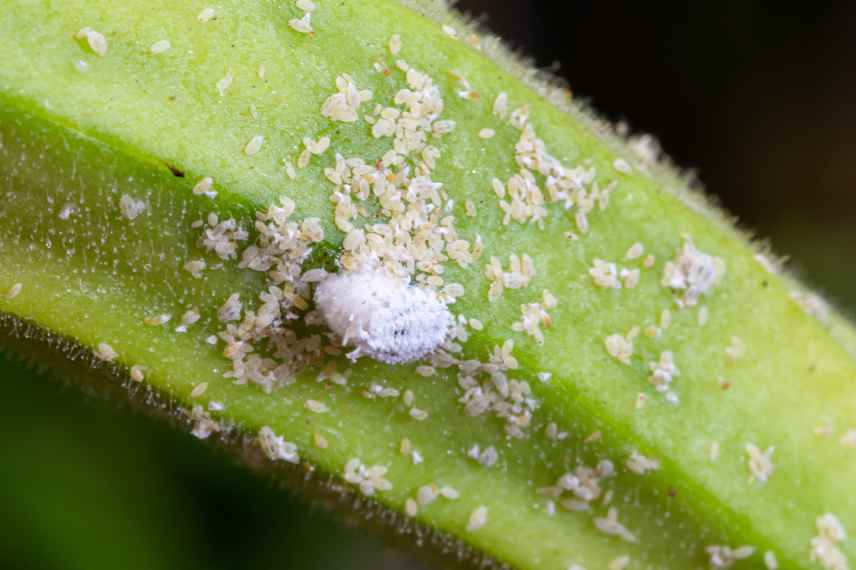
Identifiable by their cottony appearance and the waxy substance they secrete, mealybugs suck the sap from the leaves and stems of the plant. Not only do they weaken the Cycas, but their presence can also lead to the development of sooty mould, a blackish fungus that feeds on the sugary substance excreted by the mealybugs. This twofold attack can seriously compromise the health and appearance of your Cycas.
A mixture of water and rubbing alcohol can be effective for removing mealybugs. Soak a cotton bud in a mixture formed of 70% 90° rubbing alcohol and 30% water, then gently dab each mealybug. The alcohol dehydrates the mealybugs, killing them effectively. Be sure to treat all affected areas, including leaves and stems. Carry out this treatment carefully to avoid damaging the plant’s tissues.
→ To learn more about the mealybugs: identification and natural treatments.
Mites
Mites represent a significant threat to Cycas, particularly in hot, dry conditions. These small arachnids feed on the plant’s sap, which can lead to yellowing of the leaves and an overall decline in the plant’s vigour. Among the types of mites that can affect Cycas are mainly tetranychid mites and eriophyid mites.
An effective natural method to counter mites on your Cycas is the use of an infusion made from garlic or nettle. These plants contain sulphur compounds (in the case of garlic) or minerals (in the case of nettle) that act as natural repellents. To prepare the infusion, soak a few crushed garlic cloves or nettle leaves in water for several hours. Then strain the mixture and spray it onto the affected areas of the plant. Repeat the process every few days until signs of infestation disappear.
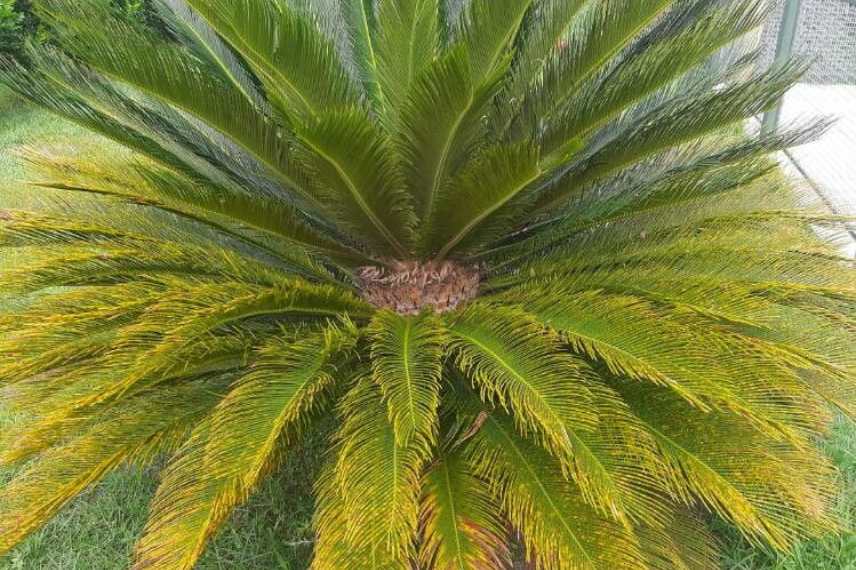
Yellowing of the leaves can be caused by mites
Read also
How to protect Cycas in winter?The nematodes
Nematodes are microscopic worms that attack the roots of plants, which can sometimes affect their health. By feeding on the sap of the roots, they create entry points for pathogenous fungi, making the plant more vulnerable to diseases such as root rot. This type of infestation can cause yellowing of the leaves, stunted growth and, in the most severe cases, the death of the plant.
One way to naturally combat nematodes is the use of composted horse manure or dung, rich in organic matter and beneficial microorganisms. These microorganisms can help to control nematode populations by competing with or preying on these parasites. To apply this method, incorporate the composted horse manure into the soil around the plant’s root zone, taking care not to damage the roots.
Slugs and snails
The ‘slimy ones’ can cause mainly cosmetic problems to your Japanese sago palm. By nibbling the leaves, they create holes and tears that detract from the plant’s appearance. Damage is particularly visible on young shoots, which are more tender and therefore more attractive to slugs and snails.
A natural and effective way to deter snails and slugs is to use a barrier of crushed eggshells. The sharp edges of the shells make it difficult for the molluscs to cross and reach the plant. To put this into practice, crush the eggshells into small pieces and arrange them in a circle around the base of your young Cycas, newly planted. Alternatively, you can simply ignore these molluscs and let your garden wildlife regulate their population (ground beetles, birds such as thrushes, hedgehogs…).
Root rot
Root rot is often caused by an excess of water in the soil, which creates a damp environment favourable to the development of pathogenous fungi. Common symptoms include yellowing and wilting of the leaves, which can ultimately lead to the death of the plant if the problem is not treated in time.
Preventing root rot requires appropriate cultural practices. Ensure your Cycas is planted in well-drained soil to avoid water accumulation. In addition, moderate but regular watering, according to the needs of the plant and the climatic conditions, will help maintain the proper water balance. Also avoid over-fertilising, as an excess of nutrients can unbalance the soil and favour the development of diseases.
It is not widely known, but cinnamon is an effective natural remedy against root rot thanks to its antifungal properties. To use this method, first remove the plant from the soil and cut away the parts of the roots that appear rotten or diseased. Then, sprinkle powdered cinnamon on the cut areas before replanting the Cycas in fresh, well-drained soil.
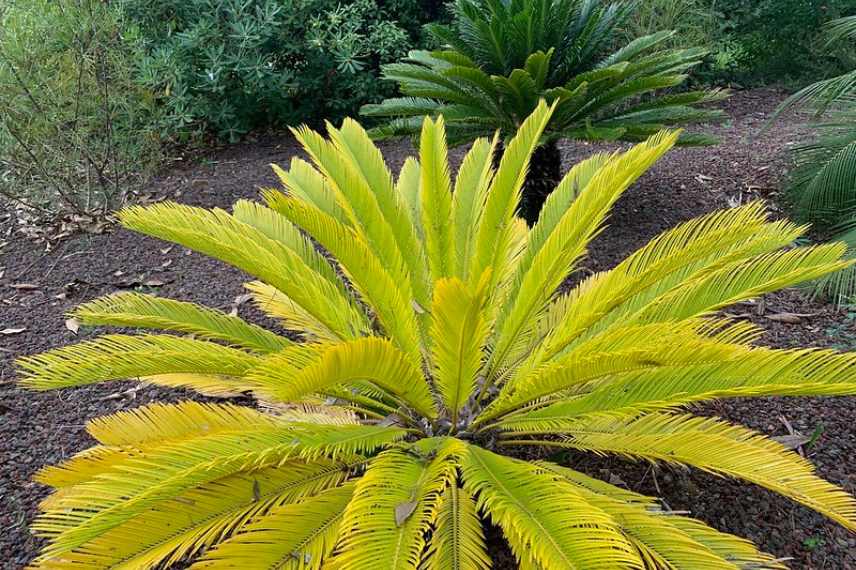
The yellowing of the leaves of a Cycas can also be due to root rot
Foliar spot diseases
Foliar spot disease can affect the Cycas revoluta, and is generally caused by various types of fungi (genera such as Cercospora, Colletotrichum and Phyllosticta). Symptoms include the appearance of black or brown spots on the leaves, which can affect the plant’s appearance and, over time, its overall health. If this condition is not treated, the leaves may eventually turn yellow and fall, weakening the plant. As with all fungal diseases, prevention is crucial. Make sure your Cycas is planted in well-drained soil and follow a watering regime suited to the plant’s needs. Also avoid over-fertilisation and ensure good air circulation around the plant to minimise the humidity that favours fungal growth.
A commonly used natural method for treating fungal diseases of plants is a spray based on bicarbonate of soda. This product acts as a fungicide and can help prevent the spread of the disease. To prepare the solution, mix one tablespoon of bicarbonate of soda with one litre of water and add a few drops of black soap to aid dispersion. Spray this solution onto the affected leaves, taking care to also cover the undersides of the leaves where fungi can also develop.
Powdery mildew
Powdery mildew is a fungal disease that can severely affect Cycas revoluta, or Japanese sago. Characterised by a white powdery coating on the leaves, this disease inhibits photosynthesis, which can lead to a general weakening of the plant. If left untreated, powdery mildew can spread to other parts of the plant and even infect neighbouring plants. Prevention is often the best defence against powdery mildew. Make sure your Cycas has enough space for good air circulation, which will help reduce humidity around the leaves. Also avoid overwatering and ensure you water the base of the plant rather than the leaves to minimise moisture.
An effective and natural solution against powdery mildew is spraying diluted cow’s milk. Milk contains fatty acids that can help destroy the fungus. To prepare this solution, mix one part milk with nine parts water. Use a sprayer to apply this mixture to the affected areas of the plant, especially the leaves. Repeat this treatment once a week until signs of the disease disappear.
→ To learn more about the Powdery mildew or the white disease.
Anthracnose
Anthracnose is a fungal disease (which can also be included in the group of foliar spot diseases) a dreaded disease that causes leaves to brown and can lead to the premature death of the plant. Most often caused by fungi of the genus Colletotrichum, this disease develops particularly in damp, poorly ventilated environments.
Cinnamon is known for its antifungal properties and can be an effective natural alternative for treating anthracnose. Prepare an infusion by boiling a few cinnamon sticks in water for about 15 minutes. Once the infusion has cooled, strain the solution and use a sprayer to apply directly to the affected areas of the plant.
→ Worried about anthracnose? To learn more, read Anthracnose: prevention and treatment.
Sooty mould
We briefly touched on it when discussing aphids; sooty mould is a common condition affecting Cycas, often caused by the presence of aphids or scale insects. These insects produce a sweet substance called honeydew, which provides a fertile substrate for the development of this surface fungus. Sooty mould appears as black deposits on the leaves, resembling soot. Although this fungus does not attack the plant directly, it can inhibit photosynthesis by blocking the sun’s light, which weakens Cycas over the long term.
One natural method to eliminate sooty mould is to treat its underlying cause, namely the insects that produce the honeydew. Insecticidal soap is effective at removing these insects without harming the plant. You can prepare a homemade solution by mixing a few tablespoons of liquid organic soap into a litre of water. Use a sprayer to apply this solution to the affected areas of the plant, taking care to thoroughly cover the insects and the sooty mould deposits.
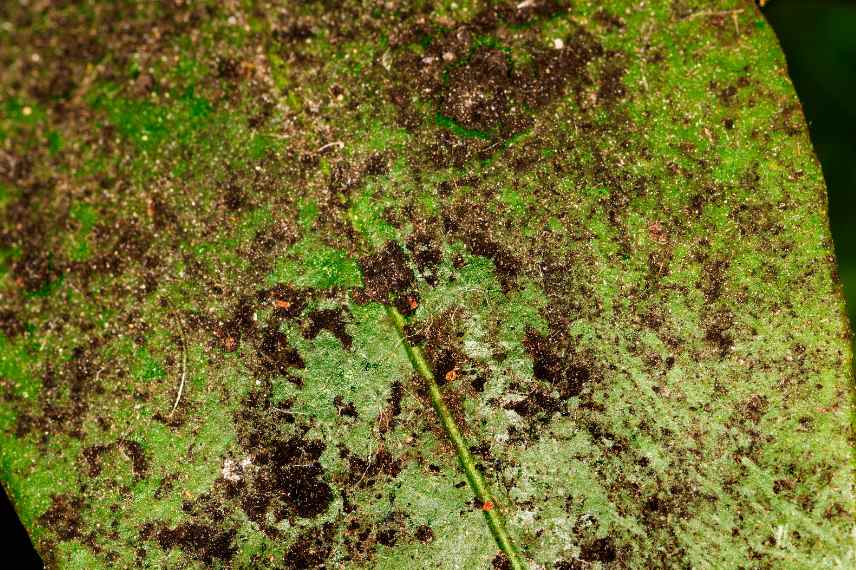
Appearance of sooty mould (here on an orange tree leaf)
- Subscribe!
- Contents
Comments