





























Diseases and pests of Catalpa
Identification, prevention and treatment
Contents
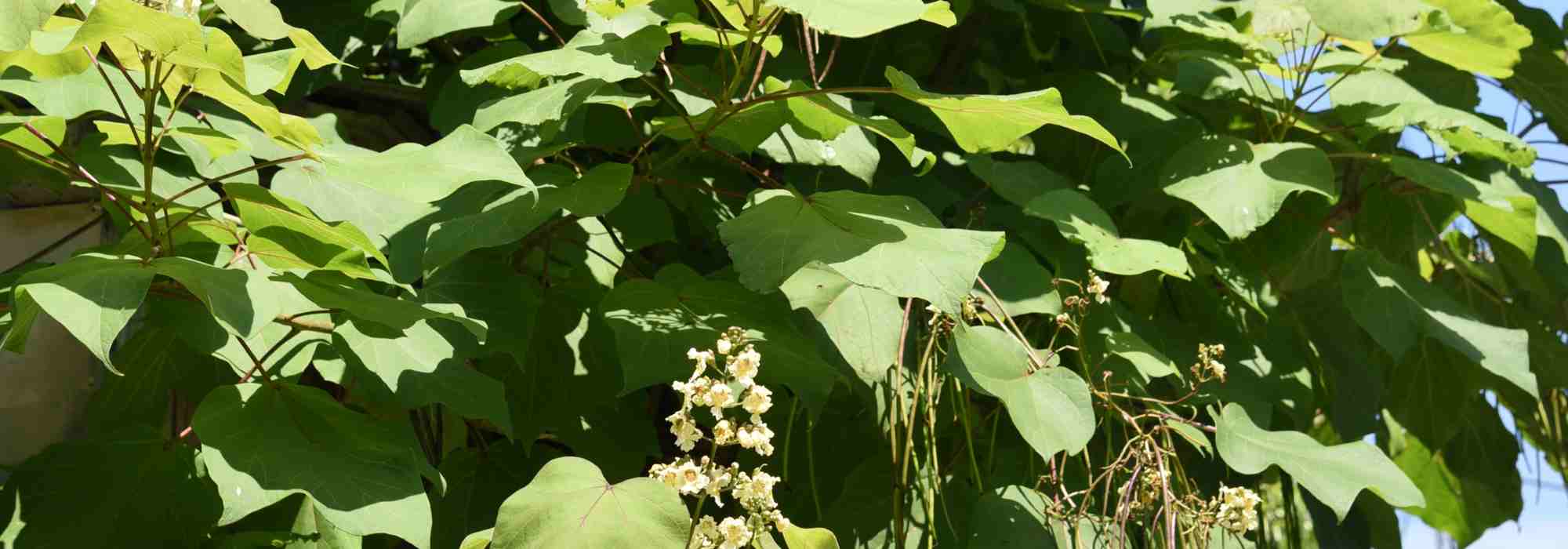
Catalpa is a very beautiful shade tree appreciated for its white summer flowering followed by bean-shaped fruits and its large heart-shaped leaves with an exotic appearance. It forms a leafy parasol under which it is pleasant to shelter from the sun in summer. Fast-growing, it provides thick and beneficial shade on hot days. Very easy to grow, it thrives in full sun, in any fresh and well-drained soil under most of our climates, and it withstands urban pollution very well. However, although this tree is generally resilient, it can also be subject to various diseases and pest infestations. It is essential to know how to identify and treat these issues to ensure the health and longevity of your catalpa. Here are the various fungal diseases and pest attacks that can affect your catalpa, and how to remedy them naturally.
And, discover the dedicated file: “Catalpa: planting, pruning and care”

Armillaria
Identification:
Armillaria or root rot is a serious fungal infection that affects the roots of the tree. The responsible fungus, Armillaria mellea, is present in the soil and can infect the tree through wounds or damage to the roots. This disease attacks the wood and causes a gradual weakening of the tree, manifested by yellowing of the leaves, wilting, and ultimately, the death of the tree. Furthermore, the presence of fruiting structures of the fungus at the base of the tree is a telltale sign of infestation.
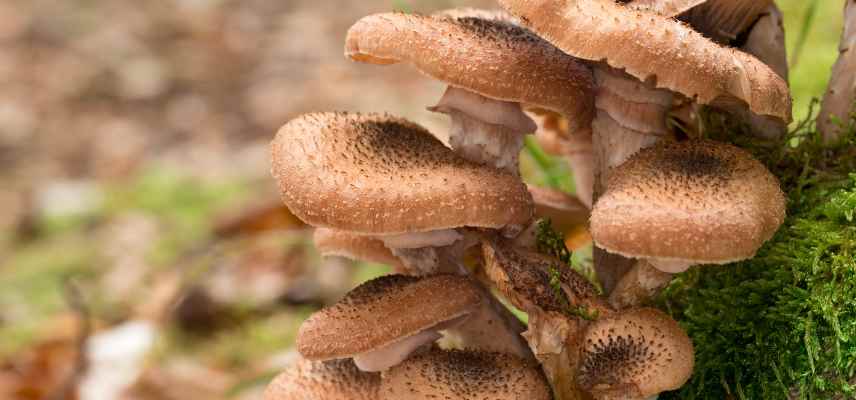
Armillaria mellea or armillaria
Control of Armillaria:
- Remove infected trees: in the event of an armillaria attack, it is crucial to uproot the entire tree, including its roots. It is not sufficient to simply cut the tree at ground level, as the remaining roots may still harbour the fungus and spread the disease. Once the tree is removed, it is recommended to burn it to completely eradicate the fungus.
- Quarantine the area: to prevent the spread of the fungus, a trench about 50 cm deep can be dug around the spot where the infected tree was removed. The excavated soil should be placed inside this circle. It is advisable to wait several years before replanting in this area to ensure that the fungus is completely eliminated.
- Replace the soil: another option is to remove soil to a depth of 60 to 80 cm, or even more, around the area of the infected tree and replace it with fresh soil.
- Remove old stumps: old tree stumps can harbour the armillaria fungus and spread the disease to new trees. Therefore, it is important to remove all old stumps from the area.
- Choice of new plantings: if replanting is necessary, it is best to choose a tree species less susceptible to armillaria, such as Oak, Beech, Yew, Rowan, Tamarisk, or Lime. Additionally, it is recommended to choose container-grown plants to minimise root damage that could be an entry point for the fungus.
- Improve soil drainage: a well-drained soil is less favourable to armillaria.
- Avoid automatic watering near old trees: it can promote the development of the fungus.
Prevention:
It is recommended to space trees well during planting to reduce the risk of infection. It is also important to regularly monitor trees for early signs of the disease and avoid root damage that could facilitate the entry of the fungus. Excess moisture in the soil would favour the development of the fungus. Prefer well-drained soils to prevent its occurrence. The mulching with compost rich in organic matter can also help strengthen the immune system of your catalpa. Additionally, removing diseased trees and sanitising the soil can limit the spread of the fungus.
Read also
Catalpa: planting, pruning and carePowdery mildew
Identification:
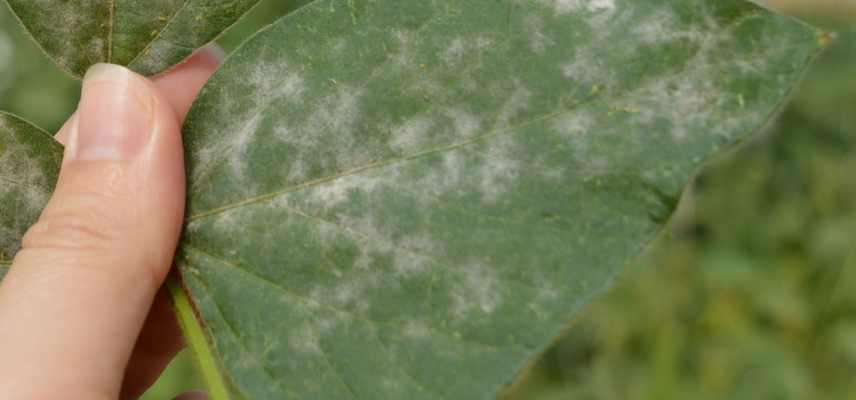
The powdery mildew is a fungal disease that can seriously affect the health and vigour of the tree. This superficial fungus produces a white or grey powdery substance that covers the leaves, stems, and sometimes even the fruits of the Catalpa. It appears during a very humid spring. Symptoms of powdery mildew may also include wilting, deformation, and yellowing of the leaves. In cases of severe infection, leaves may fall prematurely, which can weaken the tree and reduce its growth and flowering.
Natural solutions:
In the event of an outbreak, immediately remove the affected parts to slow its spread. Treat your tree with a horsetail decoction or a sulphur-based product. Repeat the operation at regular intervals.
→ And, discover all our natural solutions to combat white disease.
Prevention:
Space your plantings adequately, ensure that your Catalpa has enough room to breathe and that air circulates well around it. Humidity is a favourable factor for the appearance of powdery mildew. Avoid watering the foliage as well as overly frequent watering that encourages fungal development. Instead, water at the base of the tree.
Verticillium wilt (or wilting)
Identification:
Verticillium wilt, also known as verticilliosis, is a fungal disease caused by the fungus Verticillium that lives in the soil. It enters the tree through its roots and then spreads throughout the vessels that transport sap. Catalpas infected with verticilliosis may exhibit a variety of symptoms such as wilting of leaves, yellowing, large necroses on the lamina, premature leaf drop, stunted growth, and in severe cases, tree death. The tree may lose its bark and die.
The initial symptoms are generally discoloration, wilting, and yellowing of the leaves. These symptoms may initially affect a single branch or one side of the tree. The leaves may then yellow and fall prematurely. If you cut an affected branch, you may see brown streaks in the wood. This discoloration is often a clear sign of verticilliosis.
Natural Solutions:
Unfortunately, there is no curative treatment for verticillium. If your tree is severely infected, all infected branches and leaves should be removed to prevent the spread of the fungus in the soil.
Prevention:
- Ensure crop rotation if possible, and avoid planting catalpas where verticillium-sensitive plants have been previously infected.
- Plant your catalpa in well-drained soil. The Verticillium fungi prefer moist soils, so good drainage can help prevent infection.
- Avoid damaging the tree, as injuries can provide an entry point for the fungus.
- Thoroughly clean your gardening tools to prevent spreading the fungus from one tree to another.
- Boost your catalpa’s immunity with foliar sprays of nettle manure and horsetail decoctions.
Read also
How to pair Catalpa?Iron chlorosis
Identification:
If the leaves of your catalpa turn yellow while retaining their green veins, it may be due to iron chlorosis, caused by a deficiency in iron. The leaves may become entirely yellow and eventually fall off.
Natural solutions:
Foliar sprays of iron chelates can help rectify this issue. You can also add compost, well-rotted manure, or a foliar fertiliser for anti-chlorosis to improve soil quality.
Prevention:
Catalpas thrive in deep, cool, fertile soils. An overly alkaline soil can hinder the tree’s absorption of iron. Ensure that the soil is well-drained and sufficiently rich in organic matter. Soil that is too compacted or poor can lead to nutritional problems.
Scale insects
Identification:
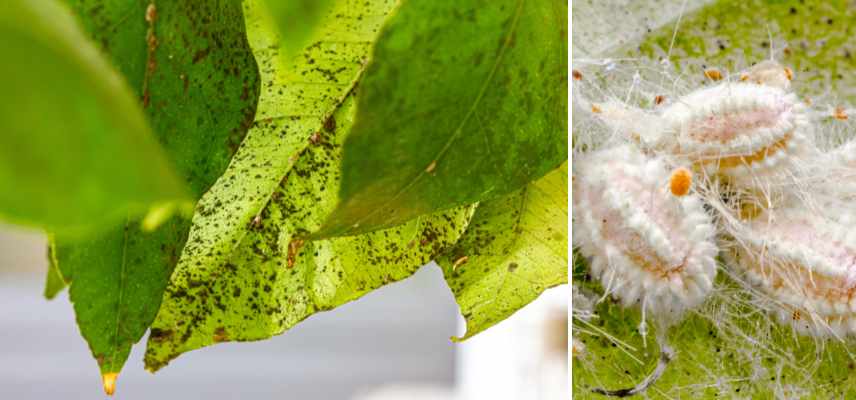
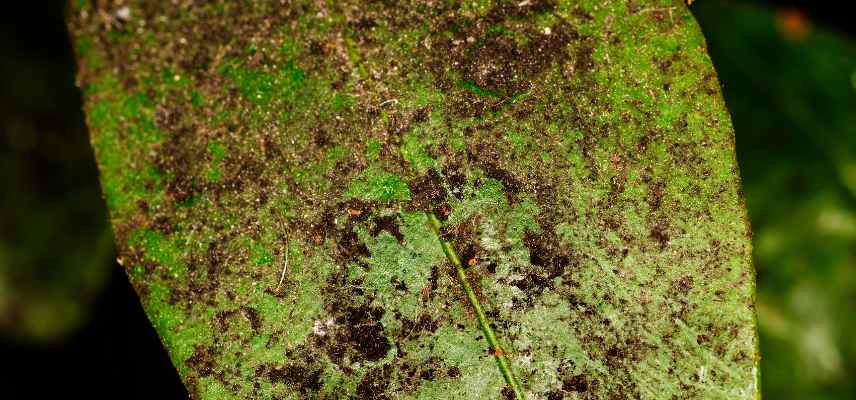
Mealybugs are small piercing-sucking insects (like aphids) that feed on the sap of plants. They secrete a sticky substance (honeydew) that encourages the appearance of a fungal disease: sooty mould. The leaves then become covered in black soot, which can hinder photosynthesis. Clusters of whitish secretions, small brown spots, and sticky droplets on the leaves should also alert you. While their attacks are not fatal to your catalpa, they can nonetheless affect its growth and flowering.
Natural solutions:
- Try to dislodge them with a powerful jet of water, then brush the trunk.
- In the case of a more serious infestation, spray a mixture of water and liquid black soap: spray every eight days until the mealybugs disappear. White oil (or paraffin oil) is also effective.
- In winter, cut off the branches (not the largest ones) infested with mealybugs and burn them.
Prevention:
Encourage the presence of beneficial insects in your garden, such as ladybirds, hoverflies, and lacewings.
→ Discover all our tips for fighting mealybugs naturally and effectively
Aphids
Identification:
These small green or black piercing-sucking insects feed on the sap of leaves, which can cause them to yellow and wilt. The aphids promote the development of sooty mould, a disease characterised by the appearance of a black, sticky substance on the leaves. If you spot a colony of these small parasitic insects on your catalpa, you must act quickly, although aphids are rarely dangerous to plants.
Natural solutions: A mixture of water and black soap can be very effective for eliminating aphids at the first signs of an attack. Spray it directly onto the aphid colonies. The nettle manure is also an effective natural repellent.
Prevention: Attract the natural enemies of aphids, such as ladybirds, and plant “trap” flowers infested with aphids (chamomile, nasturtiums, foxgloves…) near your catalpa.
→ Read our tips for fighting aphids naturally and effectively
Sooty mould
- Subscribe!
- Contents
Comments