





























Cucumber and gherkin diseases and pests
Our tips to recognise, treat naturally, and prevent diseases and pest invasions of cucumbers and gherkins
Contents
Cucumbers and gherkins (Cucumis sativus) are just one single fruit-vegetable of the same species since the cucumber is simply an unripe gherkin. Of course, there are varieties dedicated to the harvest of cucumbers, to be enjoyed fresh in salads during the height of summer, and others for gherkins, pickled in vinegar. Nevertheless, cucumbers and gherkins have their place in all vegetable gardens, provided they grow in soil rich in humus, cool, light, and in a warm, sunny location. Very greedy, they will need to be watered regularly to fruit properly. With a creeping habit, they thrive when grown vertically, trained on any support.
However, these cucumbers and gherkins can be susceptible to a few diseases. As for pests, their attack can be virulent. With a few precautions and by maintaining good growing conditions, these diseases and pests can be avoided.
Learn to identify the main pests and diseases of cucumbers and gherkins to treat them naturally and prevent them effectively in advance.

Powdery mildew, or white disease
The cucumber, and to a lesser extent the gherkin, can be affected by powdery mildew, also known as white disease. This is a cryptogamic disease caused by several fungi that often target cucurbits (pumpkin, courgette, melon…). It primarily develops in dry conditions within a confined atmosphere, such as that of a greenhouse, and the disease becomes visible towards the end of the growing season. The fungus overwinters on the plants, in small specific sporangia.
Symptoms
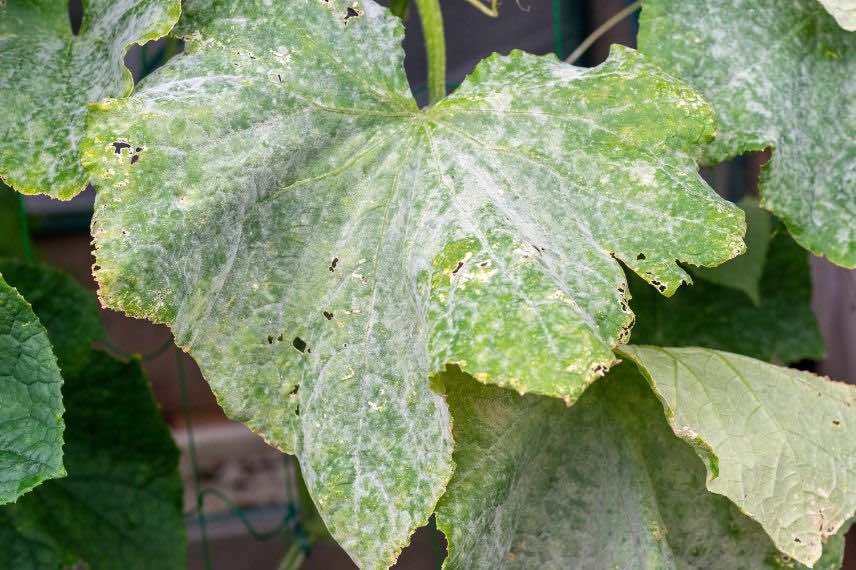
Small white, farinose spots appear on the leaves, and then the fungus invades both the upper and lower surfaces of the leaves. They eventually become distorted, curl up, and dry out prematurely.
Natural Treatments
Several natural treatments are possible:
- A spray of sulphur-based fungicide, either in flower or wettable form (the dosage is indicated on the product packaging)
- Bicarbonate of soda (1 tablespoon in one litre of water)
- Skimmed milk mixed with water (1 litre of milk to 1 litre of water) sprayed once a week
Prevention
- Avoid planting too closely
- Avoid fertilisers that are too rich in nitrogen
- Ensure good ventilation in greenhouses to prevent confined atmospheres
- Remove contaminated foliage and stems
- Mulch the soil
- Apply a spray of horsetail decoction
To learn more: Powdery mildew or white disease
Botrytis or grey mould
This disease of grey mould, caused by the fungus Botrytis sp, is primarily a disease of weakness. It often appears at the end of the season and during the summer months if the weather is humid. The fungus overwinters in the form of mycelium on the parts of infected plants.
Symptoms
The disease first manifests as round brown spots on the foliage, often at the edges of the lamina. Then a grey felt develops on all affected organs (leaves, buds, flowers, fruits…). The tissues die quickly.
Natural Treatments
- Pull up and burn the infected plants
Prevention
As control is difficult and drastic, everything relies on preventive measures:
- Avoid overly nitrogenous fertilisation
- Ensure good soil aeration and adequate water supply (without wetting the foliage)
- Provide good soil coverage with loose materials
- In spring and autumn, spray a horsetail decoction on the soil
- Stimulate the growth of young plants with a spray of nettle manure
To learn more: Botrytis or grey mould
Anthracnose or naked red
The anthracnose of cucumber and gherkin (or melon and watermelon) is caused by Colletotrichum orbiculare. It is also known as red naked and can develop if the weather is very humid and hot, which is why it remains uncommon in France. In the past, it was referred to as “picotte” in the south-west of the territory.
Symptoms
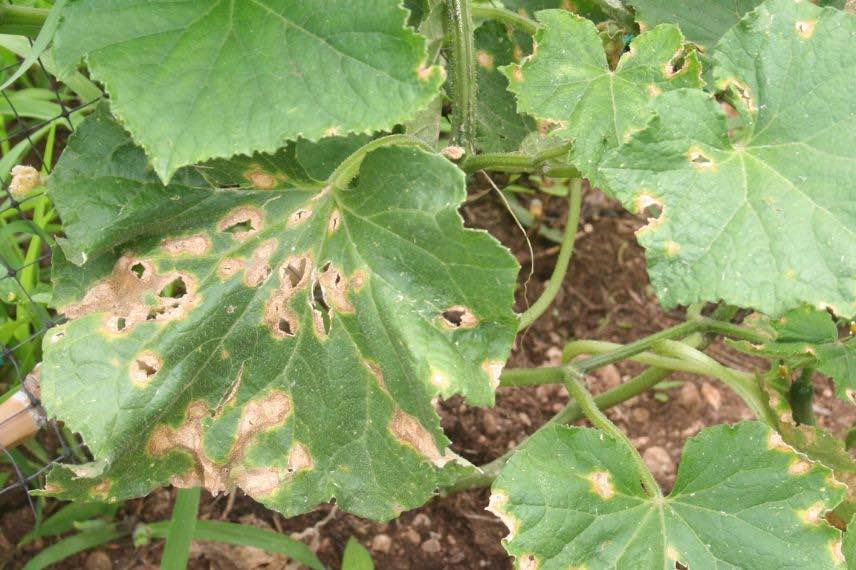
Brown, circular, often depressed spots with a light yellow halo appear on the leaves. These spots become covered with reddish mucus containing large quantities of spores.
Natural Treatments
- Burn all waste and seeds from affected plants
Prevention
- Maintain sufficient distance between young plants
- Sow only seeds that are known to be healthy
- Water plants with horsetail decoction
- Implement a strict rotation of 3 to 4 years
- Avoid any harvesting or soil work in wet conditions in infested areas
Cladosporium or grey mould
This disease of cladosporiosis, also known as grey mould, is caused by Cladosporium cucumerinum, which is quite virulent in cold and humid regions. It affects cucurbits from cucumber to courgette, including melon and squash. This disease has consequences on the quality of cucumbers and gherkins, which develop longitudinal cracks. It primarily thrives in humid weather.
Symptoms
This fungal disease is recognised by hollow, whitish to greyish spots surrounded by a yellow halo that form on the leaves. These spots release a yellowish, gummy exudate. Fruits may also show spots covered with a kind of brown fluff.
Natural Treatments
No treatment is effective.
Prevention
- Apply Bordeaux mixture
- Ensure good soil aeration
- Ensure good greenhouse ventilation
- Practice a crop rotation of 4 years
The mosaic virus
The mosaic virus, to which cucurbits are susceptible, is often transmitted by aphids. It is therefore imperative to act at the first sign of aphid colonies, especially black ones. This is a viral disease that necessitates the destruction of the harvests.
Symptoms
It manifests as mottling on the leaves. Subsequently, the leaves turn yellow, and the plant becomes stunted. Necrotic spots in the shape of rings appear on the lamina and on the fruits if they have formed. The flowers, fruits, and leaves become distorted and shrivelled.
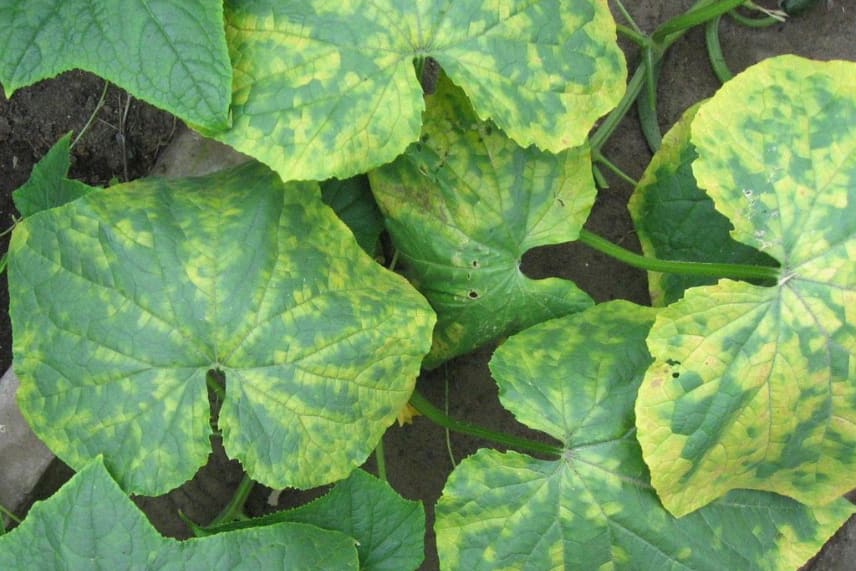
Cucumber leaves affected by the mosaic virus (Dieter©)
Natural Treatments
- Combat the vector of the disease, namely aphids, with sprays of water and black soap
- Destroy plants that show signs of disease
Prevention
- Thoroughly clean tools, especially pruning shears, after each use
- Weed the growing beds properly
- Use virus-resistant varieties
Cucumber bacteriosis
This is a bacterial disease caused by Pseudomonas lacrymans, transmitted through infected seeds and soil. Fruits are often attacked when injured, for example by thin or during pruning. Temperatures of 20 to 25 °C increase the risk. The disease is spread by wind, rain, and cultural practices.
Symptoms
Wet spots of a brownish-yellow colour appear on the cotyledons, then on the leaves in an angular pattern. They are viscous on the underside. White crusts form in dry weather. Fruits are also affected: round spots appear, turning dark green and then brown with a white centre.
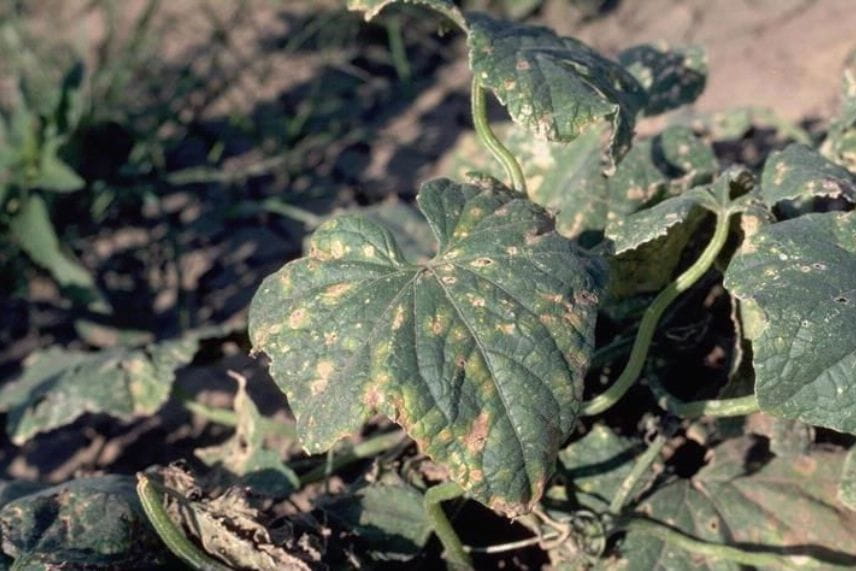
Leaves of cucumbers affected by bacteriosis (Clemson University©)
Natural Treatments
- Spraying Bordeaux mixture can slow the spread of the disease
Prevention
- Use seeds that are known to be healthy
- Soak seeds in water at 50 °C or in garlic extract for 20 minutes
- Implement a crop rotation of at least 3 years
- Remove diseased leaves
- Clean and disinfect gardening tools
Pests of Cucumbers and Gherkins
Aside from aphids, cucumbers and gherkins can frequently be attacked by three well-known pests: slugs, thrips, and whiteflies.
To get rid of slugs, I invite you to read Ingrid B’s article: 7 ways to fight slugs effectively and naturally
To eliminate thrips, these piercing and sucking insects that feed on the sap of infested plants, Solenne explains everything in this article: Thrips: identification and natural treatment
Finally, whiteflies can be fought naturally. Discover how with Olivier: Whitefly: identification and treatment.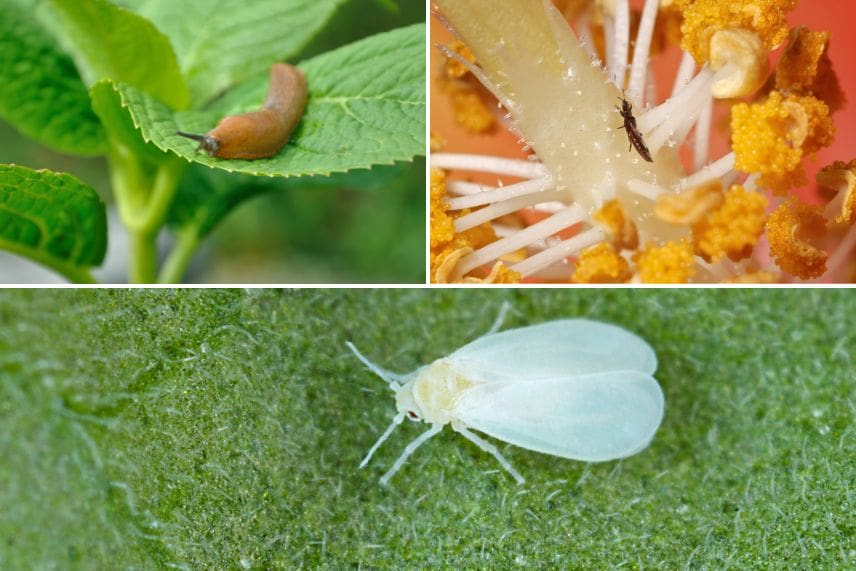
- Subscribe!
- Contents
Comments