





























Common misconceptions about growing tomatoes
The truth and the myths about tips for growing tomatoes
Contents
If there is one vegetable (well, fruit!) in the vegetable garden that gathers a lot of tips and tricks, it’s definitely the tomato. From sowing to planting, from watering to pruning, every good gardener has their clever advice passed down from their grandfather, a tip whispered in their ear by their grandmother, or a discovery made by the neighbour (who shares it with you “even if it’s a secret!”). In short, as gardeners, we have all tried to apply these techniques or beliefs to some extent. With varying degrees of success! Let’s take stock of these misconceptions that circulate around tomato cultivation.
Around the time of sowing tomatoes
Every good gardener who has tried to sow tomatoes has seen them stretch and become leggy at least once. Seedlings grow on a stem that elongates, stretching and developing few or no leaves. Eventually, the seedling weakens, becomes fragile, discolours, and lies down.
What causes this leggy phenomenon? Simply a lack of light, combined with the right temperature and humidity. This is where some ideas can mislead us. Indeed, it is not uncommon to read in specialised literature or on websites that tomato sowing can begin as early as February. False (or true for gardeners living in the Mediterranean region and Corsica, who can start their tomato sowing as early as late February).
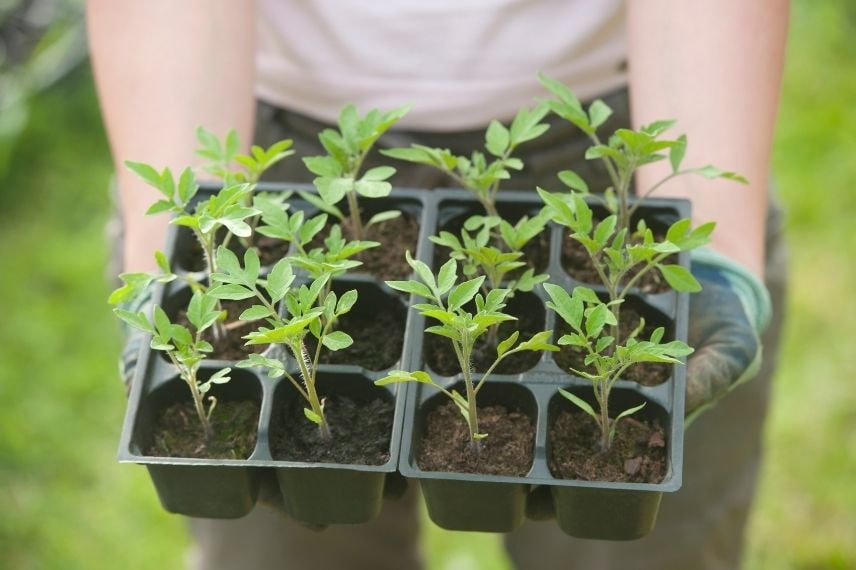
There’s no need to sow tomatoes too early, risking them becoming leggy
To germinate, a tomato seed needs a temperature between 15 °C at night and 22 to 25 °C during the day, and at least 14 hours of light per day. However, these conditions are generally met around April.
So, knowing that a tomato seed needs 4 to 6 weeks to form a plant capable of being planted outdoors, calculate your sowing date based on your planting date. This will vary from late April to early June, depending on the region where you live.
For more information, see Ingrid’s text: sowing tomatoes and their transplanting.
Read also
Succeeding in growing tomatoesWhat to think about tips related to tomato planting?
Tomato is a nutrient-hungry plant, that’s a fact. It is also particularly prone to numerous diseases (downy mildew, blossom end rot, black rot, fusarium wilt, verticillium wilt…). Everywhere, advice abounds to prevent the onset of these diseases or to provide the necessary fertilisers for the proper development of this solanaceous plant.
Bad Fertilisation Ideas
- Banana peel in the planting hole. While banana peel is rich in potassium and magnesium, it is no more so than potatoes or squashes. Moreover, it does not contain nitrogen. Therefore, placing it at the bottom of the tomato planting hole is unnecessary, even harmful. Indeed, its decomposition may create an air pocket detrimental to the root system. Additionally, banana peel is more likely to ferment than decompose. So, it’s better to put it in the compost bin instead.
- Shredded or crushed nettle leaves in the planting hole. While nettle is rich in minerals and trace elements, particularly nitrogen, potassium, and iron, once again, throwing it into the tomato planting hole is not a good idea. Why? In the absence of air, nettle will ferment more than decompose and may cause the roots to rot, especially if they are in direct contact. The ideal solution is to mulch the base of the tomatoes with nettle leaves. Alternatively, you can bury nettle (or comfrey) leaves between the tomato plants.
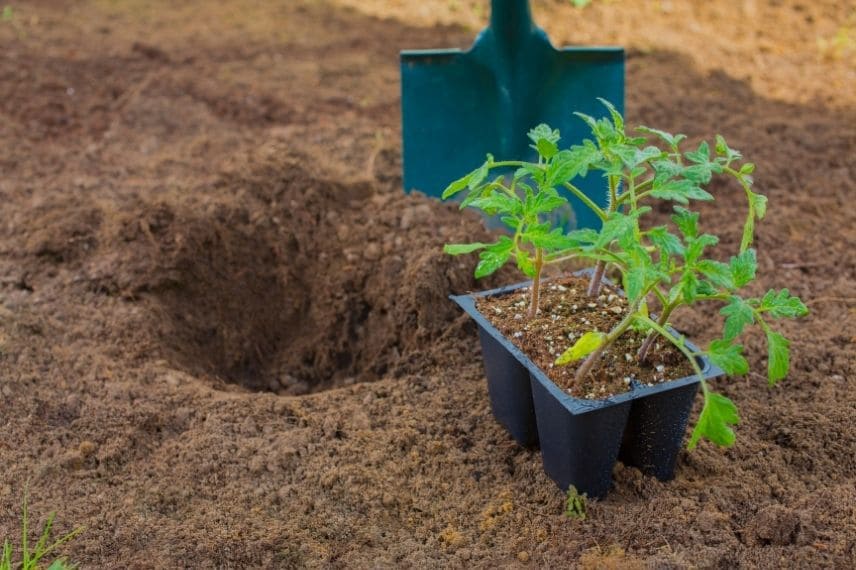
Banana peel or nettles in the tomato planting hole can be more harmful than effective.
The Misconception About Fighting Downy Mildew
Widespread, the idea of using copper wire threaded through or wrapped around the tomato plant persists. This is meant to protect it from the onset of downy mildew. However, it has little basis in fact.
On one hand, copper is not soluble in water and even less so in sap. Therefore, it will not transform into copper sulfate. Furthermore, downy mildew is not transmitted through sap, but by contact. It can only be treated by contact, meaning through preventive spraying of the foliage with Bordeaux mixture, horsetail decoction, or baking soda.
Conversely, the copper wire piercing a tomato plant risks weakening it and could potentially be a vector for a fungal disease.
The Common Belief About Greenhouse Planting
Many plant and grow tomatoes in a cold greenhouse or closed tunnel. While this is a good idea, as it protects the tomato from moisture and allows it to ripen faster due to the ambient heat, it is essential that the greenhouse is regularly ventilated. Downy mildew develops not only due to humidity but also due to a lack of air circulation.
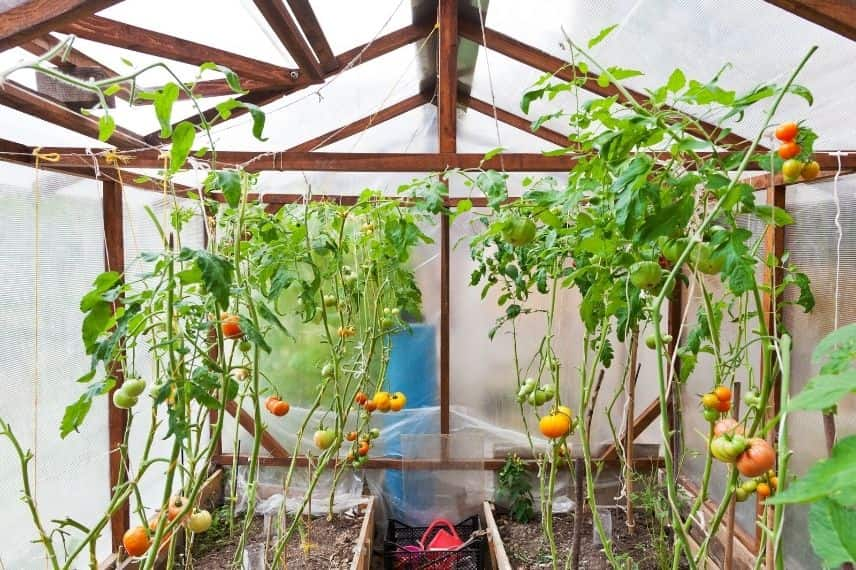 In a greenhouse, tomatoes lack air. A simple tomato shelter is preferable.
Better than a greenhouse, a simple tomato shelter will be much more effective in protecting them from the elements while allowing air to circulate. Four to six stakes or tubes and a plastic sheet are sufficient.
Discover other Tomato seeds
View all →
Available in 1 sizes
Available in 1 sizes
Available in 1 sizes
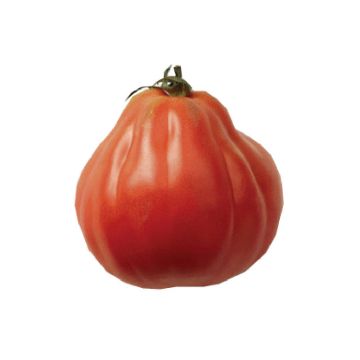
Available in 1 sizes
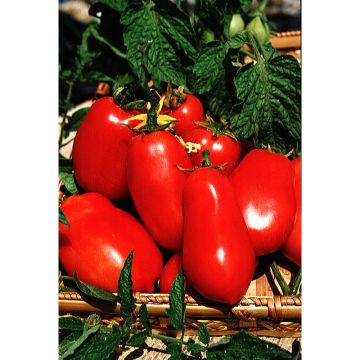
Available in 1 sizes
Available in 1 sizes
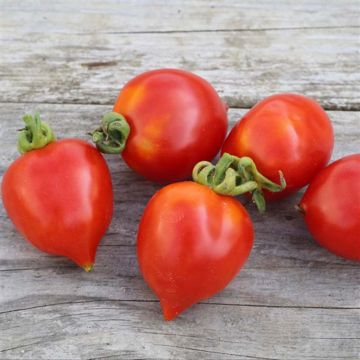
Available in 1 sizes
Available in 1 sizes
Available in 1 sizes
Available in 1 sizes
Watering tomatoes... More rumours!
In terms of watering, many so-called good ideas spread as quickly as diseases! Especially since watering tomatoes sparks quite a bit of debate.
- The upside-down water bottle system is (in my view) not necessarily the best idea. Why? Because it puts the tomato on a drip feed. It will have a continuous supply of water near the soil surface, and its roots won’t seek water deeply. This can be a temporary solution for extended holidays… However, it is preferable to water generously with a watering can every 4 to 5 days, or more depending on the climate. And of course, without wetting the foliage!
- Eggshells in watering water or milk against blossom end rot. This disease, also known as apical rot, often occurs when tomatoes have a high need for calcium to ripen. Indeed, eggshells and milk are rich in calcium, but not enough for it to be significant. On the other hand, more regular watering will be more effective for the tomato to draw the calcium contained in the soil.
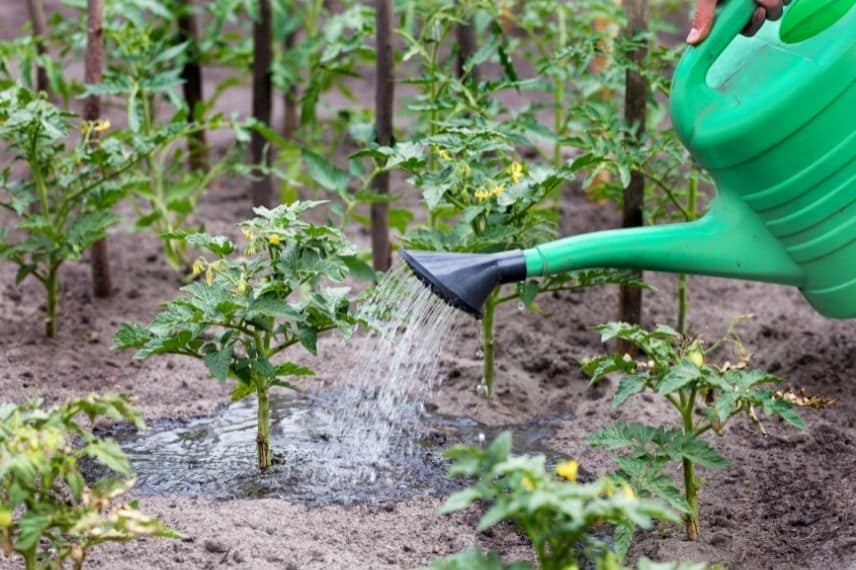 Tomatoes should be watered less frequently but generously, with a watering can, and without wetting the foliage.
- Sweet watering water to make tomatoes melt-in-the-mouth and sweet! An idea that raises eyebrows! If we follow this logic, watering with comfrey manure would make the tomatoes taste like it! I’ll leave you to test that…
Read also
Staking tomatoesEverything said about tomato pruning
The pruning of tomatoes, now that’s a topic that sparks debate! Some swear by the removal of suckers, topping, and leaf stripping to facilitate the ripening of fruits and improve air circulation. Others do it simply to increase yield by planting more plants.
However, these multiple prunings, which cause undeniable wounds to the plant, are also wide open doors for fungal diseases…
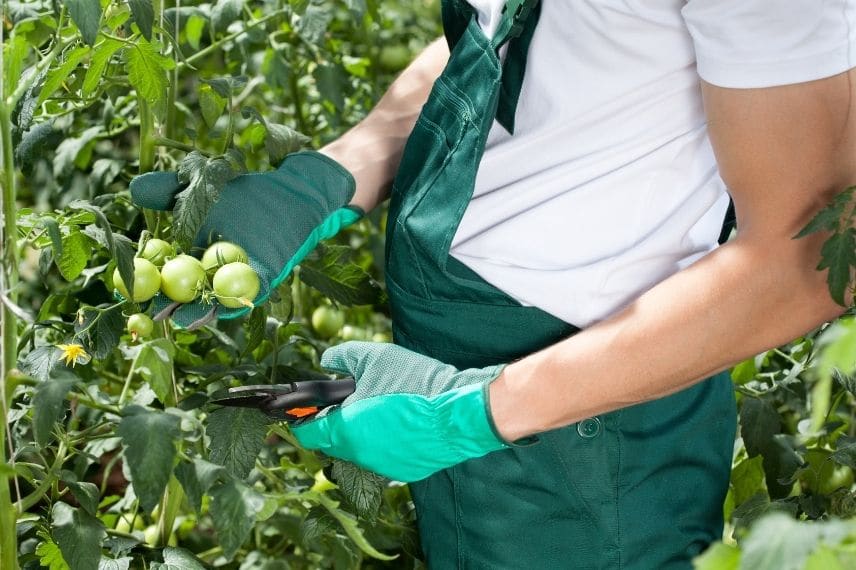
Tomato pruning should be more considered and less systematic
The solution may lie in a more measured removal of suckers, without pruning. Admittedly, the tomato plant will develop wider, which requires more space, but the ripening will be just as good. You can thus grow your tomatoes in a cage. Virginie D. explains the principle of the tomato cage.
- Subscribe!
- Contents
Comments