






























Combating moths with garden herbs
Natural solutions to get rid of clothes moths
Contents
When moths start making holes in our woollen garments, it’s often too late to act. And if it’s an infestation, we don’t know what to do, desperate to rescue our favourite jumper or scarf, literally eaten away by these little creatures.
There are indeed products available in the chemist’s section, but traditional moth traps such as naphthalene are often foul-smelling, or filled with chemicals.
Did you know that some garden plants can act as a preventative measure in your drawers and cupboards to repel moths? Let’s review them to say goodbye to these insects that spoil our wardrobe!

Moths and Mites
We address in this article the clothes moths that attack our woollen garments by perforating them with tiny holes, and not pantry moths, the famous pantry moths. Just like the latter, clothes moths fear light and favour confined, dark, poorly ventilated places typical of our wardrobes and cupboards.
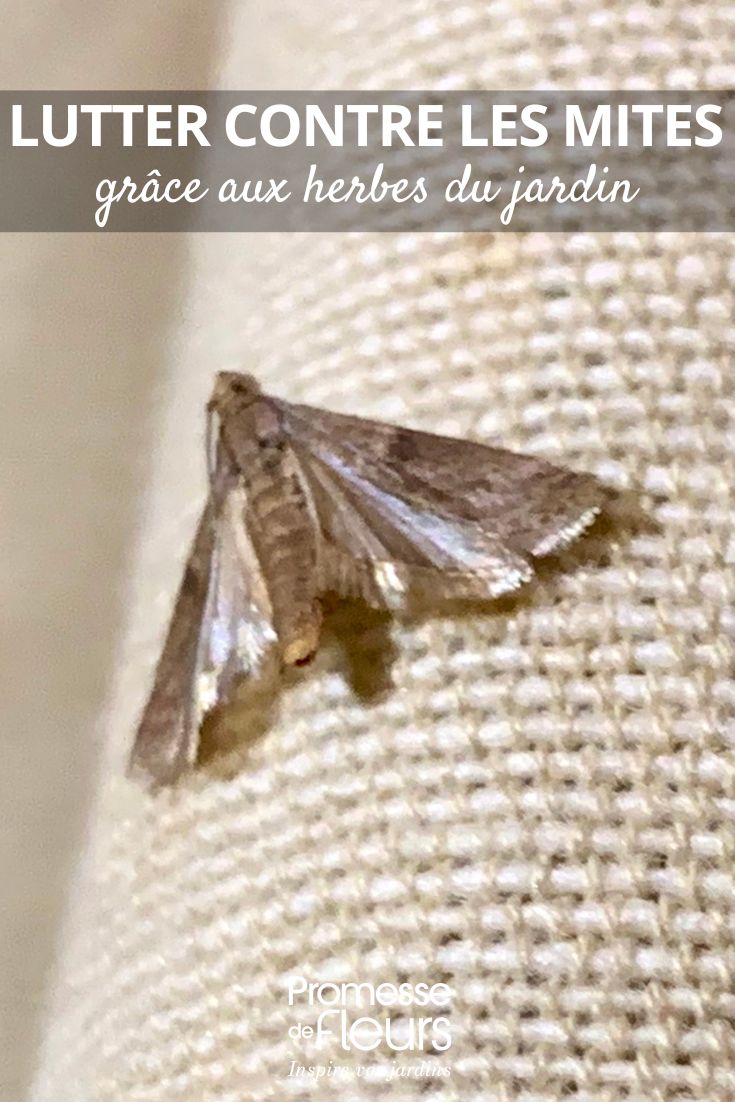
The clothes moth, Tineola bisselliella, belongs to the same family as butterflies, the Lepidoptera. They are nocturnal moths described as domiciles, in that they live in our habitats. The adult insect and the larvae act only at night. There is also the moth known as fur moth or case-bearing moth, Tinea pellionella. These textile moths feed indoors on proteins that they unfortunately find in keratin, feathers and clothing made from animal fibres such as wool, bristle, cashmere and in fur, but also in woollen carpets, tapestries and more rarely curtains. The larvae revel in them to spin their cocoons; the adults will lay eggs in these natural materials, and to a lesser extent, in clothing containing a certain percentage.
Note: pantry moths infest the kitchen, feeding mainly on dried foods such as pulses or foods rich in starch (flour, rice, cereals…), and will lay their eggs there.
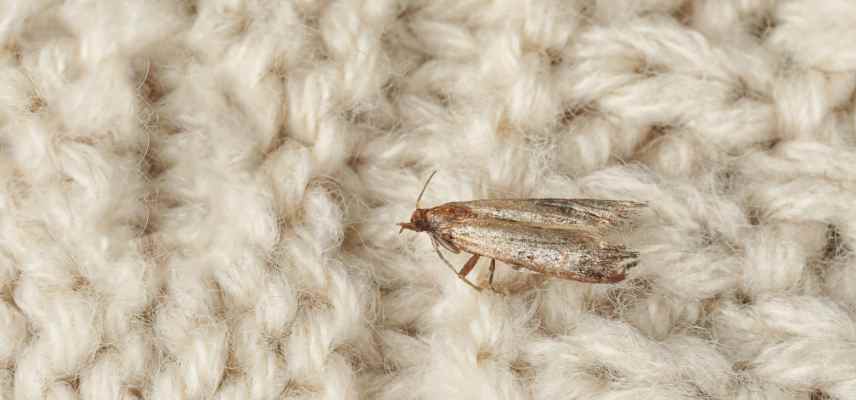
Tineola bisselliella
Moth-repellent plants that are truly effective
Clothes moths dislike certain smells, and it is on this weakness that we will exploit. All the aromatic plants mentioned here will always benefit from being paired with their essential oil, increasing their scent intensity: make small fabric sachets (linen or cotton) to place your garden herbs in. Spray them with essential oil to refresh, over the months, the scent that bothers the moths.
Here are the best-known plants for their natural repellent properties:
Lavender
It’s a plant whose benefits are no longer in question, both in the garden, where it lends a garrigue and Mediterranean feel, and in our home. A star plant thanks to the chemical compounds it contains, lavender is a true ally in the fight against clothes moths. Lavender indeed contains linalool and linalyl acetate, which are terpenes. These compounds emit a strong scent that is particularly unpleasant for moths. The linalool acts as a natural repellent, notably disturbing the nervous system of insects.
- Use : place dried lavender sachets in your wardrobes and drawers. You can also hang fresh lavender bouquets or lavender wands.
- My tip : keep your pruning residues mid-summer when you trim your lavenders. I even keep the flowering stems of my butterfly lavender, which are also quite effective and fragrant in drawers.
→ Read our tutorial How to dry lavender?

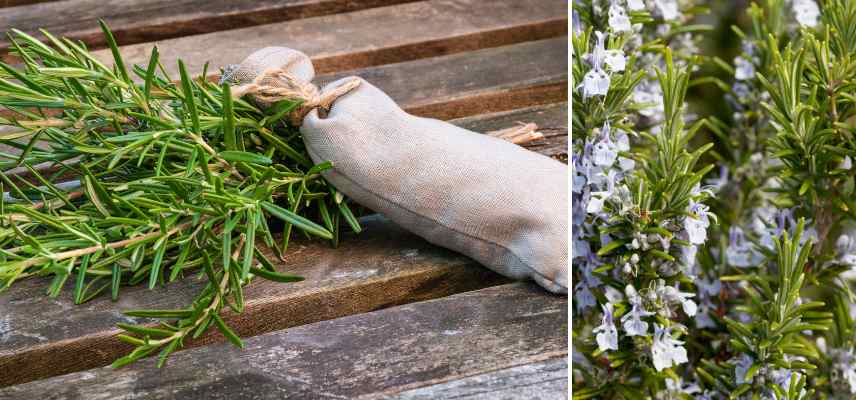
Rosemary
Rosemary leaves are rich in essential oils, notably in eucalyptol (cineole), camphor and pinene. These compounds have insecticidal and repellent properties, making the environment inhospitable for moths. It is therefore used freely in the sachets you prepare and place in cupboards to keep moths away. Even if its scent may not please in a wardrobe context, when paired with lavender, it passes very well.
- Use : place fresh or dried rosemary sprigs in your cupboards. You can also make sachets with dried rosemary to place between your clothes.
- My tip : add two to three drops of essential oil on your sachet or herb bag. This will intensify the scent nicely.
Bay laurel
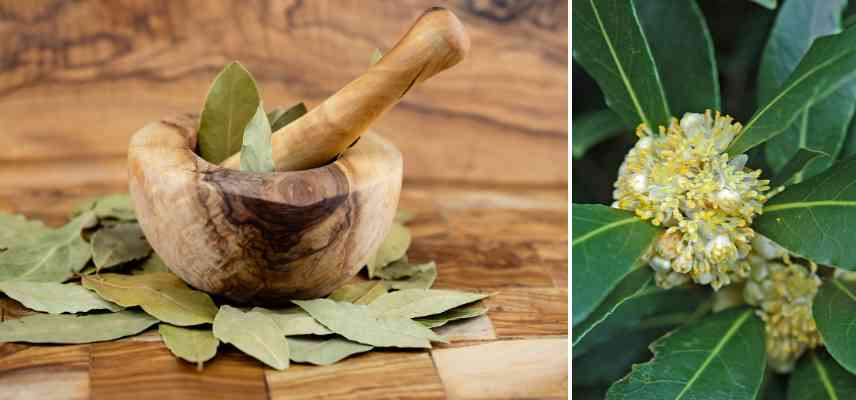
Bay leaves contain essential oils, especially eucalyptol and cineole, which have repellent properties. These compounds also give off a scent that is unpleasant for moths, preventing them from settling in areas where they are present.
- Use : chop the dried leaves or crush them in a mortar before placing them in fabric sachets or laid flat in your drawers and wardrobes (in which case, cut a long branch from the shrub).
- My tip : as when I cook, roughly snip each leaf with 2 or 3 snips to intensify its fragrance.
Eucalyptus
Like rosemary and bay laurel, eucalyptus contains eucalyptol, a compound known for its repellent and antiseptic properties. Eucalyptol gives off a strong scent that is unpleasant for moths, preventing them from re-establishing themselves in treated areas. Among those with the highest content are the Eucalyptus globulus, the Eucalyptus radiata, and also the Eucalyptus camaldulensis, and to a lesser extent the Eucalyptus gunii.
- Use : cut two or three fairly long stems from the older growth, where the concentration of eucalyptol is strongest. Place dried eucalyptus leaves in your drawers and cupboards, or use eucalyptus essential oil diluted in water to lightly spray, from a distance, your storage spaces. As with other plants, renew the leaves regularly to maintain their effectiveness.

Eucalyptus globulus et Eucalyptus gunii
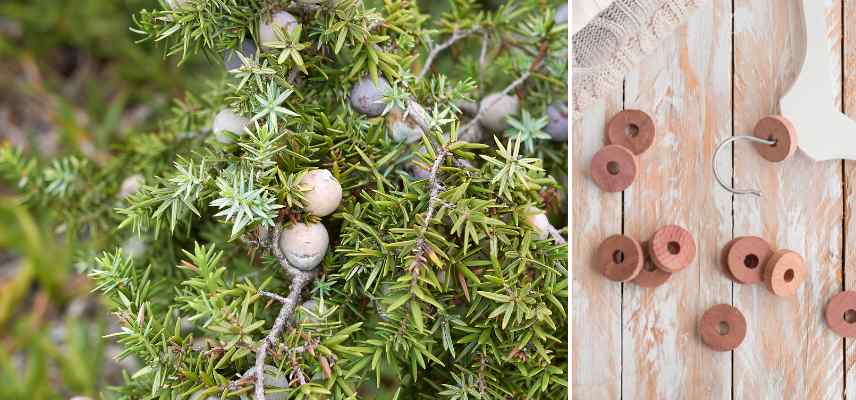
Cade wood (Juniperus oxycedrus)
You surely know it if you’re interested in moths! Cade wood, or cade juniper, is the one sold commercially as balls for drawers or as slices to hang in wardrobes. It contains essential oils rich in monoterpenes, such as alpha-pinene and limonene. These compounds have insect-repellent properties and are well known for repelling moths. The other juniper species share similar aromatic and repellent properties and can be considered effective substitutes, though their essential oil content is lower.
-
Use : harvest the stems and leaves of cade juniper. Prepare sachets with roughly crushed leaves and stems with a pestle (they sting!), or dried cade juniper stems, and place them in your cupboards and drawers. As with other plants, a few drops of cade essential oil on the fabric sachets will be perfect for extra concentration.
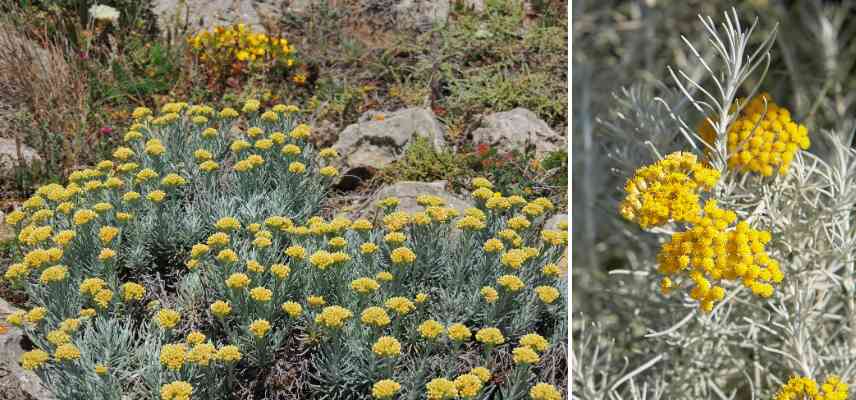
Helichrysum
Also known as helichrysum, this garrigue perennial is another plant of interest for its aromatic and repellent properties. Among its active compounds, the Helichrysum italicum contains lactones, flavonoids and essential oils. These compounds (principally the lactones) contribute to its strong, distinctive scent, hence its common name of curry plant, which acts as a natural repellent against insects, including moths. They are concentrated mainly in its small yellow flowers.
-
Use : place dried hellebrysum bouquets in your cupboards or prepare sachets with dried flowers to place or hang among your clothes. The pleasant fragrance of hellebrysum also brings, like lavender, a pleasant scent to storage spaces. As with other plants, renew your harvest after a year, as the scent fades after this period.
- My tip : since hellebrysum tends to crumble, favour making small fabric sachets filled with the flowering tops.
From the spice rack: cloves and cinnamon
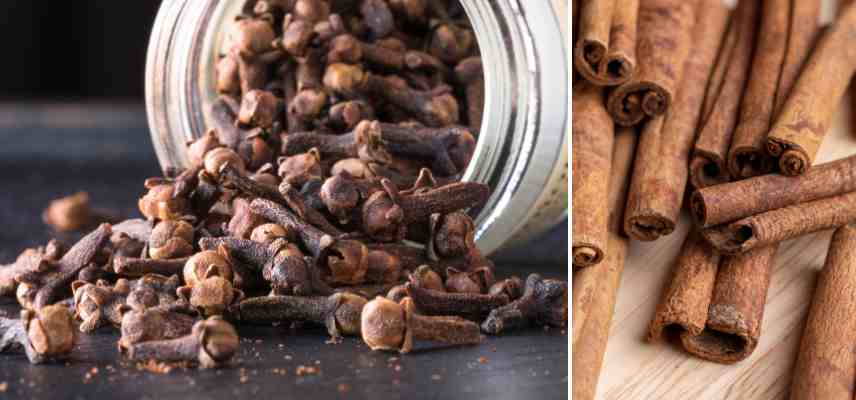
After this garden foray, head to your kitchen spice cupboard! There you’ll find whole cloves and cinnamon sticks, two products that are also very effective against clothes moths. Not only do these two spices together provide a pleasant scent in your drawers and wardrobes, but they are both interesting because their aroma does not appeal to moths at all.
Cloves contain eugenol, a powerful aromatic compound with insecticidal and repellent properties, making it very effective for keeping moths away. Its strong scent is indeed particularly deterrent for these insects. As for cinnamon, this bark contains cinnamaldehyde, an aromatic compound recognised for its insect-repellent properties, also present in the camphor tree, which is also used to fight moths. Cinnamaldehyde is, too, effective for repelling various insects, including moths, thanks to its strong scent and its effects on their nervous system.
- Use : roughly crush a few cloves in fabric sachets and place them in your cupboards. Ideally, pair the clove with two or three cinnamon sticks in your moth-proof little bags.
Some tips and advice for getting rid of mites
It is important, as soon as you spot holes in clothes, to carry out a proper spring clean of your cupboards, wardrobes and drawers where you store your clothes.
-
- \t
- Among sensible best practices, airing is essential. Choose a fine day and open all your drawers and wardrobes to air these areas as thoroughly as possible. Repeat this maximum airing on a regular basis in your bedrooms and dressing rooms.
\t
-
- Vacuum thoroughly to clear and clean the affected surfaces, especially wool-containing carpets, but also under furniture and in corners, as clothes moths also enjoy dust and the dust bunnies that collect on the floor.
\t
-
- Clean the area with vinegar: remove all your clothes and wipe the shelves and drawers with a cloth dampened with a mixture of water and white vinegar. There’s nothing like white vinegar for sanitising the surfaces on which your clothes will be placed or hung.
\t
-
- Do not store a dirty, stained or sweat-smelling garment. Clothes moths love this odour and derive the proteins they crave from these residues! Do not tempt them, and remove as much hair as possible from your clothes when you store or hang them (hair = keratin = a pantry for moths!).
\t
-
- As mentioned above, boost the repellent scent with the most effective essential oils against moths: eucalyptus, Atlas cedar, lavender or lavandin, geranium and sweet orange. They also smell divine…
\t
-
- To maximise the effectiveness of all these plants, consider renewing the sachets or the branches every year to maintain their freshness and their repellent action. You can also combine several of these plants for enhanced protection.
\t
- Finally, don’t wait for an invasion of these not-so-friendly clothes moths! You really must act quickly as soon as you notice that your clothes have holes, or you risk your winter wardrobe being irreparably damaged…
- Subscribe!
- Contents
Comments