





























Citrus trees: how to get them bearing fruit?
Our tips for achieving beautiful harvests of lemons, oranges and mandarins...
Contents
Iconic Mediterranean plants, the citrus trees enchant our springs and summers with their blossoms of pure white, sometimes slightly pink-tinged, and above all deliciously scented. As for the evergreen foliage, it has definite appeal throughout the seasons thanks to the gloss of its green. But it is mainly in winter (between October–November and April–May) that citrus trees become attractive. Indeed, their fruiting delights the palate as much as the eyes with the splashes of colour they bring to a garden or veranda. And depending on the species grown, these fruits display shapes, sizes and colours of great variety.
These little pleasures associated with growing citrus trees are within everyone’s reach. Although not very hardy, citrus trees can be grown anywhere in France. Obviously, in the ground in the ‘orange-growing zone’ or around the Mediterranean coast, in pots elsewhere. This cultivation presents no particular difficulties, but does require regular maintenance. Especially if you want abundant fruiting. That’s the secret!
Discover the main tips to ensure your lemon trees, orange trees, mandarins, grapefruits and cedrat trees bear abundant fruit year after year.

Choice of citrus trees
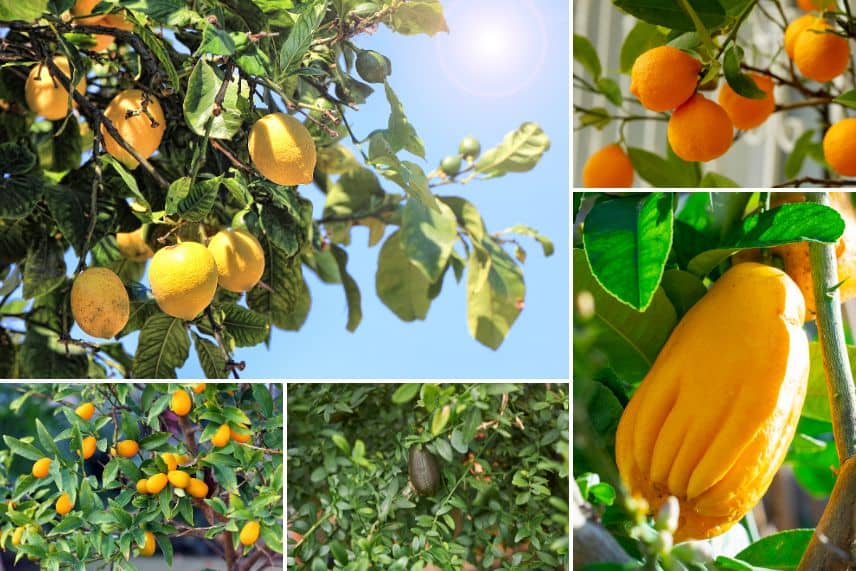
If you live on the Côte d’Azur, and especially in the “orange zone” or in Corsica, you are lucky indeed! In fact, you can grow, in the ground, most species of the Citrus variety, namely lemon trees, orange trees, mandarins, and Citron trees. As you move inland, while remaining around the Mediterranean rim, possibilities narrow, but it is always possible to grow in the ground a lemon tree, a mandarin tree, a bitter orange tree… On the Atlantic coast, some citrus trees also grow fairly easily, even if fruiting isn’t always guaranteed.
However, elsewhere, container cultivation is essential! Provided you have an outside space (garden, terrace, balcony, courtyard, patio…) where your citrus will spend the warm season, and a veranda, a cold greenhouse, a winter garden, or at least a relatively bright frost-free shelter. Indeed, keeping a lemon tree, an orange tree or a mandarin tree outdoors, under a winter protection fleece, in mid-winter when temperatures fall below -5 °C, is impossible. Thus, a citrus plant must be wintered in a well-lit room with a temperature of around 5 to 10 °C.
Likewise, to bear fruit from a citrus plant, forget growing it in our overheated apartments in winter. It is simply impossible, because citrus require wintering: they need a spell of cool conditions (a chill of about 5 to 10°C) to bear fruit.
If all the conditions are met, you can therefore pot-grow a lemon tree, in particular the Four Seasons lemon tree, or the refined finger lime, an orange tree, a mandarin tree or a clementine tree, a kumquat, a citron tree, or the remarkable Buddha’s hand…
Two exceptions to the rule remain: Poncirus trifoliata and calamondin. The former is a thorny lemon tree that tolerates -15 °C and can therefore be grown in the ground (almost) anywhere. The latter is a kumquat-mandarin hybrid and is grown in a pot indoors, tolerating the indoor atmosphere. Both bear fruit fairly easily.
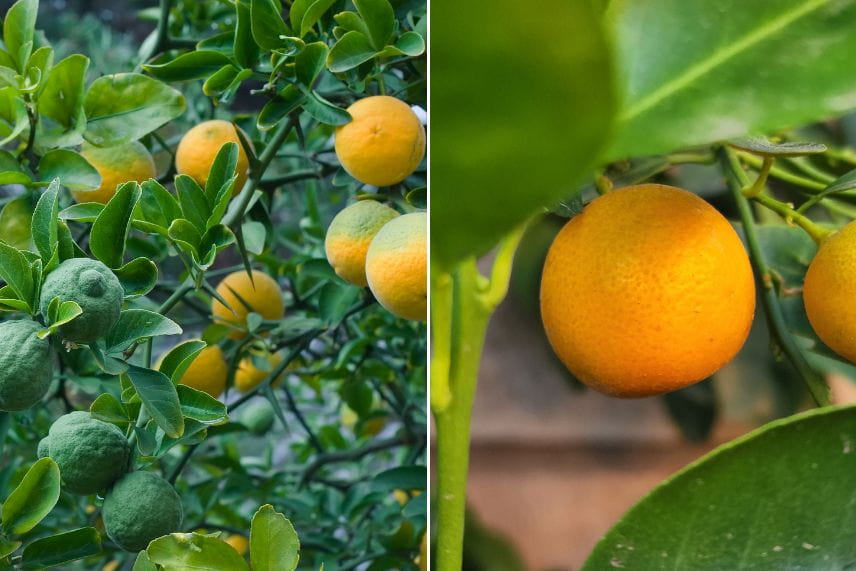
The thorny lemon tree and the calamondin stand out for their growing conditions
For a little more information, please see our articles:
Soil and sun exposure, two key elements for the fruiting of citrus trees.
To obtain beautiful citrus trees, you must first take care of the planting, whether in the ground or in a pot. And planting entails soil and exposure.
Planting in the ground
In the ground, a citrus tree must first benefit from an optimal position. It should therefore be planted in full sun, ideally at a south-facing location, and especially at a location protected from cold or desiccating winds. Likewise, citrus trees do not like sea spray.
In terms of soil, provide your citrus trees with well-drained, fairly light soil (or lightened with pozzolana, rich in iron, gravel or coarse sand to promote drainage). As for soil type, it should preferably be neutral or slightly acidic. Calcareous soils are not much appreciated by citrus trees, unless you amend with heather soil.
Finally, leave sufficient space for your citrus trees, a little for their spread, but mainly because of their root system. Their root system is very shallow, which can be troublesome for other plants growing nearby.
Planting in pots
Grown in pots, citrus trees need a relatively light substrate consisting of garden soil, potting mix, a little sand and compost. Obviously, the pot should be lined at the bottom with a layer of clay pellets or gravel.
They must receive sufficient light. From October–November to March–April, citrus trees are overwintered in a bright room with a temperature of 8–10 °C. They should not be in direct sun, to avoid leaf burn. As soon as any risk of frost has passed, they are moved outside, first to partial shade, lit by the morning sun, for two weeks to acclimatise, then to full sun and sheltered from winds.
The importance of careful maintenance for growing citrus trees.
Maintenance is certainly the most important factor in helping your citrus trees—lemon trees, orange trees and mandarin trees—produce beautiful fruits. Especially if grown in pots. Nevertheless, the same maintenance can be applied to citrus trees grown in the ground, even if they fare better than those grown in pots.
When talking about maintenance, several essential actions must be considered: watering, fertilising, pruning and repotting. We will detail all of these actions, the ABCs for your citrus trees to bear fruit.
Watering citrus trees
One essential thing to note: citrus trees are real water guzzlers! It is therefore essential to water them very regularly in spring and summer. Thus, heavy watering every 2 to 3 days is recommended, simply allowing the substrate to dry on the surface between waterings. In open ground, a watering once a week may be sufficient. In pots, you must never let water stagnate in the saucer or at the bottom of the decorative pot.
From autumn onwards and in winter, watering is reduced but continues. Indeed, citrus trees are evergreen plants where the sap continues to circulate. However, they need a winter resting period. A light watering once a week is sufficient for citrus trees in pots. Citrus trees planted in open ground simply cope with the weather.
Waterings should always be with rainwater, ideally at room temperature, as they do not appreciate hard water.
Fertilising citrus trees
If they are thirsty, citrus trees are also very hungry for nutrients. Their nutritional needs are enormous, especially during flowering, fruit set and fruiting. They therefore require very regular fertiliser applications. Regularity is indeed an important consideration. If you begin fertilising your citrus trees, continue to do so very rigorously, as they would not tolerate irregular fertilisation.
From March to September, a slow-release fertiliser should be applied to a moist substrate every 15 days. Ideally, a fertiliser that is both organic and mineral, specifically for citrus, is perfect, but you can also use a fertiliser rich in nitrogen and potassium, as well as phosphorus and trace elements. Citrus trees also need iron, which can be supplied by adding pozzolana to the substrate.
In open ground, citrus trees should manage themselves if planted in suitable soil. However, a fertiliser application can be made once per season.
Fertilisation is suspended between October and March.
A moderate pruning
Whether grown in open ground or in pots, citrus trees can be pruned, but always in moderation. Indeed, a healthy citrus tree should bear flowers, leaves and fruit. Nevertheless, if you don’t know how to prune your citrus trees, it’s better to refrain than to do it badly! Pruning is indeed optional. And if you must prune, do so after harvesting the fruit.
It mainly involves removing dry or dead branches, and opening up the centre of the shrub by pruning branches that tangle or cross, or grow toward the inside.
And as a reminder, always use a sharp pruning shear that is perfectly disinfected with denatured alcohol.
Regular repotting
Like all plants, citrus trees need to be repotted regularly, about every three years on average. Thus, with fresh substrate, they will meet their substantial nutritional needs. However, it is recommended to repot them into the same pot or a container slightly larger. You will simply need to scrape away the old soil from the root system.
If your citrus tree is difficult to repot due to its size and weight, top-dressing suffices. Top-dressing involves removing a few centimetres of substrate from the top and replacing it with potting compost.
Monitoring pests and diseases
Citrus trees can be susceptible to attack by pests or diseases that inevitably affect fruiting. Take advantage of the care you give your citrus trees to monitor for any suspicious appearance of aphids or scale insects. Similarly, if the foliage yellows or drops, act quickly!
Read also
Citrus trees: planting and maintenanceAnd pollination, shall we talk about it?
Citrus trees grown in the ground or citrus trees grown in pots that spend spring and summer outdoors will normally be pollinated by wind or insects, and especially by bees. In fact, citrus trees are self-fertile plants that do not require the presence of another plant nearby to be pollinated. There are therefore no male or female trees among citrus trees.
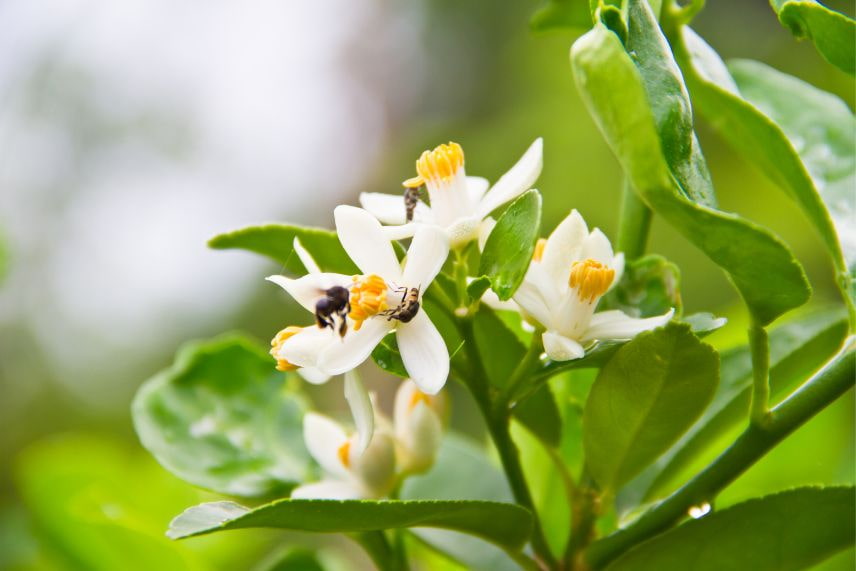
Pollination of citrus trees is normally carried out by insects and wind
So, if your citrus tree flowers and thrives in an environment rich in biodiversity (and, of course, you have followed my maintenance tips to the letter!), you should see fruiting. However, if your citrus tree does not receive enough wind or the work of pollinating insects, you can, if you wish, help the outcome by hand-pollinating the flowers yourself. It suffices to move the pollen from the stamens to the pistil, which are on the same flower, using a very fine and soft brush. With the bristles of the brush, collect the pollen, then tap the pistil. And that’s all there is to it!
- Subscribe!
- Contents

Comments