






























Chlorophytum: care through the seasons
Watering, fertilising, repotting... everything you need to know about the spider plant care
Contents
Chlorophytum comosum, also known as the spider plant, is one of the most popular houseplants, and for good reason: it is as beautiful as it is easy to care for. With its long green leaves striped with white and its ability to produce cascading offsets, it brings a touch of dynamic, lasting greenery to any indoor space. But if this plant is renowned for its robustness, it is not immune to the fundamental care requirements, which vary with the seasons.
Each season brings its share of changes: temperature, humidity, light… all of which influence the health and vitality of Chlorophytum. Knowing how to tailor care to the right time of year is to give it the best conditions to flourish, produce new offsets and display vibrant foliage all year round.
Discover the care Chlorophytum needs across the seasons.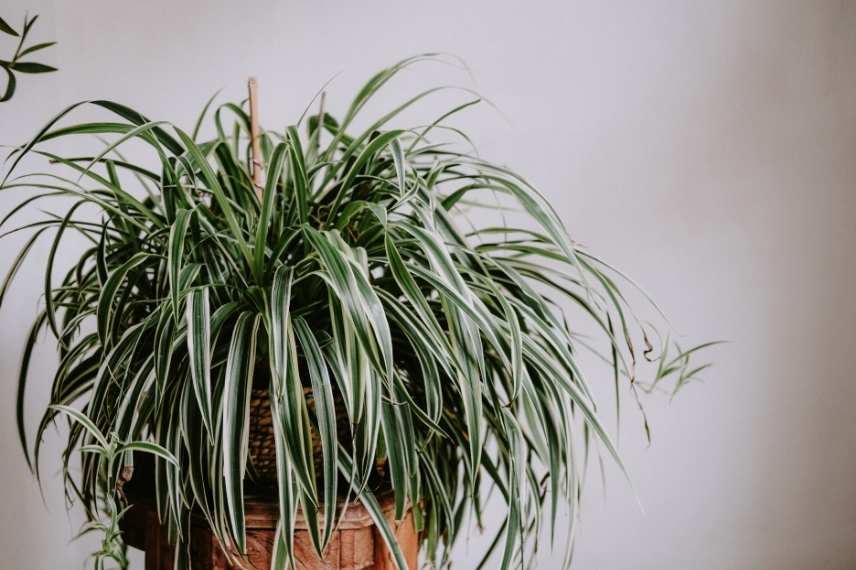
Spring, a time of revival for Chlorophytum
Spring is a period of awakening for many indoor plants, including Chlorophytum. It is the time to stimulate its growth after winter dormancy. Indeed, light levels and temperatures are rising.
Watering
- In early spring, Chlorophytum resumes activity after winter dormancy, so you should increase watering gradually, taking care not to waterlog the potting mix. Watering once a week is ideal.
- The soil should be kept slightly moist, but never waterlogged. Let the top of the potting mix dry slightly between waterings. Likewise, never leave water in the saucer or cachepot.
- If the ambient air is dry, you can occasionally mist the leaves with room-temperature water to increase surface humidity.
Repotting
- Spring is generally the best time to repot. If roots are protruding from the drainage holes or the plant is cramped, it’s time to move up to the next pot (1–2 cm larger in diameter).
- Use a well-draining, light potting mix rich in organic matter. A simple potting compost for houseplants will do, supplemented with perlite for drainage
- Take the opportunity to divide the clumps if the plant has become sizeable. It is also an opportunity to create new plants to give to friends and family!
- Repotting should be done every 1–2 years.
Fertilising
- At least one month after repotting or from the beginning of March if Chlorophytum has not been repotted, balanced fertiliser for green plants
- A liquid fertiliser for green plants every 4–6 weeks may suffice
- Avoid applying a fertiliser that is too strong all at once
Exposure
- In spring, days get longer, so you should ensure that Chlorophytum receives indirect but adequate light
- It can be moved near a well-positioned window, for example east- or west-facing, without exposure to direct scorching sun
- If it was in a darker area in winter, gradually reintroduce it to light to avoid leaf scorch.
Pruning
- This is the time to remove dead or yellowing leaves to refresh its appearance
- Also feel free to remove stolons, the thread-like shoots the plant produces, if you do not want offsets or small plantlets.
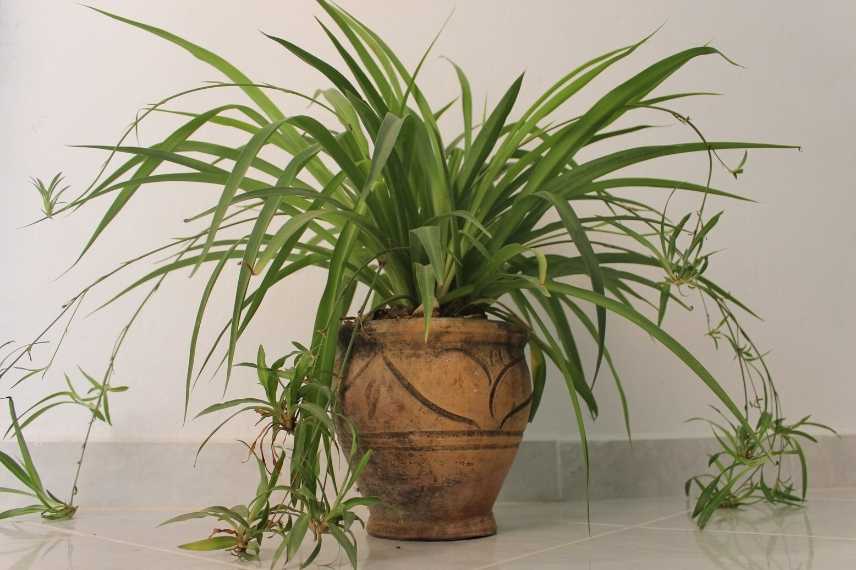
Stolons can be removed in spring
Pest and disease monitoring
In spring, it is essential to monitor the mealybugs, the aphids or the red spider mites, often attracted by the young shoots of Chlorophytum. That’s why you should regularly inspect the undersides of the leaves. In case of an infestation, treat with black soap diluted in water for aphids and spiders. Mealybugs, tougher, should be removed with a mixture of black soap, 70% alcohol and vegetable oil, diluted in water.
To prevent diseases, ensure the growing medium never stays waterlogged. Excess moisture is a breeding ground for fungi that cause root rot. Good air circulation around the leaves also helps prevent fungal diseases.
Ventilation
Spring is a key season for ventilating the space if the plant is in a closed room. Open the windows to refresh the air. Chlorophytum prefers moderate temperatures, between 18°C and 24°C. The spider plant should also be protected from cold draughts, especially during still-cool spring nights.
Summer, an equally challenging season for indoor plants
Summer conditions put indoor plants to the test with higher temperatures and an increased risk of drying out. Chlorophytum is no exception, which means you must be extra vigilant.
Watering
- In summer, evaporation is faster. It is therefore recommended to increase the watering frequency, but not excessively, especially during periods of high heat. The potting mix should stay moist, never waterlogged. If necessary, two waterings per week may be given
- Water preferably in the morning or late afternoon to avoid temperature shock
- Don’t forget to mist the leaves with ambient-temperature water to compensate for drier air, especially if the air conditioning is running.
Fertilising
- You can continue with a light fertiliser application, but don’t hesitate to reduce the frequency if growth slows
- In hot weather, the plant uses more energy to resist stress than to grow, so be cautious with feeding. A dosage that is too strong can burn the roots. That is why it is essential to follow the dosages, or even reduce them.
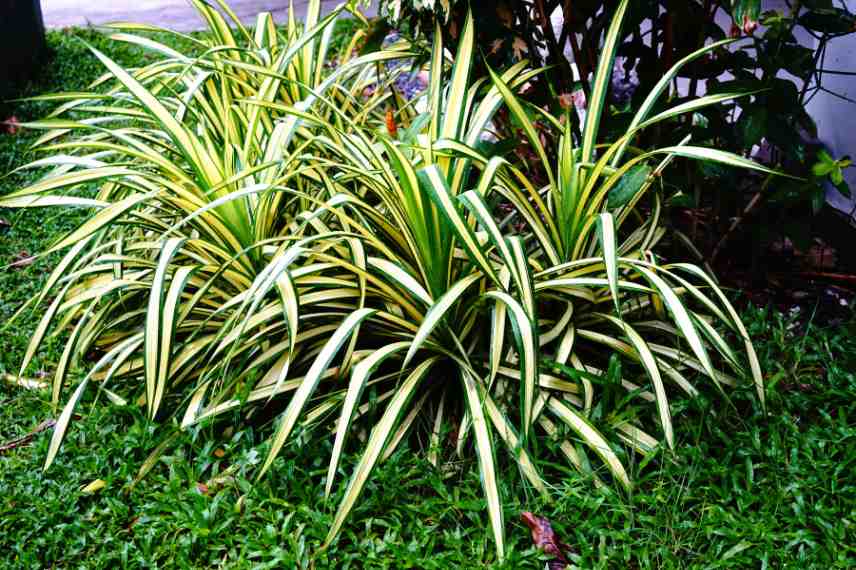
Chlorophytum can spend the summer in the garden or on a balcony, in partial shade
Light exposure
- Summer requires filtering light, as Chlorophytum cannot tolerate direct sun. However, it does need bright indirect light. A light curtain in front of the window can help soften the rays
- In summer, indoor plants can also be placed outside, on a balcony, on a terrace or in the garden. Chlorophytum also enjoys this little spell outdoors. But ensure it receives partial shade, under a shade cloth or beneath a tree or shrub.
Disease and pest prevention
As pests such as scale insects or spider mites are more active in warm, dry conditions, be vigilant by inspecting the undersides of the leaves. At the first sign of infestations, treat as quickly as possible with insecticidal soap.
To prevent fungal diseases, avoid splashing foliage during watering and ensure good air circulation in the room. Of course, do not let the watering water stagnate in the saucer or the plant pot.
Autumn, a period of transition for the spider plant
Autumn marks the transition to a quieter period for the plant, with growth slowing somewhat. That is why maintenance is reduced, but continues nonetheless:
- We gradually reduce watering frequency to once every ten days. The substrate should remain moist, but not soggy, so it is left to dry out a little longer between waterings. If the air is dry due to heating, misting with water can continue, but sparingly. They help prevent red spider mite infestations.
- In terms of fertilisation, Around October, you should gradually reduce and then stop fertiliser applications, as Chlorophytum enters its rest period.
- As the days shorten, ensure that Chlorophytum receives sufficient indirect light. You should therefore move it gently closer to a window, but without direct sunlight.
- It is recommended to remove the last stolons that remain and to discard yellowing or dead leaves.
- In autumn, your Chlorophytum prefers a temperature between 16 and 22 °C.
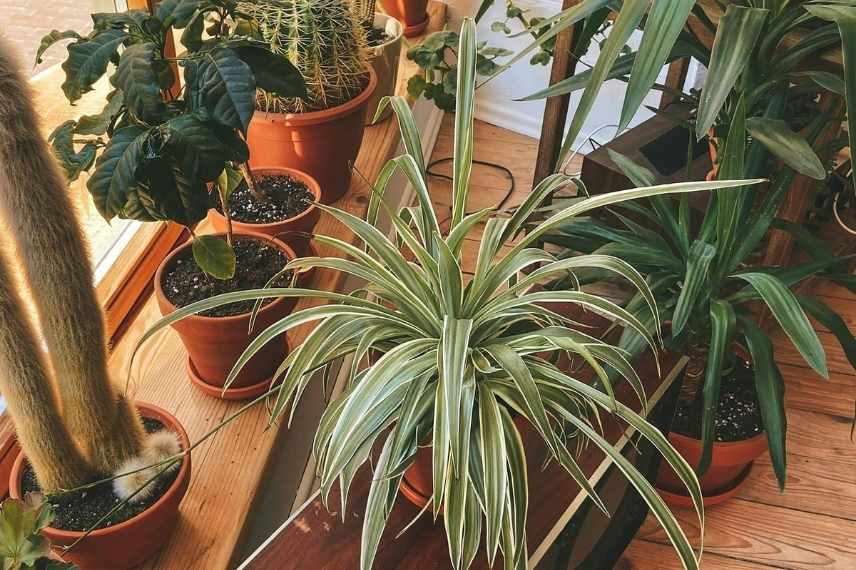
In autumn and winter, Chlorophytum should be placed near a window, but without direct sunlight
Winter, a season of rest for Chlorophytum
Winter is a quieter period for Chlorophytum: growth slows, or even stops, and care should be adjusted accordingly.
- Watering frequency is markedly reduced. The potting mix should be dry at the surface between two waterings, but do not let the plant dry out. A watering every 15 days is an ideal rhythm
- To maintain some humidity, you can place Chlorophytum on a saucer filled with moistened clay pebbles.
- Fertiliser is not applied at all until March.
- The spider plant should be placed in the brightest room possible, as far away as possible from heat sources such as radiators or the fireplace.
- The foliage should continue to receive careful monitoring to prevent pest infestations.
- Subscribe!
- Contents
Comments