





























Chelsea chop: 13 perennial plants to pinch
Which type of plants are adapted to the Chelsea chop?
Contents
Like a refreshing haircut that brings back bounce, volume, and vitality to our hair, some perennial plants with summer flowering benefit from a light pruning at the end of spring to enhance their floral production and make them beautiful and generous as desired.
This operation is the famous “Chelsea Chop,” which is becoming increasingly talked about.
We will tell you all about the perennials that appreciate this spring pruning the most, and they will reward you a hundredfold!

Rudbeckia, echinacea, phlox… many flowers enjoy the Chelsea chop

What is the Chelsea Chop?
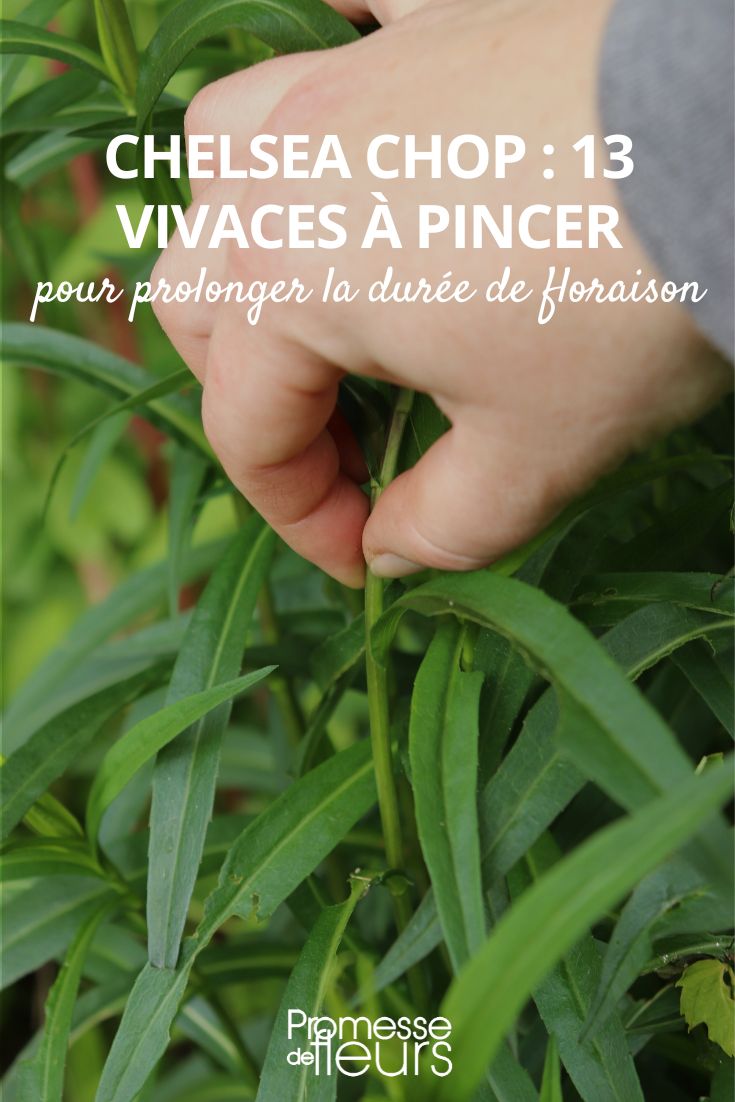
From the English verb “to chop,” and the Chelsea district in London where a famous flower show takes place at the end of May, the “Chelsea Chop” is the name given to a technique of pinching perennials traditionally performed at the end of May. Pinching refers to the action of cutting the tip of a stem between the thumb and index finger. A pair of scissors achieves the same effect. This action of pinching flowers is known to gardeners when it comes to “deadheading,” which means removing faded flowers from perennials or annuals like Cosmos, for example, to encourage continuous flowering.
In the case of the Chelsea Chop, the aim is to pinch the tips of unflowered stems that are just starting to show their first buds early in the season, to thicken the perennial, allowing it to grow in a straighter and more harmonious manner, giving it a lovely compact habit and resulting in a greater number of flower buds (the flowers will be smaller). The plants will not be leggy; on the contrary, they will maintain a beautiful bushy appearance with lovely proportions.
This technique also allows for the selection of stems to cut (one out of two, for example), to stagger the overall flowering time of the plant: this gives control over the duration of flowering, which is longer. The flower beds will be enhanced throughout the season!
→ Discover the Chelsea chop technique in detail with Pierre.
Read also
Care of perennial plantsWhen should you proceed?
According to the date of the English “Chelsea Flower Show,” which traditionally takes place in the last week of May, the pinching of perennials should be applied at this time, that is to say, late May. Summer perennials typically have not yet produced flower buds. This actually depends on the region and climate, as well as the progress in the growth of the perennials… Intervention should occur when the plants have already developed well, otherwise, there is a risk of having the opposite effect and weakening the plants.
Therefore, the Chelsea chop can be adopted until mid-June for the later perennials, such as Asters or garden Chrysanthemums, for example. The later you pinch, the more you delay the flowering of the perennial that needs to produce its flower buds.
Discover other Perennials
View all →
Available in 1 sizes
Available in 2 sizes

Available in 1 sizes
Available in 2 sizes
Available in 1 sizes
Available in 1 sizes

Available in 2 sizes
Available in 2 sizes
Available in 1 sizes

Available in 1 sizes
What are the ideal plants for the Chelsea chop?
The Chelsea chop is beneficial for summer and autumn perennials, tall and/or generously flowering plants with strong floral development. Pinching allows these types of plants to become bushier and denser, strengthening their stems so they can more easily support the weight of the inflorescences, as seen with Phlox, for example. This technique can help avoid staking a number of plants. The plants in question are herbaceous perennials, referred to as “soft,” meaning they are non-woody.
Here is our selection of perennials that benefit most from pinching:
SUMMER PERENNIALS
-
Penstemon
To maintain their attractive appearance, apply the Chelsea chop to Penstemon, these lovely perennials often found in a wide range of pink hues. They will be even more floriferous, knowing that you can renew their flowering throughout the summer by stimulating it again by cutting back the faded inflorescences.
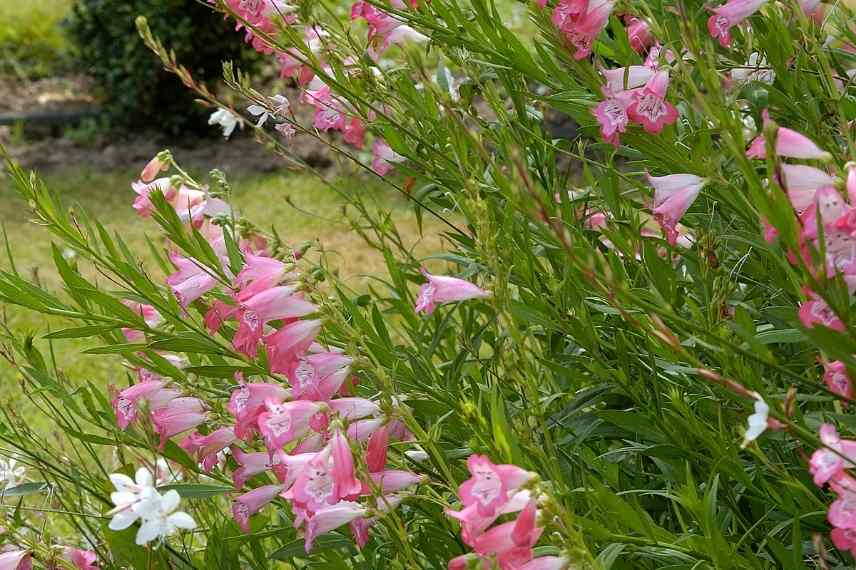 Penstemon
-
Campanulas
With their bell-shaped flowers in pink, mauve, or white, campanulas delight us in summer. By adopting the Chelsea chop on these romantic perennials, you will better control their flowering to spread it over time.
 Campanulas
-
Sages
Sages also benefit from the Chelsea chop, which helps them maintain a more bushy habit. Try it on Salvia nemorosa, for example. Shrubby sages, which tend to be woody, should be treated with a spring pruning, or even late winter depending on the region.
 Salvia ‘Amistad’
-
Phlox
With a little help from the Chelsea chop, you will encourage a more abundant floral induction in Phlox, these charming, slightly old-fashioned plants that look stunning in all types of gardens. Varieties with very large flowers will also suffer less from summer rains and gusts…
 Opulent and highly flowering Phlox
TALL PERENNIALS
-
Leucanthemum
Large daisies or Leucanthemum, often reaching nearly 1 metre in height, will particularly benefit from the Chelsea chop applied to half of the stems to prolong their generous flowering.
 Leucanthemum
-
Helenium & Rudbeckia
Hélénies (Helenium) bloom in summer until September, rewarding us with their beautiful flowers in warm, spicy colours. They benefit from pinching to stand upright, as most of them are quite tall. Rudbeckia, also part of the aster family, recognizable by their yellow flowers with black centres, are also great fans of the Chelsea chop.
 Heleniums
-
Perennial Helianthus
Perennial Helianthus, commonly known as sunflowers, ranging from pale yellow to golden yellow, are other tall plants. They too are enhanced by late spring pinching.
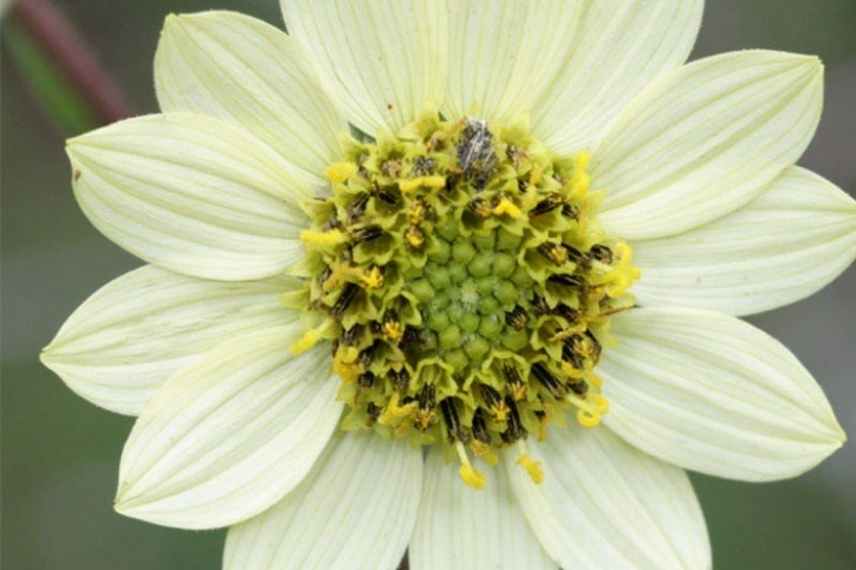 Helianthus giganteus ‘Sheila’s Sunshine’
LATE-FLOWERING PERENNIALS
-
Asters and Chrysanthemums
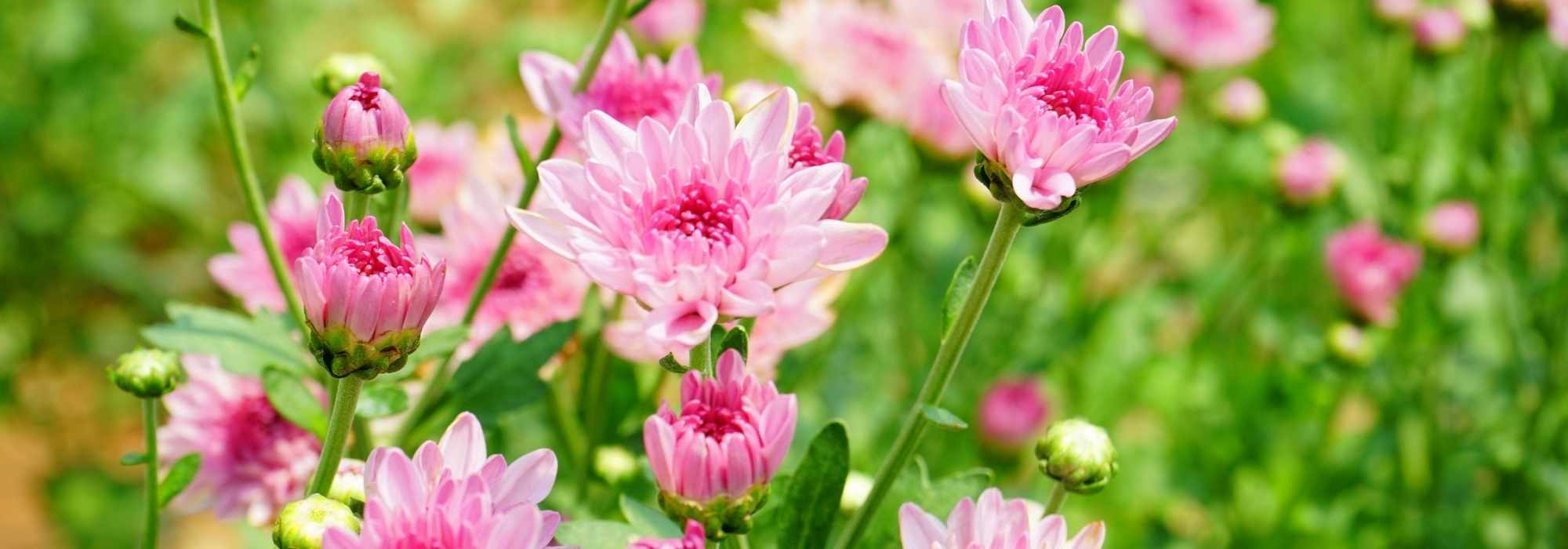
Asters and chrysanthemums brighten the garden when it begins to fade. Their delicate flowers will be even more numerous and their appearance controlled by a Chelsea chop in early to mid-June, when they start to develop.
 Asters and Chrysanthemum
-
But also:
Other beautiful blooms await us for late summer: they too will benefit from a little Chelsea chop to further stagger their flowering and maintain a compact habit for plants that might otherwise tend to open up too much: the Solidago (goldenrod), autumn Aconites like Aconitum carmichaelli and all Sedums (stonecrops).
 Solidago, Aconitum carmichaelli and Sedum
- Subscribe!
- Contents
Comments