





























Butterflies' favourite flowers
for a butterfly-friendly garden
Contents
Attracting day-flying butterflies to your garden is more than just a visual treat. These majestic insects play an essential role in the pollination of your plants, thereby contributing to the biodiversity of your outdoor space. Discover how to transform your garden into a true paradise for butterflies with our selection of the best flowers to attract them. We will guide you through a colourful and fragrant selection of plants that will not only beautify your garden, but also provide a valuable source of nectar for these winged visitors.
Ready to invite nature to your doorstep and observe the delicate dance of butterflies in your garden? Read on to discover how to do it.

What attracts butterflies to flowers?
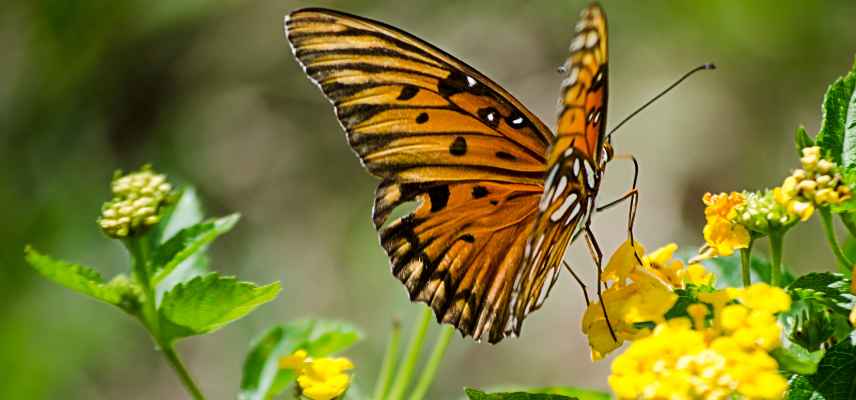
Several factors attract day-flying butterflies to flowers. Here are some of the most important:
- Nectar : Adult butterflies feed mainly on nectar from flowers. They are therefore attracted to flowers that produce lots of nectar.
- Colour : Butterflies are generally attracted to bright and colourful flowers. Some colours such as red, yellow, orange, pink and purple tend to be particularly attractive to them.
- Odour : Many butterfly species are attracted by the scent of flowers. Flowers that emit a strong fragrance, especially those with a sweet scent, tend to attract more butterflies.
- Shape of the flower : Butterflies often prefer flowers that have a shape making nectar access easier. For example, flat or bell-shaped flowers are appreciated because they offer a “platform” on which the butterfly can perch while feeding.
- Time of flowering : Day-flying butterflies are active during the day, so they are mainly attracted to flowers that open during the day. Some flowers that bloom early in the morning or late in the afternoon may not attract as many butterflies.
To create a garden that attracts butterflies, it is recommended to plant varieties of flowers that bloom at different times to provide a constant source of nectar. Additionally, as butterflies need warmth to fly, it is also helpful to include sunny areas in your garden.
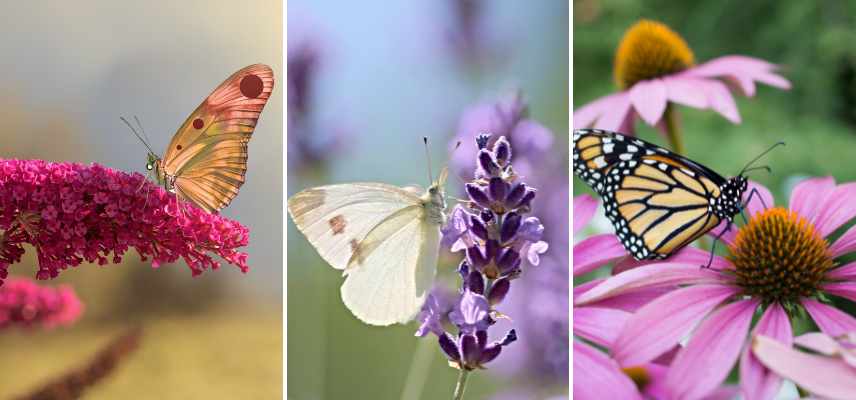
Bright colours, fragrance and shape of flowers are among the main criteria that attract butterflies
Top 10 flowers for attracting butterflies
Here is our top ten list of flowers best known for attracting butterflies with their nectar. However, bear in mind that plenty of other flowers can attract butterflies.
- Oregano or wild marjoram (Origanum vulgare): an aromatic plant with summer flowering, producing small pink or purple flowers that are rich in nectar and very attractive to butterflies ;
- Lavender (Lavandula sp.): a plant highly regarded not only for its pleasant fragrance and its lovely flowers, but also for its attractiveness to butterflies and other pollinators. Choose lavender varieties with purple and blue flowers; these bright colours are easily visible to butterflies ;
- Buenos Aires Verbena (Verbena bonariensis): a plant highly attractive to butterflies thanks to its flat-topped inflorescences, which allow the insect to land, and rich in nectar ;
- Echinacea (Echinacea sp.): it produces large daisy-like flowers, usually pink, white or purple, which are very rich in nectar, attracting a wide range of butterflies ;
- Mints (Mentha sp.): mint produces small flowers, usually white or pink, rich in nectar. This nectar attracts a wide range of butterflies and other pollinating insects ;
- Garden valerian (Centranthus ruber): also known as “Spanish Lilac”, is a very attractive perennial to butterflies, thanks to its small reddish, pink or white flowers, rich in nectar ;
- Eryngium (and other “thistles”) : Eryngium or blue thistle or Panicaut produces globular or conical inflorescences, blue-metallic or sometimes white, depending on species, rich in nectar. Other types of “thistles” can also be attractive to butterflies, such as milk thistle (Silybum marianum) or creeping thistle (Cirsium arvense) ;
- Autumn-blooming Asters (Symphiotrichum sp): these asters produce a profusion of small daisy-like flowers, usually pink, purple or white, very rich in nectar and at a time when flowering is becoming rarer ;
- Sedum spectabile (now Hylotelephium spectabile): one of the main advantages of Sedum spectabile for butterflies is that it provides a late-season food source when few other plants are in bloom ;
- Ravenelle wallflower (Cheiranthus cheiri): ravenelle wallflower produces clusters of vividly coloured flowers, often yellow, but also orange, pink or white. These flowers emit a sweet fragrance that attracts a variety of insects, including butterflies.
Make sure to plant these flowers in a sunny spot, as butterflies need the sun’s warmth to fly. Also, try planting them in groups rather than singly to make your garden more attractive to butterflies.
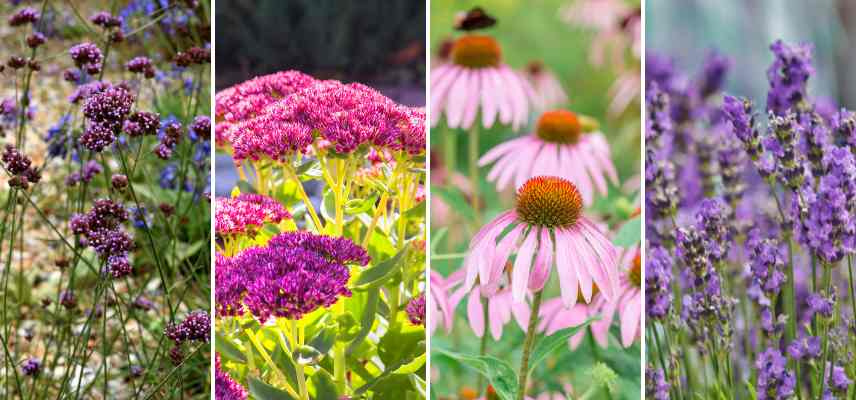
Verbena bonariensis, Sedum spectabile, Echinacea, Lavandula… Among the most attractive in the garden!
Let's not forget the caterpillars!
It is particularly commendable to want to grow nectar-rich plants for adult butterflies, but bear in mind that it is also important to safeguard host plants for butterflies, i.e., those on which caterpillars feed. Here are a few examples of plants to plant or let grow at home to feed these caterpillars:
- Nettle (Urtica dioica): It is a host plant for several butterfly species, including the Small Tortoiseshell, the Peacock, the Painted Lady, the Red Admiral and the Vulcain;
- Wild grasses: The “herbs” are host plants for a multitude of butterfly species, such as Satyrion or the Fadet de la Mélique;
- St John’s wort (Hypericum sp.): This plant attracts the caterpillars of the St John’s-wort hawk-moth;
- Plantain (Plantago sp.): Several butterfly species, such as fritillaries, lay their eggs on this plant;
- Cabbages (Brassica sp.): These plants are host plants for certain pierids, including the Cabbage White and the Turnip White;
- Clover (Trifolium sp.): Species such as the Blue Argus and the Common Azure favour this plant;
- Bracken (Pteridium aquilinum): The caterpillar of the Succisa checkers feeds on this plant;
- Wild lettuce (Lactuca virosa): This plant is preferred by the caterpillar of the Comma;
- Thistle (Cirsium sp. and Carduus sp.): These plants attract many butterfly species, including the swallowtail, the thistle butterfly and the great wood-n’s butterfly;
- Catnip (Nepeta cataria): It attracts the caterpillar of the bindweed hawk-moth;
- Asters (Aster sp.): These plants are host plants for several caterpillar species, including the Meadow Argus;
- Willow (Salix sp.): Their leaves are used by the caterpillars of several butterfly species, including the Large Night Peafowl;
- Birch (Betula sp.): It is a host plant for several butterfly species, such as the Marsh Copper and the Brimstone;
- Blackberry (Rubus fructicosus): a nourishing plant for adult butterflies, but also for certain caterpillars, such as the Raspberry Leaf Miner and the Blackberry Nacre;
- The Apiaceae (carrot family): plants in this botanical family feed a few caterpillars, including the well-known Machaon.
In short, as you’ll have gathered, to welcome as many butterfly species as possible, you should safeguard a wide botanical diversity and prioritise native species.
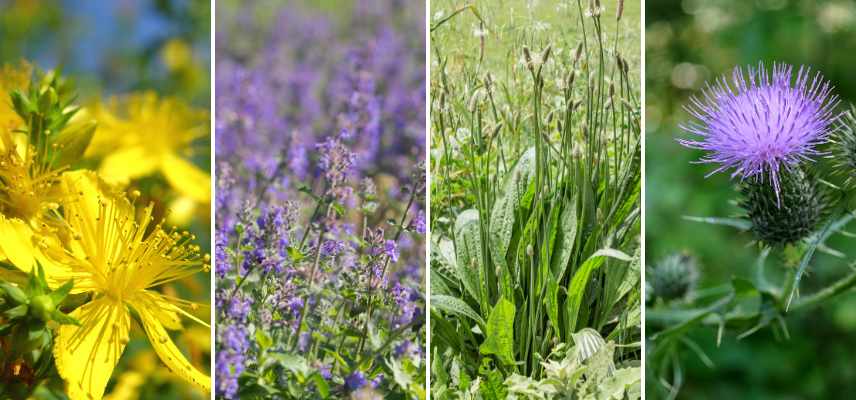
Hypericum, Nepeta, Plantago and Thistle
- Subscribe!
- Contents
Comments