





























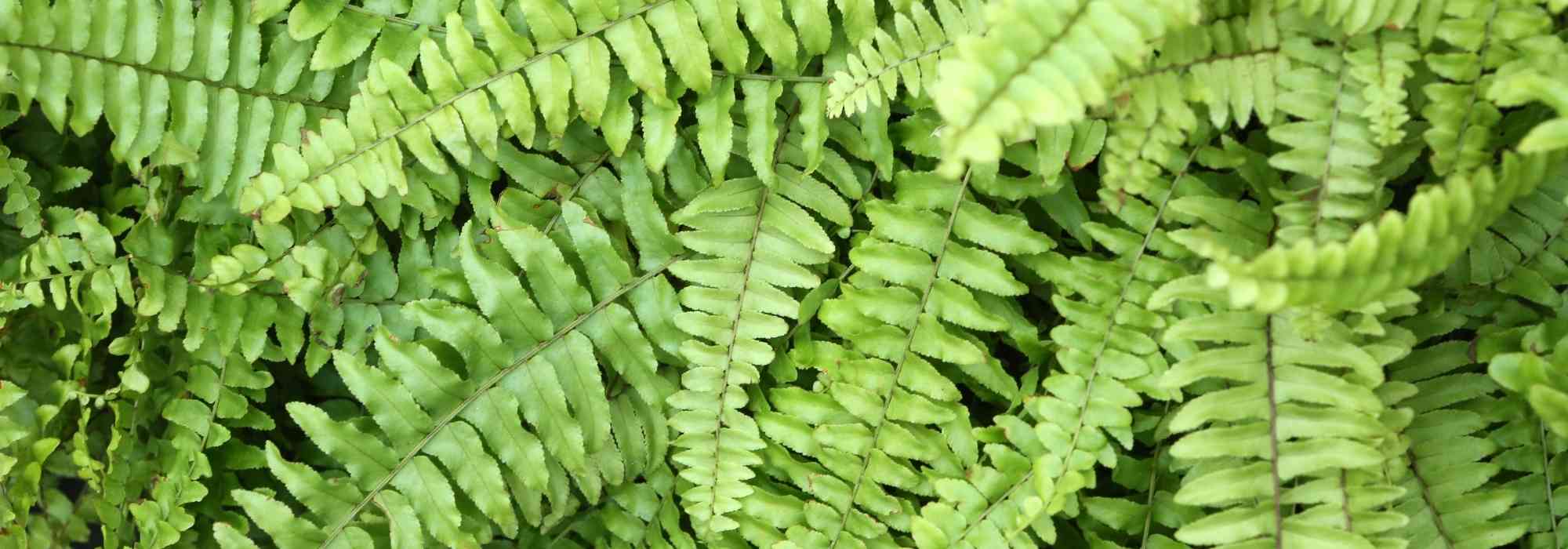
Boston fern (Nephrolepis): its care throughout the seasons
All our tips for watering, fertilising, pruning and repotting this indoor plant, season by season
Contents
With its graceful habit and trailing fronds in a vibrant green, the Boston fern (Nephrolepis) is one of the most popular houseplants. Originating from tropical and subtropical forests, it is renowned for its air-purifying ability and for bringing a touch of lush greenery. However, to keep it looking its best year-round, it is essential to tailor its care to seasonal variations, recreating as closely as possible the conditions of its natural environment. Changes in light, temperature and ambient humidity require constant vigilance from the indoor gardener.
Discover the step-by-step, season by season, for caring for the Boston fern.

Spring, the awakening and growth
Spring marks the end of winter dormancy and the start of the Boston fern’s active growth period. It’s the moment when the plant wakes up, requires more energy and resumes production of new fronds.
Watering and Humidity
Rising temperatures and increased light mean greater water needs, especially since the Boston fern naturally grows in humid environments.
In spring, you should resume a more frequent watering routine, twice a week. The medium should remain slightly moist at all times, without being waterlogged. Water as soon as the surface of the soil begins to dry to the touch. It is preferable to use for watering rainwater, or demineralised water, at room temperature. Obviously, do not leave standing water in the saucer or the cachepot.
The Nephrolepis requires high atmospheric humidity, ideally above 60%. It is therefore recommended to maintain regular leaf misting, if possible with non-calcareous water (rainwater or filtered/demineralised water), once a day. The use of a humidifier or placing the pot on a dish filled with damp clay pebbles can be beneficial.

Leaf misting is essential for the Boston fern to maintain a constant humidity
Fertilising
The resumption of activity requires nutrients. Start applying a liquid fertiliser for houseplants, diluted to a quarter or half of the recommended dose, every two to three weeks. This is the time when the plant will benefit the most.
Repotting
If the roots of your fern are coming out of the pot or if growth seems slowed, your Nephrolepis is root-bound. Spring is the ideal time to repot.
Choose a pot slightly larger, with a layer of clay pebbles at the bottom, and a well-draining special potting mix for houseplants. You can also prepare your own substrate with potting mix, sphagnum moss and perlite.
It’s also an opportunity to multiply your plant by crown division or by separating stolons.
Summer: Heat Management
Summer is the Boston fern’s peak season. Its fronds grow quickly, but the risk of dehydration and sunburn increases.
Watering and Humidity
Maintain generous, regular watering, often twice a week or more if temperatures are very high. The aim remains to keep the soil evenly moist, never allowing the root ball to dry out completely, which would brown the tips of the fronds.
Misting should be even more frequent to compensate for the heat and the air often dried by heatwaves.
Light
Ensure that the fern receives bright, but always indirect, light. Direct sun is its worst enemy and causes irreversible sunburn on the fronds. Ideally, it should be placed near a window facing east or north.
If night-time temperatures do not fall below 12–15 °C, you can take it outside, in full shade.

In spring and summer, the Boston fern should be watered two to three times a week
Fertilisation
The applications of special fertiliser for green plants continue, every two weeks, diluted by half to avoid nutrient excess.
Frond Care
To promote healthy growth, cleaning is essential.
- Remove systematically yellowing or desiccated fronds at their base so that the plant concentrates its energy on new shoots.
- Give it a warm monthly rinse (the equivalent of a tropical downpour) to dust the foliage and prevent the establishment of mites such as the red spider mites. Let it drain well and take the opportunity to inspect the foliage for other pests such as the scale insects or the aphids.
Autumn, the transition to winter for Boston fern
As autumn approaches, the fern is preparing for its winter rest. The gardener should gradually slow down their care to accompany this natural transition.
Watering and fertilising
The plant’s metabolism begins to slow.
- Slowly reduce the frequency of watering. The substrate should begin to dry slightly on the top few centimetres between two waterings. Continue to maintain good ambient humidity, as indoor heating can begin to dry the air.
- Reduce the frequency of fertilising to once a month, or even once every six weeks, as the plant needs fewer nutrients.
Preparation for dormancy
If your Boston fern was outdoors, it is imperative to bring it indoors before the first significant drops in temperature to avoid thermal shock. Ideally, temperatures should not fall below 15°C.
It is also essential to remove damaged fronds.
Winter, the well-deserved rest
Winter is the most delicate period for the Boston fern, especially due to the heating that dries indoor air considerably. The plant enters a rest period and its growth is greatly slowed.
Watering and humidity
In winter, the aim is to avoid over-watering which causes root rot while countering dry air. This is why it is essential to:
- Space out watering considerably. Let the substrate dry more on the surface, while ensuring it is never completely dry to the core. Watering may be necessary only once a week or less depending on the room temperature. Excess water in winter is the leading cause of fern mortality.
- Misting. Misting is more important than ever to counteract the heating. You can also group several plants together to create a more humid microclimate. Remember to keep the plant away from radiators and cold drafts.
Temperature and light
- Keep a stable temperature, ideally between 15 and 20 °C. Avoid temperatures below 10 °C which would interrupt its growth.
- Place your Boston fern near a window, facing East or West, to compensate for the low winter light, but always without direct sun.
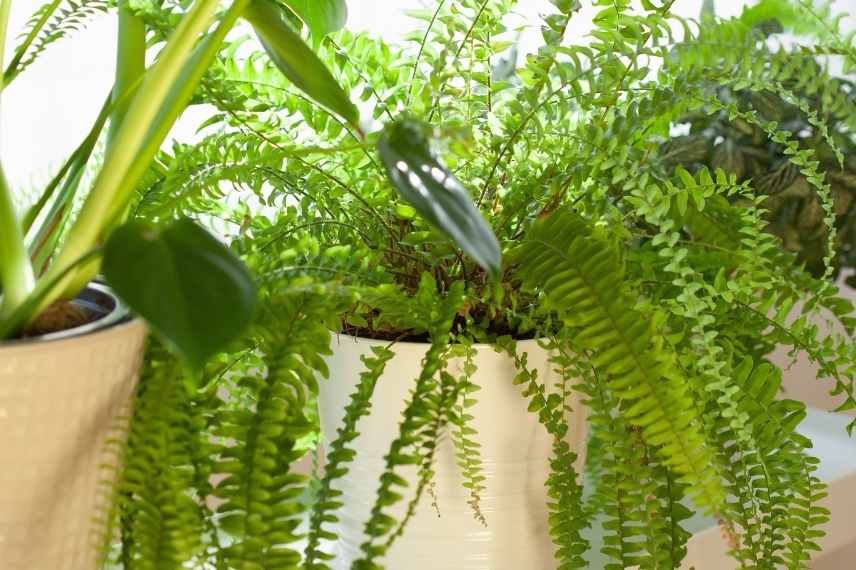
Nephrolepis needs good light without direct sun
Specific care
- Fertilisation: Completely stop fertiliser application until spring returns.
- Pests: Dry air promotes pests such as red spider mites and mealybugs. Check the undersides of the fronds carefully. In case of infestation, clean the leaves with soapy water.
- Subscribe!
- Contents

Comments