





























Blackcurrant: diseases and pests
Identification, prevention and treatment
Contents
The blackcurrant bush is an easy-to-grow bush, but it requires some attention due to its sensitivity to various fungal diseases and parasitic attacks.
Here you will find the list of diseases and pests affecting the blackcurrant bush, along with their respective natural treatments.

Powdery mildew and the blackcurrant bush
The powdery mildew is a fungal disease that affects many garden plants, particularly the blackcurrant. It earns its nickname “white disease” from the characteristic white fluff that covers the leaves, stems, and immature fruits of the plant. This white down ultimately leads to the decline of the branches.
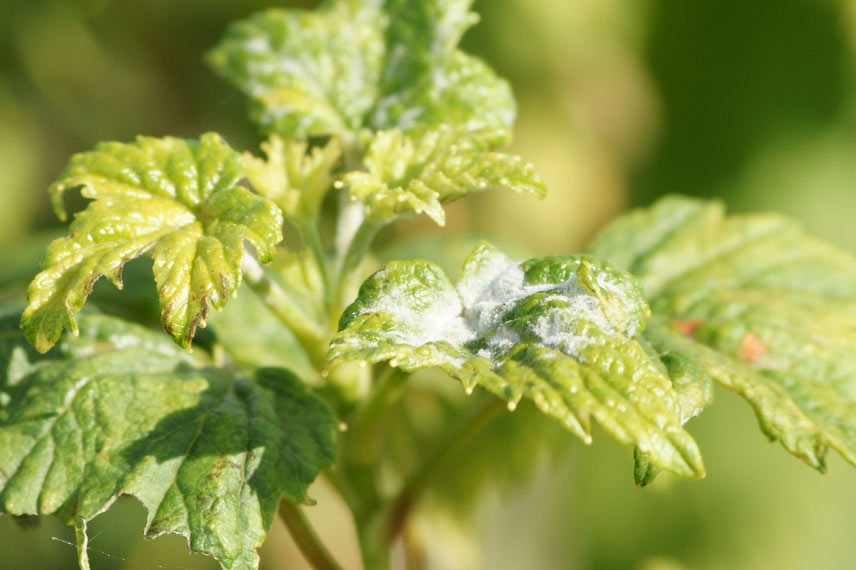
Leaf of blackcurrant affected by powdery mildew, photo by Mariluna
To prevent the disease, ensure you space your plantings adequately and regularly clean around them to avoid moisture stagnation, a factor that favours the appearance of powdery mildew. Also avoid watering the foliage of the blackcurrant.
In the event of an outbreak, immediately remove the affected parts to slow its spread. Treat the blackcurrant repeatedly with a horsetail decoction or a sulphur-based product.
Read also
Blackcurrant: planting, pruning and careBlackcurrant anthracnose
Anthracnose is a fungal disease that affects the foliage of blackcurrant plants. It is characterised by brown spots that appear on the leaves, stems, and fruits of the plant. Eventually, the leaves dry out and fall to the ground. Blackcurrant yields can even be compromised in the event of a severe anthracnose outbreak.
To limit the risk of anthracnose, avoid excessive nitrogen inputs that promote the development of the most vulnerable young shoots. Similarly, avoid wetting the foliage of your blackcurrants during watering, as moisture encourages spore development.
If your plants are affected by anthracnose, make sure to collect all dead leaves and burn them. Treat your blackcurrants with Bordeaux mixture when the leaves fall, and repeat the treatment at the beginning of the following spring. During the growing season, apply horsetail decoction sprays twice a week to strengthen the plant and prevent anthracnose attacks.
Discover other Blackcurrant bush
View all →
Available in 2 sizes
Available in 1 sizes
Available in 1 sizes
Available in 1 sizes
Available in 6 sizes
Available in 3 sizes
Available in 1 sizes
Available in 1 sizes
Available in 1 sizes
Available in 2 sizes
Rust and the Blackcurrant bush
The rust of blackcurrant is also a fungal disease. In spring, it is recognised by the orange or yellow pustules it leaves on the leaves of the plant. In summer and winter, the observed spots take on a brown hue. Eventually, the leaves end up dying and falling prematurely.
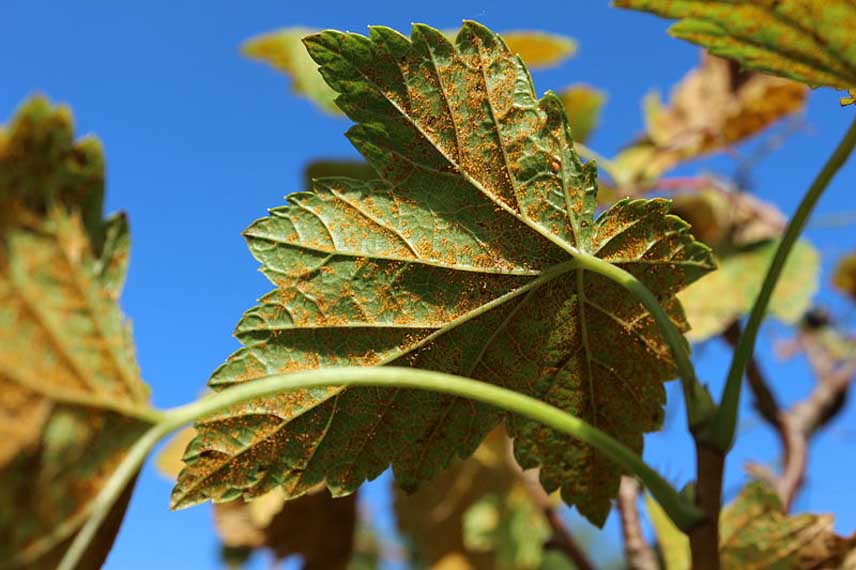
Blackcurrant rust – Cronartium ribicola, photo by Marc Argent
The diluted horsetail decoction at 15% is here an excellent preventive treatment against rust. In spring, treat your blackcurrants with fern manure to reduce the risk of diseases.
Be sure to collect fallen leaves and fruits from the ground during summer and winter before burning them. Similarly, cut and burn mummified fruits and the branches that bear them. Spraying with Bordeaux mixture helps combat rust.
Blackcurrant and the aphid
As early as spring, two types of aphids can attack your blackcurrants: the yellow aphid (Cryptomyzus ribis) and the green aphid (Myzus persicae). This well-known pest in gardens attacks the leaves of the blackcurrant bush, causing them to curl and discolour.
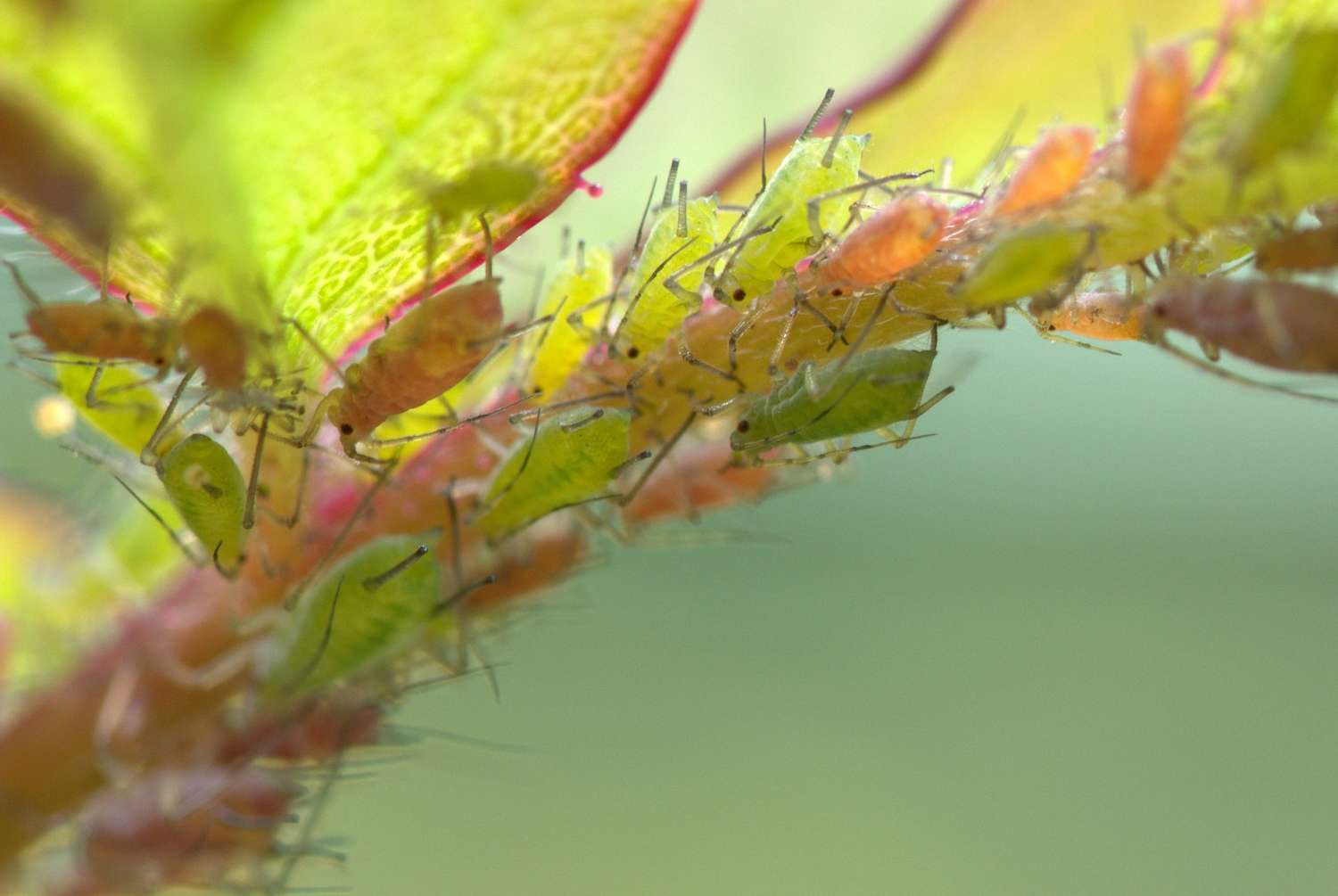
Colony of aphids
Another significant risk posed by aphids is that they are vectors of viruses. Indeed, this sap-sucking insect weakens the plant, making it more susceptible to diseases, particularly sooty mould, which is a black fungus favoured by the honeydew produced by aphids.
The best preventive measure against green and yellow aphids is to ensure the good biodiversity of the garden. To achieve this, grow spring-flowering plants and bushes to attract the aphid predators, such as:
- the tawny hoverfly;
- the syrphids;
- the ladybirds.
In terms of treatments, spraying with fern manure or black soap provides good results against aphids. If you choose black soap, complement the treatment with a garlic decoction. In fine weather, a peppermint decoction can also effectively combat aphids.
The blackcurrant gall midge
Cecidophyopsis ribis, the blackcurrant gall mite, is an eriophyid mite invisible to the naked eye. It is so small that a magnifying glass is needed to observe it. This parasitic mite settles inside the buds of the blackcurrant, just beneath its scales. It is recognised by the abnormal swelling of these same buds. Note that the gall mite can also be a vector for viruses.
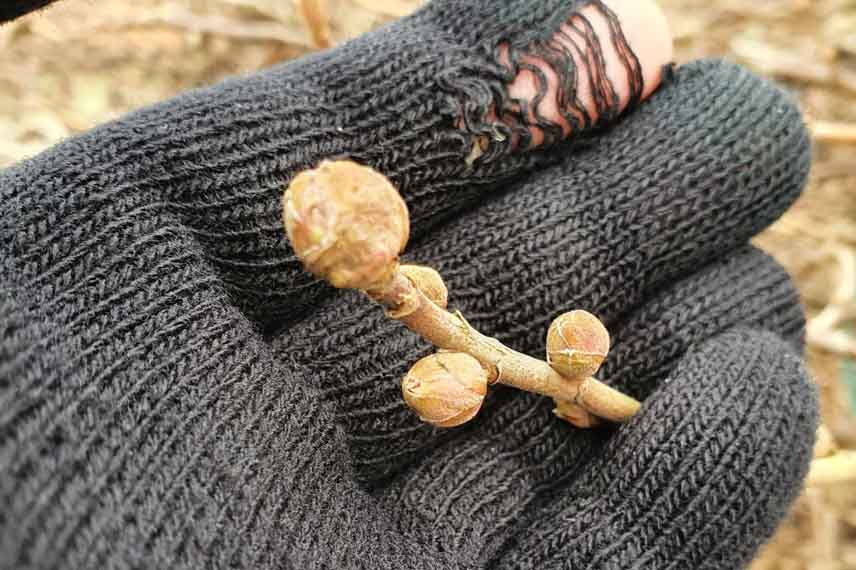
Cecidophyopsis ribis, photo by jensu – iNaturalist
At the first signs, remove the affected shoots caused by the gall mite before treating the blackcurrant with a mixture of sulphur and Bordeaux mixture.
The spider mite and the blackcurrant bush
The spider mite is a small mite that is yellow and appears when the weather is warm and dry. It then pierces the leaves of the blackcurrant to suck the sap. It can be identified by the yellow spots it leaves on the foliage, which eventually dries out, as well as the fine webs it weaves on the plant.
Treat the blackcurrant promptly, as a heavy infestation of spider mite can lead to the overall decline of the tree. In the evening, carefully apply a decoction of pyrethrum to the leaves, especially on their undersides.
The currant clearwing moth
The currant clearwing, Synanthedon tipuliformis, is a moth that lays its eggs on blackcurrants between May and June. From these, small whitish larvae emerge that settle in the branches of the bush to grow. The affected branches eventually dry out. Furthermore, the wounds caused by the clearwing caterpillar favour the onset of fungal diseases.
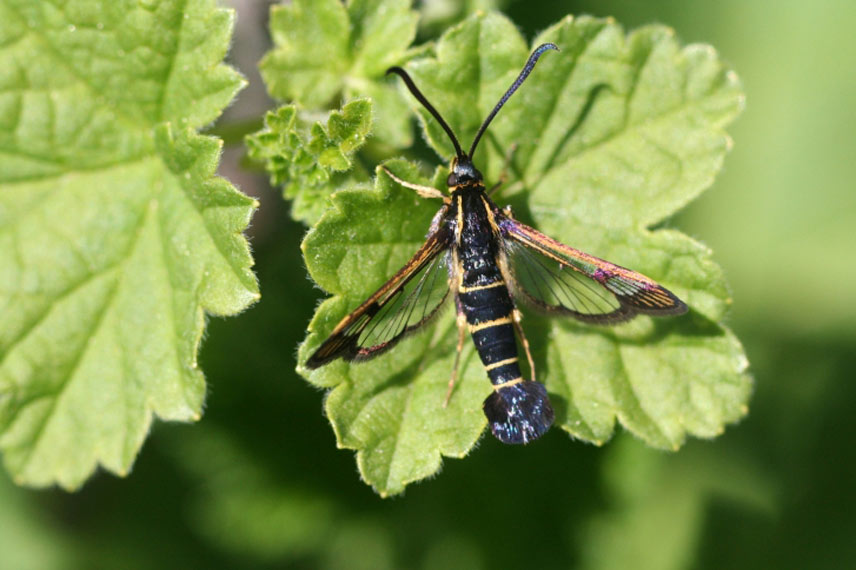
Specimen of Synanthedon tipuliformis, photo by Lymantria
In the presence of clearwing caterpillars, remove all affected branches completely.
- Subscribe!
- Contents
Comments