





























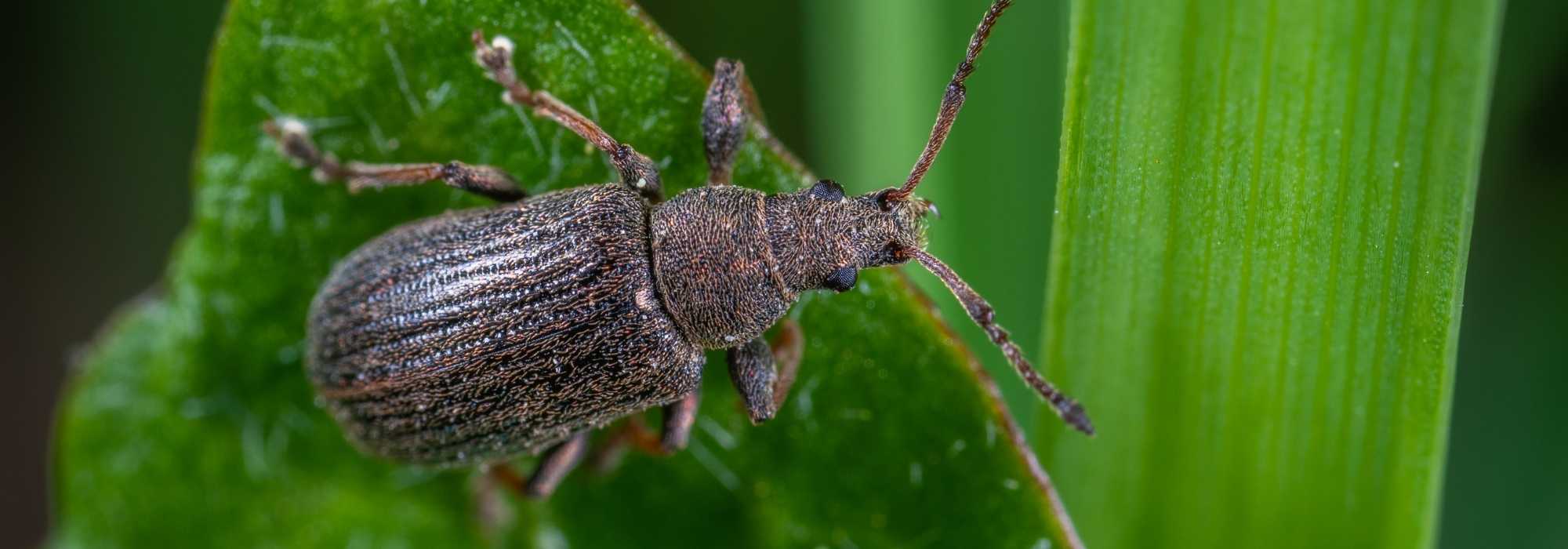
Beetles: Friends or Foes of the Gardener?
It depends on which beetle we are talking about.
Contents
Beetles are representatives of an important family of insects, the Scarabaeidae, which includes around 30,000 species worldwide. Some are known to us in nature and in the garden. We think of dung beetles, rose beetles, or cockchafers. Are beetles beneficial insects or, on the contrary, pests? Well, it depends on the species. Some recycle organic matter, others contribute to pollination, while others bury dung in the soil… while some are busy nibbling on the roots of our plants.
→ Who are they? How do they live? How can we welcome them in the garden? We tell you everything in our advice sheet.
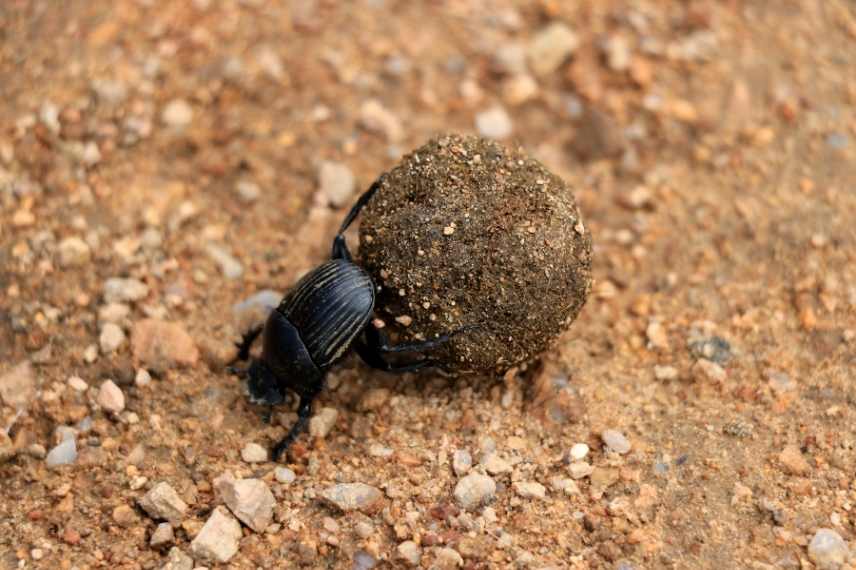 Among beetles, the fascinating work of the dung beetle

Beetles: who are they?
Beetles come in all sorts. The term refers to all insects belonging to the large family of Scarabaeidae (order Coleoptera), which includes around 30,000 species worldwide, with about 200 species in Europe. The Scarabaeidae family is one of the most significant insect families in terms of species count. It also includes the largest insects in the world: the Goliath (Goliathus goliathus), whose male weighs over 100 g, and the Hercules beetle (Dynastes hercules), whose male can measure over 15 cm.
In our region, beetles include rose beetles, dung beetles, cockchafers, and beetles like the European rhinoceros beetle (Oryctes nasicornis)…
Although the family is vast and diverse, beetles share some common characteristics:
- a very rigid shell, partly composed of elytra (that is, a pair of hardened wings that protect the underlying pair of wings) covering the abdomen;
- a very short head fused to the body, often equipped with short spikes;
- a relatively oval or rounded body;
- two antennae ending in a club, but sometimes ending in plates as seen in cockchafers;
- growths on the legs, somewhat like a comb, for digging in the soil;
- In some species, the male displays impressive growths: such as the horn in the rhinoceros beetle.
Size ranges from a few millimetres to 4 cm in length, and colours vary greatly among species.
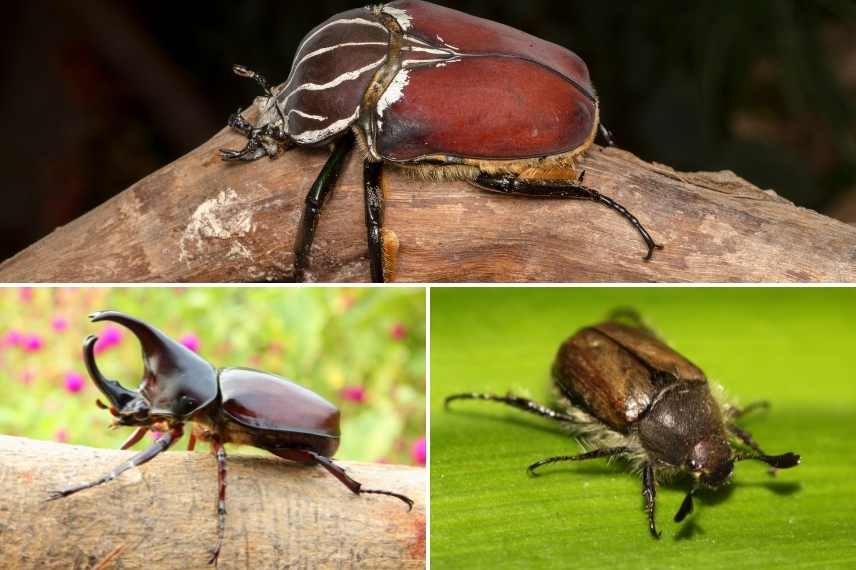 At the top, the Goliath; at the bottom left, the rhinoceros beetle; and at the bottom right, a cockchafer.
Lifestyle of Certain Beetles
Diet
There are generally two main categories of beetles:
- Coprophagous beetles that feed on dung and decomposing organic matter: this includes dung beetles, for example.
- Phytophagous beetles that feed on leaves, roots, fruits, and flowers… This includes cockchafers and rose beetles. Some are even saproxylophagous, meaning they feed on dead wood, like rhinoceros beetle larvae.
Often, the larva does not eat the same things as the adult. For example, the Common Cockchafer (Melolontha melolontha) feeds on roots in its larval stage, then on foliage as an adult.
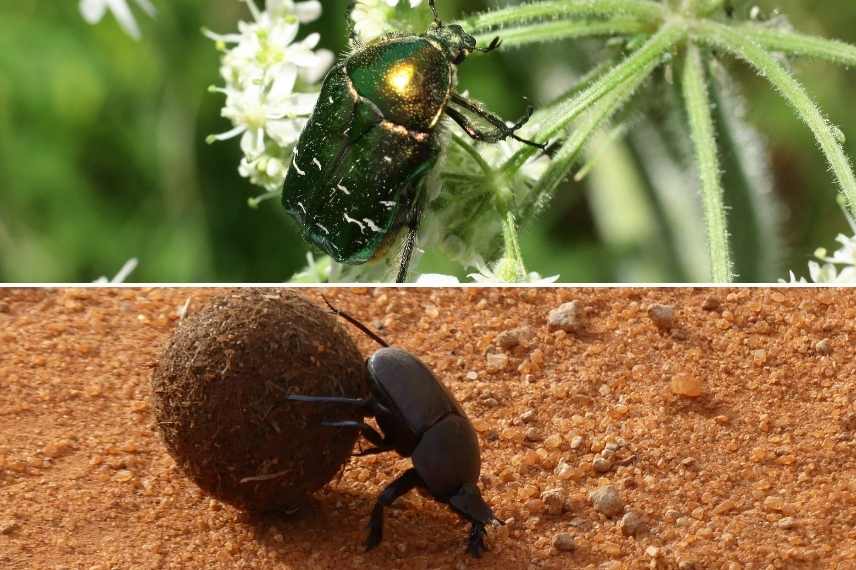 Above, the golden rose beetle (Cetonia aurata). Below, a dung beetle.
Life Cycle
Female beetles lay their eggs in the soil or in decomposing matter (compost or dead wood or even dung in the case of dung beetles). The larval stage is long, sometimes lasting several years, as with the Common Cockchafer, which remains underground for 3 years. The insects emerge from the soil or compost once they are adults.
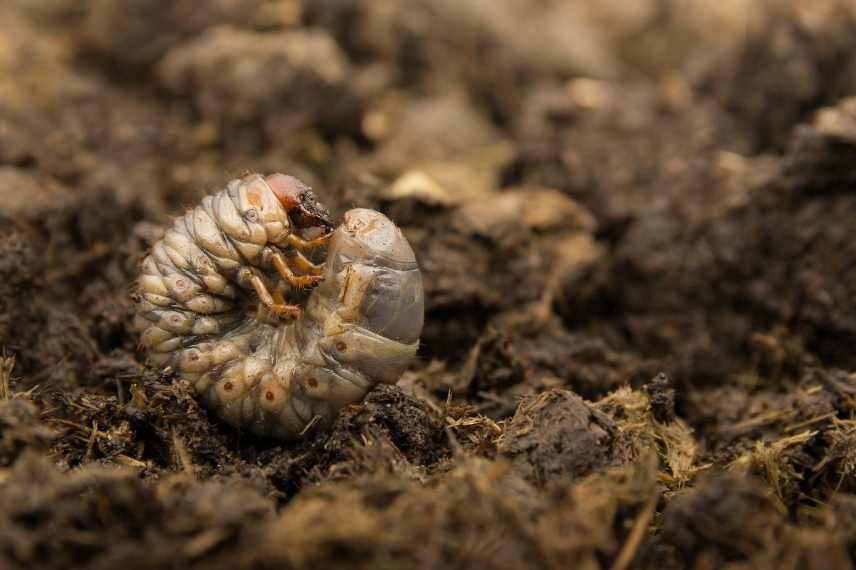 Rhinoceros beetle larva
Habitat
Habitats are varied and depend on the species: open environments, woods and forests, flowering meadows…
A valuable ally for the gardener...
Coprophagous beetles such as dung beetles and organic matter recyclers like the larvae of the Golden Rose Beetle (Cetonia aurata) enrich the soil and prevent the development of certain phytopathological diseases. The larvae of dung beetles and rose beetles also help accelerate the decomposition of dead wood.
Golden Rose Beetles and Trichius beetles (Trichius sp.) are excellent pollinators and the rare damage they cause to certain flowers is quickly forgotten.
… but not always
Indeed, the larvae of cockchafers, known as “white grubs,” can become harmful by damaging plants and lawns when they attack the roots. That said, cockchafers and their larvae are often regulated by their natural predators: birds, hedgehogs, lizards, and ants.
On the other hand, the Japanese Beetle (Popillia japonica), an invasive species present in Europe since 2017, poses problems in orchards by feeding on the foliage and fruits of fruit trees such as apple, plum, cherry, and apricot trees.
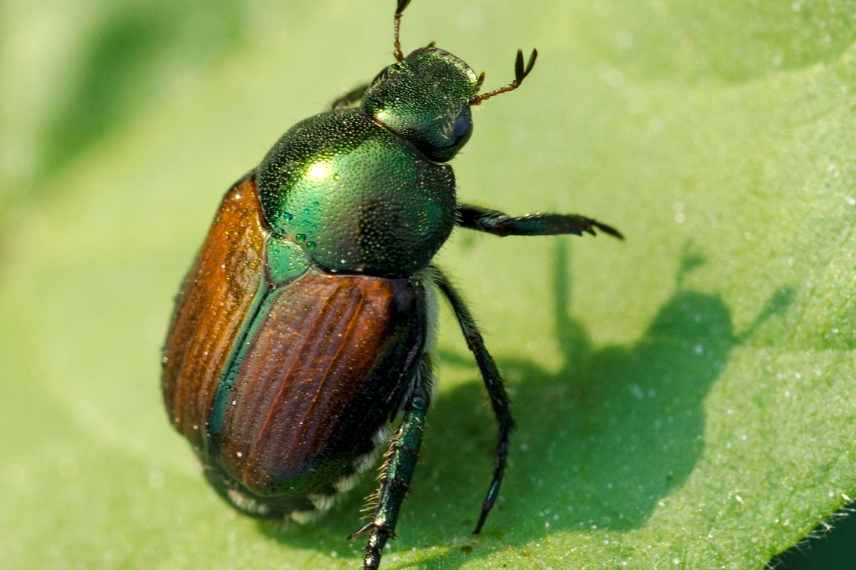 Popillia japonica is not welcome…
How to encourage the presence of beneficial beetles
Firstly, it is important to give nature plenty of space by banning all products (even so-called organic ones!) that end with “cide”: weedkiller, insecticidal, fungicidal… and by favouring a wide diversity of plants and micro-environments: free hedges, flowering meadows, fruit trees, flowering bushes, large trees…
Leaving dead wood, in piles or not, in some forgotten corners of the garden is also very beneficial for beetles (and not just them, by the way!). Feeding one or more compost heaps will also allow the larvae of rose beetles to develop.
Did you know?
- The sacred scarab (Scarabaeus sacer) was revered in ancient Egypt as a symbol of the sun and the god Ra.
- The term “scarab” comes from the Old French “escarbot”. The word “escarbot” originates from either Latin or Greek, but it is also the root of the word “carab”. Another beetle that is not part of the scarab family.
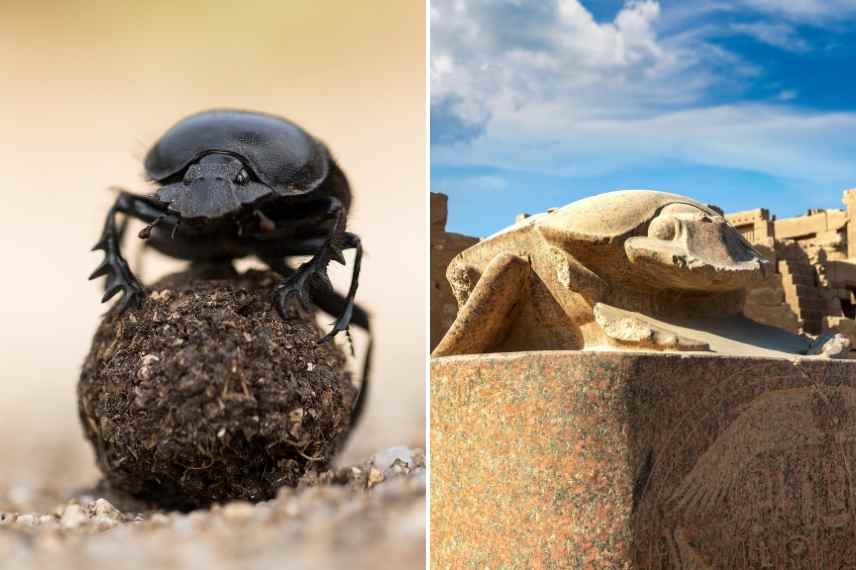
The sacred scarab. On the right, the famous scarab from the temple of Luxor in Egypt.
- Subscribe!
- Contents
Comments