





























Barometer plants
Weather forecast: when plants give us a clue
Contents
Flowers or plants that predict weather? Can we really believe it? Foliar, floral, and fruiting changes can indeed indicate imminent weather changes. Barometer plants, sensitive to atmospheric and humidity changes, help us understand weather fluctuations. A leaf that curls or a flower that closes can, for example, signify that rain is on the way. Observing these subtle signs gives us clues and simply helps anticipate the care needed for your garden.
Let’s take a closer look at nature and swap our weather apps for some infallible plants in this regard! Knowing how to interpret plant behaviour is truly fascinating…

The signs of nature
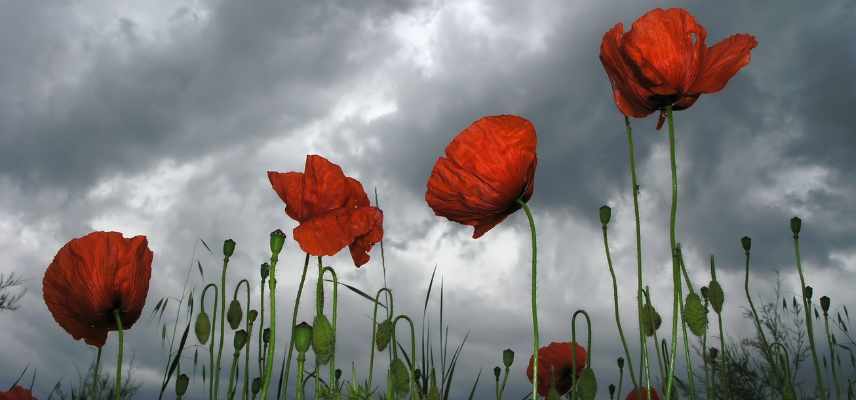
Observing animal behaviour, the shape of clouds, or the direction of the wind helps to understand the weather changes in the coming hours. Adapting to their medium, variations in temperature or humidity affect them. This phenomenon is well-known in birds that fly lower than normal or bees that become very active before a storm.
As we know, the ancients closely observed nature to assess changes in the weather and knew how to interpret them. All the signals from nature have thus inspired many proverbs in our almanacs, at a time when weather reports and satellites did not exist.
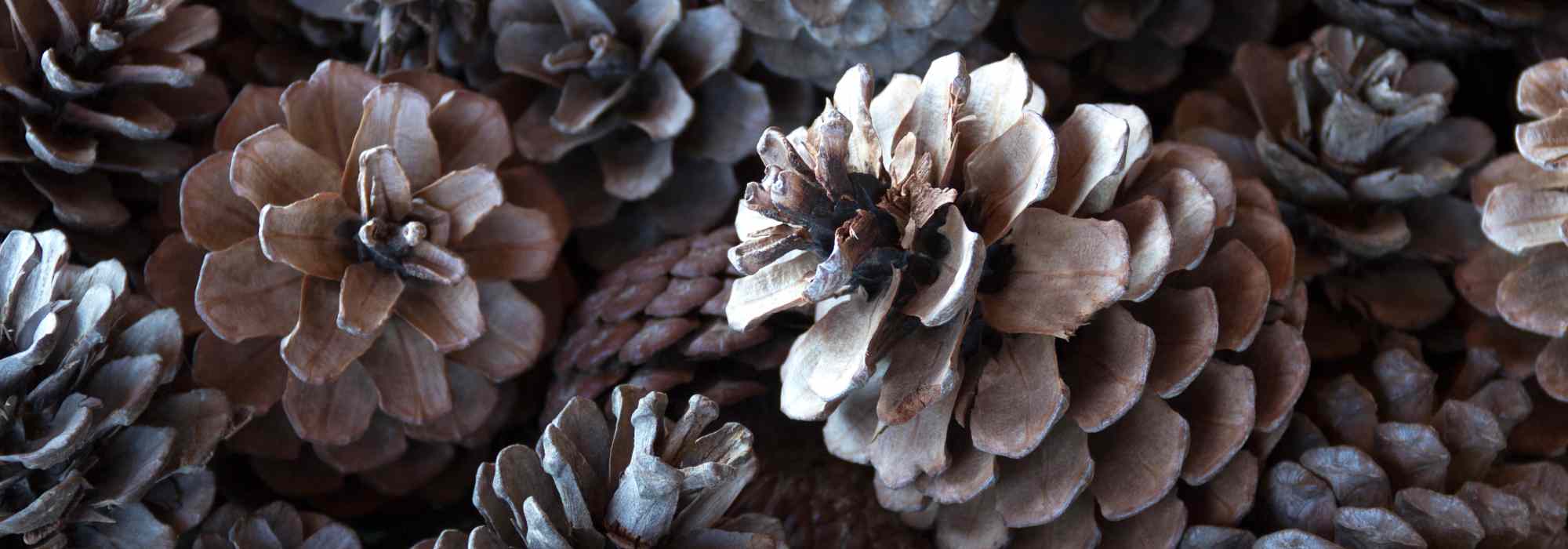
Plants, being static, also have a say in the weather to come, like the famous pine cone that closes up. But can plants really predict the weather? The “barometer” plants, as we call them, react subtly to variations in weather conditions. These are species sensitive to changes in atmospheric pressure, humidity, or temperature. Careful observation of them allows for anticipating weather developments. With a few plants from your garden, you can have targeted forecasts. In reality, plants have a gift for prediction for a relatively short duration, often just a few hours, and usually concerning the bad weather ahead…
Changes observed in flowers
The most frequently observed signal is the closing of flowers: they close when rain is imminent, a strategy they have developed to protect their vital organs, stamens and pistil.
Carline (Carlina acaulis)
Also known as silver thistle, it is the star plant of weather forecasting! This semi-evergreen perennial blooms from July to September, on a very short stem, often found in mountainous regions or causses, hence its nickname shepherd’s barometer. Its head, surrounded by golden bracts, invariably closes and signals the arrival of rain, while when it opens, the weather is fine. It is an original and interesting perennial for dry or rocky soils in full sun.
The field thistle (Cirsium arvense)
This robust field thistle, identifiable by its branched stems and purple flowers, reacts strongly to humidity. In high humidity, the hairs on its stems and leaves stand upright. In fine weather, all its leaves are spreading. It closes its colourful head, emerging from the bracts, as soon as humidity rises. Field thistles thrive in full sun, in clayey and cool soil, but can grow in a variety of soils. Rather invasive, you will notice it during your countryside walks.
The Wood Anemone (Anemone nemorosa)
This delicate perennial bears white flowers that are highly appreciated in spring, blooming from March to April. They close at the end of the day or droop down if rain is approaching or during overcast weather. The wood anemone develops into a herbaceous tuft with a running rhizome, featuring palmate basal leaves arranged in a rosette.
Sundew (Drosera spp.)
This genus of small carnivorous plants, often found in turf moors, reacts to changes in atmospheric pressure. If low pressure (often a sign of impending rain) is approaching, their leaves curl and their sticky tentacles, resembling dew, wrap around. These plants can be grown indoors or in regions with very mild climates.
Daffodils (Narcissus spp.)
Their fragrant and elegant flowers often close before a shower. Daffodils are among the most charming spring bulb perennials, with elongated and narrow leaves, and a unique bell-shaped corolla per stem. The botanical daffodils are the most affected.
Poppy (Papaver rhoeas)
This delicate annual with bright red petals has the unique characteristic of closing its flowers when rain is near. Its ephemeral, delicate, and silky flowers bloom between May and August, often signalling the arrival of a downpour. The poppy is one of the best plants for rewilding the garden: to cover large areas, slopes, or ditches and flowering meadows.
The Dandelion (Taraxacum officinale): Common in our gardens, the yellow flowers of the dandelion open and close in response to light. It has the particularity of closing its flower when rain is approaching. If they remain closed in the morning, a rainy day can be expected. It is therefore a good indicator for anticipating watering.
Sunflower (Helianthus annuus): when its flower does not fully bloom, rain is often on the way…
But also: marigolds, osteospermum, and the morning glory (Convolvulus tricolor – as well as the entire genus Convolvulus and Ipomoea) whose flowers also close as rain approaches. Meanwhile, the four o’clock (Mirabilis jalapa) will open earlier in the afternoon if the weather is humid.
⇒ Note: as many flowers in the aster family close at night, observe them during the day for a reliable indicator!
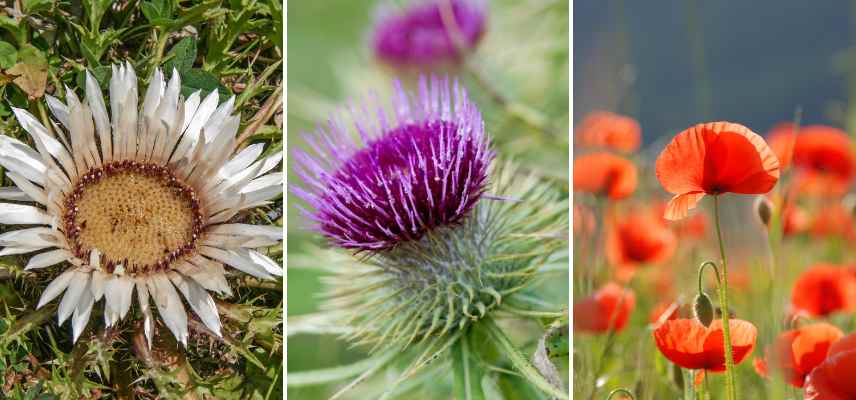
Carlina acaulis, Cirsium arvense and poppy
Changes observed on leaves or fruits
Leaves can also change in some plants, just like fruits, with the most well-known example being the pine cone. Here are some of the most commonly observed phenomena in our meadows, gardens, or orchards:
The maritime pine (Pinus pinaster): Proudly displaying its evergreen needles, this pine serves as a valuable natural barometer. If its pine cones close their scales, it indicates that humidity is rising and that the weather is turning for the worse: rain is likely on the way. Most conifers are very sensitive to climatic variations, and the cones of spruce and fir also signal good weather when they remain wide open. This also applies to a pine cone that has fallen from the tree!
The clover (Trifolium pratense): This modest resident of our lawns and meadows has the unique ability to fold its leaves when the weather is humid or becomes windy, or when rain is imminent.
Nasturtium (Tropaeolum majus): This well-known climbing plant, with its vibrant flowers, is an excellent indicator of impending rain. Its round leaves crisp and fold slightly when rain is on the horizon.
Mimosa pudica (Mimosa pudica): This small tropical shrub (from South America) is known for its quick response to stimuli. When a storm threatens, the bipinnate leaves of this miniature mimosa close up, reducing its surface area exposure. Commonly known as the sensitive plant, it also reacts to touch and closes at night. It produces small, feathery purple flowers at the end of summer and requires plenty of warmth and humidity to thrive (pot cultivation in our climate).
Horse chestnut (Aesculus hippocastanum): This majestic tree, also known as the common horse chestnut, is prevalent in our parks and avenues and is particularly sensitive to weather changes. When rain is approaching, its large palmate leaves close up to protect the plant’s sensitive parts.
The weeping birch (Betula pendula): The weeping birch, also known as the silver birch, famous for its peeling white bark and drooping branches, reacts to humidity by twisting its leaves. It is said that when rain is expected, its leaves turn over to show their lighter undersides.
The lime tree: Its leaves also tend to close up in rainy weather, revealing their whitish underside.
The pear tree (Pyrus communis): Pear trees, especially older varieties, show signs of impending rain. They tend to exude droplets of water from their fruits, a phenomenon known as guttation, when humid weather is on the way.
The creeping Phyllanthus (Phyllanthus urinaria): This small drought-resistant herbaceous plant has leaves that stand upright when the weather is dry and droop when humidity increases. It is a reliable indicator of moisture levels.
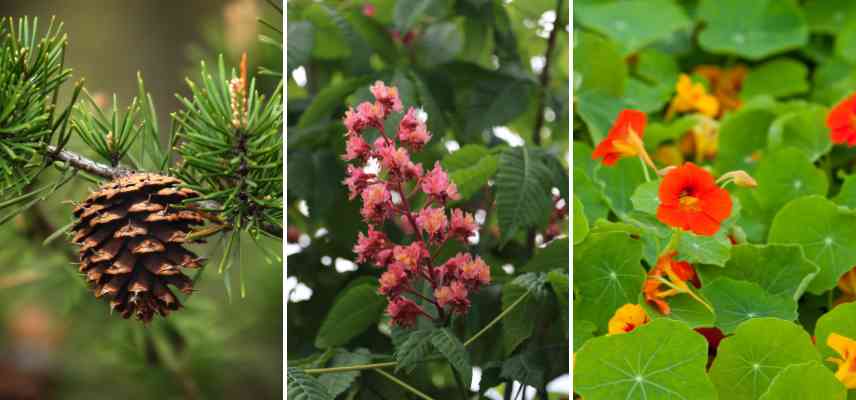
Pine, horse chestnut with red flowers, and nasturtium
- Subscribe!
- Contents

Comments