





























Aromatic plants for a permaculture garden
Our selection to strengthen the garden ecosystem
Contents
Did you know that aromatic plants fit perfectly into a permaculture garden? Yes indeed! They also play a part in the garden’s resilient and self-sufficient ecosystem, by attracting pollinators, by repelling certain pests and by fostering positive interactions between crops. Chosen with care, these aromatic plants reinforce the kitchen garden’s natural balance while bringing their flavours and benefits to cooking and infusions. Discover the perfect aromatic plants for a permaculture garden and their benefits.

Why incorporatING aromatic plants into permaculture?
Growing aromatic herbs fits perfectly within the permaculture ethos, which aims for autonomy, functional biodiversity and a reduction in external inputs (fertilisers, treatments, etc.). Thanks to their repellent or attractant properties, they actively contribute to garden balance.
And why is that? Well, certain aromatic plants release into the air volatile compounds (odours, pollen, etc) that repel certain garden pests. Others, very melliferous, attract bees, hoverflies and butterflies, essential for pollination. Finally, many of them pair well with vegetables or fruit trees, stimulating their growth or masking their presence from pests.
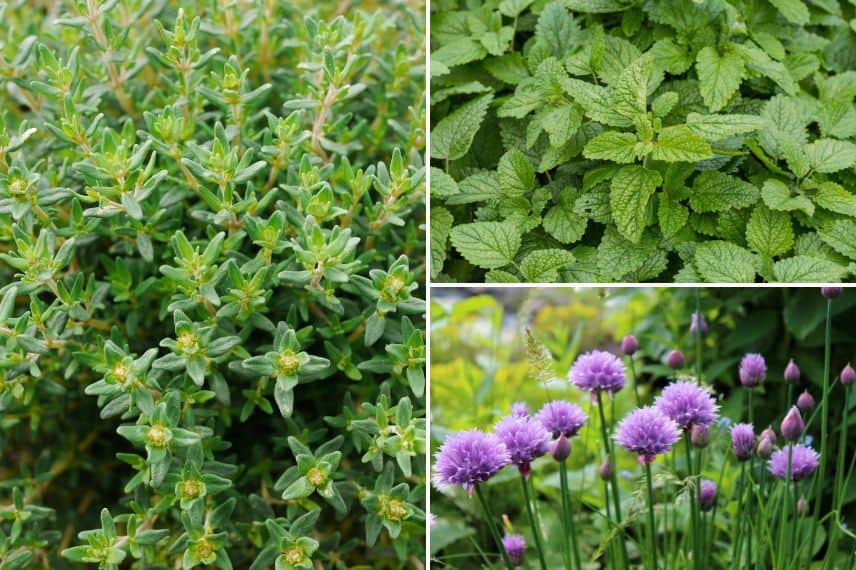
Thyme, lemon balm and chives
Essential aromatic plants to grow in permaculture
Here is a selection of aromatic plants particularly suited to a permaculture vegetable garden and why:
- Chives: Perennial; its scent repels aphids and carrot flies. It thus protects roses and would also limit the appearance of black spot disease. Additionally, it attracts bees.
- Thyme: Its melliferous flowering and its aromatic foliage disturb and limit the presence of certain insects (whiteflies, nematodes, etc.). It also promotes the presence of pollinators and pairs well with Mediterranean vegetables such as tomatoes or aubergines.
- Mint: Its strong scent repels ants, aphids and flies, and attracts hoverflies (aphid-eaters!). Use with caution due to its invasive nature or plant in a buried container or in a distant corner.
- Savory: Effective against aphids and whiteflies. In addition to its repellent properties, it improves the growth of beans and broad beans.
- Basil: A very good companion for tomatoes, it repels whiteflies while stimulating their growth. Moreover, the two also pair very well in the kitchen… a coincidence?
- Lemon balm (Melissa officinalis): Its lemon-scented foliage can help repel mosquitoes, and its very melliferous flowers attract many pollinators useful to the vegetable garden.
- Dill: Attracts ladybirds and hoverflies, both major predators of aphids. Its airy flowering adds volume to the vegetable garden.
- Rosemary: Very drought-tolerant, acts as a natural repellent against carrot fly and flea beetles.
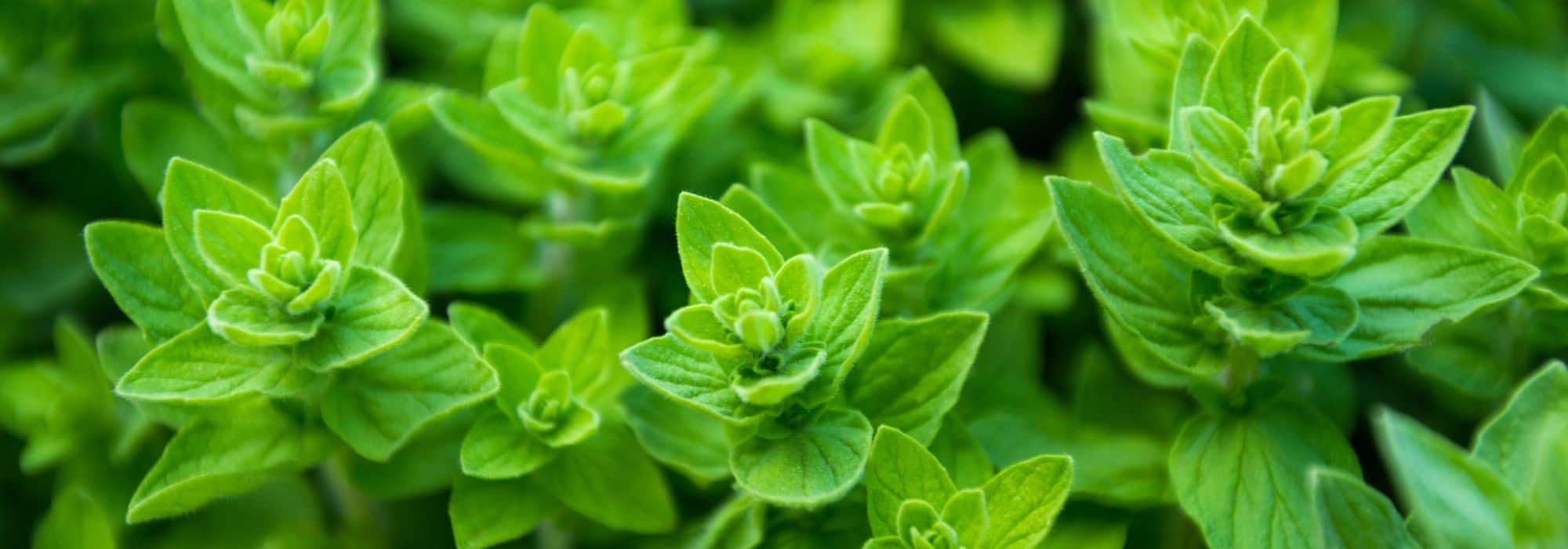
- Oregano: Forms a good living ground cover, protects the soil and attracts many pollinators thanks to its prolonged melliferous flowering.
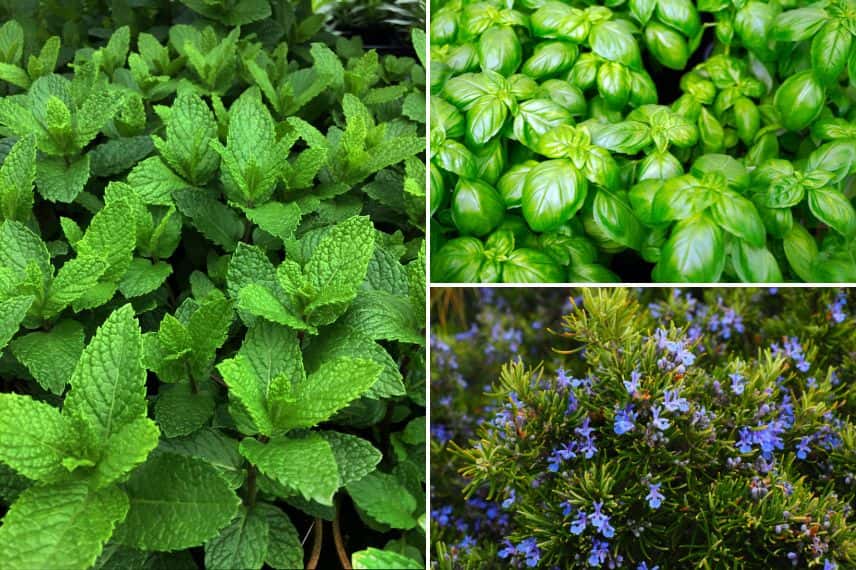
Mint, Basil and Rosemary
Table of aromatic plants by their role in permaculture
| Aromatic plant | Main function in permaculture | Beneficial associations | Recommended growing type |
|---|---|---|---|
| Chives | Strengthens resistance to fungal diseases and repels aphids | Roses, carrots, strawberries | Border of a bed or mound |
| Thyme | Natural repellent against insects, attracts pollinators | Tomatoes, aubergines, cabbages | Rockery, mound on dry soil |
| Mint | Repellent (aphids, ants, mosquitoes), partial ground cover | Cabbage, beans, peas | Buried pot or semi-shaded area |
| Savory | Repellent against aphids and whiteflies, stimulates growth | Beans, broad beans, root vegetables | At the edge of vegetable rows |
| Basil | Stimulates growth and repels whiteflies | Tomatoes, peppers, cucumbers | Base of plants or mobile pots |
| Lemon balm | Attracts pollinators and stabilises borders | Fruit trees, edible hedges | Humid area, edge of the vegetable plot |
| Dill | Habitat for ladybirds, attracts beneficial insects | Lettuce, cucumbers, courgettes | Mixed border, companion planting |
| Rosemary | Repellent against carrot fly and flea beetles | Carrots, broccoli, kohlrabi | Dry slope, south-west protection hedge |
| Oregano | Living ground cover, attracts bees and protects the soil | Vines, raspberries, pulses | Poor soil, at the base of shrubs or living fence |
How to choose the right aromatic plants according to your garden’s needs
To create an effective natural balance, select each aromatic plant according to the ecological functions it provides that you need. Also take into account your climate and soil.
- If the garden is often invaded by aphids, favour savory or dill, which attract their natural predators.
- In case of a pollinator shortage, rely on lemon balm, thyme or oregano, all very melliferous.
- To protect fruiting vegetables, basil is a wise ally, while rosemary protects roots against certain insects.
- Finally, in difficult or dry areas, thyme or rosemary stand out as resilient solutions, even in poor soil.
Observation remains key: every garden evolves, and aromatic plants enable natural balancing without heavy intervention.
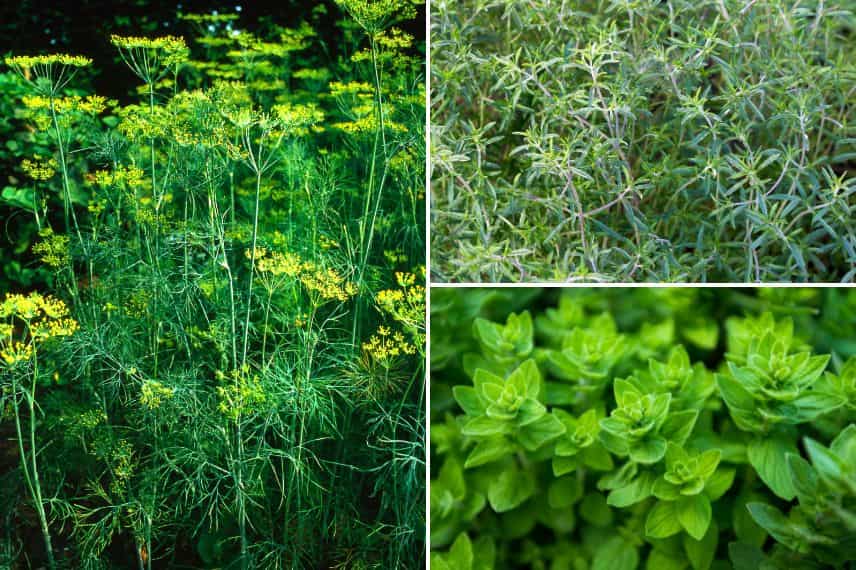
Dill, Savory and Oregano
How to incorporate these aromatic herbs into a permaculture garden?
The arrangement of aromatic plants is not left to chance. In permaculture, they are integrated as close as possible to the crops to be protected or to passageways.
- The perennial aromatic plants, such as thyme or chives, can form protective borders or low hedges. They shape the space while creating beneficial microclimates.
- Annual or biennial plants, such as basil or dill, naturally find their place in companion planting with vegetables, within raised beds or in movable pots.
- Also consider varying the plantings to spread the flowering to feed pollinators throughout the season.
Creating an aromatic spiral: a permaculture technique well-suited
The aromatic spiral is a classic permaculture feature. It allows growing several aromatic plants in a small space by creating different microclimates thanks to its spiralled form. The summit, dry and hot, houses thyme or rosemary. On the slopes, intermediate species such as chives and oregano are placed. At the bottom, where moisture is retained, plant mint or lemon balm.
→ To learn more, read our article: “How to create a spiralled herb spiral?“.
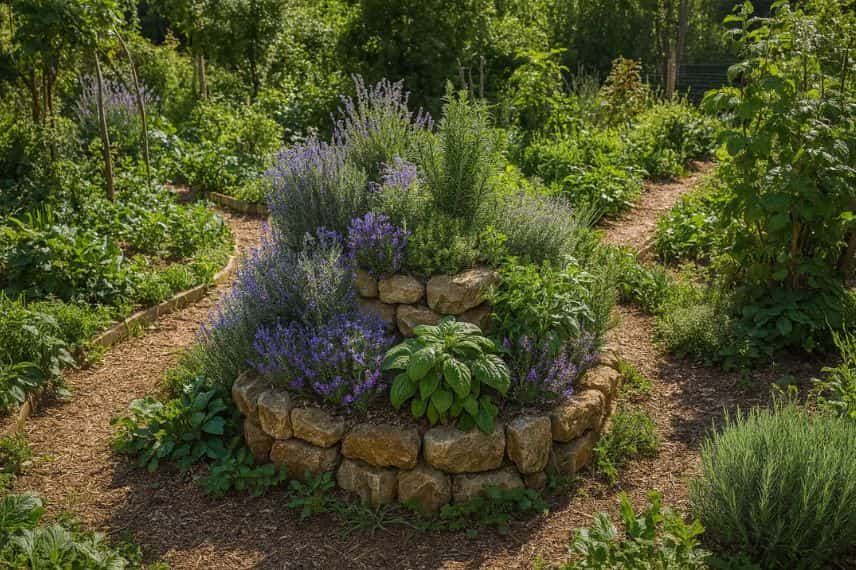
A spiralled herb spiral in a permaculture garden (AI-enhanced image)
Read also
Permaculture: the technique of swalesPractical tips for successful cultivation.
To make the most of aromatic herbs in the garden, follow these simple guidelines:
- Plant aromatic herbs in the right spot: thyme, rosemary or savory prefer a sunny, dry and well-exposed position. Conversely, mint and lemon balm enjoy a cooler, partially shaded area.
- Pay attention to soil drainage, especially for Mediterranean species. Excess moisture causes roots to rot. In heavy soils, mix in sand or grit at the bottom of the planting area.
- Avoid over-watering. Most aromatic herbs adapt very well to drought once well rooted. Moderate, regular watering is enough during hot spells.
- Prune or harvest regularly: this stimulates branching, prolongs the plant’s life and prevents flowering too early. It is best to cut in the morning, when the aromas are most concentrated.
- Let a few plants go to flowering, especially towards the end of the season. The garden benefits from melliferous flowering, which is valuable for bees.
- Subscribe!
- Contents
Comments