





























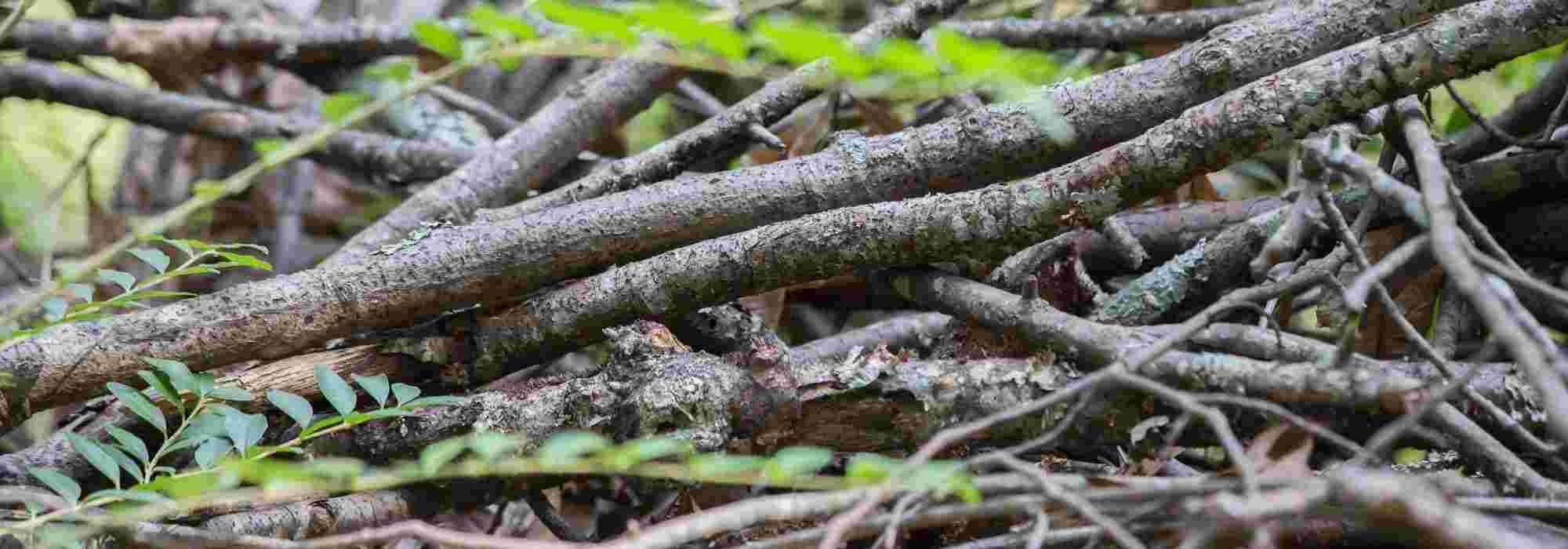
A pile of branches or dead wood for garden wildlife
So simple, yet remarkably effective
Contents
Brush piles or dead wood are essential for the survival of many species in nature and in the garden. They provide shelter for some birds, reptiles, amphibians, a few mammals like hedgehogs, and various arthropods (woodlice, insects, spiders…). Wood is also a source of food for fungi and wood-boring insects. If you care about ecology, helping nature, and living in a vibrant garden, this is an easy arrangement to create. It’s simple and free, so let’s get started on making a pile of branches or a stack of wood for an ecological garden!

Why leaving piles of branches in the garden?
A large bundle of branches, a pile of twigs, or even a big stack of logs provides a perfect shelter for many insects, small mammals, and amphibians. Some birds may also nest there. Wood proves to be a source of food for many small arthropods and, of course, for fungi. It is a simple arrangement that can enhance the biodiversity of your garden.
They live in piles of branches or logs
Some mammals hide, hunt, or hibernate in piles of branches. The hedgehog, which can hibernate until April, makes a cosy nest formed of mosses and dead leaves. You can also find polecats, weasels, stoats, and shrews that forage for insects there.
Some birds use the protection offered by tangled branches to nest. This is the case for the European robin, the wren, or the dunnock. Furthermore, wood piles represent a source of food for all insectivorous and omnivorous birds.
Our friendly garden helpers that combat pests, amphibians such as toads, frogs, newts, and even salamanders, find shelter during the day in the dampest parts of the wood. At night, these garden friends will emerge to feast on insects and gastropods.
Reptiles also benefit: Wall lizards, slow worms, and grass snakes.
Beetles and other coleoptera, ladybirds, earwigs, hoverfly larvae, lacewing larvae, ants, flies, spiders, myriapods (centipedes, millipedes…) and pill millipedes live in piles of dead wood or branches. They find shelter and food there. Slugs and snails will tuck themselves between the logs and serve as food for their predators.
Mosses (bryophyta) and lichens also grow on dead wood, using it as a support. They are neither parasitic nor xylophagous. Let’s not forget some fungi and microorganisms that live in and on the wood.
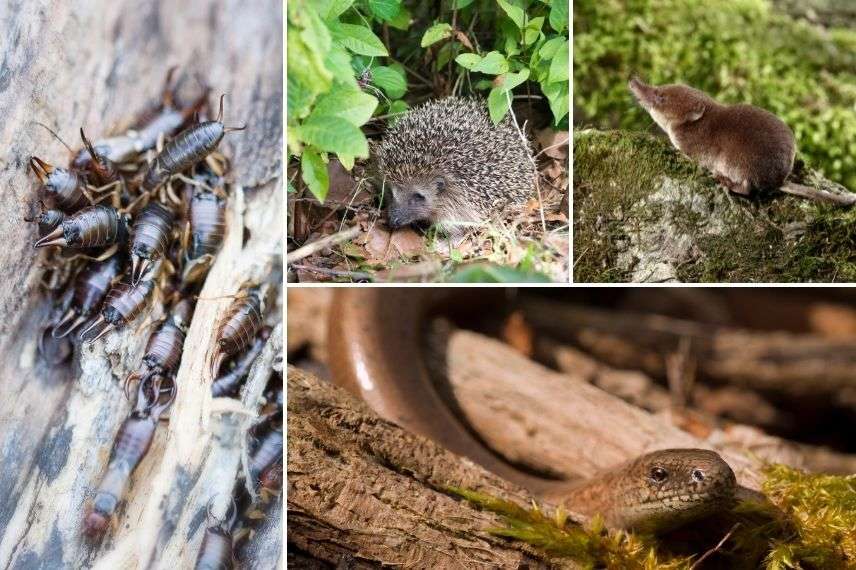
Earwigs, hedgehogs, shrews, slow worms, and many others find refuge in piles of dead wood
They feed on dead wood
Nearly half of the xylophagous insects (those that eat wood) in the world are threatened with extinction. Why not help them a bit by offering their favourite food: wood? Among these, the most iconic are the Alpine longhorn beetle (Rosalia alpina) and the stag beetle (Lucanus cervus). Also included are bark beetles, some hymenoptera, and a few butterfly caterpillars… These insect larvae that feed on dead wood will attract their predators, such as woodpeckers.
Fungi also feed on wood and decompose cellulose to make it more digestible for other wood consumers. They are either xylophagous (feeding on living wood) or saproxylophagous (feeding on decaying wood).
Read also
Welcoming a hedgehog in your gardenWhere and how to leave branches?
Where?
The log pile should be placed in the sun and sheltered from the wind. It can be positioned near a damp area: a small stream, pond, or natural basin.
The pile of branches should be made in the sun (if you prefer a refuge for reptiles) or in the shade (better for mammals and amphibians), for example, near a hedge, and protected from the wind as well. There is no need to place this pile of branches in a highly visible spot. A slightly hidden area, concealed by vegetation or a garden feature, will be perfect and much calmer for the wildlife that will make it their home.
How?
The wood pile
It’s quite simple. Just gather logs, large branches, round wood, pruning waste… and stack them. You can also add some hay, straw, or dead leaves to cover your pile of wood and branches.
The height is not very important: a height of 50 cm is already sufficient.
The best option is to create your log pile in a crescent or “U” shape open to the south, thus creating a warm area for reptiles (lizards, slow worms, and snakes). Wood retains less heat than stone but warms up faster than it.
You can stack your logs meticulously (like a firewood pile) or, on the contrary, in a completely chaotic manner. Using logs, large branches, or even stumps or trunks of different diameters and shapes will create numerous and varied cavities, attracting more different species. If you want the wood pile to become a nesting site for reptiles (notably for the Grass Snake), feel free to insert straw, mowing residues, or dead leaves within the stacks. You can also insert drilled logs for solitary bees or tins filled with straw to serve as shelters for earwigs, for example.
You can create wood piles all year round, but the best time is during the winter rest period. You can also place several in different areas of your garden, but do not space them more than 25 m apart. This way, these wood piles can remain connected, allowing animals to move from one to another with less danger.
Maintenance is limited to adding logs from the top if you see that the pile is shrinking. Do not touch the decomposing parts, as they are the refuge for a whole range of wildlife.
The branch pile
The pile of branches is simply about stacking branches, tree pruning waste, and shrub or hedge trimming waste in a somewhat random manner. The wood can be green or dead. Ideally, mix different species. Feel free to insert thorny branches (blackthorn, wild rose, hawthorn…) which will help hold the pile together while providing good protection for wildlife.
There is no need to make gigantic piles here either: 50-60 cm high for about a metre wide is more than enough. You can create multiple piles, but do not space them too far apart (no more than 25 m). The creation of a branch pile can be done all year round, but winter is ideal.
You can cover your branch pile with straw and dead leaves.
You can also create a row of dead branches between stakes. Place your stakes in two lines spaced about 50 cm apart, creating a sort of corridor. All that’s left is to fill this “corridor” with branches. It looks nice, it appears “neat“, and forms an original hedge, but it is just as effective as a simple pile of branches.
Maintenance consists of adding a few branches from the top now and then if the pile shrinks in height.
All these living “wood-eating” beings will decompose the wood and help enrich the soil with organic matter.
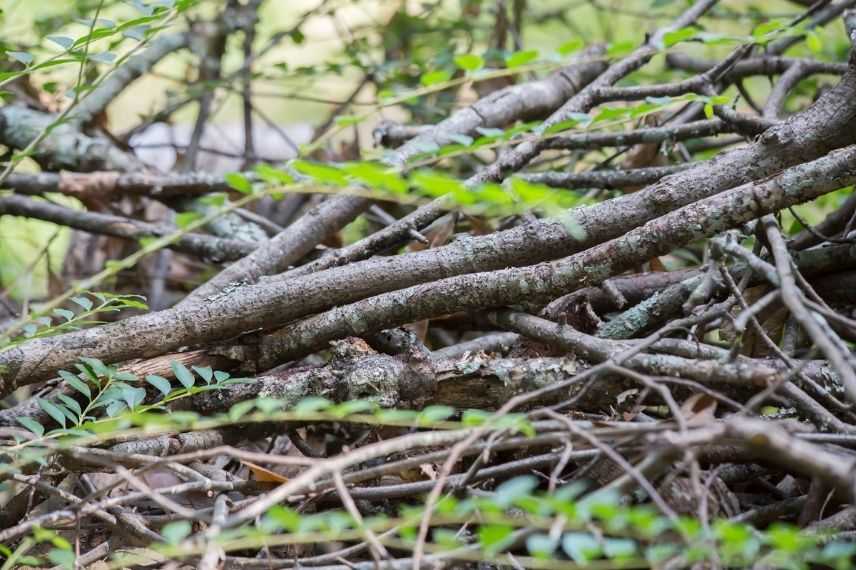
Pile of branches for garden wildlife
- Subscribe!
- Contents
Comments