





























9 original plants for tasty soups
Ideas for plant-based soups to vary flavours and pleasures
Contents
I don’t know about you, but when we think of soup recipes, we often first think of potatoes, leeks, carrots, and the like. It’s true that vegetables usually play a central role in soups, but it’s also possible to create delicious velvety soups that combine flavour, pleasure, and originality with plants! Nettle, sorrel, dandelion, and other wild herbs or aromatic and culinary plants, discover (or rediscover) our recipe ideas for homemade soups with plants and thus change from the traditional vegetables!

Dandelion
Springtime golden flower, thriving in full sun or partial shade, the dandelion is sometimes unjustly disliked. However, the dandelion is an entirely edible plant, from its flowers to its root, including its leaves. Used for centuries, the dandelion, or Taraxacum officinale, even has diuretic properties (hence the origin of its name: wet-the-bed) and purifying qualities. Its flower buds can be enjoyed like capers, while its yellow flowers are used to make dandelion jelly, its root is roasted, and its young leaves can be prepared in salad or dandelion soup. Dandelion leaves also pair well in more varied soups, such as with carrots, onions, leeks, turnips, and potatoes.

Dandelion soup
Nasturtium
Elegant climbing plant, the nasturtium offers us a beautiful summer flowering. Frost-sensitive, it cannot withstand temperatures below -5°C and is often grown as an annual. In regions with mild winters, it usually self-seeds in the garden. Undemanding, the nasturtium grows quickly in full sun or light shade, in ordinary, not overly rich soil.
But the nasturtium is not only beautiful, it is also edible! Its leaves and flowers can be enjoyed raw in salads, its flower buds like capers, and it can be cooked in soups. Nasturtium soup can be prepared with both its leaves and its flowers. Here too, it can be paired with other vegetables, mainly with potatoes and onions. The nasturtium adds a peppery flavour to your soup, reminiscent of watercress. The nasturtium is rich in vitamin C and is believed to have antiseptic, stimulating, diuretic, and expectorant properties.

Velvety nasturtium soup
Nettles
Nettles certainly pack a punch and are very useful in garden fertilisation when transformed into manure. But nettle is also appreciated in cooking! In fact, it has a slight green bean flavour when eaten raw and a spinach taste when cooked. It’s worth noting that to remove its urticating properties, you should either dry the leaves or rinse them under hot water or boil them for 2 to 3 minutes. In the kitchen, mainly the young shoots are used. Nettle is rich in vitamins and minerals and is said to be used in herbal tea for its diuretic and antibacterial effects. This plant lends itself to numerous recipes: salads, quiches, cakes, pesto, as a herb mix, and even delicious soup. In soup, nettle stands well on its own with a knob of butter and a hint of fresh cream, but you can also vary the recipes by adding potatoes, a courgette, and an onion.
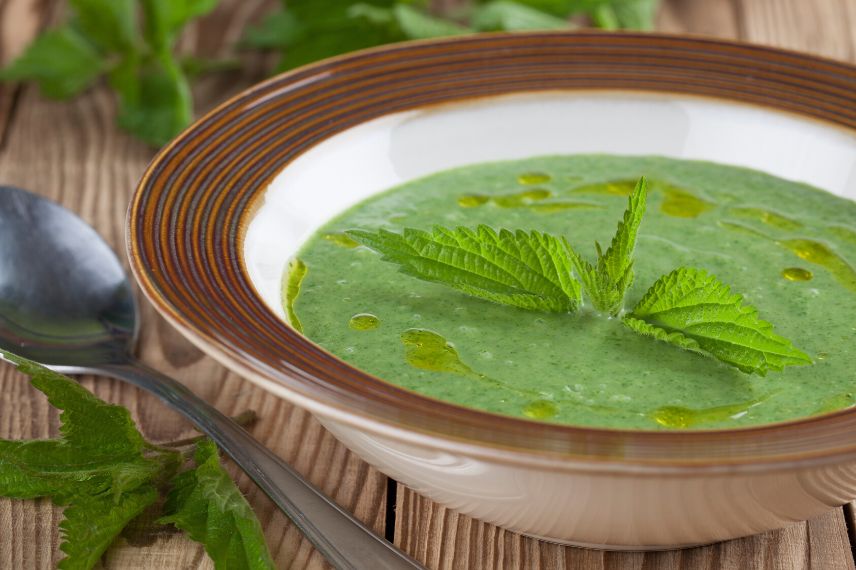
Nettle Soup
Sorrel
Sorrel is often grown as a culinary plant for its leaves with a tangy, sometimes sharp flavour, featuring a citrus note. It is also a vegetable plant, and its beautiful green leaves are primarily consumed in salads, occasionally paired with spinach, but also in soups. It is rich in vitamin C, as well as in carotene. Like nettles, sorrel leaves are sufficient on their own to make a sorrel soup, with, of course, a pinch of salt, pepper, a knob of butter, and a spoonful of cream for sweetness. One might also like to add one or two potatoes to thicken the soup.
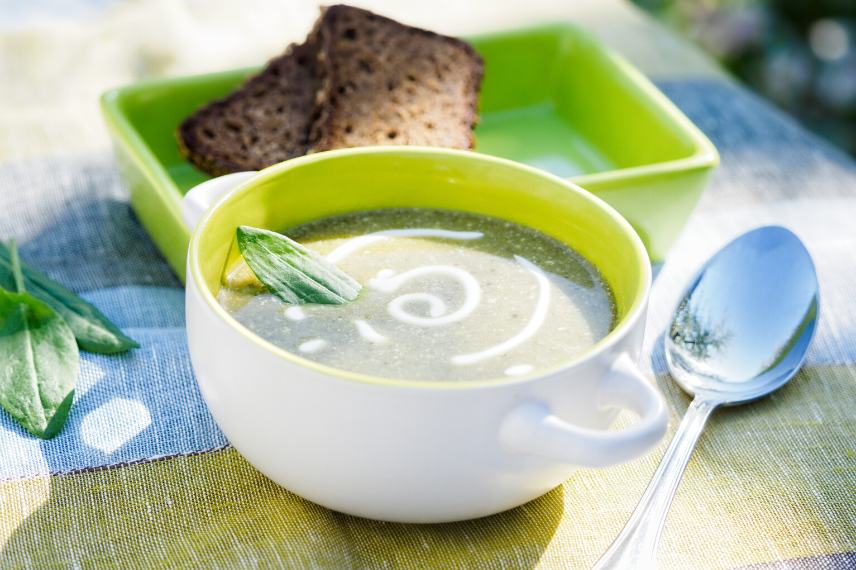
Velvety sorrel soup
Mint
Easy to grow, mint is a fragrant perennial plant that thrives in full sun or partial shade, whether in the garden or on the balcony. Mint is highly valued, especially in summer, for its beautiful fragrant green leaves, adding freshness to dishes, for tea, in salads, desserts, tabbouleh, and even in cold soups. To prepare a delicious chilled mint soup, you will need a generous handful of its fragrant leaves, which can be paired with another summer star: cucumber. Together, they create a delightful, refreshing, and low-calorie soup, offering a change from traditional gazpacho. It’s worth noting that mint can also enhance more traditional soups, adding originality, for example, with courgettes, potatoes, or tomatoes.
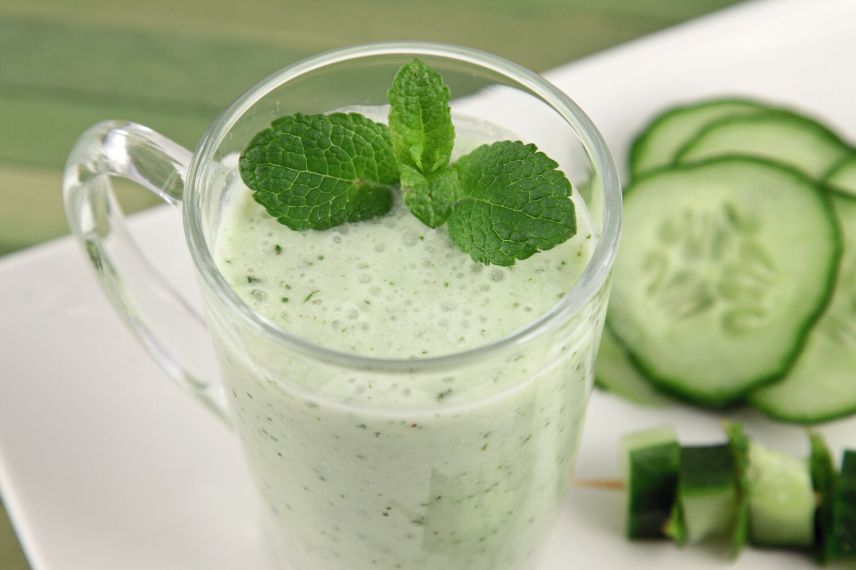
Chilled mint and cucumber soup
Atriplex
Close relative of spinach (both belong to the family of Chenopodiaceae), orache or “Belle-Dame” is a leafy vegetable that is consumed in the same way, but with a milder taste. It is also known as “false spinach.” This ancient vegetable is very easy to grow in all types of light soil, remaining slightly moist. Depending on the variety, its lovely foliage can be light green, medium green, or purple-red.
With orache, you can enjoy its leaves, young stems, and even its seeds in salads, quiches, gratins, and soups. This plant is cooked exactly like spinach, so preparing a soup with orache is a breeze! Orache leaves pair wonderfully with potatoes, courgettes, and onions. Moreover, this vegetable is known to be low in calories, rich in fibre, vitamins, and minerals. So, what are you waiting for to sow, grow, and savour it?
→ Learn more about orache with Gwenaëlle in Orache in the kitchen: plant-based recipes for rediscovering an ancient vegetable.
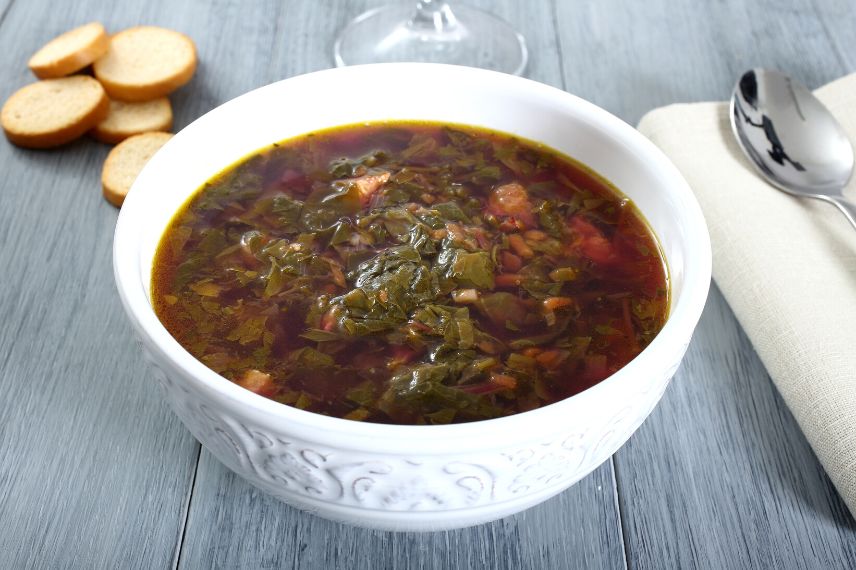
Soup with orache
Wild garlic
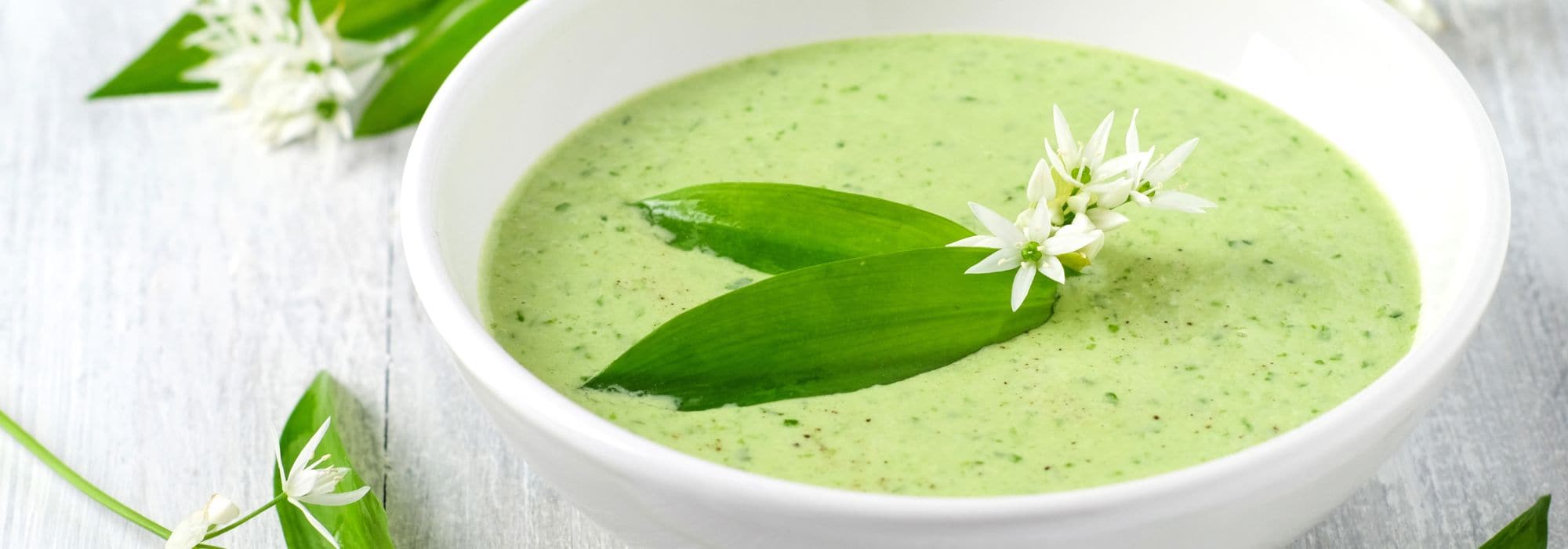
The Bear’s Garlic (Allium ursinum) is a lovely perennial plant found in damp woodlands whose leaves and delicate white umbel flowers emit a garlic scent with the slightest touch. Its distinctive flavour makes it an excellent culinary herb to enhance dishes. Both its bulbs, flowers, and raw leaves are consumed, in salads, pesto, bear’s garlic butter or cooked like spinach, in stir-fries, quiches, and soups. Bear’s garlic soup is generally prepared with its leaves, combined with potatoes, onions, and a bit of cream, resulting in a soup with a unique flavour that is both strong and aromatic!
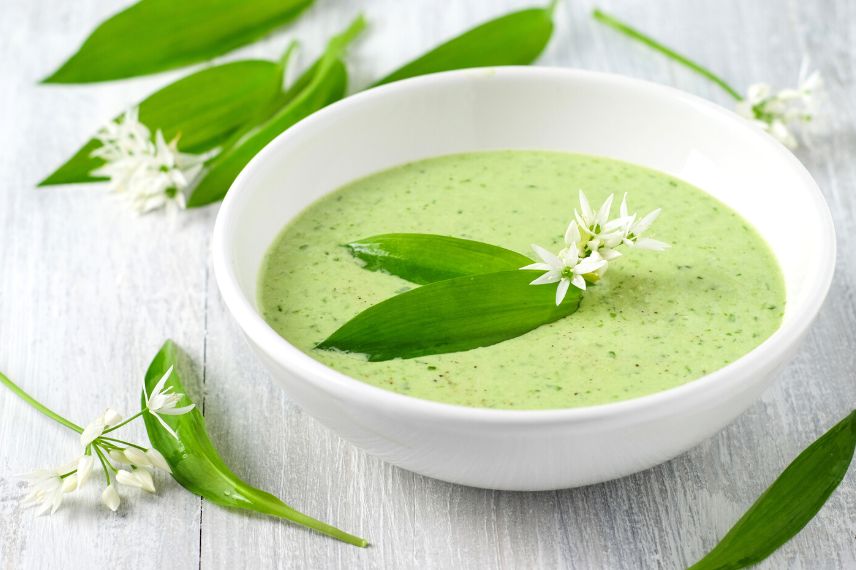 Bear’s garlic soup</caption]
Purslane
The common purslane annual is a lovely succulent plant that enjoys warmth, sunshine, and sandy soils of southern France and the Atlantic coast. Easy to grow, it is also a vegetable plant, with a slightly tangy and peppery flavour, that can be eaten both raw and cooked. The small fleshy leaves of purslane are wonderful in salads, simply sautéed in a pan, in quiches, risottos, and also in soups, in recipes similar to those using spinach, with potatoes and courgette. Purslane is known to be rich in vitamins, minerals, and antioxidants.
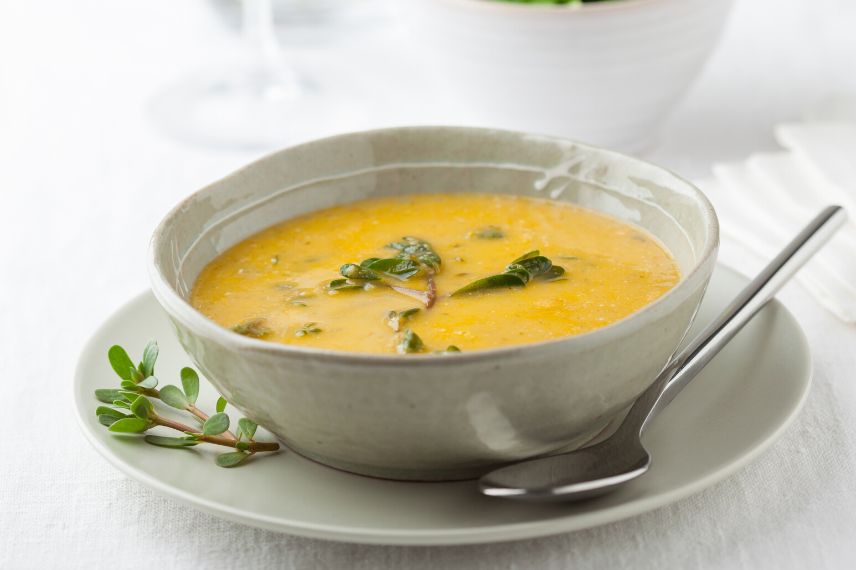
Purslane Soup
Radish and carrot tops
Radishes and carrots are highly valued in cooking, but did you know that their leaves can also be used? You can chop them to enhance salads, make pesto, or even soups!
In soup, radish leaves pair very well with leeks and potatoes to soften their sharp, slightly spicy flavour. They are known to be rich in vitamins and iron.
In potage, carrot leaves add a flavour that sits between carrot and parsley, with a hint of bitterness. Again, a few potatoes, onions, and a bit of cream will elevate your soup. Carrot leaves are rich in minerals and vitamins.
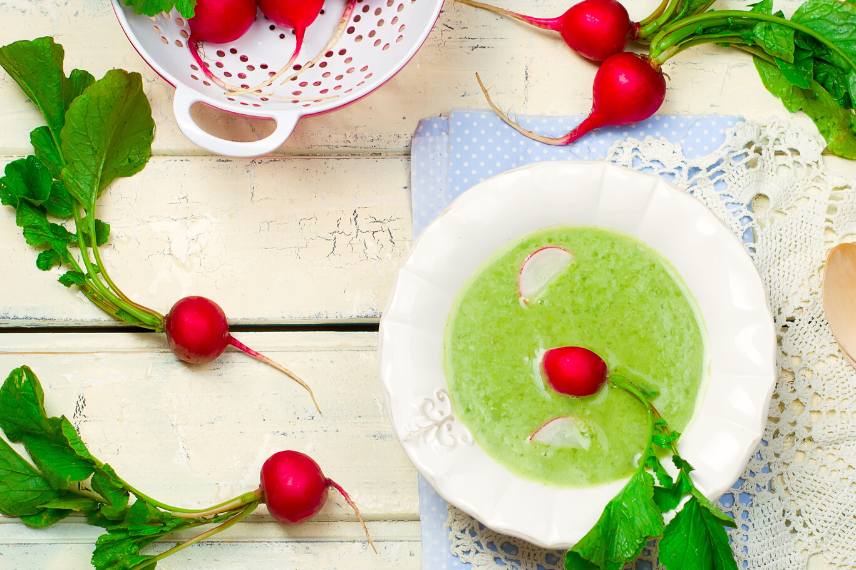
Radish leaves soup
Some precautions to take for a good harvest
For a healthy harvest, it is recommended not to pick your herbs and plants in meadows where farm animals graze. Indeed, some plants contaminated by cattle may carry the parasitic liver fluke and thus contaminate you through work surfaces and utensils. It is also advisable to avoid foraging in polluted areas (railway lines, public parks with dog faeces, etc.) or near heavily trafficked roads.
- Subscribe!
- Contents

Comments