





























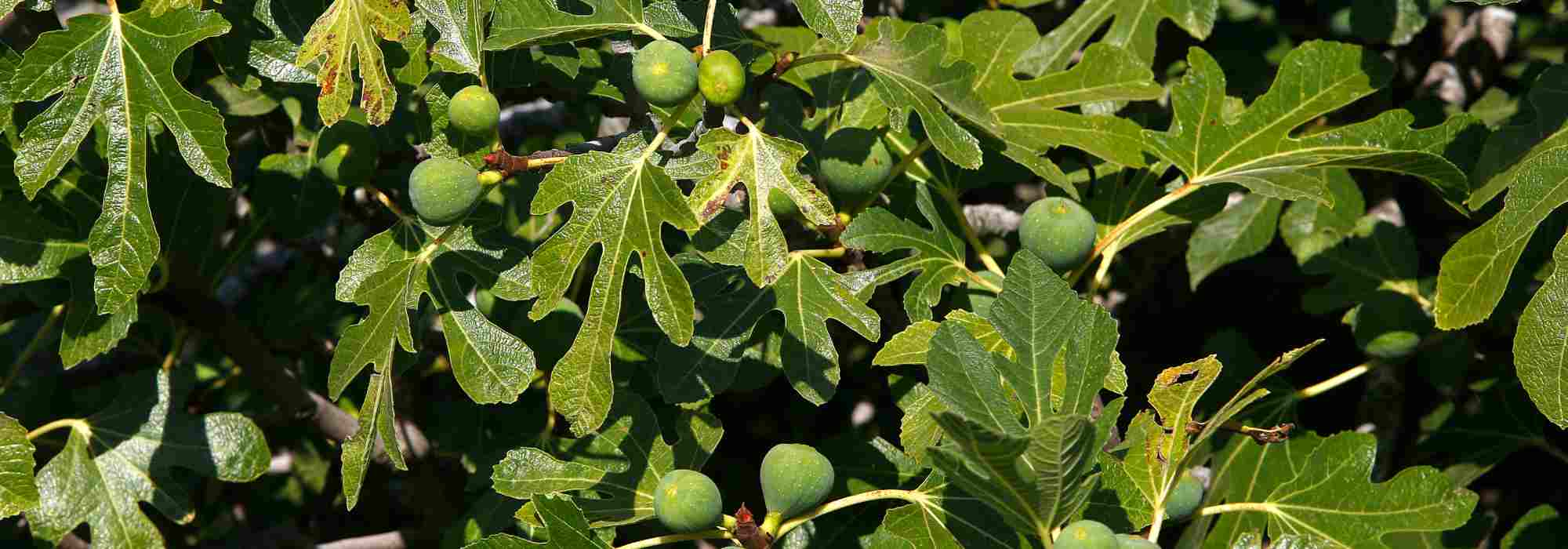
8 fig trees for the northern half of France and Belgium
to savour figs even in the north and in Belgium
Contents
Discover eight exceptional varieties of fig trees (Ficus carica) specially selected to thrive in the cooler regions north of the Loire and in Belgium. Fig trees, with their lush leaves and sweet fruit, bring a Mediterranean touch to climates that can sometimes be harsher. In this guide, we will present in detail these varieties of fig trees, such as ‘Ice Crystal’, ‘Brown Turkey’ or ‘Goutte d’or’, which not only survive but prosper and bear fruit in less favourable climatic conditions.
Here you will find essential information to choose the variety that will suit your garden perfectly. From the quality of the figs to their cold hardiness, this article will guide you in selecting the ideal variety for your garden. Get ready to savour fresh, delicious figs, even in regions where the climate can be a challenge!
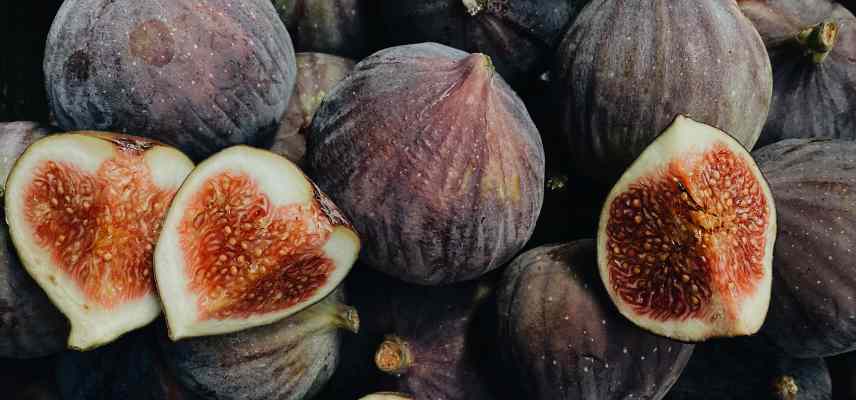
Figs north of the Loire: it’s possible!

The challenges facing fig trees north of the Loire
Growing the fig tree north of the Loire and in Belgium presents several challenges that gardeners must overcome to successfully enjoy their own figs. The climate in these regions is indeed less favourable to cultivating this Mediterranean tree. Lower temperatures, particularly during winter, as well as ambient humidity, can affect the tree’s health and therefore the quality and quantity of the fruit produced.
One of the major problems is frost. Fig trees are sensitive to low temperatures, which can damage the buds and thus reduce the chances of fruiting. It is therefore often necessary to take protective measures such as mulching or using winter fleece to retain heat.
Sun exposure is another crucial factor for fig production. In northern regions, sunny days are less frequent, which can affect the ripeness of the fruit. It is therefore advisable to choose a sunny, sheltered spot to optimise fruiting.
Soil moisture can also be a constraint. Fig trees prefer well-drained soil, and an excess of water can cause fungal diseases, affecting both the tree’s growth and the quality of the fruit.
However, by choosing varieties of fig trees that are more cold-resistant and by following appropriate gardening practices, it is perfectly possible to successfully grow this fruit tree in cooler climates.
→ For everything you need to know about fig tree cultivation, read Fig tree – Ficus carica: planting, pruning and maintenance.
Fig tree 'Ice Crystal'
The Fig tree ‘Icecrystal’ is a variety of fig tree that is particularly well suited to cooler, wetter climates. Its cold resistance is due to several factors. Firstly, its buds are more robust and less likely to be damaged by low temperatures. Moreover, the tree itself is capable of tolerating frost : the above-ground parts can, however, be destroyed by the cold (young shoots from -15 °C, flower buds from -10 °C), but it will regrow from the stump down to -20 °C.
In terms of fruiting, Ficus carica ‘Icecrystal’ does not disappoint. It produces medium-sized figs with slightly velvety skin and sweet, juicy flesh. These fruits are not only delicious but also rich in nutrients such as vitamins and antioxidants. Their sweet flavour makes them ideal for eating fresh, but they are also excellent in various culinary preparations, such as tarts or jams.
The ‘Icecrystal’ variety is a biferous variety, fruiting from early July and again towards the end of August. The harvest will take place several times, as the figs reach ripeness. This variety is also self-fertile and parthenocarpic, thus allowing fruit to develop without fertilization.
To maximise fruit production, it is important to plant the ‘Icecrystal’ fig tree in well-drained soil and to ensure it has as much sun exposure as possible. The adult size of this fig tree is 2 m in every direction.
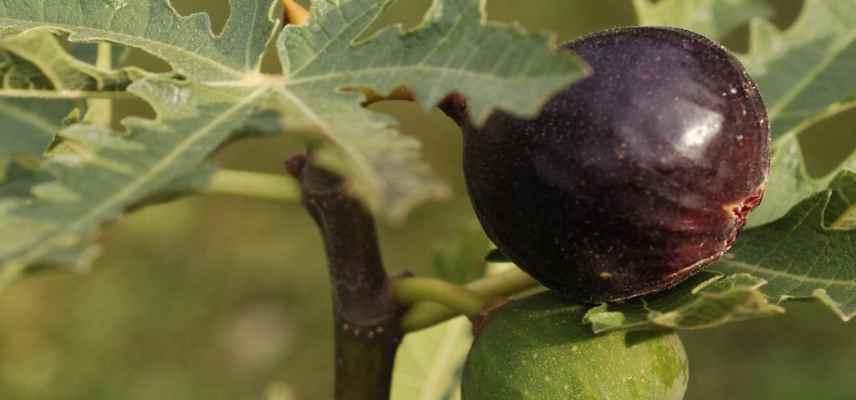
Fig tree 'Goutte d'or'
The Fig tree ‘Goutte d’Or’ is a variety of fig tree highly prized, notably for its early fruiting. This characteristic makes it an attractive choice for areas north of the Loire and in Belgium, where the growth season can be relatively short.
This earliness means the tree begins to produce fruit earlier in the season (July to September) compared with other varieties. The other striking feature of this variety is the colour of its fruit. As its name suggests, the Ficus carica ‘Goutte d’Or’ produces figs of a beautiful golden-yellow hue. These fruits are not only pleasing to the eye; they are also very flavourful. The fig’s flesh is soft, juicy and sweet, making it a delicious choice for fresh eating as well as for a variety of culinary uses, from desserts to savoury dishes.
This variety is biferous (two fruitings per year), self-fertile and parthenocarpic, allowing fruit to be produced without fertilization. It does not require other fig trees and does not need the intervention of the blastophage, the sole pollinating insect of the fig tree, which is too delicate to survive in cold climates. Here too, this fig tree is very hardy; although the above-ground parts can be killed by frost (young shoots from −15 to −17 °C, flower buds from −10 to −12 °C), it will regrow from the stump down to −20 °C.
It is recommended to plant this fairly large fig tree (2.50 m high by 3.50 m wide) in well-drained soil and to choose a sunny position to encourage abundant fruiting.
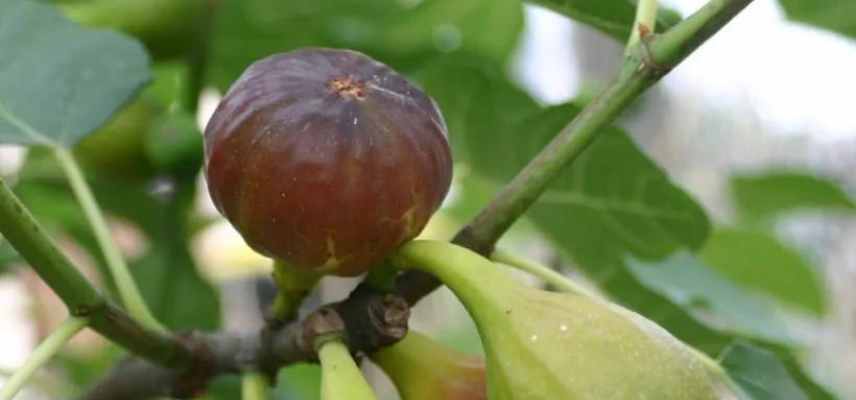
Read also
Ficus: planting, pruning and maintenanceFig tree 'Madeleine des deux saisons'
The fig tree ‘Madeleine des Deux Saisons’ is a variety of fig tree distinguished by two important characteristics: its robustness and its ability to fruit twice a year, in spring and in autumn. It is indeed a biferous variety (which bears fruit twice a year), very early, adapted to many French regions, even outside the Mediterranean zone. Fruiting appears on one-year-old wood for the spring crop (100–120 g), fleshy, of a good size, which are harvested from June–July; on the current year’s shoots for the autumn figs (70–80 g), rounded and slightly smaller, from mid‑August to October depending on the region. The figs are green, becoming golden when ripe, pear-shaped and fleshy for the summer fig, and rounder for the autumn fig.
Although winter protection measures such as mulching or the use of winter fleece can always be beneficial, this fig tree is more tolerant of temperature fluctuations and periods of frost than other varieties (down to -15 °C). This hardiness makes it less susceptible to diseases and pests, which makes maintenance easier and increases the chances of an abundant harvest.
As for its productivity, the fact that it fruits twice during the year is a real advantage. This means not only that you can enjoy fresh figs for almost the whole year, but it also gives you the flexibility to harvest the fruits at different stages of ripeness according to your preferences or culinary needs. The fruits themselves are medium-sized and have a sweet, soft flesh that is delicious eaten fresh or used in various recipes.
To successfully grow the Ficus carica ‘Madeleine des Deux Saisons’, it is recommended to choose a sunny location sheltered from strong winds. The soil must be well drained to avoid any risk of root rot or the development of fungal diseases. Regular but moderate watering and appropriate fertilisation will favour abundant fruiting and quality fruit. This fig tree reaches 4 m in height and 4 m in width.
Fig tree 'Brown Turkey'
The fig tree ‘Brown Turkey’ is prized for its generous production of high-quality figs. The figs are medium to large, oblong in shape, and have a brownish-purple skin. Inside, the flesh is pink to deep red and offers a sweet, sugary flavour. These figs are delicious fresh, but they are also excellent for cooking, jam-making and drying. It is also a biferous variety.
The ‘Brown Turkey’ fig tree is relatively easy to grow. It prefers a sunny position and well-drained soil. It can tolerate slightly cooler winter temperatures than some other fig varieties. This fig tree can grow up to 4 m in all directions.
Although the ‘Brown Turkey’ is more cold-tolerant than some other fig varieties, it may require winter protection in more northerly regions. Using mulch and winter fleece can help protect the fig tree during the coldest months. In colder climates, it can also be grown in a pot and brought indoors for the winter to protect it from frost.
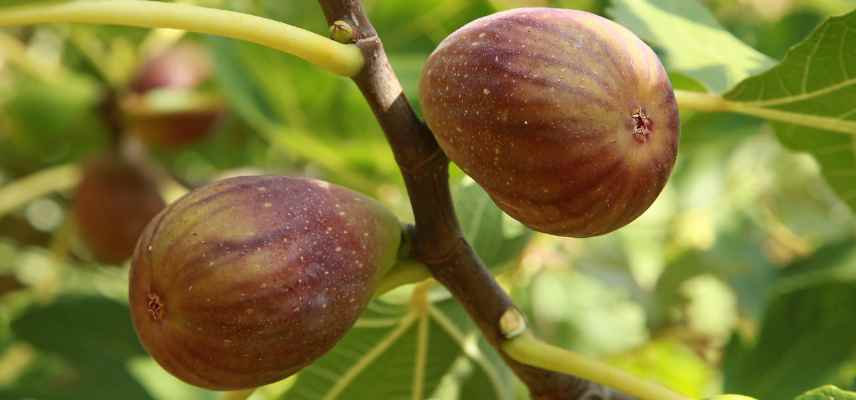
Fig tree 'Noire de Caromb'
The figs produced by the fig tree ‘Noire de Caromb’ are an intense black when ripe. Their flesh ranges from pink to deep violet and is incredibly sweet and fragrant. This rich flavour makes it a favourite choice among fig lovers. This fig tree, biferous and self-fertile, grows up to 4 m tall and as wide.
One of the major assets of ‘Noire de Caromb’ is its ability to thrive in cooler climates. Although it prefers a warm, sunny climate, it is more cold-resistant than many other varieties of fig trees. This means that it can be successfully grown in regions further north, including the north of the Loire and Belgium. However, it is advisable to protect the fig tree during the winter months to avoid any frost damage. The use of mulch and winter fleece can help preserve the tree’s health.
The ‘Noire de Caromb’ figs are versatile in the kitchen. You can enjoy them fresh as a dessert, use them to make jams, compotes, or incorporate them into savoury dishes. Their sweet flavour and dark colour also make them attractive for culinary presentation.
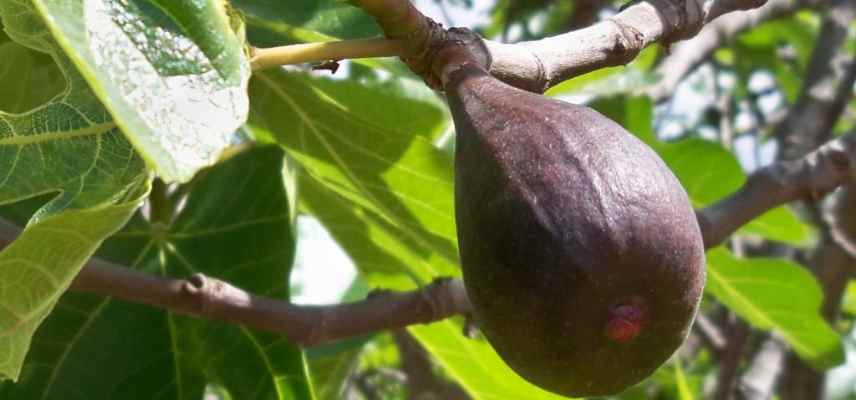
Fig tree 'Rouge de Bordeaux' ('Pastillière')
The fig tree ‘Rouge de Bordeaux’ is a variety of fig tree prized for its robustness and the quality of its red figs. This variety is particularly well suited to cooler climates, making it a popular choice for gardeners located north of the Loire and in Belgium. This fig tree is self-fertile but only produces fruit once a year. It is a little less bulky in the sense that it will only reach about 2.5 m.
The figs produced by the ‘Rouge de Bordeaux’ are, at ripeness, a dark red, almost purple. They are of medium to large size and have a thin, glossy skin. When you cut into them, you’ll discover a pink to deep-red flesh that is incredibly sweet and flavoursome. The figs are versatile in the kitchen, perfect for eating fresh, but also for making jams, desserts and other dishes.
What particularly sets the ‘Rouge de Bordeaux’ apart is its resistance to cold. However, it is still recommended to protect the fig tree during the winter months using methods such as mulching and winter fleece to avoid any damage from frost.
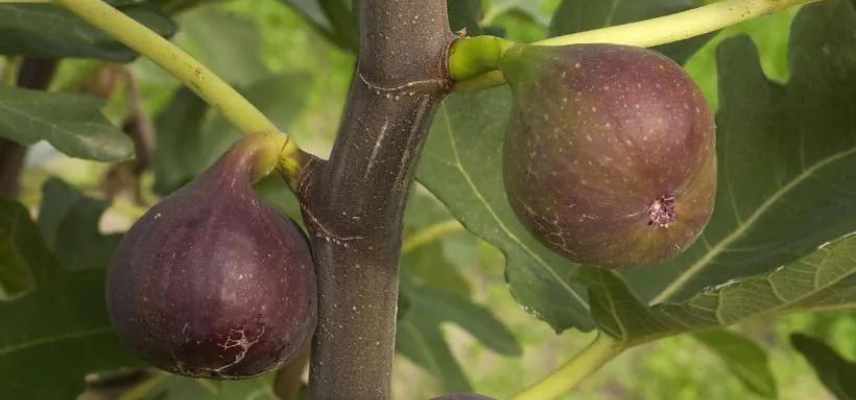
Fig tree 'Brunswick'
The figs produced by the ‘Brunswick’ fig tree are medium to large in size and have brown to dark purple skin. The flesh inside is pink to red, sweet and fragrant. These figs are known for their excellent flavour and culinary versatility. They are ideal for eating fresh, but they are also perfectly suited to making jams, desserts and other dishes. This fig tree is medium-sized; at maturity it can reach a height of 2 to 4 metres, but its size can be controlled by regular pruning.
‘Brunswick’ is a biferous variety. The first harvest, known as the main harvest, takes place in summer, usually in July. The second harvest occurs in autumn, in September or October. Furthermore, the ‘Brunswick’ fig tree is self-fertile, which means it does not need another fig tree for pollination.
To grow a ‘Brunswick’ fig tree successfully, place it in a sunny spot with well-drained soil. Pruning can be carried out to maintain the shape and size of the tree. Regular watering is essential, especially during dry periods, to promote healthy growth.
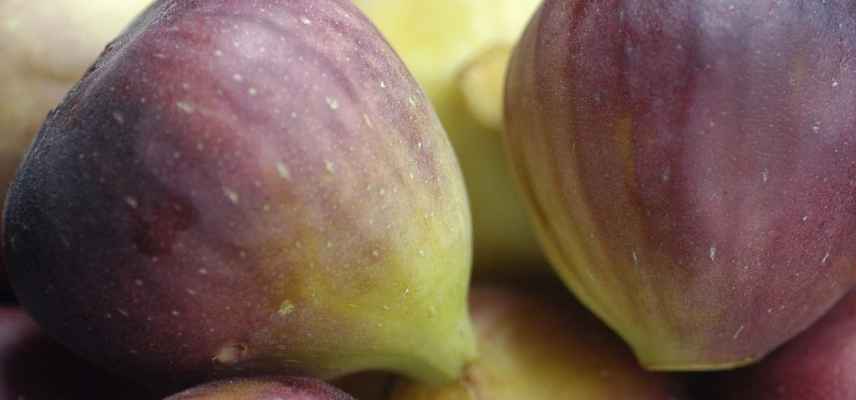
Fig tree 'Jannot'
The figs produced by the fig tree ‘Jannot’ are medium to large in size. They have a brownish to dark purple skin and a pink to bright red flesh inside. The quality of ‘Jannot’ figs is generally highly regarded, as they are sweet, juicy and fragrant. They are ideal for eating fresh or for making jam and desserts.
The fig tree ‘Jannot’ is a biferous and self-fertile variety. The first harvest takes place in summer, usually in July, and the second harvest occurs in autumn, in September or October. At ripeness, the ‘Jannot’ is of medium size, reaching a height of about 2 to 3 metres. Its size can be controlled by regular pruning.
The fig tree ‘Jannot’ is relatively cold-hardy and can therefore be grown without concern in the northern part of France and in Belgium. As with other fig varieties, however, it is recommended to protect it from frost during the winter months to avoid any damage. The use of mulch and winter covers can be beneficial for this purpose.
- Subscribe!
- Contents
Comments