





























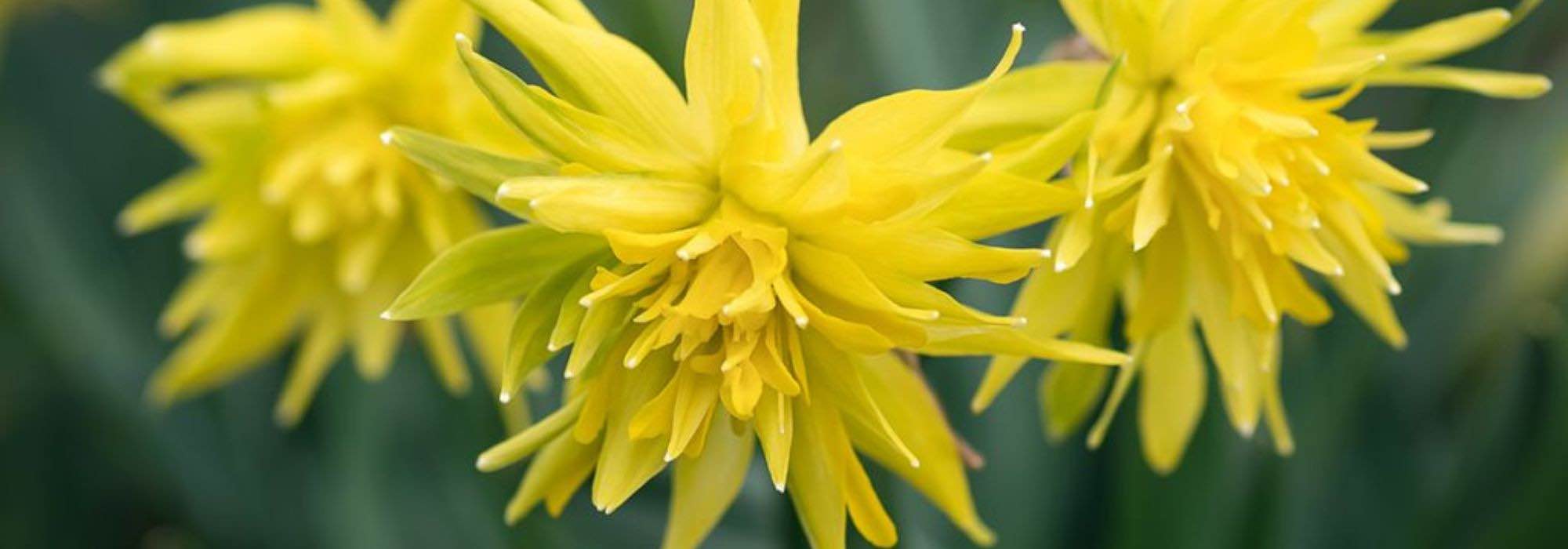
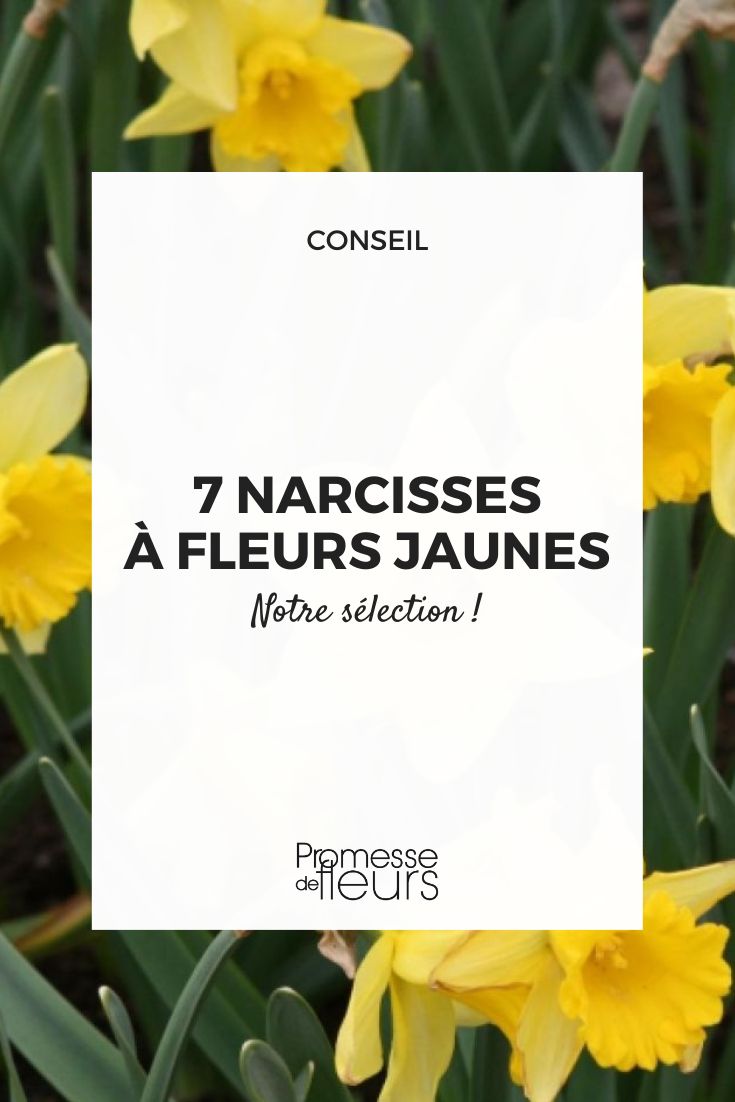
7 yellow daffodils to celebrate spring
A selection of yellow daffodils for the garden and balcony
Contents
Narcissi, also called jonquils, are delightful bulb plants that brighten the garden in spring. Available in a range of colours and sizes, these flowers can also be fragrant and are perfect for creating beautiful cut flower arrangements in a vase. These large bell-shaped blooms are hardy; some adapt to slightly heavy, damp soils and can be planted in full sun or partial shade. On a lawn, at the foot of trees, in borders, or in pots on a balcony, they put on a charming display during their flowering, which occurs between February–March and May.
Discover our selection of narcissi with yellow flowers to celebrate the arrival of spring in your garden or on your balcony.

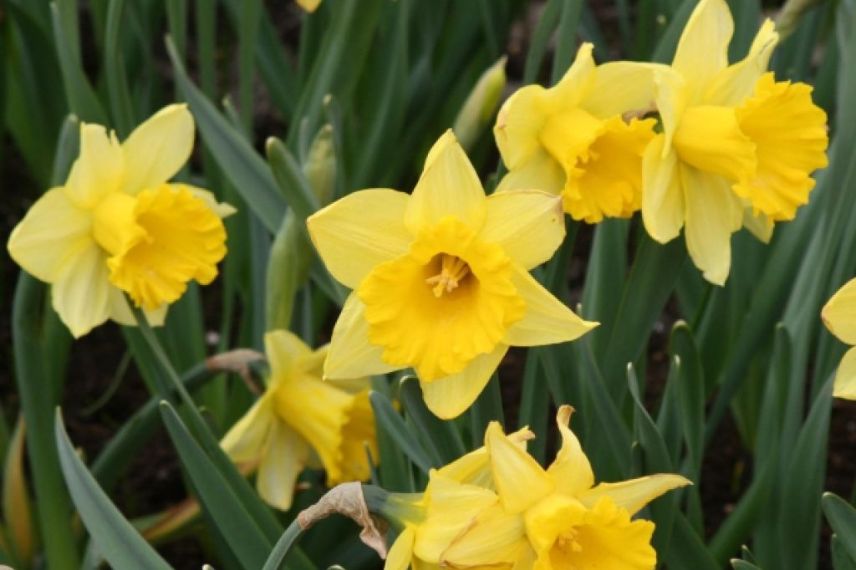
The daffodil 'Camelot', a sunny golden yellow
The narcissus ‘Camelot’, 35 cm tall, bears flowers of golden yellow that brighten the garden in spring. It blooms from April to June, offering tubular, solitary flowers, sword-shaped on medium green foliage. The flowers give off a light fragrance and are sensitive to inclement weather, such as rain that can damage them. Hardy to −23°C, they have deciduous foliage and reappear next spring. Plant them in cool soil at the foot of trees or sheltered within a bed. They are also suitable for planters, rockeries or pots.
Plant them in groups without mixing them with other flowers. You can plant other spring bulbs nearby, such as the hyacinths. To create contrast with yellow daffodils, opt for blue hyacinths.
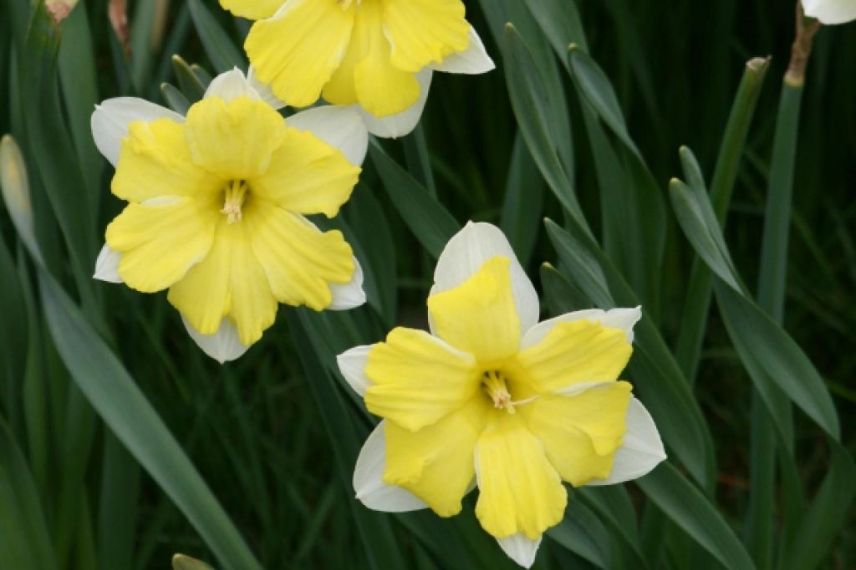
The narcissus 'Cassata', with an orchid-like appearance
The narcissus ‘Cassata’ enchants the garden with its original pale yellow double flowers that resemble orchids. At 45 cm tall, this narcissus blooms in April and May, offering an elegant flowering against a backdrop of medium green foliage. You can even use them as cut flowers in a vase to enjoy indoors. Hardy and undemanding, this narcissus can be planted in full sun or partial shade, in well-drained soil or heavy soil. Cut the leaves of the narcissi only when they have turned yellow and feed them with fertiliser, because it is at this time that the bulb stores reserves for next year’s flowering. As cut flowers, it is best not to mix them with other flowers because the stems of narcissi contain a substance that makes other plants wilt. If you nevertheless want to combine them with other flowers in a vase, try this technique: dip the stems of narcissi in hot water for 1 to 2 minutes before placing them in a vase.
Accompany this narcissus with red or white tulips and play on the contrast of shapes to create an original spring flower bed in vibrant colours.
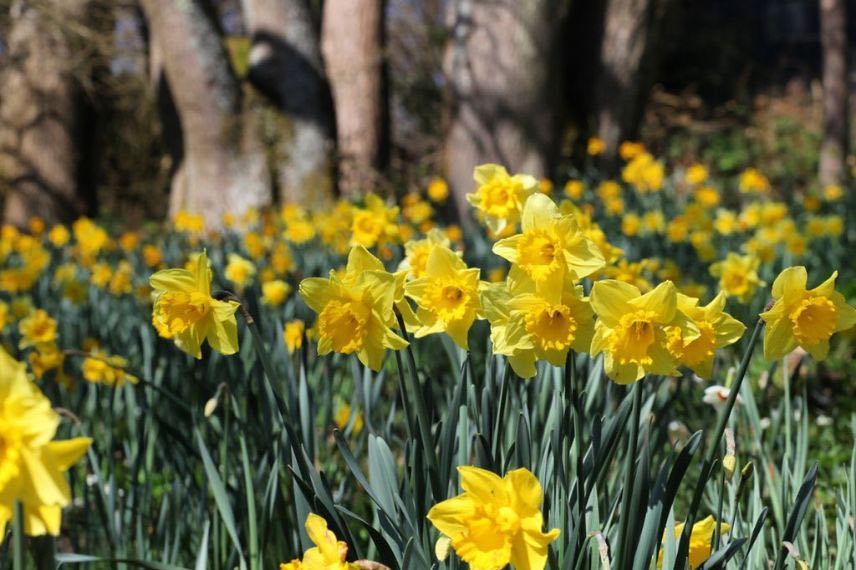
The daffodil 'Dutch Master', a timeless classic
If you fancy a safe bet and a classic, timeless daffodil, the narcissus ‘Dutch Master’ is a multi-award-winning historic variety and the ideal plant. It bears large, golden-yellow flowers with frilled trumpets 10 cm long in April to brighten Easter and children’s egg hunts. Robust and reliable, it reaches 45 cm and produces foliage forming handsome, upright clumps of medium green. It is also an excellent cut flower.
In a sunny border or a pot placed in the sun, plant this narcissus in groups alongside scillas, daisies and forget-me-nots to create a rustic, bucolic atmosphere.
Read also
Moderate yellow flowers in the gardenThe 'Easter Tide' daffodil, surprising yellow pom-poms
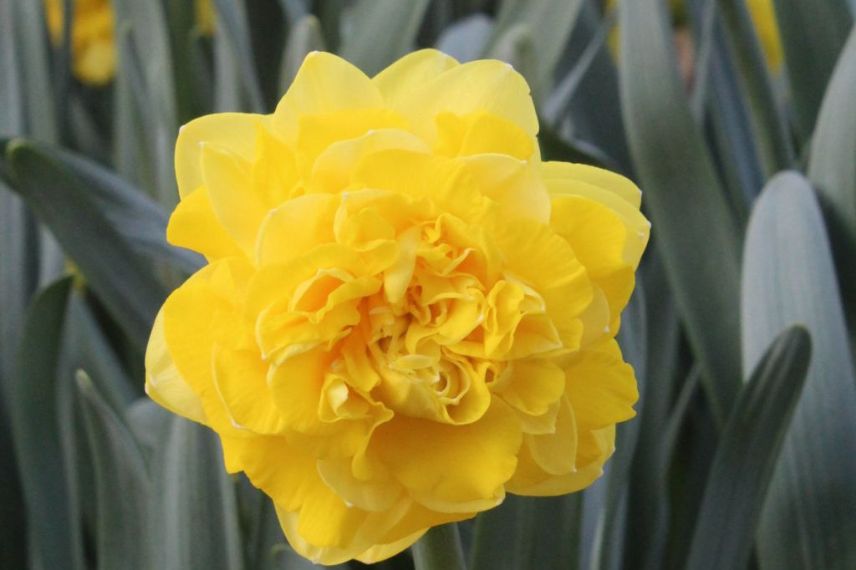
The narcissus ‘Easter Tide’ treats us to golden-yellow flowers reminiscent of large, very double pom-poms from as early as April. The flowers are also notable for their frilled corolla and their plump centre filled with crinkled, dense petals. Reaching 50 cm in height, it was raised in 1959 in the Netherlands and has proven itself in the garden. Hardy down to −23 °C, it is a plant easy to grow that naturalises in well-drained soil and prefers cool soils. It is also an excellent cut flower that keeps well in a vase.
In a border or rockery, you can showcase it by giving it companions such as hyacinths and white narcissi.
The Narcissus 'Blushing Lady', a bicolour daffodil
The narcissus ‘Blushing Lady’ is notable for producing bicoloured yellow and salmon-pink flowers. The 40 cm high stems each bear 2 to 3 flowers, composed of a corolla of soft yellow surrounding a pale orange-yellow central coronule that turns a delicate salmon pink as the days pass. Slightly scented, it flowers in April and May and is an excellent cut flower. The narrow deciduous foliage resembles that of rushes and disappears in summer. Hardy, it is easy to grow and can be planted equally well in full sun or partial shade, in fresh, well-drained soil.
In a border, rockery or in a container, pair this narcissus with muscari and early tulips.
The miniature narcissus 'Sailboat', a dwarf jonquil
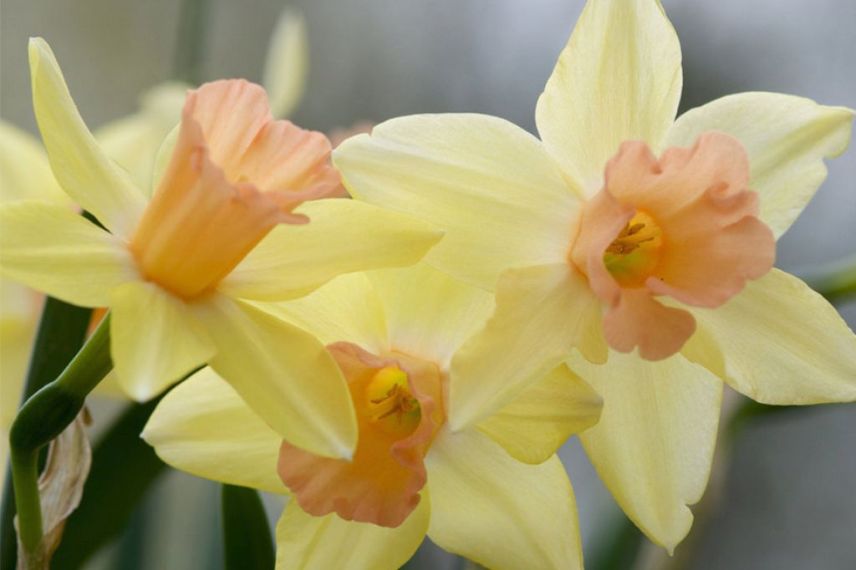
The miniature daffodil ‘Sailboat’ is a small daffodil 25 cm tall well suited to small borders or flowering pots. It produces 2 to 3 scented flowers per stem, with a white corolla and a sulphur‑yellow centre that turns cream‑white. It blooms in April and its flowers have a lemony fragrance. Its leaves are narrow and cylindrical. This daffodil prefers warm climates and a sunny position. Vigorous and low‑maintenance, however it does not thrive in heavy, wet soil.
Combine this daffodil with Geranium pratense ‘Cluden Sapphire’, dwarf iris ‘Making Eyes’ and alyssum ‘Goldkugel’ to achieve beautiful contrasts and lively colours.
Narcissus 'Rip Van Winkle', a small flower to discover
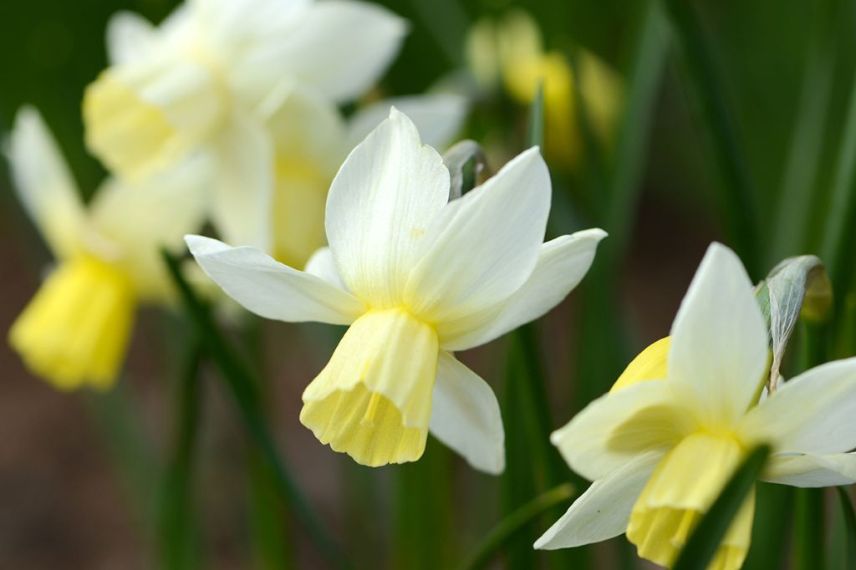
The narcissus ‘Rip Van Winkle’ is a dwarf daffodil 15 cm tall with a distinctive appearance. It bears small, very double, ruffled flowers in a bright yellow tinged with green. It flowers early in March and April. Fragrant, the flowers are made up of surprisingly slender petals alternating between yellow and green, somewhat reminiscent of large, elegant dandelion-like flowers. This Irish variety originates from a botanical species Narcissus pumilus brought back from Spain. Plant in a sunny spot in very well-drained soil.
Create flower displays that are out of the ordinary by pairing this narcissus with blue or purple crocus and plant them in a rockery or in a pot.
For further information
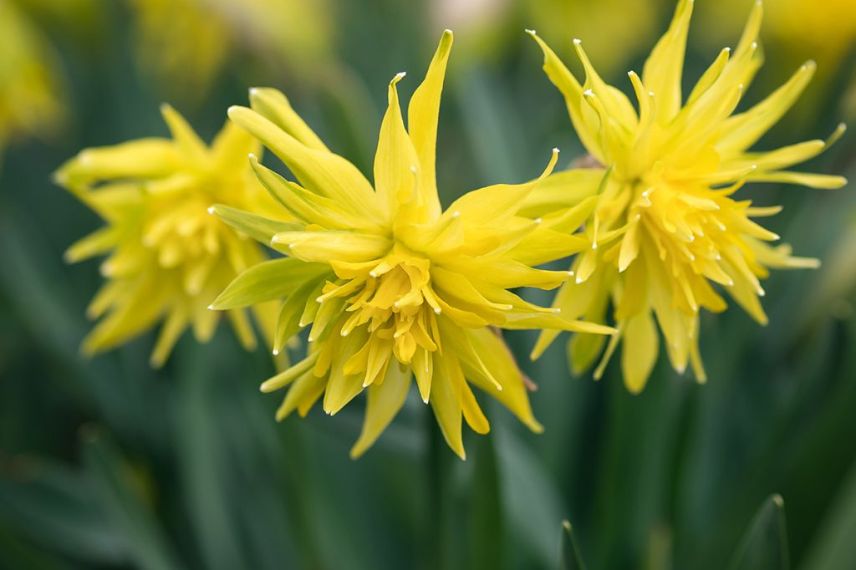
Discover our complete range of daffodils and consult our article on the cultivation and planting of daffodils.
- Subscribe!
- Contents
Comments