





























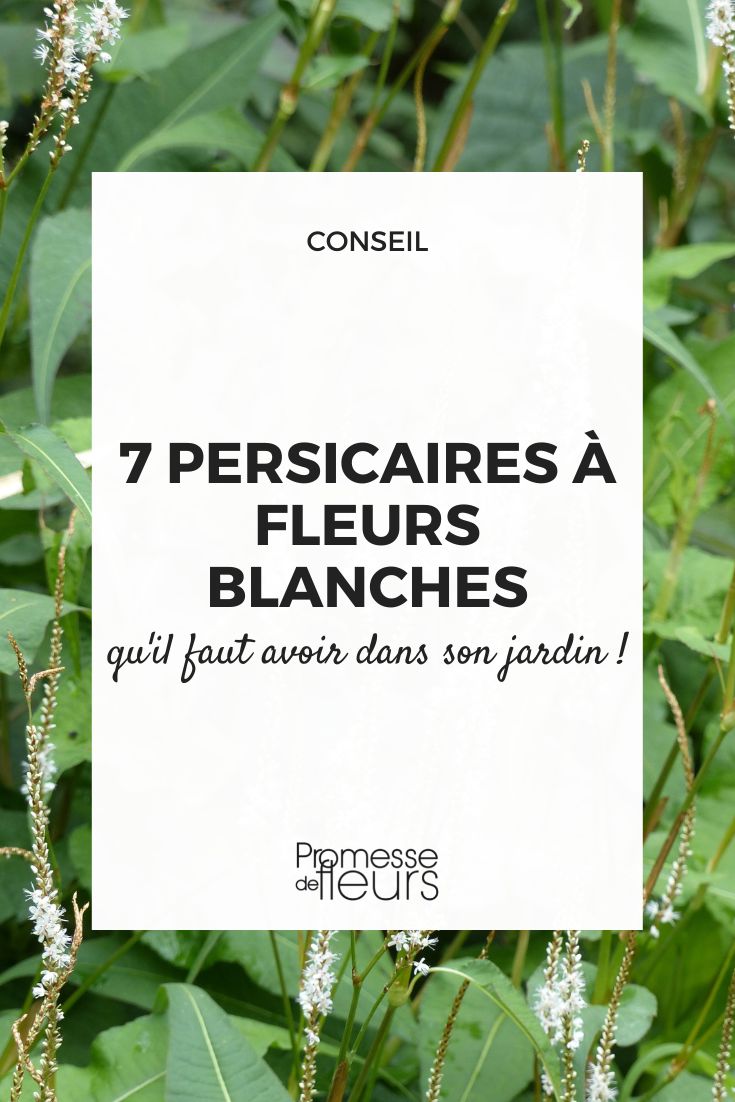
7 White-flowered Persicarias
A simple and elegant flowering
Contents
In a cool soil garden, Persicarias or Persicaria are essential perennials! They enliven borders with their delicate presence, featuring dancing spikes that fit seamlessly into an English garden, contemporary, romantic, exotic…
Easy to cultivate, quite hardy, robust, and floriferous, they come in a variety of species and cultivars, but share similar preferred conditions. Cool soil is essential for all species, and they are tolerant of other aspects.
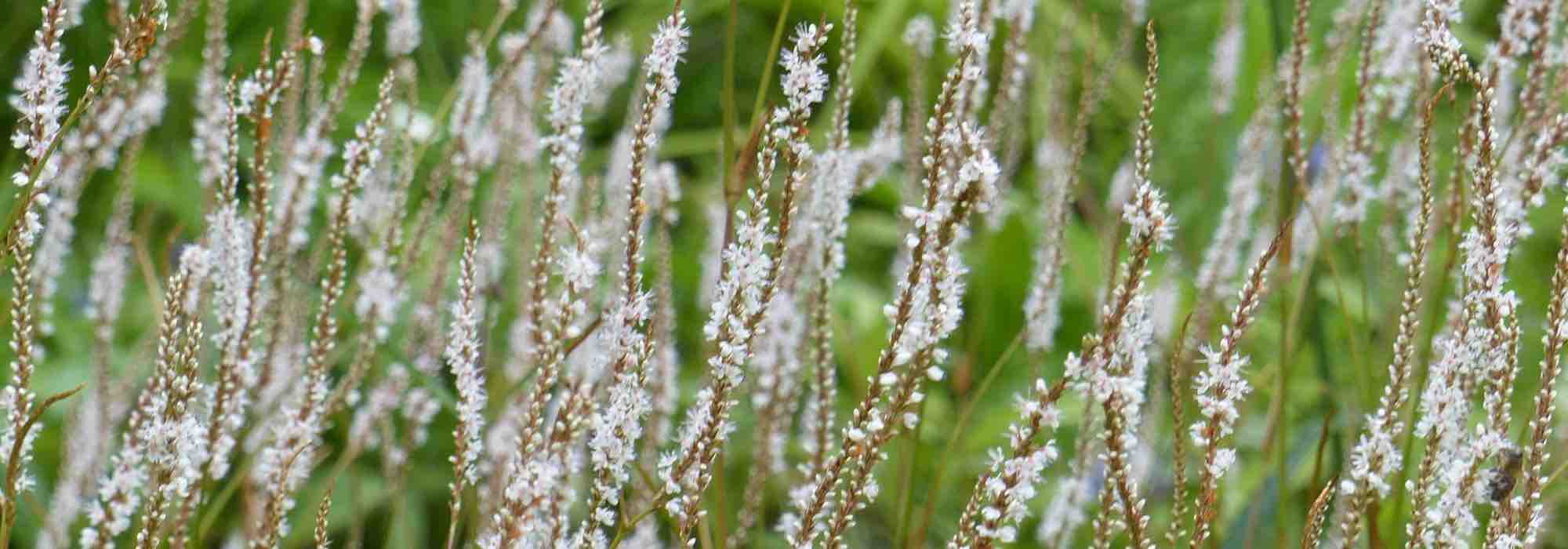
Let’s explore the white-flowering Persicarias, with their fine, light, and delicate spikes in Persicaria amplexicaulis, in clusters or corymbs in other species. Sometimes, it’s the foliage that is truly remarkable.
Discover our favourite species and varieties quickly.

Persicaria amplexicaulis 'Alba'
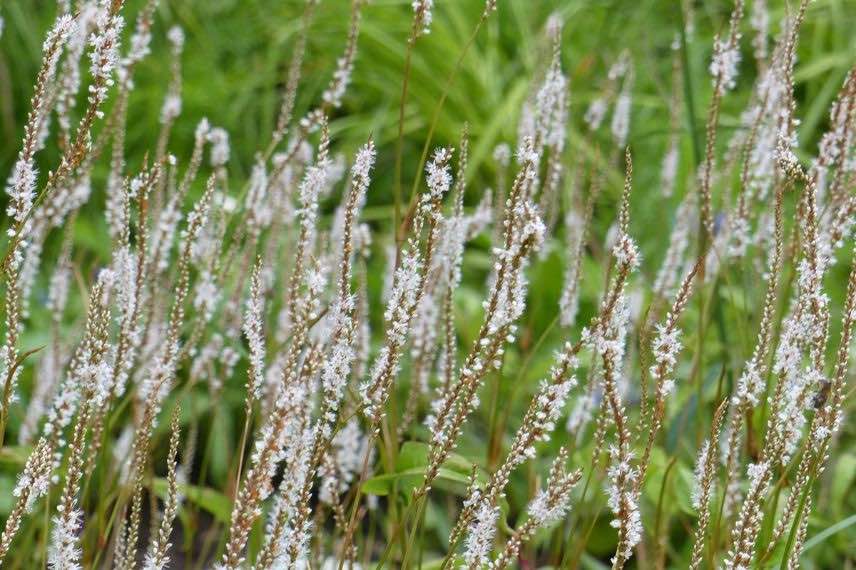
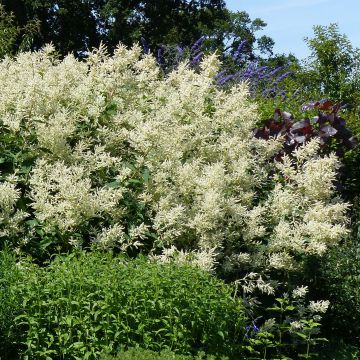
Appreciate the delicacy of the lovely spikes of Persicaria amplexicaulis ‘Alba’. They dance and undulate, held high above the foliage. This knotweed can reach a height of 120 cm in flower with a spread of 60 cm. From July to September, it produces numerous pure white spikes, measuring 7 to 10 cm long. The flowering is continuous throughout the summer, and the plant, with a spreading habit, makes a good groundcover. Its medium green leaves, measuring 15 to 25 cm long, turn red in autumn.
Pollinated by bees and butterflies, it finds its place in the middle or back of a border, in cool soil or even in wet areas. Pair it with lovely white and airy Filipendulas, set against a backdrop of contrasting purple bushes, such as a purple hazel: Corylus avellana ‘Rode Zellernoot’.
Persicaria amplexicaulis ‘Alba’
Persicaria microcephala 'Red Dragon'
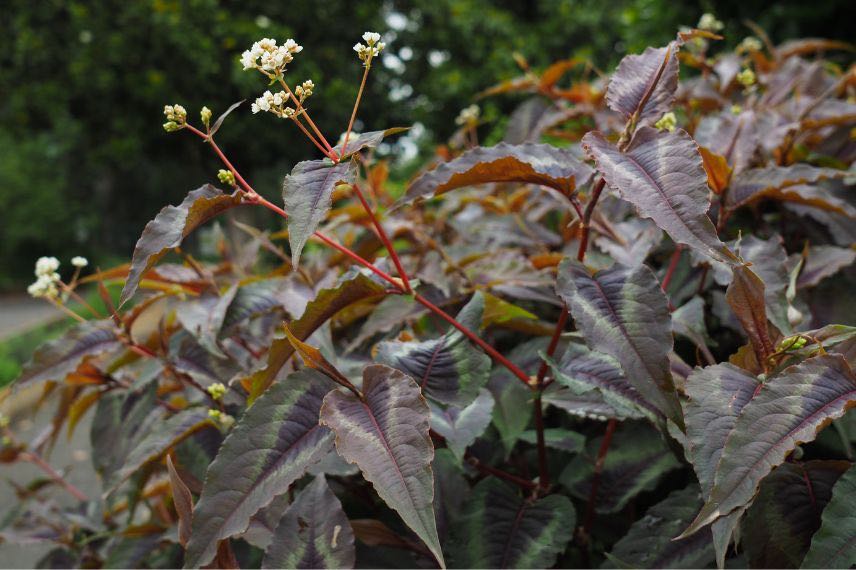
Some Persicarias have beautifully attractive foliage, such as Persicaria microcephala ‘Red Dragon’, featuring brown-purple leaves, with a geometric pattern, maculate with a black triangle outlined in silver. As if that weren’t enough, it produces lovely white flowering clusters in summer, well contrasted, borne on red-brown stems. It forms a bush 80 cm to 1 m tall with a limited spread of 50 cm.
This is a plant that invites experimentation with various combinations to play with its lovely foliage; for example, try a dark colour scheme with Geranium phaeum or a contrasting lavender blue with Nepeta grandiflora ‘Summer Magic’.
Persicaria microcephala ‘Red Dragon’
Discover other Persicaria
View all →
Available in 1 sizes
Available in 3 sizes

Available in 2 sizes
Available in 2 sizes
Available in 1 sizes
Available in 1 sizes
Available in 1 sizes
Available in 1 sizes
Available in 1 sizes
Available in 2 sizes
Persicaria polymorpha
The Persicaria polymorpha is a very large species of Knotweed or Polygonum. With a powerful but clump-forming, non-suckering stump, upright and robust stems rise in spring to form a large loose bush. In summer and autumn, from June to October, it bears numerous long and large pure white flower corymbs that emit a strange ammonia-like scent. It reaches 2 m in height and 70 cm to 1 m in width.
Plant it in an exotic setting, alongside other large perennials suited to fresh to moist soil, such as Gunnera manicata or Rheum palmatum var. tanguticum.
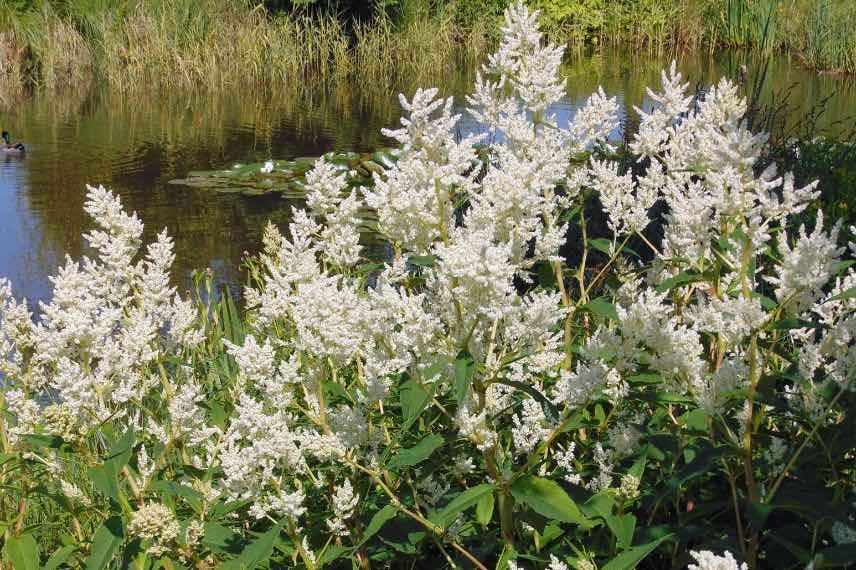
Persicaria polymorpha
Persicaria runcinata 'Purple Fantasy'
Attention to the eyes, here’s another remarkable foliage Persicaria: Persicaria runcinata ‘Purple Fantasy’. Its leaves are triangular, marked with inner triangles in a gradient of green, brown, and silver. These colours soften to purple in autumn. It is a very original variety that blooms in summer and autumn, producing small, less conspicuous white bouquets. Quite small in size, reaching 50 cm in height and a minimum of 30 cm in width, it grows quickly and thrives in all exposures, tolerating occasional droughts in deep soil and handling heavy soils very well. Its pattern is more pronounced in sunlight.
In a contemporary garden, place its carefully designed foliage alongside the gramineous allure of Ophiopogon and Heucheras, which you can match in colour to the shades of ‘Purple Fantasy’.
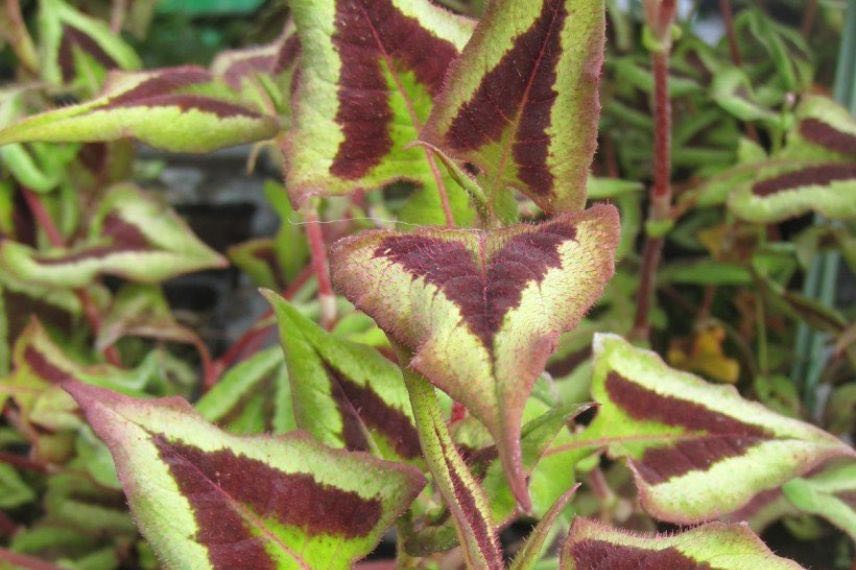
Persicaria runcinata ‘Purple fantasy’
Persicaria weyrichii
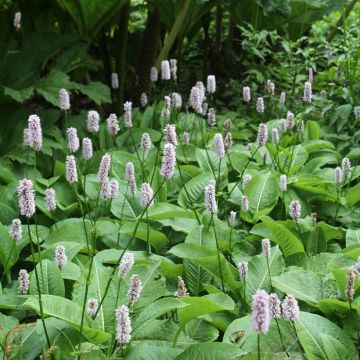
The Persicaria weyrichii forms a well-rounded clump. It resembles Persicaria polymorpha, but is more compact. It reaches 80 cm in all directions at ripeness. Its large lanceolate leaves often have bronze highlights. From June to August, it bears very decorative flowers, cream-white in colour, held on flexible stems. Like its relatives, it tolerates all exposures and requires fresh soil.
Plant it in a natural setting, in partial shade, alongside large ferns and with a Astilboides tabularis with large rounded leaves.
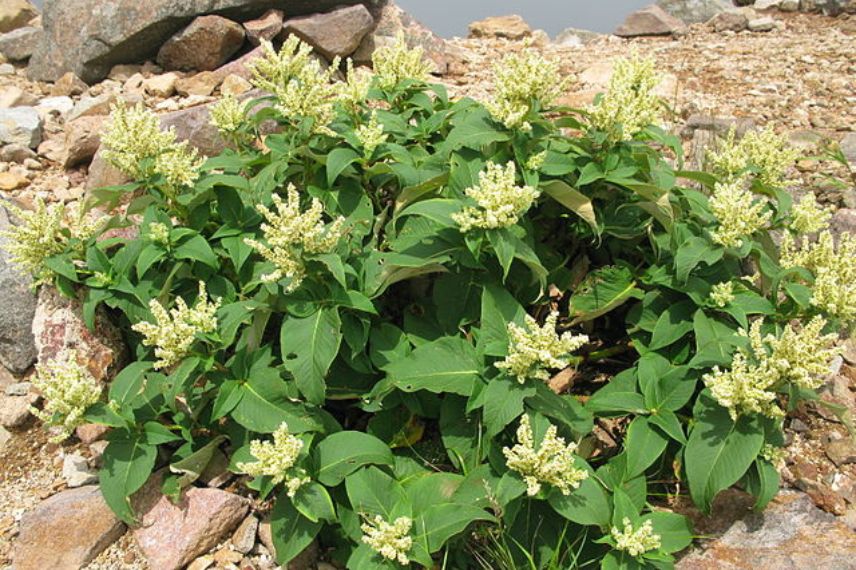
Persicaria weyrichii
Persicaria dshawachischwilii
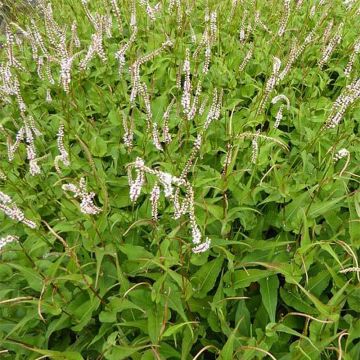
You are spared the trouble of remembering its name, or pronouncing it for that matter, the Persicaria dshawachischwilii is rare in cultivation. A word to collectors. This species features long, narrow leaves of a rather light green. It slowly forms a bushy clump about 1 m in all directions. The flowering, rather early for a knotweed, begins in May-June and continues until July. It consists of numerous ramified spikes of about 10 cm made up of multiple small creamy white flowers.
Quite greedy, it enjoys rich soils. Plant it in front of a beautiful, large dark green or variegated Miscanthus, for example, the Miscanthus transmorrisonensis. Add some white Japanese Anemones.
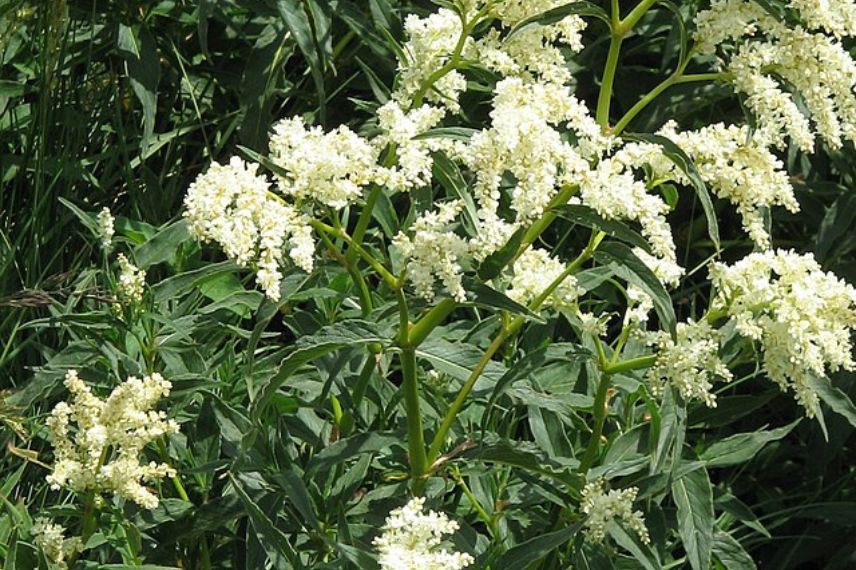
Persicaria dshawachischwilii
Persicaria amplexicaulis 'White Eastfield'
Return to the classics with the Persicaria amplexicaulis ‘White Eastfield’, noted for the abundance and lightness of its flowering. It produces numerous very slender spikes from July to October, measuring 10 to 15 cm long, composed of multiple small flowers. Ivory when in bud, they open to pure white. Its lanceolate leaves, 17 cm long, are dark green and turn purplish in autumn. The plant reaches 90 cm in all directions.
With a light appearance, find a place for it in all styles of gardens, and don’t forget to create summer or autumn bouquets with its lovely spikes. Mix with stem-clasping Persicarias: Asters, Dahlias, Agastaches, Phlox, and Echinaceas.
- Subscribe!
- Contents
Comments