





























7 columnar fruit trees for small gardens
Varieties with a narrow habit suited to urban gardens.
Contents
Not everyone has a large garden or an orchard in which to plant fruit trees. Fortunately, there are fruit varieties with a columnar habit, particularly narrow, which take up very little space, and can easily be installed on a balcony, a terrace or in a small garden. They can be planted in open ground, but can also be grown in pots. It’s the ideal solution for small city gardens! These varieties offer a very distinctive silhouette, with a straight main trunk and short, close-set side branches. They have the advantage of a very small footprint. Moreover, being compact, harvesting and maintenance are easier.
There are notably many columnar apple varieties, but you can also find columnar pear trees, plum trees and cherry trees. We invite you to discover them by introducing the seven best varieties!

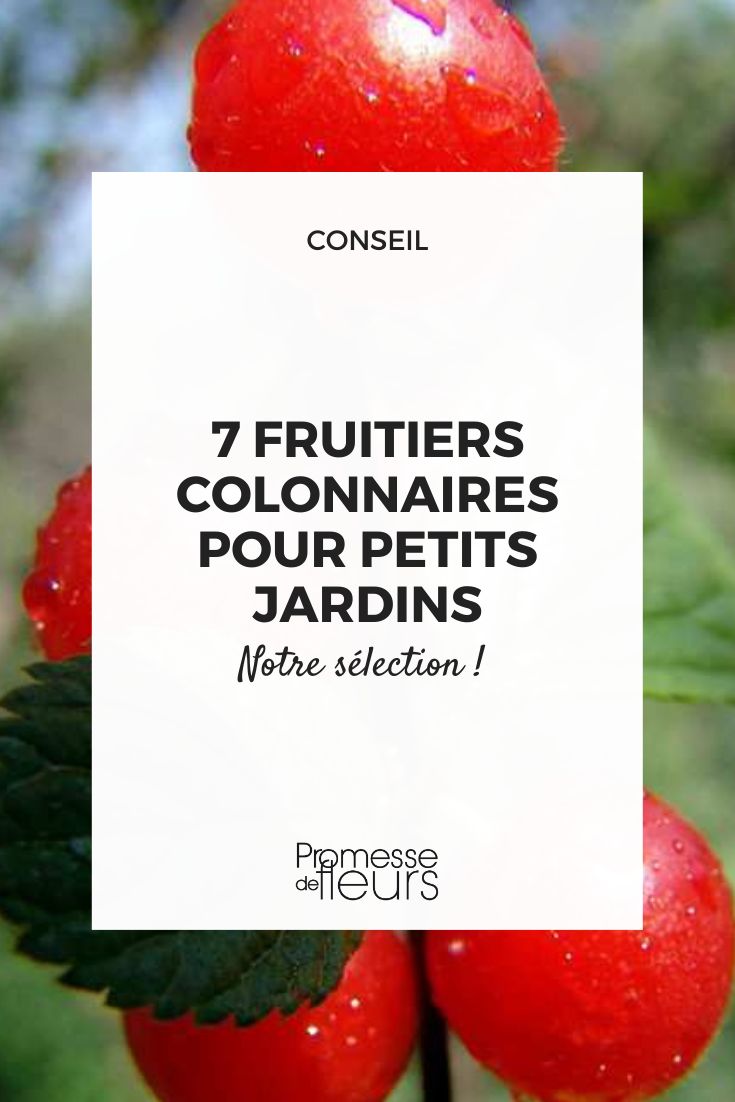
Cherry tree 'Sylvia'
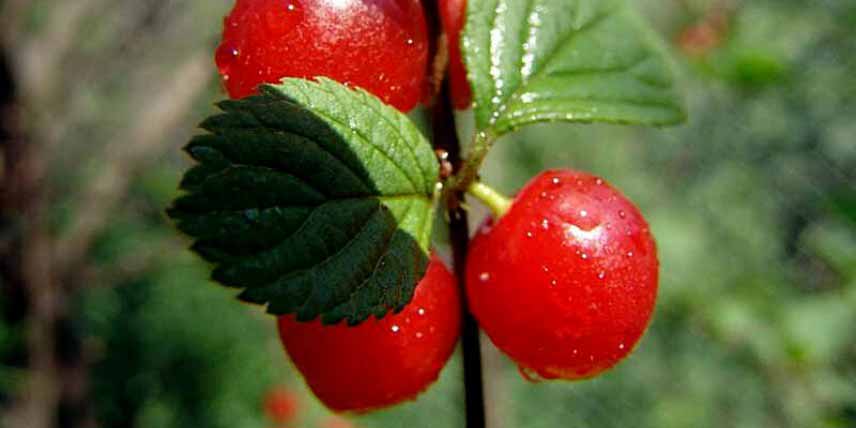
The cherry tree ‘Sylvia’ is a delightful compact variety with a columnar habit, ideal for small spaces. It consists of an upright trunk and short lateral branches. It reaches up to 1.5 m in height and 50 cm in width. It adapts equally well to growing in a pot or in the ground. It flowers in April, then covered with a multitude of small white flowers, and typically bears fruit in July. Its fruits are bright red and offer sweet, crisp flesh. It is a self-fertile variety: it does not need to be paired with another cherry tree to ensure pollination. It produces sweet and slightly tangy cherries, ideal for eating fresh or for processing. Plant it preferably in autumn, in September or October, in a cool, well-drained growing medium and in a sunny location.
Discover our full guide: “Cherry tree: planting, pruning, maintenance”
Read also
10 dwarf fruit trees to grow in potsplum tree 'Quetsche Toronto'
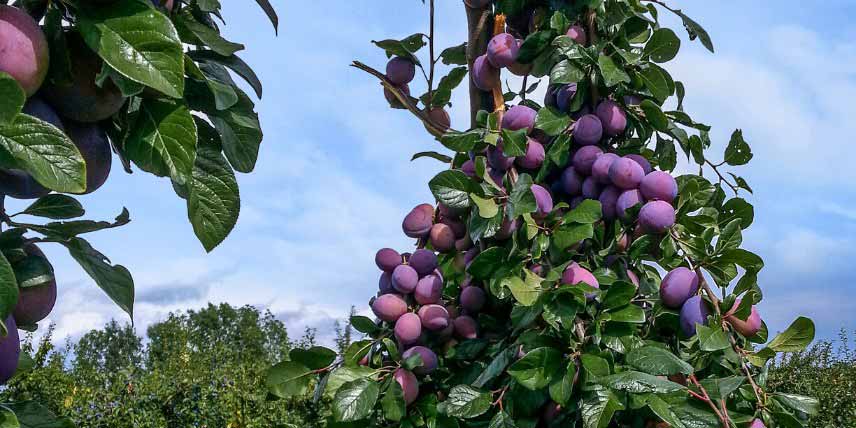
The plum tree ‘Quetsche Toronto’ is a prolific-bearing variety that can reach up to 3–4 metres tall and only 50 cm wide. In April it becomes covered with a profusion of white blossoms, and in September produces dark blue–purple plums, coated with bloom. Their flesh is yellow, juicy and deliciously sweet. They are perfect for eating fresh, but also for desserts or jam. It is a self-fertile plum tree. However, for an even bigger harvest, it benefits from being planted near another variety. Plant it in full sun, in soil rich in organic matter and well-drained. It usually begins to bear fruit 2–3 years after planting. It is not very susceptible to disease and adapts well to container planting. To keep it at a reasonable height and ease harvesting, we recommend pruning the shoots that develop from its top in July.
Our complete guide: “Plum tree: planting, pruning and maintenance”.
Pear tree 'London'
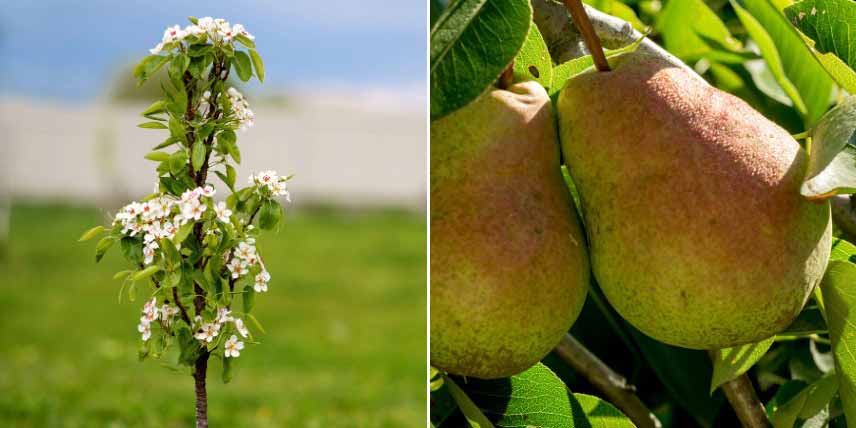
The London pear tree is an ideal variety for terraces and small gardens. It can reach a height of 3–4 m and a width of 60–80 cm. It bears relatively large fruits from mid-September to mid-October, with a smooth skin and pale green-yellow colour. Their flesh is white, meltingly tender, juicy, sweet and delicately perfumed. They keep for two weeks in the fridge. They can be eaten raw, or cooked in desserts or savoury dishes. This pear tree bears in April pretty white flowers with five petals, 2–3 cm in diameter, melliferous. To optimise its growth, choose a sunny location and rich, well-drained soil. The London pear tree is also less demanding when it comes to pruning, which makes it easier to maintain. It is partially self-fertile: the presence of other pear trees nearby will improve pollination. It tolerates temperatures down to -20 °C, but it is nevertheless advisable to shelter it from cold winds.
Our full sheet: “Pear tree: planting, pruning and care”
Read also
Dwarf fruit treesPear tree 'Obelus'
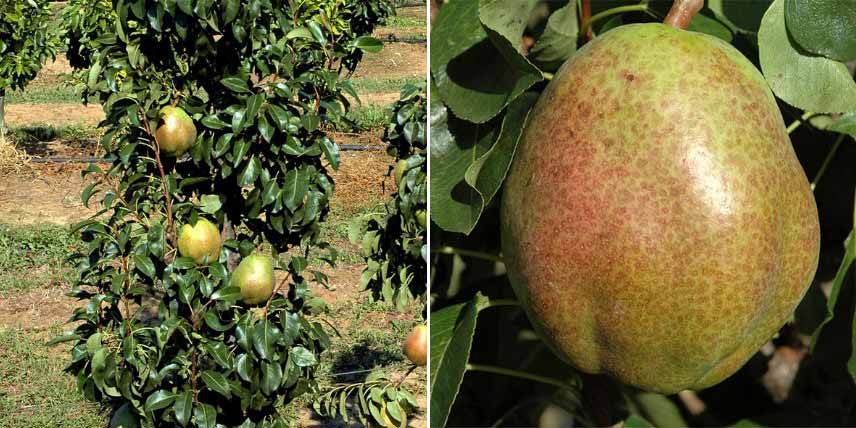
The pear tree ‘Obelus’ is a somewhat larger variety than the others we present here, as it reaches up to 3 m in height with a 1 m spread. It flowers in late March and then bears white five-petalled flowers. It generally fruits from late August to early September, and bears pears of good size, fairly round, green in colour, speckled with brown-purple, or even red. Their flesh, cream-white, has a sweet and delicately perfumed flavour. They can be eaten fresh, but also in pastries, jams or compotes. This pear tree is resistant to scab. However, it is not self-fertile: you will need to pair it with another pear tree, for example the ‘Angelys’ variety or ‘Doyenné du Comice’. Plant it sheltered from the wind, in cool, well-drained soil, not calcareous.
Apple tree 'Red Sensation'
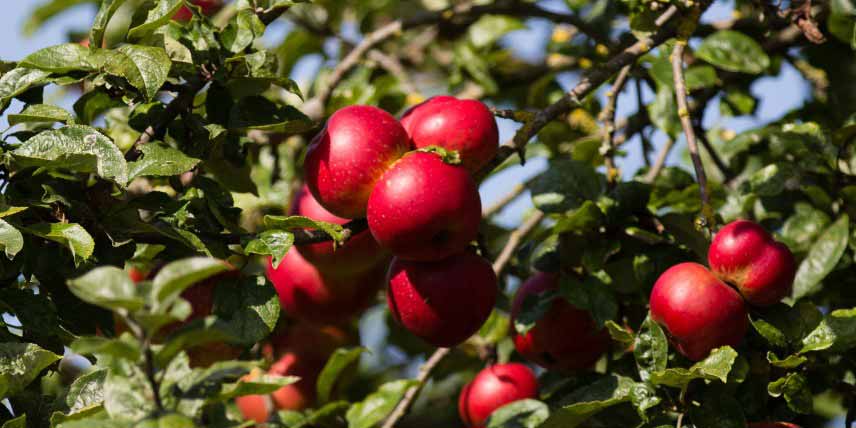
The apple tree ‘Red Sensation’ stands out for its scarlet-red apples and its sweet-tart flavour. It reaches up to 1.5 m tall with a habit of 80 cm, and in April–May it produces pretty white-pink flowers. Harvest takes place from late September to October. The apples are medium-sized, bright red, glossy, and have a sweet-tart flavour, pleasantly scented. They are particularly suited to baking, but can also be eaten fresh, or used in compotes, jams, and in savoury dishes. It is the result of a cross-breeding between the ‘Ballerina’ hybrid apple-tree series and the ‘Red Jonathan’ apple tree. This apple tree requires rich and well-drained soil, and good sunlight for optimum fruiting. A light pruning during the winter will promote better growth and fruiting. It is a self-fertile variety and therefore does not need to be near other apple trees to bear fruit. It can be planted either in the ground or in pots. Plant it in autumn in a rich, moist but well-drained growing medium.
Discover our full guide to apple trees and their cultivation.
Apple tree 'Villandry'
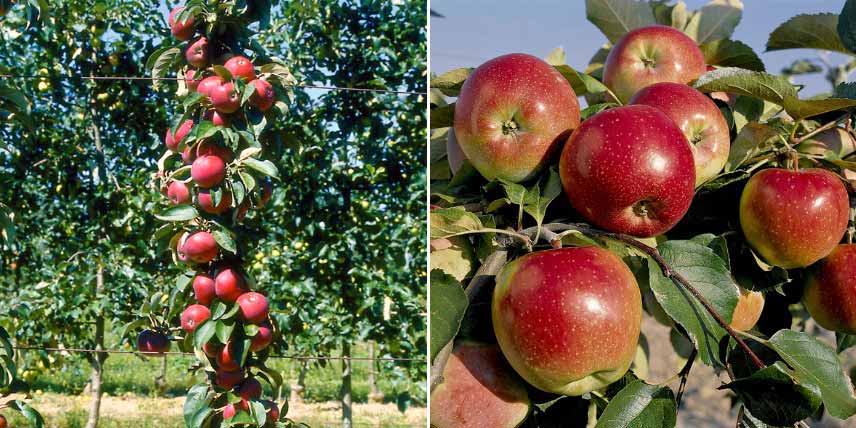
The Villandry apple tree is a French variety named after the famous Villandry Castle. It is particularly suited to small gardens thanks to its columnar habit. It typically bears its first fruit two to three years after planting. It bears fruit in September, and then produces medium-sized apples, red with grey speckles. Stored under ideal conditions, they can keep until February. Their flesh is crunchy and fragrant, juicy and sweet, ideal for eating fresh or for cooking. It is a self-fertile apple tree. However, to yield an even more abundant harvest, it is preferable to plant beside it another variety that flowers in the same period, such as the apple tree ‘Reine des Reinettes’. It is a vigorous apple tree that grows quickly, but does not exceed 2 metres in height and about 60 cm across. It is not bulky and adapts well to various soil types, provided they are well drained. Adequate sunlight and regular watering, especially during the dry months, are essential for abundant fruiting.
Apple tree 'Amboise'
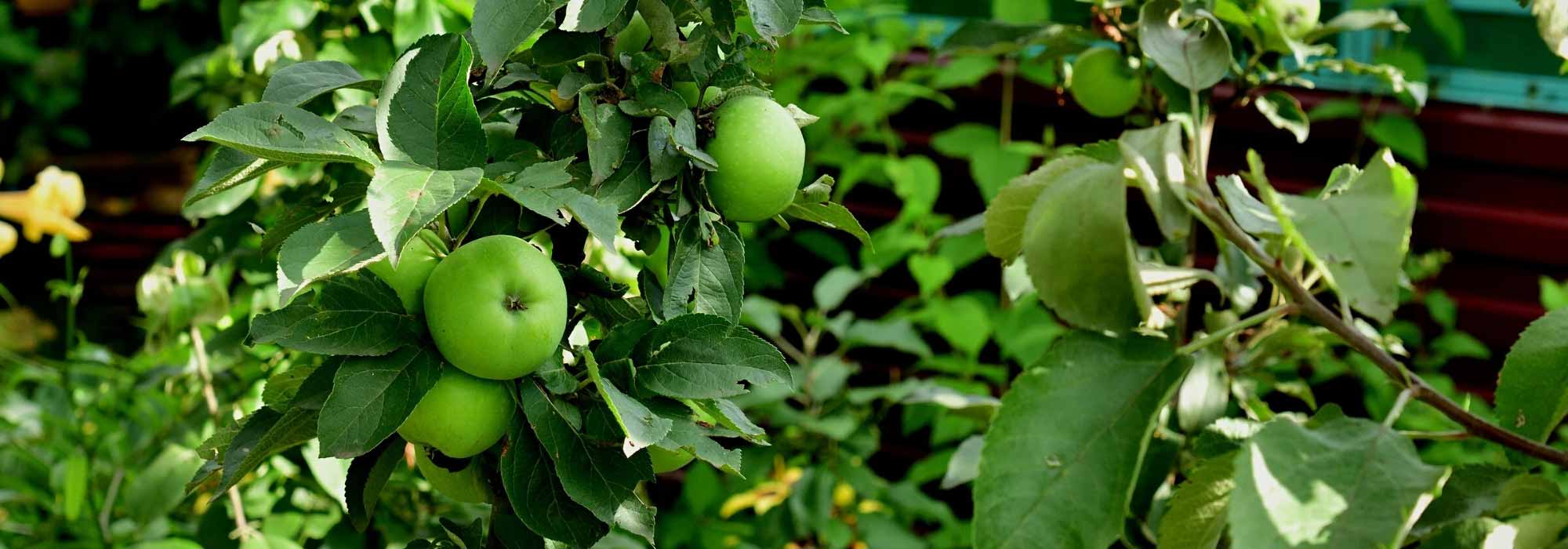
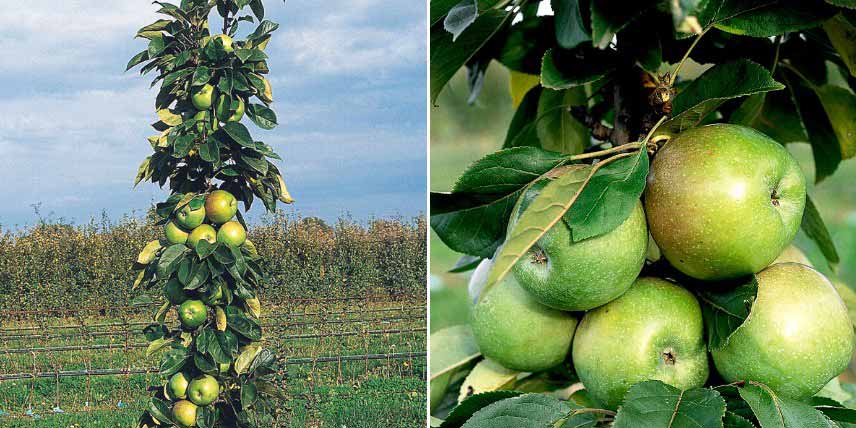
The apple tree ‘Amboise’ (also known as ‘Amboise Delcogra’) offers in September apples with a bright green colour, the tart flavour recalls Granny Smith. They are medium-sized, with a firm flesh. Versatile, they can be eaten raw or cooked into desserts (crumbles, tarts…) as well as in savoury dishes or added to a salad. The ‘Amboise’ apple tree grows quickly and reaches up to 4 m tall at maturity, but with pruning it can easily be kept to a height of 2 m. It needs staking to ensure a straight, upright habit. Compact, it reaches about 60 cm in width. It has good productivity and its apples store very well through winter: stored in good conditions, they can indeed keep until February. It fruits fairly quickly, two to three years after planting, sometimes earlier. This variety is not self-fertile and should therefore be planted near other varieties that flower at the same time, such as the apple tree ‘Reine des Reinettes’.
- Subscribe!
- Contents
Comments