






























7 shrubs with graphic foliage and habit
Bushes that are particularly ornamental, to grow in the garden or in pots.
Contents
Shrubs enchant our gardens with their various ornamental qualities: flowering, fruiting, colour or texture. Their foliage and silhouette also form part of their decorative assets. Leaves can thus display a distinctive shape, texture or colour, and may even change with the season. In terms of silhouette, these conifers or deciduous shrubs can be columnar, layered, weeping, umbrella-shaped, globe-shaped or even more sophisticated and original in form. These plants are sure to turn heads! There really is something to suit almost every taste and garden style.
Discover our selection of seven shrubs with decorative habit, to enhance the beauty of their foliage and their unique appearance.

Albizia julibrissin 'Chocolate Fountain': a cascade of purple leaves
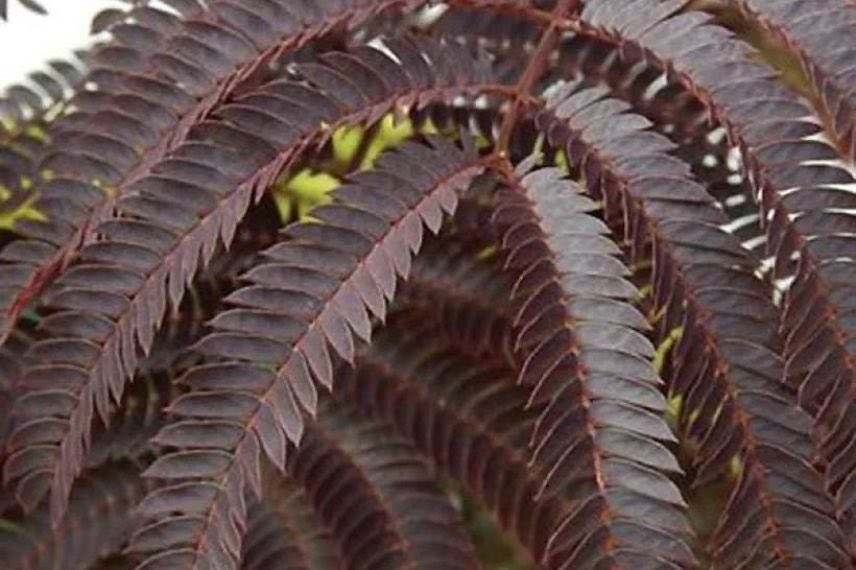
Albizia is best known for its adorable summer flowering in silky plumes. But the silk tree has more aesthetic assets at its disposal: it possesses a handsome foliage that is especially light, finely divided, reminiscent of the mimosa or the fronds of ferns. At ‘Chocolate Fountain’, this foliage has the peculiarity of being bronze-green in spring, then becoming astonishingly purple for the rest of the year until autumn. The soft pink flowering is particularly enhanced by these dark hues.
As for its weeping habit, it consists of pliant branches that naturally bend toward the ground. This majestic, airy habit gives it extra charm and explains its name, “Chocolate Fountain”.
This variety will be particularly well suited to be grown as a specimen, in the garden or even in a large pot. It will reach around 5 metres in height with a 4-metre spread after several years. ‘Chocolate Fountain’ will bring a lovely exotic touch and prove ideal for creating a shady spot, under which to eat or rest, sheltered from the sun’s burning rays.
Albizia is a bush that thrives in hot, sunny conditions. It benefits from good drought tolerance, even on poor and saline soils, as well as frosts down to -15°C. Provide it with a well-drained growing medium that does not retain excess water.
For more information: Albizia: planting, pruning and maintenance
Read also
Trees and bushes: different habitsCatalpa bignonioides 'Aurea': ideal for bringing shade and light to the garden
The Golden catalpa has the advantage of providing shade and light to the garden thanks to its foliage and its shape, both highly decorative.
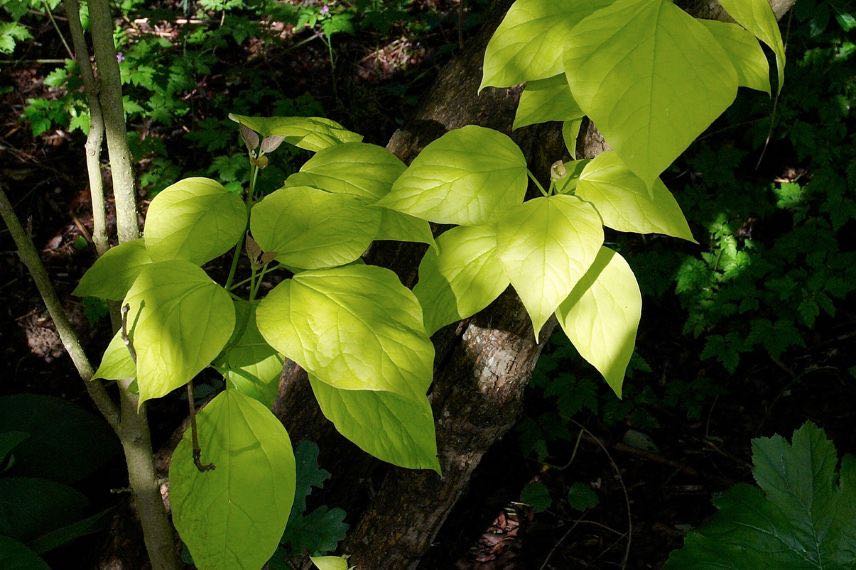
This tall bush or small tree enchants us first with its coppery-purple foliage in spring.
The leaves then take on golden tones, soft green, and lemon-yellow in autumn before they fall.
As with other Catalpa, they are heart-shaped.
This foliage pairs wonderfully with the white, heart-shaped flowers, which appear in late spring. It gives way to long decorative pods, which earn the Catalpa its nickname of the ‘bean tree’.
In terms of silhouette, this slow-growing shrub will reach 5 to 7 metres across after about ten years.
It has an umbrella-shaped habit, perfect for providing shade and natural coolness to the garden.
Provide it with a sunny or partly shaded position, in cool, well-drained soil.
Hardy down to -20°C, it will thrive in most of our regions, in a position sheltered from strong winds.
For more information: Catalpa – planting, pruning, maintenance.
Corylus avellana contorta 'Medusa': a bush with a silhouette straight out of a fairy tale.
This twisted dwarf hazel bush impresses with its silhouette reminiscent of a real serpent’s nest. In early spring, long yellow aments appear, highly decorative, unveiling themselves before the foliage. Its name, “Medusa”, refers to the hair of the Gorgon in Greek mythology. This dwarf variety is among the most contorted, and its small dimensions (1.5 m tall by 1 m spread) allow it to be grown anywhere, even in restricted spaces or in pots.
Its branches, with a twisted and contorted appearance seem inspired by old tales and help create a scene full of mystery. This impression is all the more pronounced when snow or frost coats the branches in winter.
The leaves, initially green, develop beautiful golden-yellow colours in autumn.
Easy to grow, this hardy and tolerant shrub thrives in all soil types, provided they are deep enough and not too dry. Plant it in full sun or partial shade. Plant it in a border with other ornamental plants for winter interest, such as dogwoods.
For more information: Hazel, Corylus: plant, prune and maintain

Read also
7 trees with striking foliage and formAloe striatula: a succulent plant to add an exotic touch.
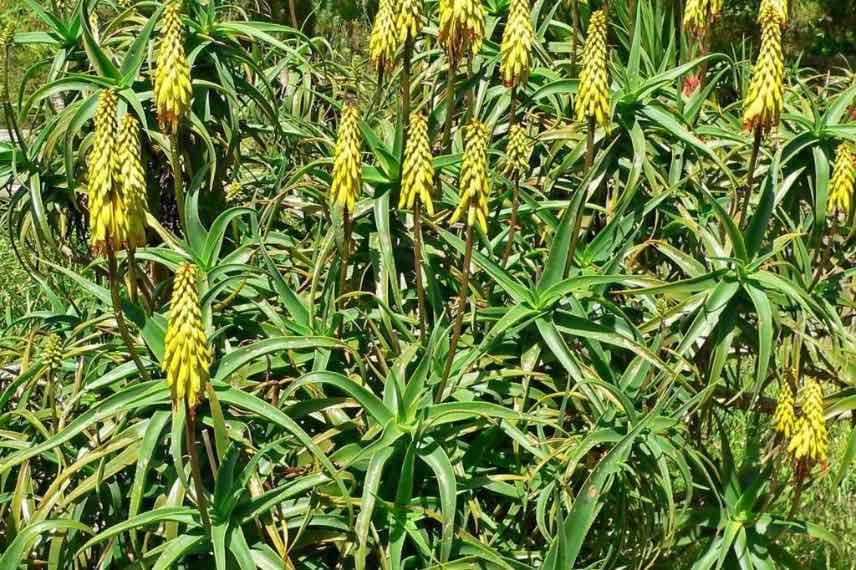
Aloe striatula has the exotic charm of succulent plants, but the advantage of being hardy despite its South African origins (down to -12°C in well-drained soil). The shrub-like silhouette of this Aloe comprises thick stems bearing rosettes of long, pointed leaves with dentate margins. The plant has a loose habit, with branches that can spread along the ground. It tolerates pruning well, though this Aloe can be trained into a very attractive dome.
The late-spring flowering is just as ornamental. It reveals long spikes of tubular flowers in a bright yellow-orange.
Like all succulents, this Aloe handles summer drought and heat well. These qualities make it a perfect candidate for no-water gardens, rockeries, arid slopes or pebble beds.
In terms of size, at maturity it reaches 1.50 metres in height with a 2-metre spread, allowing cultivation both in the ground and in a large pot. A somewhat more compact option (1.50 m in all directions), the cultivar ‘Artic Jungle’ will also be ideal for adding a graphic touch to the terrace or balcony.
Grow Aloe striatula in a sunny position, sheltered from prevailing winds, in well-drained soil, even if poor and rocky.
For more: Aloe: planting, growing and care
Liquidambar styraciflua 'Stella': a pyramidal habit that adds verticality.
The American sweetgum is a fine ornamental tree, appreciated for the beauty of its autumn-coloured foliage. The variety ‘Stella’ has a more modest growth, its dimensions reaching 6 to 10 metres in height and 3 to 4 metres in spread. Tolerant of pruning, it can be reduced to around 3 metres in all directions for cultivation in small gardens or in a large tub.
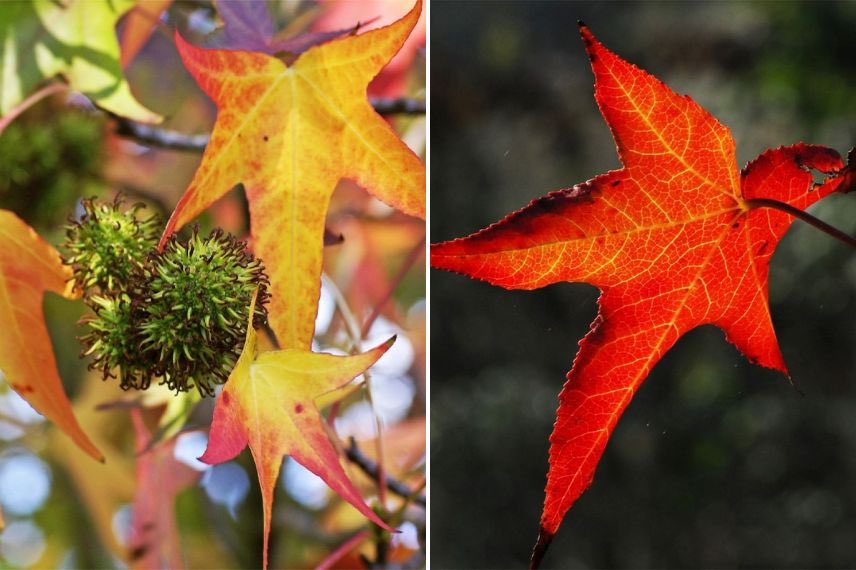
Its palmately lobed leavess are among its first aesthetic assets. They are star-shaped, made up of deeply lobed lobes. Initially green, they blaze in autumn, taking on shades from yellow to crimson red for many weeks.
Its majestic habit is just as interesting: it is conical, with lateral branches longer at the base than at the top. It will form a focal point in the garden and add a striking graphic presence.
Hardy and resistant to pests and diseases, it is an easy-care decorative bush. Plant it in full sun or partial shade in moist, deep, but not calcareous soil. It can even withstand short periods of flooding, which makes it suitable for planting near water features.
For more information: Liquidambar, American sweetgum: planting, pruning, care
Larix kaempferi ‘Stiff Weeping’: a dwarf conifer that will catch the eye.
Larix kaempferi ‘Stiff Weeping’ is a striking bush with a weeping habit, which would almost make it resemble Cousin Itt from The Addams Family, albeit a bit tousled. Considered a dwarf conifer, it reaches about 2 to 3 metres in height at maturity with a spread of less than 1 metre. This makes it suitable for growing in both large gardens and smaller spaces.
This Japanese larch has a particularly soft, trailing habit that reaches the ground, with non-spiny needles in a pretty blue-green. They take on a golden colour in autumn. It is then the brown-pink colour of the branches that adds to the plant’s aesthetic appeal.
‘Stiff Weeping’ proves easy to live with: hardy and undemanding, it grows quickly and requires little maintenance. Grow it in full sun or partial shade, in soil that remains light, moist and non-calcareous. It will integrate easily into a border, but will also look superb when grown as a specimen. It will add a striking vertical accent or help mark an entrance.
For more information: Larch, Larix: planting, pruning and care
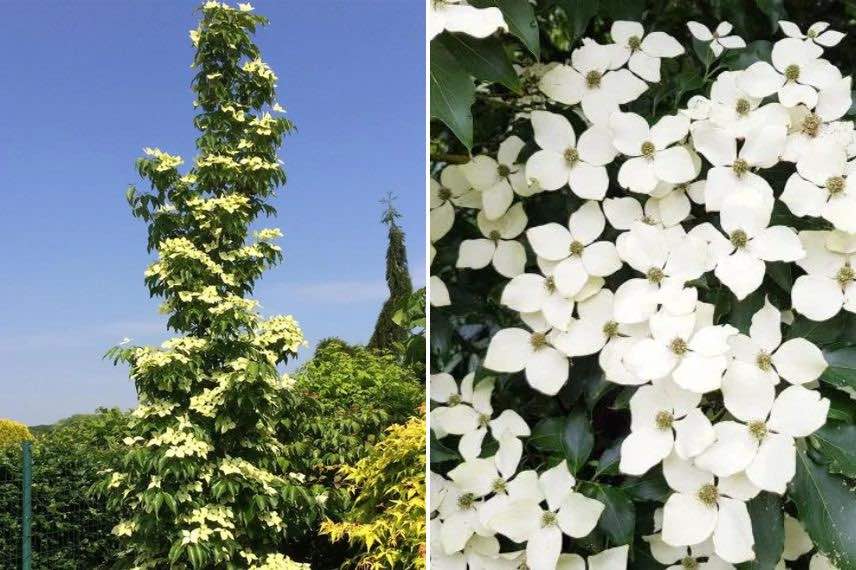
Cornus kousa ‘Flower Tower’: a columnar silhouette that blazes in autumn.
Dogwoods have plenty of aesthetic appeal: Generous spring flowering, decorative fruits, foliage that takes on lovely warm colours in autumn. Here we have chosen ‘Flower Tower’ for its narrow columnar silhouette, very graphic, composed of branches in horizontal tiers. With a vertical silhouette, it reaches 4 metres in height at maturity with a spread of only 1 metre. It adapts easily to many gardens.
In late spring, it is clothed in large white inflorescences, earning it the name ‘flowering tower’. They then give way to colourful fruiting throughout the summer.
The leaves are ovate and very veined, delicately undulated along the edges. Initially dark green, they take on magnificent red-purple colours in autumn before falling.
Hardy and easy to grow, this dogwood will thrive in sun or partial shade, in soil that is cool and rich in organic matter. It will dress a fairly tidy lawn or well-used walkways with ease.
For more information: Flowering dogwoods: planting, pruning and maintenance
- Subscribe!
- Contents

Comments