






























6 cold-hardy citrus trees
Citrus trees are hardier than you might think.
Contents
The Citrus trees presented in this article have been tested in several French regions, from north to south, and are cited in the book by Olivier Biggio and Bertrand Londeix: “Cold-hardy citrus trees, to grow in open ground”. These citrus enthusiasts have been growing numerous citrus trees in open ground for over 20 years, like a few other enthusiasts, and it is their accumulated experience that formed the basis of this book. There you will discover citrus trees hardier to frost than you might imagine.
A few clarifications are however necessary: if these citrus trees are cultivated only in open ground, where they therefore stay winter after winter, it is always under favourable conditions: a site well sheltered from winds, with good sunlight, especially in winter when we ensure to give them a generous amount of sunlight from the morning. The presence of a wall is often beneficial for wind protection as well as for reflecting heat and light. Hardiness figures given in this article apply to the tree, not to the fruits. Citrus fruits generally freeze at temperatures around -5 to -6°C. Accordingly, depending on your region, keep an eye on the harvest period to avoid frosts as much as possible, and accept losing a harvest in some years because a stronger, earlier or later frost has arrived to spoil it.
Discover our selection of frost-hardy citrus trees!

Kumquat
The Kumquat or Citrus japonica or Fortunella margarita produces small round or long fruits that ripen from March and can remain on the tree for several months. The most common on markets are the long kumquats, acidic, but if you choose a round-fruited variety you’ll discover a sweeter fruit. Hybrids often strike a balance between sweetness and acidity. It forms a small bush up to 3 m tall with fragrant, repeat-flowering blossoms, and the fruits therefore stay on the tree thereafter at various stages of ripeness. To prevent spring frosts from affecting the fruit, it can be covered with a frost protection fleece. If planted near a sheltered wall, well exposed to the sun, the fruit can survive down to -8°C. The bush is hardy to -9°C.
The Nagami cultivar produces a long, very acidic fruit. The kumquat can be planted up to USDA zone 8b.
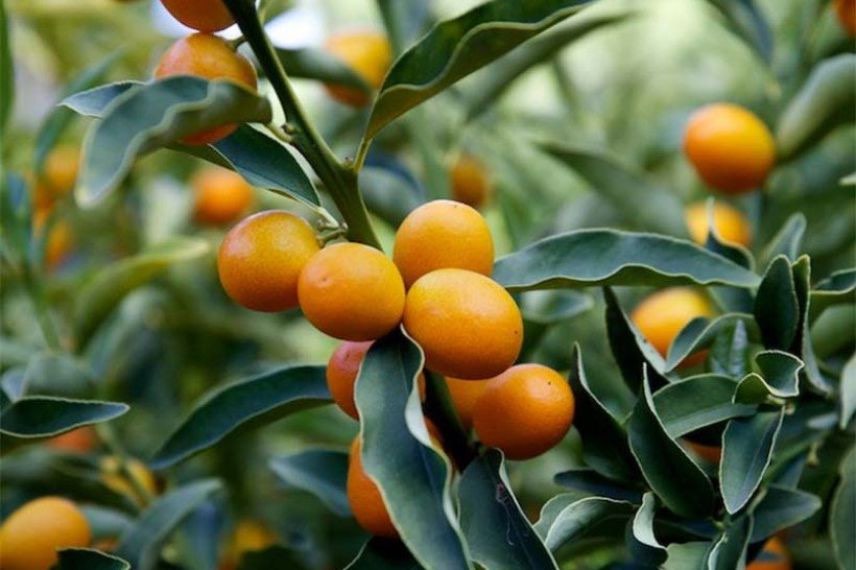
kumquat Nagami
Read also
Citrus trees: planting and maintenanceThe Yuzu
The Yuzu or Citrus juno is a citrus tree with an exceptional fragrance, used for its zest and juice, mainly in cooking. Even though it contains little juice and many seeds, it is a gem among citrus trees for its organoleptic qualities. The shrub bears mandarin-sized fruits that are harvested in November, before the first hard frosts. It is quite hardy, withstanding down to -10/-12°C. With an upright habit, it is very thorny and its foliage is semi-evergreen. Its productivity is variable; a harvest every other year is less abundant, but it still yields a substantial amount of fruit. Not particularly demanding, it is not very susceptible to diseases, and the yuzu tree proves fairly drought-tolerant once mature. Originating from China, Yuzu is an ancient citrus tree, imported to Japan in the 8th century. It forms an integral part of Japanese culinary culture, a country that is the world’s leading producer.
Yuzu is among the hardiest citrus trees, and its cultivation can be considered up to USDA zone 8a, a temperate oceanic climate zone, where minimum temperatures reach -12°C.
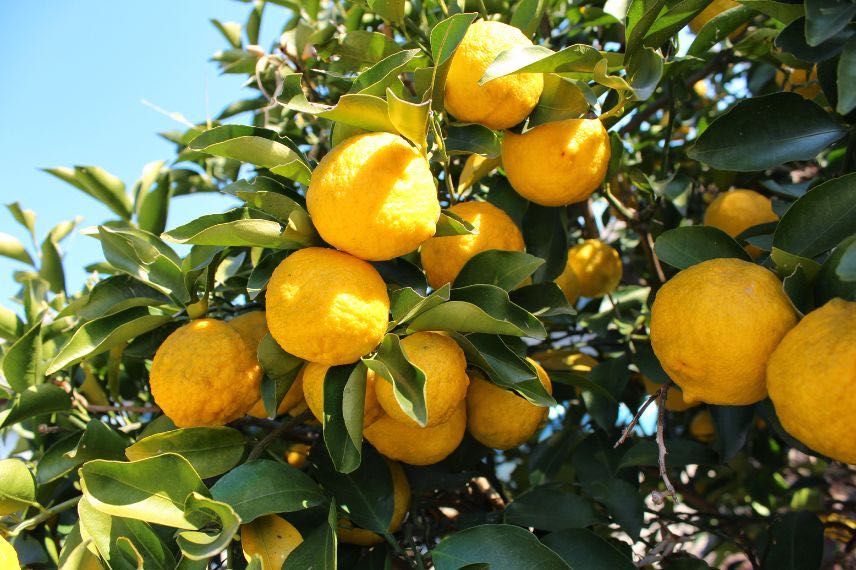
The Citrus inchangensis
Ichang Papeda, or Citrus inchangensis, is used as a substitute for lemon. Much hardier than lemon, its appeal is ornamental or culinary as a lemon substitute. Its zest, however, is very bitter, and it does not have the aromatic qualities of lemon zest. This citrus produces pink flowers and fruits 5–6 cm in diameter, yellow or yellow-orange at maturity, full of seeds. They are harvested in November. This citrus, whose hardiness is among the best, as it tolerates frost down to at least -10 °C, belongs to a primitive family of citrus from which kaffir lime (makrut lime) also originates, which is not hardy. It originates from mainland China where winters are very harsh. It forms a spiny evergreen bush with a spreading habit, 3–4 m tall.
This citrus can be grown up to USDA Zone 8a, in a modified continental climate, down to at least -10 °C.
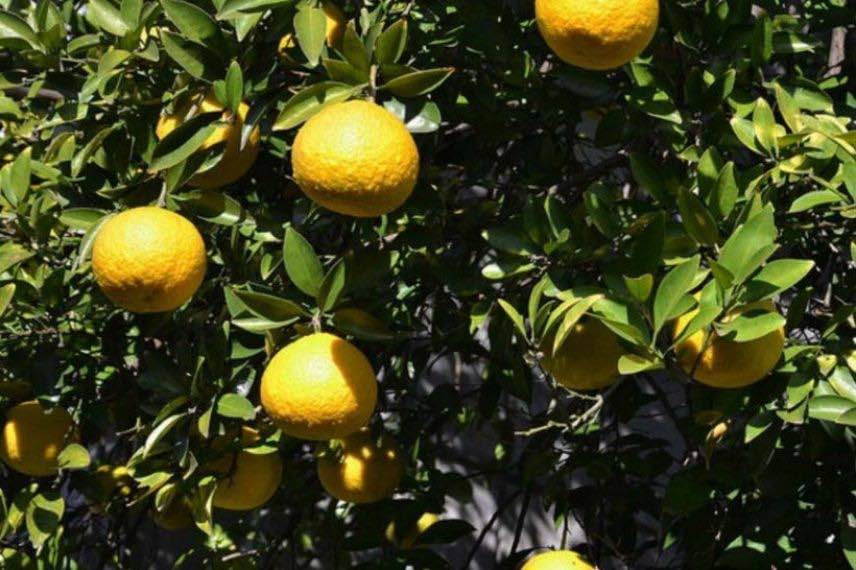
Citrus reticulata Keraji
The Citrus reticulata ‘Keraji’ is one of the hardiest mandarin trees. It bears yellow-orange fruits with a smooth rind, slightly flattened in shape. If its rind gives off an unpleasant odour, this is not the case with its fruit, whose pale orange flesh develops a lemony taste and a tangy aroma. It contains few pips. It can stay on the tree for a long time and is harvested between November and March. At full ripeness, the fruit is sweet and sugary, without the acidity present if picked earlier. Very floriferous and fruit-bearing, each year, it becomes a little hardier than a Satsuma mandarin and withstands frosts of around -12°C. It forms a bush 3 to 4 m tall with a compact habit. It originates from the southern islands of the Japanese archipelago.
It can be grown up to USDA zone 8a.
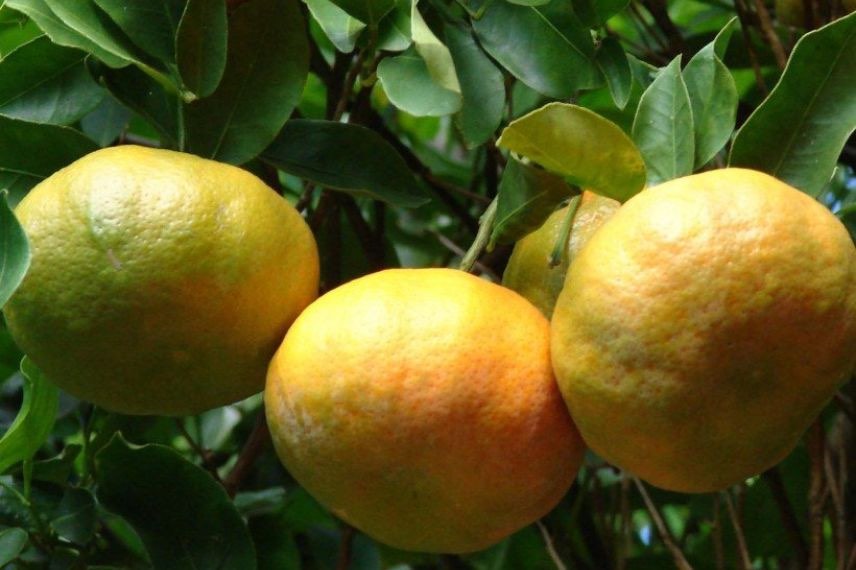
The Citrus unshiu Satsuma
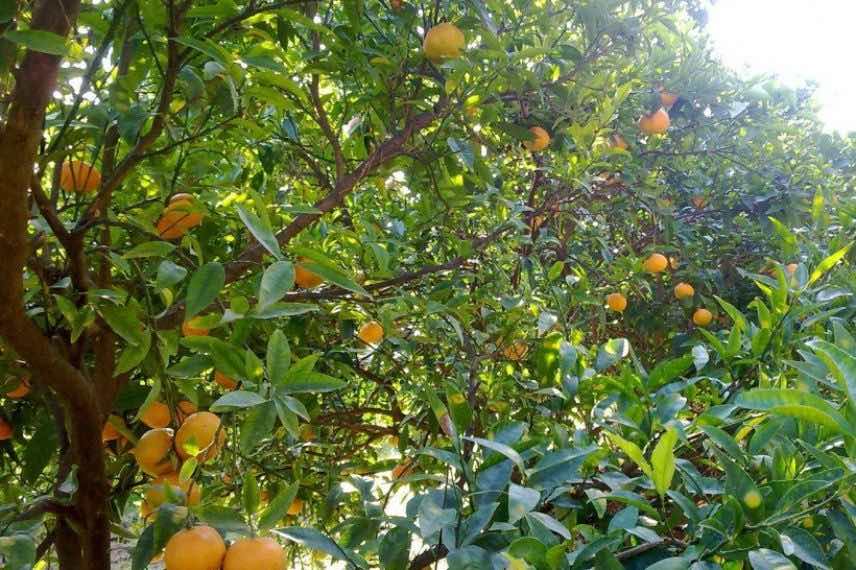
The Citrus reticulata ‘Unshiu’ or Satsuma mandarin tree is a fairly hardy bush, which tolerates frost down to -9°C. Its fruits are early; they are harvested from October to January. The earlier the fruits ripen, the more advantageous it is in the northernmost regions where sunlight is weaker. The Satsuma mandarin tree produces a very large crop of fruits with the characteristic mandarin fragrance. Their flavour is powerful, with character, and may be unsettling for those used to sweet clementines. The fruit is seedless, sweet, with a welcome touch of acidity. It is the firmness of the fruit that indicates its ripeness, not its colour. Hard fruits are not ripe; they should be softer to the touch to be ready to eat. However, do not judge by colour; Satsumas are green at first and then turn orange as temperatures drop. But it is indeed the fruit’s softness that indicates its ripeness. Subsequently, the fruit can stay on the tree for a long time, and this increases its sweetness as its acidity declines. It is up to you to find your preferred stage of ripening, but don’t fear a little acidity, which adds flavour to the fruit. The bush reaches 3 to 5 m in height with a weeping habit and large leaves, evergreen down to -10°C. It grows quickly. Repeated annual frosts below -10°C weaken the tree.
It is hardy to USDA zone 8b.
Poncirus trifoliata
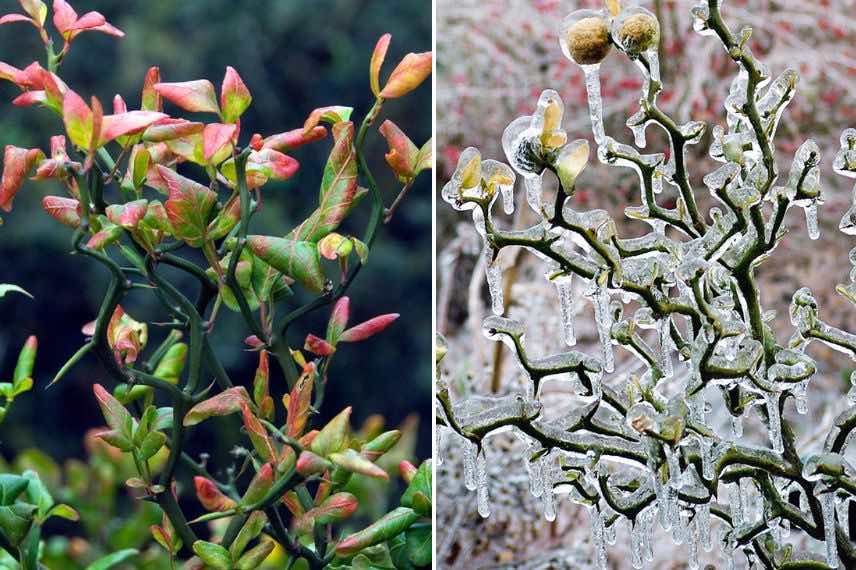
The Poncirus trifoliata is the hardiest citrus, grown for its ornamental qualities. It has deciduous, bottle-green foliage, preceded by a white spring flowering. In autumn, the foliage takes on orange hues, then its yellow fruits remain on the tree for a few weeks after the leaves have fallen. Not suitable for raw consumption, its small yellow fruit is ground into powder. China uses it as a condiment, and England uses it for tea. This citrus withstands temperatures down to -15°C. Very thorny, the bush reaches 4 m in height and can be used as a defensive hedge. It dislikes calcareous soils, but tolerates heavy soils. It is also used as rootstock or for hybridisation due to its cold hardiness.
Smaller and less vigorous, the cultivar ‘Flying Dragon’ offers beautiful tortuous branches, very decorative after the leaves fall in winter. The Poncirus trifoliata is hardy to zone 6b.
Poncirus trifoliata ‘Flying Dragon’
- Subscribe!
- Contents

Comments