





























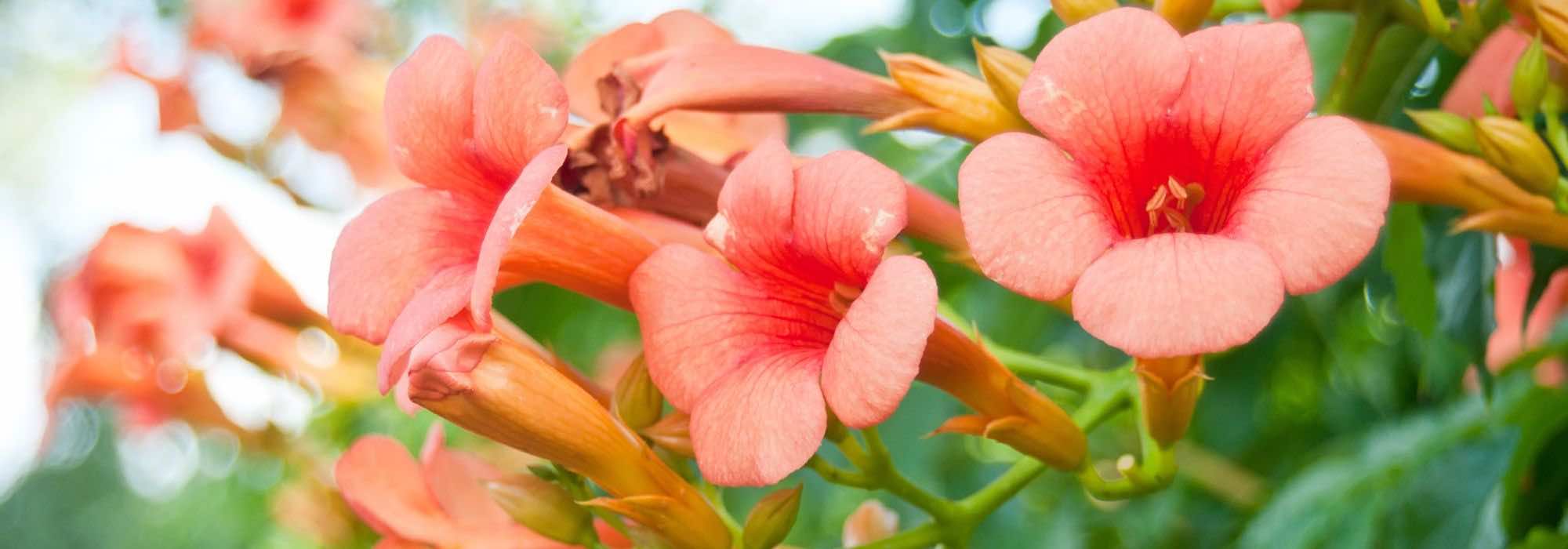
6 climbing plants ideal to shade a terrace
Plants to protect you from the sun's rays and bring natural freshness.
Contents
Climbingplants are useful in many ways in the garden. These plants provide structure and verticality, allow easy dressing of unattractive structures, but also shield from wind or prying eyes. In summer, they protect from the sun, providing shade and coolness. We can thus enjoy outdoor spaces without suffering from the heat.
For this, they must have several characteristics:
- rapid growth;
- dense foliage, to screen the sun’s rays;
- a supple habit and a self-supporting anchorage system, to be able to guide them easily;
- good resistance to sun and to the weather the terrace is subjected to (wind, salt spray…);
- easy maintenance;
- evergreen foliage for shade all year round, or deciduous to let light through in winter.
Here is our selection of 6 climbing plants to transform a terrace into a lovely, naturally refreshing cocoon.

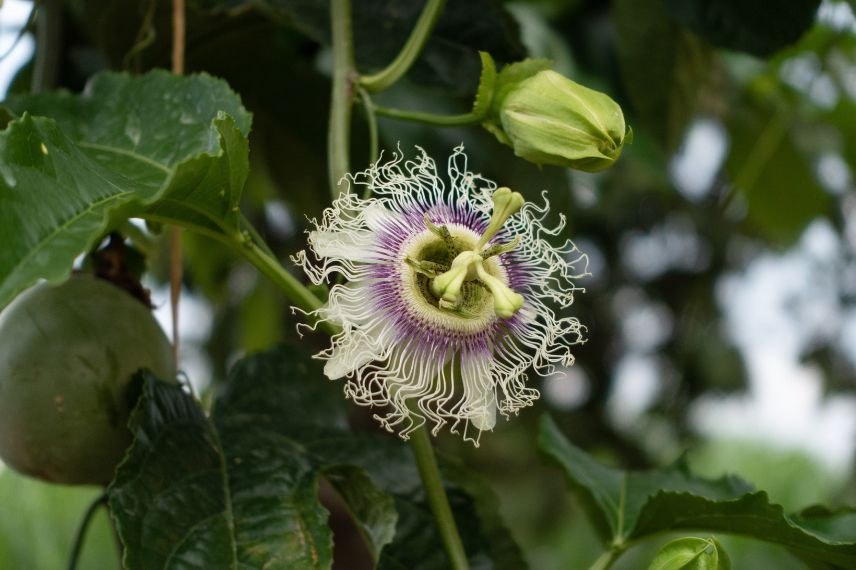
Passionflower: flowers with an exotic look to dress the terrace
The passionflowers are fast-growing climbers that have the advantage of colonising available supports thanks to their tendrils. They will thus easily cling to a pergola, a balustrade surrounding the terrace, or a trellis. Capable of growing up to 4 metres in just one year, they are ideal plants for providing instant shade.
In terms of aesthetic appeal, it is their flowers that provide the main show. With a particularly sophisticated and exotic appearance, they come in generous succession from the end of spring through the summer. There are colours to suit all tastes, from white (Passiflora subpeltata) to blue (Passiflora caerulea), via violet (‘Purple Passion’), pink (‘Anastasia’), or even a few red-flowered species (Passiflora alata).
After flowering, oval fruits take over, bobbing like real little coloured lanterns. They are edible, but most do not have a real taste (except in a few species, such as P. incarnata).
The passionflower produces large, lobed leaves, very decorative, evergreen in the face of light frosts (around −5°C).
It is cultivated in deep soil, rich in organic matter and rather cool (moist but not excessive), in a sunny position sheltered from winds. If you do not have soil around your terrace, it is possible to grow the smaller varieties (up to 3 metres in height) in a large tub set against a support to provide shade. In terms of hardiness, the hardier varieties tolerate frosts down to −10°C, or even −12°C for Passiflora caerulea.
For further reading: Passionflower, Passion Flower: planting, growing, pruning
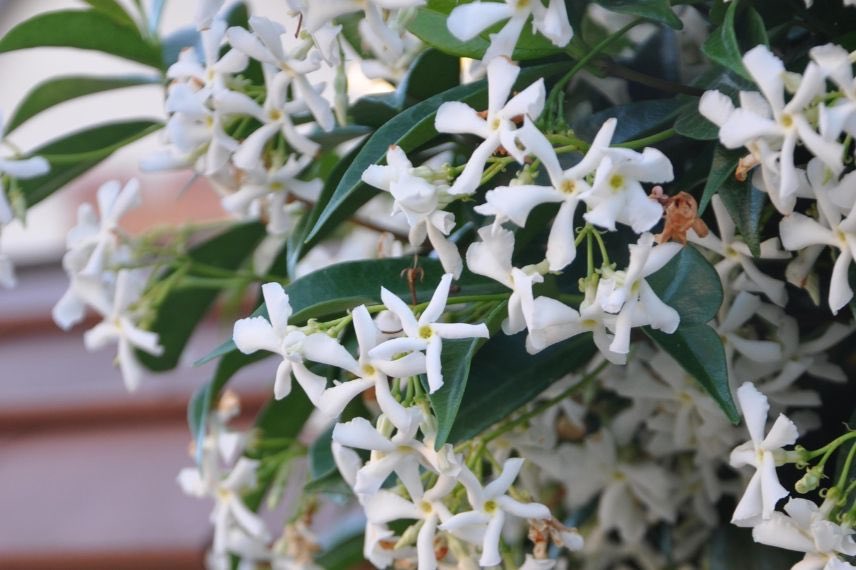
Star jasmine: to bring fragrance and shade to the terrace
The star jasmines or Trachelospermum are not really jasmines, but share with these plants a star-shaped, incredibly fragrant flowering. Flowers appear in early summer and bloom for many weeks. They are generally white, but there are also cream-yellow flowers in Trachelospermum asiaticum, or pale pink in ‘Pink Showers’. In terms of fragrance, they give off sweet notes, but never overpowering.
These twining climbers with trailing stems are ideal for providing shade on a terrace. They will readily climb a pergola, trellis, arch or garden arbour. The evergreen, dense and hardy foliage remains year-round. It is generally green, but some varieties offer foliage in other bright colours. This is the case with the yellow leaves of ‘Golden Memories’ or with the cream-coloured leaves of ‘Variegatum’. Under cold or drought, the foliage can also take on pretty red hues.
Easy to grow, this plant is one of the ideal climbers for beginner gardeners.
If its hardiness is average (-10 to -12°C), it can be grown in the northern Loire regions in a warm, sunny exposure, sheltered from winds. Container cultivation is also perfectly possible.
Plant your star jasmine in a sunny or partly shaded position. Once established, it will tolerate drought well.
For more: Jasmine: planting, care, pruning
Bougainvillea: a beautiful living screen with spectacular flowering.
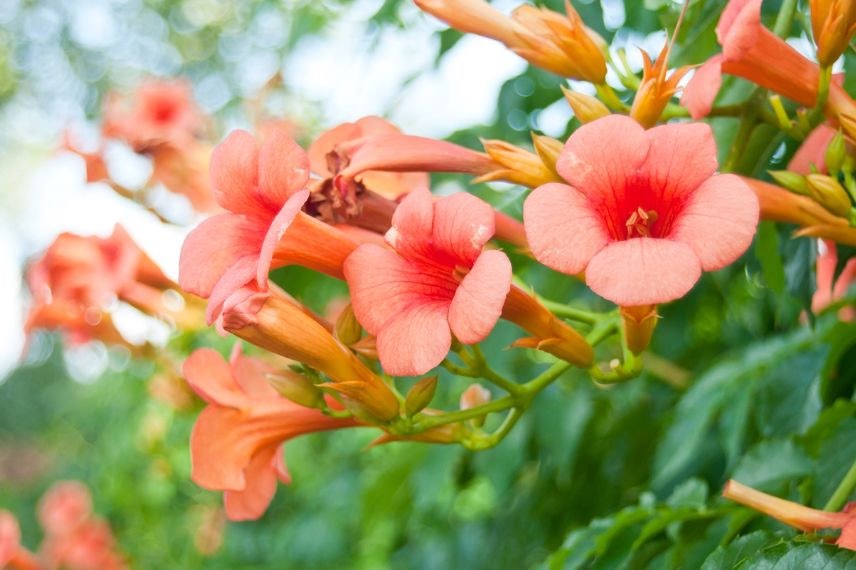
Trumpet creepers are generous climbers, whose flowering will brighten up any terrace. This liana has climbing roots or tendrils, enabling it to cling easily to a range of supports.
The trumpet-shaped flowering enchants summer with its vivid colours, in red and orange tones. It adds a real touch of exoticism. Generous, it lasts all summer, but some varieties begin to show themselves as early as May. This is the case for the Campsis capreolata ‘Atrosanguinea’ with purple flowers or of ‘Tangerine Beauty’, with mandarin-coloured flowers.
The foliage is semi-evergreen, remaining in place only if the winter is not too harsh. It consists of long, finely cut leaves, which contrast wonderfully with the warm colours of the flowers. It adds an extra touch of luxuriance.
Vigorous, these climbers can reach 8 to 10 metres in height, which allows you to create a handsome screen against the sun’s scorching rays on the terrace.
In terms of cultivation, it is a low-maintenance climber that will adapt to all soil types as long as they are not too dry. It also tolerates salt spray, making it a good choice for seaside terraces.
Hardiness ranges from -10°C to -15°C. In cold regions, ensure it is planted in a warm and sheltered position.
For further reading: Trumpet vine: planting, pruning, propagating
Read also
8 mistakes to avoid on your terracesHoneysuckle: to provide shade in northern regions
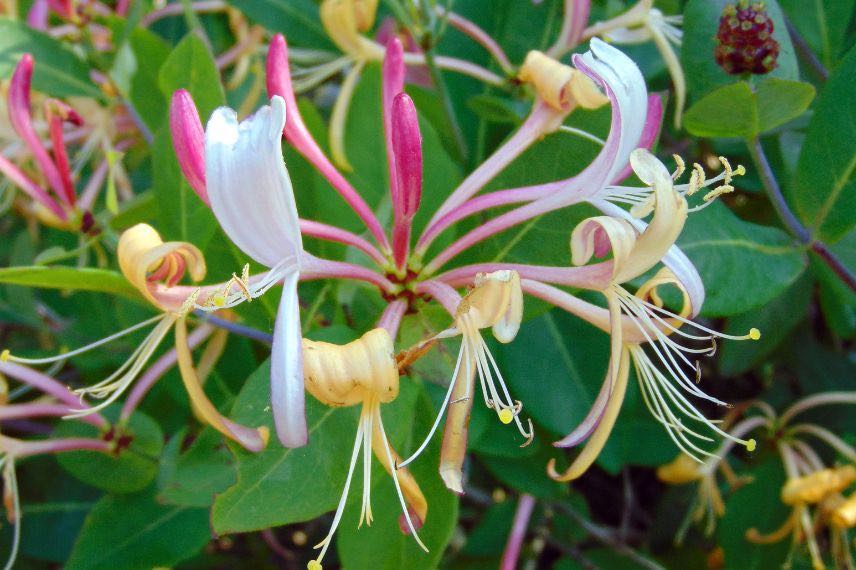
The honeysuckles will be best used to quickly create shade on a terrace in the northern regions of France. Most varieties, in fact, do not tolerate exposures that are too harsh. This climber will be ideal for covering a pergola or arbour, on which its stems can easily climb.
In terms of aesthetic appeal, it is its colourful and fragrant flowering that is of interest throughout the summer. There are varieties to suit all tastes, from delicate white flowers to brighter orange or red flowers.
The foliage is evergreen to semi-evergreen, depending on the species. It is fairly lush, forming a handsome screen of vegetation.
Easy to grow, honeysuckle thrives in ordinary soil, but fairly deep. It prefers its root area to be shaded and cool. Growing it in a large pot or container is quite possible. If you live in a region with cold winters, no problem: most varieties are hardy to below -15°C.
For further reading: « Jasmine: planting, maintenance, pruning»
Ipomoea: trumpet-shaped flowers coloured to brighten terraces.
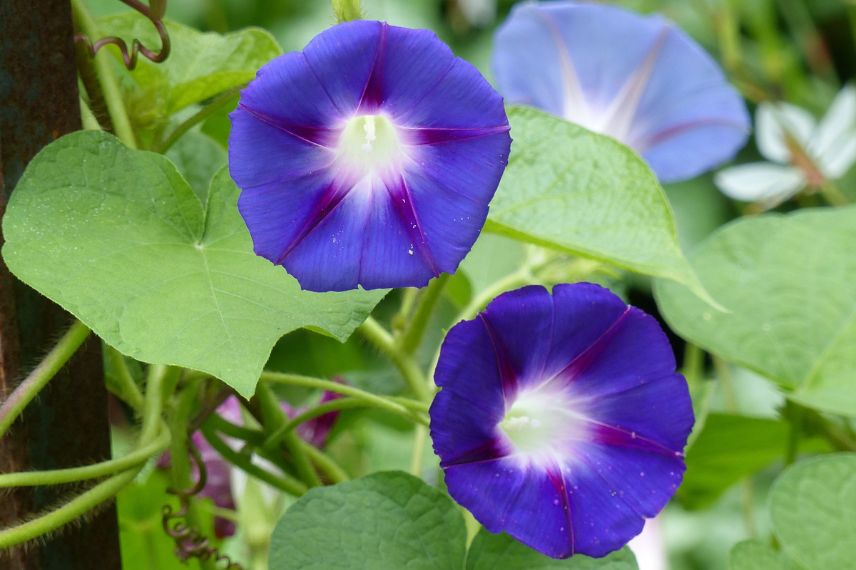
The Ipomoeas are plants grown as annuals in our climates, as they are not very hardy. With rapid growth, they can easily reach 2 to 3 metres in height, making them ideal for creating shade on the terrace during the hot season. Their twining stems wrap themselves around nearby supports on their own: balustrades, pergolas, arbors or trellises.
Summer flowering is particularly generous and colourful. It consists of funnel-shaped flowers, which bloom one after another without pause for weeks. Colour-wise, you’ll be spoilt for choice: purple with a white throat in Ipomoea rubrocaerulea ‘Crimson Rambler’, sky blue, accented by a violet star in I. purpurea ‘Dacapo Light Blue’, black-purple with a cherry throat in ‘Kniola’s Black’, or delicate white with a pink star in ‘Shiva’.
The lush foliage will transform any support into a teeming jungle, and will also bring an exotic touch.
Ipomoeas thrive in warm, sunny conditions, in soil rich in organic matter, well-drained and kept moist. They will tolerate full sun exposure, but should be sheltered from the wind. They can be grown either in the ground or in pots. In mild climates (frosts below -6 to -8°C), the Indian moonflower Ipomoea will be perennial. Note, however, that it can reach nearly 10 metres in all directions and is sometimes considered invasive.
Sowing takes place in spring and is straightforward. Just watch for aphid attacks, which relish the tender stems of these climbers.
For further reading: Ipomoeas – sowing, planting, cultivation and maintenance
The Spanish bean: an attractive, edible shade provider.
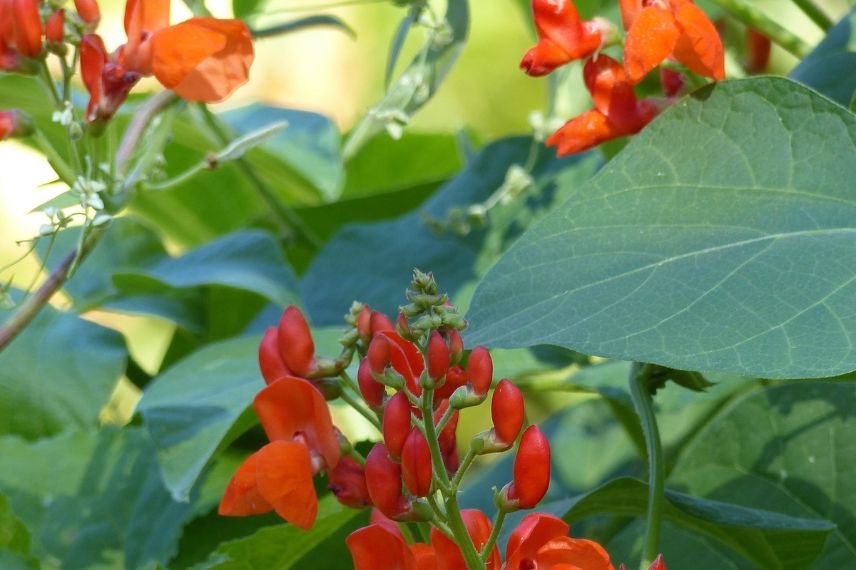
Spanish runner beans (Phaseolus coccineus) have the advantage of combining beauty and flavours. They produce large bean pods, as well as edible beans. But their flowering is also decorative. It consists of beautiful, abundant clusters of coloured flowers, in shades of red (‘Lady Di’), white (‘Emergo’), pink (‘Celebration’) or multicoloured (‘Tenderstar’).
This climbing annual will quickly reach 3 to 5 metres in height. It will wind itself around its support, creating a handsome screen to shade the sun on the terrace.
Easy to grow, it requires a sunny position with loose, well-drained soil that stays cool. Growing in a large container is also feasible.
Pour aller plus loin : Further reading: Beans: sow, grow, harvest in the vegetable garden
- Subscribe!
- Contents
Comments