





























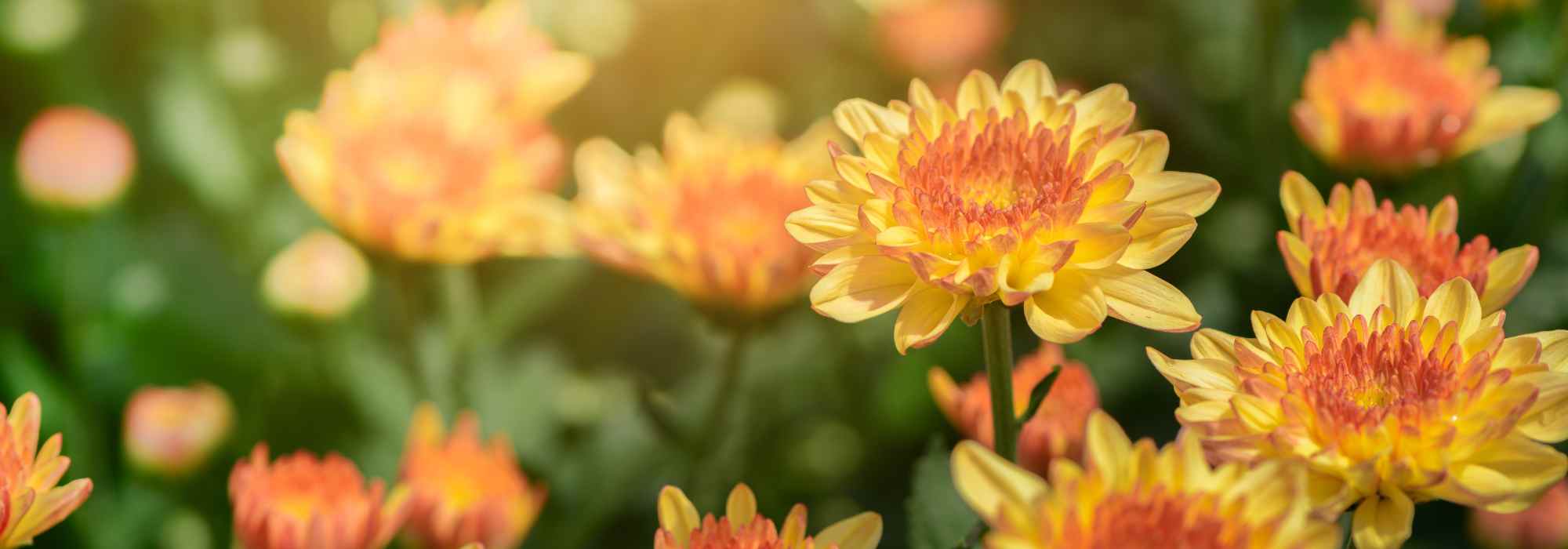
5 Chrysanthemums with yellow or orange flowers
For a burst of warm colours at the height of autumn!
Contents
Chrysanthemums, also known as autumn daisies (formerly Dedranthema), are no longer considered mere cemetery flowers, and that’s a good thing! These perennial plants are indeed among the last to bloom in the garden, with some starting to bloom in November. They provide one of the final displays before winter, colouring the borders with warm colours for an extended period. Their return to our gardens and pots also stems from their great diversity, as they originate from several hundred species, giving rise to thousands of cultivars, flowering from August for the earliest to the end of autumn. Do not confuse them with florists’ chrysanthemums, forced for All Saints’ Day, which are frost-prone!
With yellow-to-orange hues, chrysanthemums attract bees and butterflies in particular. Hardy and easy to care for, discover five varieties of bright chrysanthemums, orange or yellow.

Chrysanthemum rubellum 'Mary Stoker'
Belonging to the Korean-origin Chrysanthemum rubellum group, ‘Mary Stoker’ is one of the best-known and most striking in orange tones. This variety, developed in the 1940s, is fairly early: it flowers from September to November. Its single flowers, fairly large (2–5 cm in diameter), open to a shade blending pale yellow with apricot, very soft, giving it a pastel colour close to peach. The gold-yellow head stands out well. The chrysanthemum ‘Mary Stocker’ grows 60–90 cm tall for a handsome 50 cm spread, and is particularly hardy down to -20°C. Its foliage dies back in winter, only to resprout in spring, becoming more vigorous each year.
Plant this chrysanthemum in a lovely border or a mixed-border, in sun (west or south-facing), and in well-drained soil, alongside persicarias, New England asters ‘Violetta’, or other chrysanthemums in a strong orange. It will also be a feature in a naturalistic garden setting.
Note: Chrysanthemum rubellum varieties are often so prolific that they sometimes require staking.
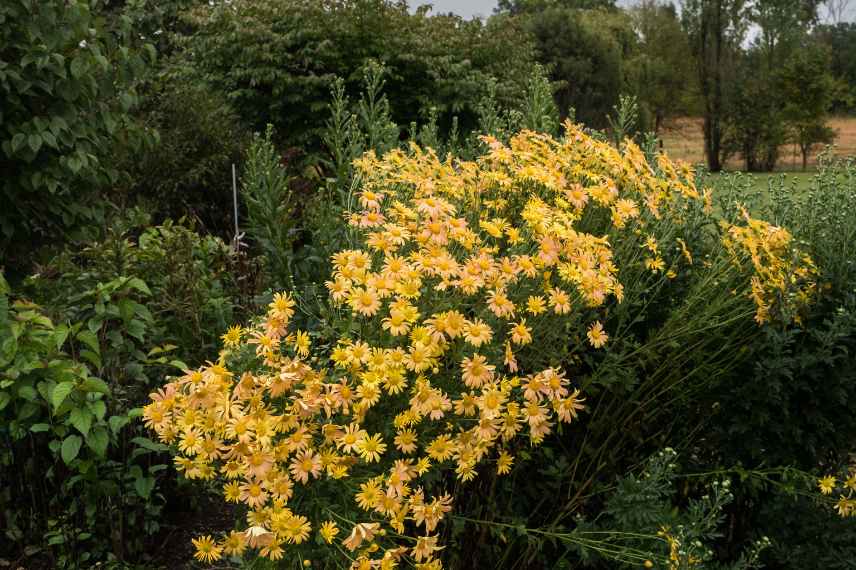
Chrysanthemum rubellum ‘Mary Stoker’ (© FD Richards)
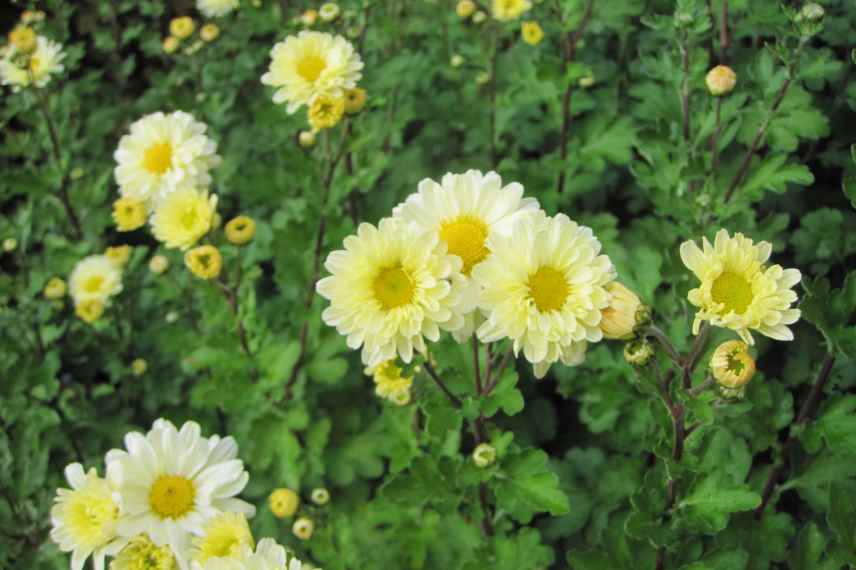
Chrysanthemum indicum 'Poésie'
The Chrysanthemum indicum ‘Poesie’ lives up to its name and proves to be wonderfully gentle. It unveils its pale-yellow double flowers relatively late, between October and November, perfect for enhancing the garden before the first frosts. Initially a fresh, buttery-yellow colour tinged with green, the numerous flowers (several per stem), of good size (5 cm) will gradually turn white, while retaining their large golden centres. The plant forms a handsome mass of 80 cm to 1 m in height with a spread of 50-60 cm. This chrysanthemum with its very soft tones will appeal to all gardeners who are put off by overly bright yellows.
Pairing with mid-height grasses as elegant as Pennisetums, Stipas or the Panicum, it will be superb in the autumn garden with autumn-coloured shrubs, perhaps surrounded by a touch of purplish foliage, such as Physocarpus or the bluish-purple of a bush sage still in bloom.
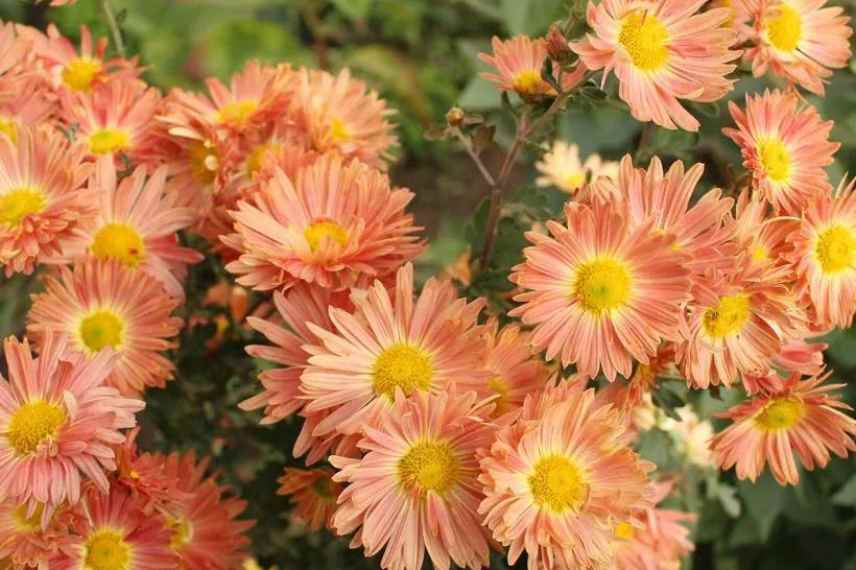
The Chrysanthemum 'Cottage Apricot'
Here is a charming chrysanthemum, with tones that are also very soft, between salmon and apricot: the Chrysanthemum ‘Cottage Apricot’. Its flowers are beautifully simple, with slender petals and the large bright yellow centre. It will gradually deepen into a darker shade, an orange-red with bronze undertones, equally attractive. Medium-sized (about 70 cm tall), it can brighten many spots in the garden. It is an undemanding variety that we recommend, particularly since it thrives in poor soil. It flowers from September to October, sometimes into November.
Surround it, for example, with a few bronze-to-chocolate Heucheras, which will coordinate with both its light early colours and the stronger late-flowering colours.
Read also
5 pairing ideas with ChrysanthemumsAjania pacifica
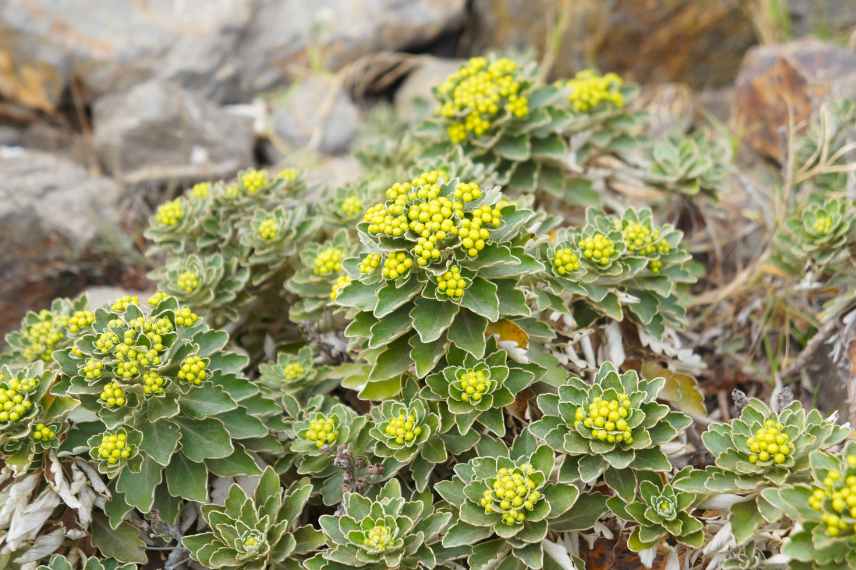
Often seen in coastal gardens, Ajania pacifica resembles chrysanthemums in its foliage and flowers, but it belongs to a different genus, Ajania. It is also known as the Pacific Chrysanthemum, though in terms of hardiness it performs fairly well, withstanding -10 to -12°C in good planting conditions. These plants are shrubby and keep their foliage in winter, unlike chrysanthemums.
Ajania remains small in size, compact, not exceeding 50–60 cm in height at maturity, with an identical spread. The flowering is yellow, brightening borders and beds from October. It resembles tiny mimosa or santolina flowers, formed of small heads of bright yellow, very different from traditional chrysanthemums. What we also value about this pretty plant is its foliage: evergreen or semi-evergreen depending on the hardness of the climate, it is a grey-green, margined with white, arranged in crenate rosettes.
The Chrysanthemum × indicum 'Nantyderry Sunshine'
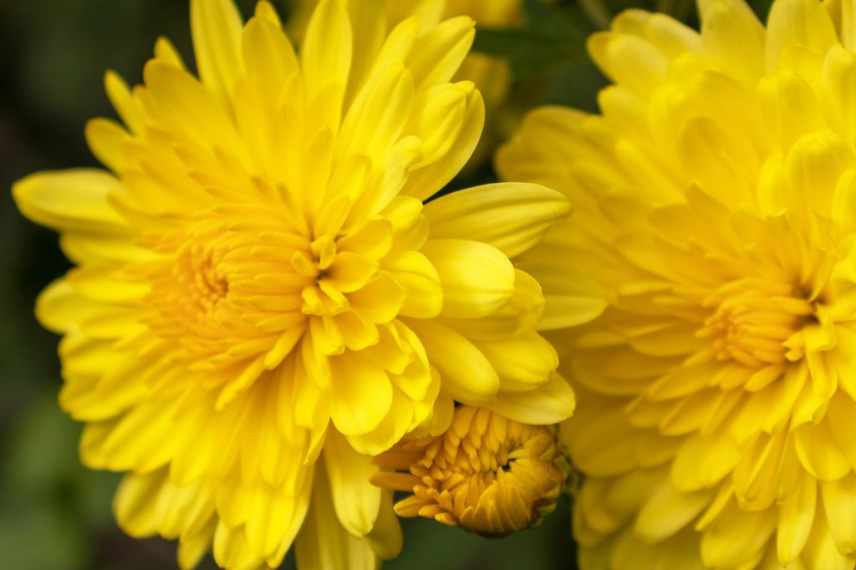
Here’s another chrysanthemum with a deeper yellow than ‘Poésie’. ‘Nantyderry Sunshine’ gives a sun-kissed glow to the borders, and this from September onward.
Very floriferous, it quickly forms a lovely 90 cm tall clump with a slightly smaller spread.
This bright yellow, gradually turning to almost orange-yellow as flowering progresses, harmonises wonderfully with flowers that remain sprightly at the same time, such as purple Asters pyraneus, but also Pennisetums orientalis and Dahlias.
Of course, it can be paired with another paler yellow chrysanthemum such as the Chrysanthemum articum ‘Schwefelglanz’.
- Subscribe!
- Contents

Comments